Free Things To Do In Cusco
Cusco, the historic Inca capital in the Andes of southern Peru at 3,335 m, keeps a long list of experiences that cost nothing: free tip-based walking tours, public plazas, Inca walls in the streets and viewpoints above the red rooftops.
Short answer
The best free things to do in Cusco are the tip-based GuruWalk walking tours of the historic centre, the Plaza de Armas and San Blas streets, the twelve-angled stone on Hatunrumiyoc, the San Pedro Market halls, and the walk up to the Cristo Blanco viewpoint above the city. The main archaeological sites are not free: Saqsaywaman and the city museums sit on the Boleto Turistico, sold in person only.
Cusco, the historic city in the Andes of southern Peru, is one of those rare destinations where the cheapest experiences are also the most memorable. The Plaza de Armas sits at 3,335 m, the colonial churches stand on Inca stone foundations, and a whole network of tip-based walking tours, public squares and street-level Inca walls costs nothing to enjoy. This guide sets out what is genuinely free in Cusco, what only looks free, and where a small ticket price still applies, all drawn from what the official sources and tour listings actually state.
What Are The Best Free Things To Do In Cusco?
The best free things to do in Cusco are the tip-based GuruWalk walking tours of the historic centre, the Plaza de Armas and the San Blas streets, the twelve-angled stone on Hatunrumiyoc street, the San Pedro Market halls, and the walk up toward the Cristo Blanco viewpoint above the city. The main archaeological sites are not free: Saqsaywaman and the city museums sit on the Boleto Turistico, which COSITUC sells in person only.
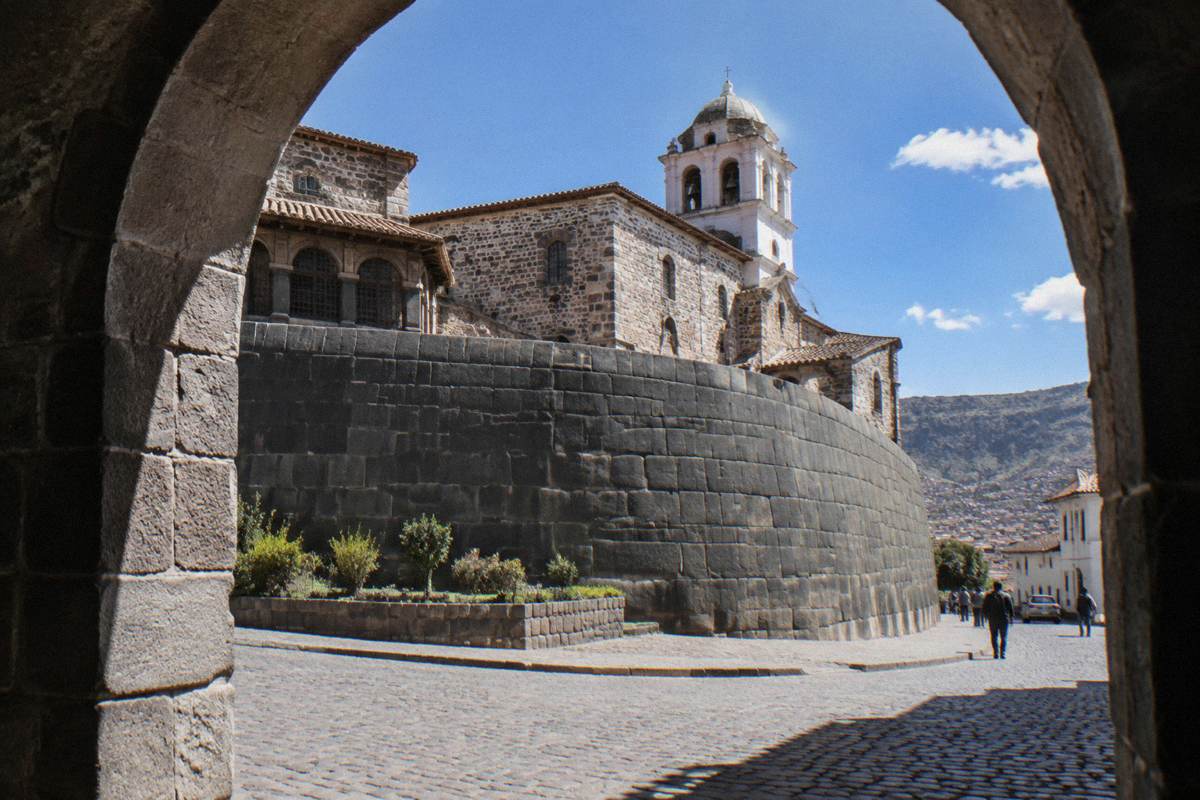
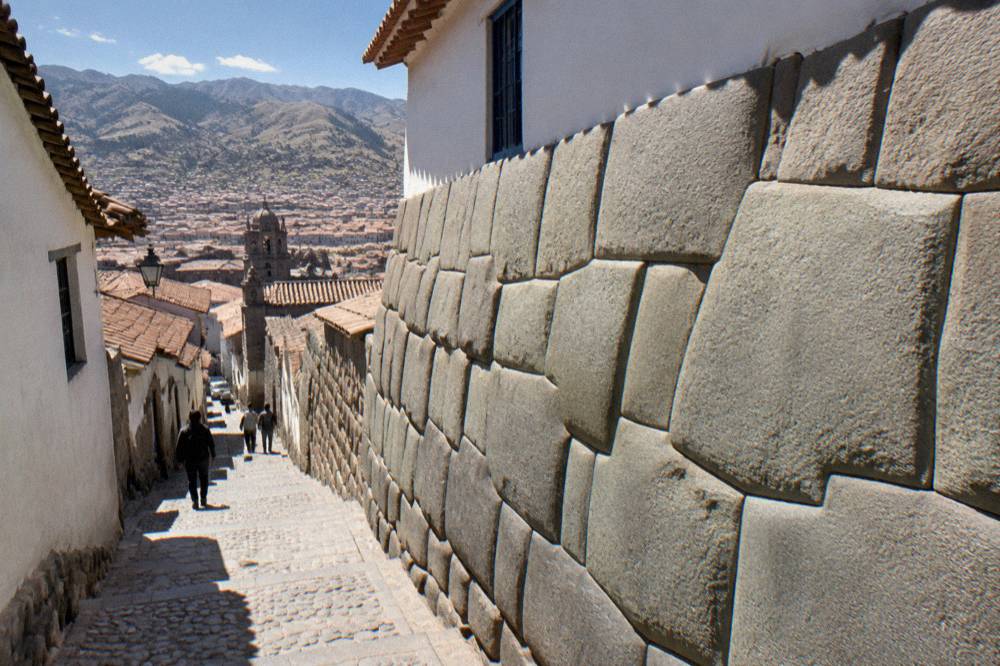
Plazas and streets are public spaces, and Cusco's historic centre is dense with them. The Plaza de Armas, the narrow lanes of San Blas, the Inca walls of Hatunrumiyoc with their finely fitted polygonal stones: none of these carries an admission charge, and none needs a guide to be worth the walk. The Cusco historic centre holds most of what this page covers within a walkable radius.
The distinction that matters is between public space and ticketed site. COSITUC's own FAQ is explicit that the Boleto Turistico covers 16 sites across three circuits, sold at the counter on Av. El Sol 103 and at most included sites, never online. Saqsaywaman, Q'enqo, Puka Pukara and Tambomachay are on Circuit I; the city museums sit on Circuit II. Nothing in this article's "free" list quietly depends on that ticket.
Are The Free Walking Tours In Cusco Really Free?
Yes, the free walking tours in Cusco are genuinely free to join, but they are pay-what-you-want: the guides work for tips, and GuruWalk, the platform that lists them, is upfront about that model. Seven such walks are listed on this site's tour roster, all free or tip based, and none carries a printed price. A tip is expected at the end, and How to Peru reports a typical range of S/ 20 to S/ 40 per person for free walking tours in Peru.
GuruWalk must be named here because these are not this site's own tours, and the honesty requirement runs both ways. Among the verified walks, "Free Tour in Cusco with local guide" is run by Frank Emerson, and the YANA WALKING TOUR of the historic centre is run by Yana Tour Operator. Other listed walks, such as "Free Tour Cusco: Incas, History and Local Culture", "Free walking Inca Cusco", "Free Walking Tour with Good Vibes" and "Inca Trail of Cusco: Sacred Paths to the Antisuyo", are named here by their listed titles, and no guide should be invented for them beyond what the roster records.
The walks themselves concentrate on the historic centre: the Plaza de Armas, the Inca walls, San Blas and the stories the city's stones carry. This site keeps a fuller rundown at free walking tours in Cusco, including how the tip model works in practice. For a first morning in the city, a tip-based walk is the cheapest orientation available anywhere in Peru.
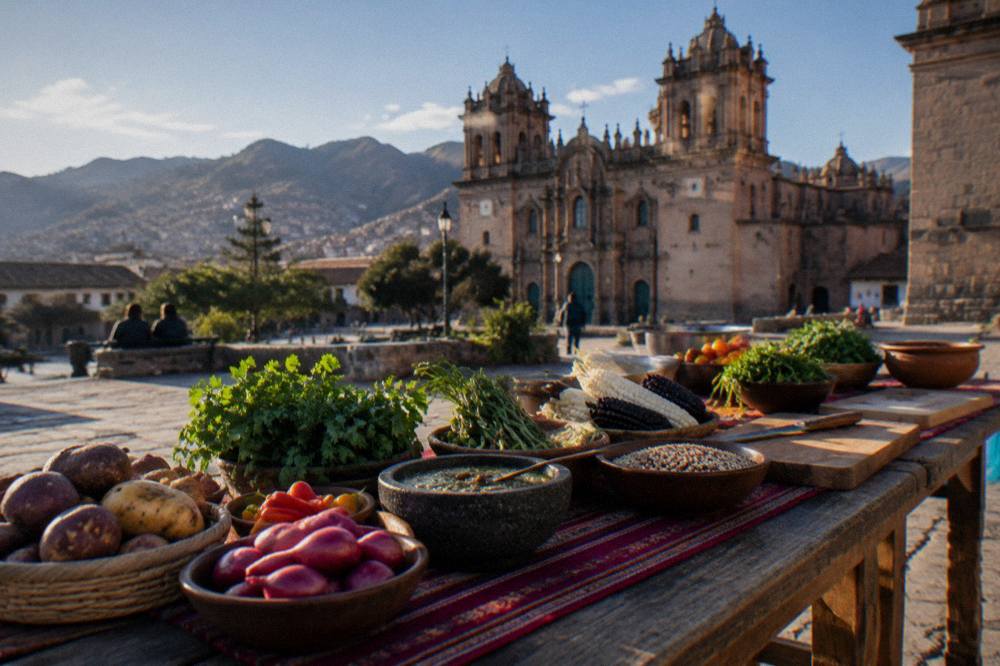
The free walks pair naturally with a paid class later in the day. The Cusco Cooking Classes and San Pedro Market Tour turns the same market the free walks pass through into a hands-on kitchen session, and Check availability shows the operator's live listing.
Which Plazas And Streets In Cusco Cost Nothing?
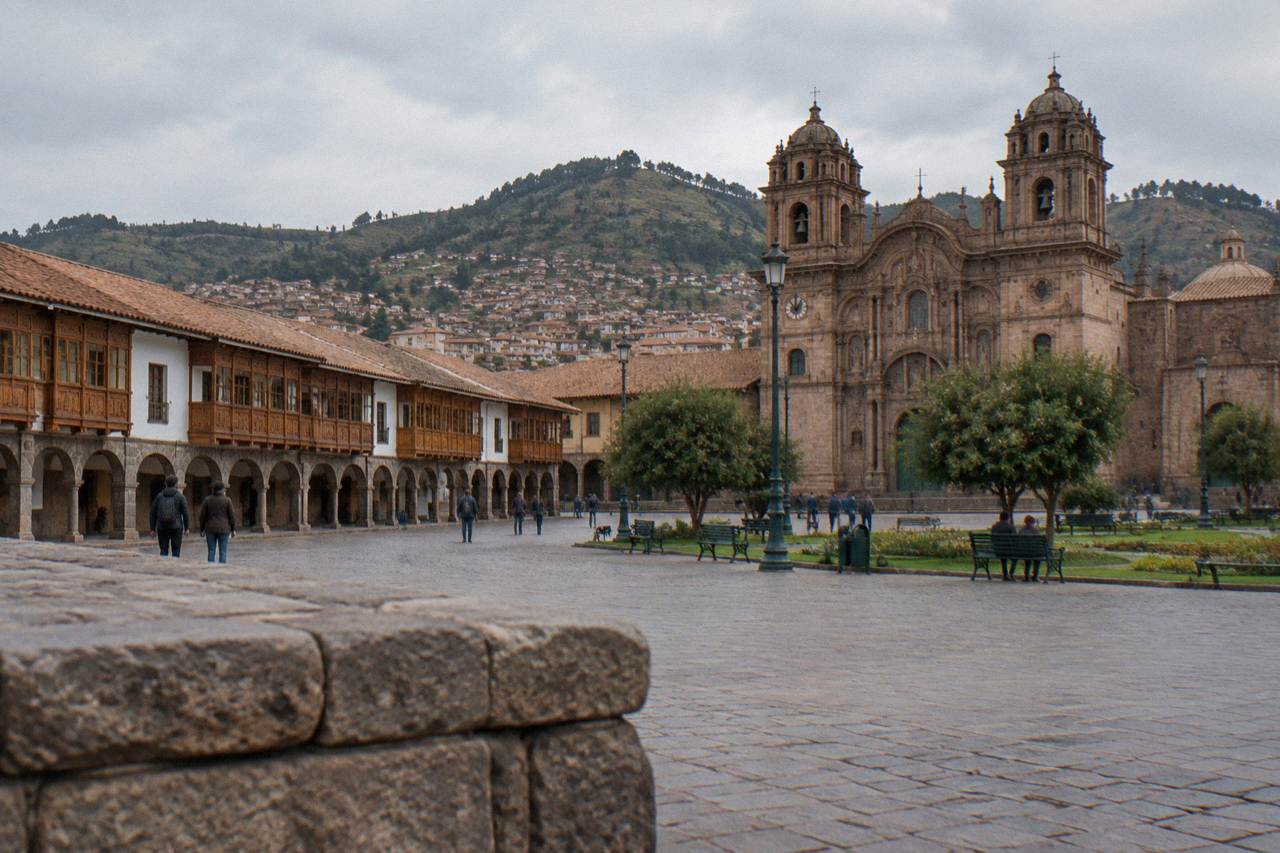
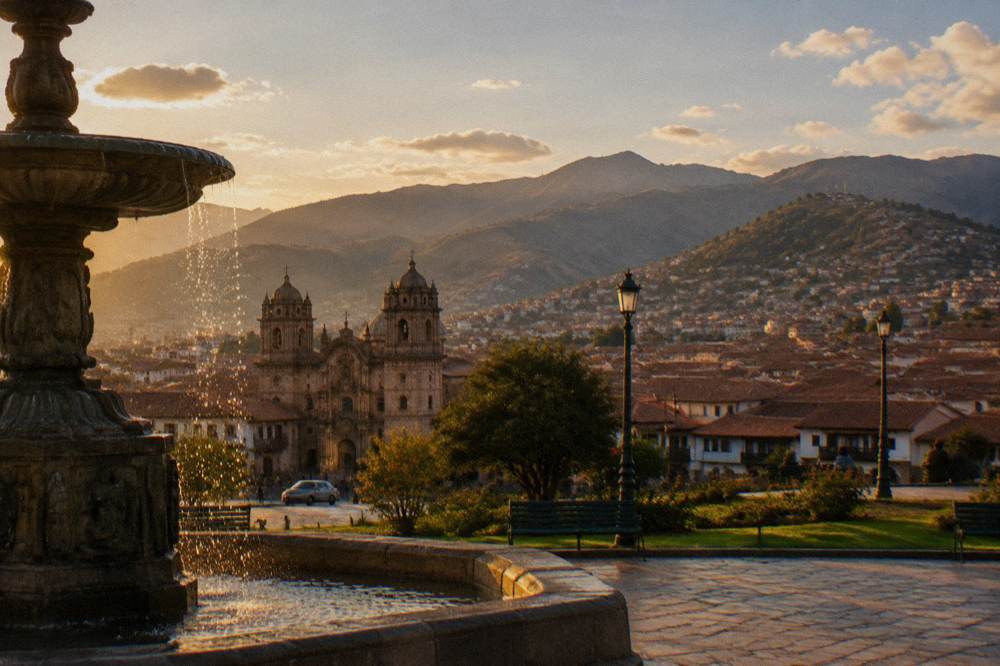
Every public plaza and street in Cusco's historic centre is free to walk: the Plaza de Armas, the Plaza de San Blas, Hatunrumiyoc street with the twelve-angled stone, and the stepped lanes connecting them. These are open public spaces with no admission charge at any hour. What is not free is entry into the buildings around them: the Cathedral charges its own admission and the Qorikancha museum sits on the Boleto Turistico's Circuit II.
The Plaza de Armas is the natural starting point. Peru's official tourism board, PromPeru, presents the historic centre's plazas and colonial churches as the core of any city visit, and the square itself asks nothing of a visitor but time. The Cathedral beside it is a separate, ticketed building; this site covers it in detail at the Cusco Cathedral.
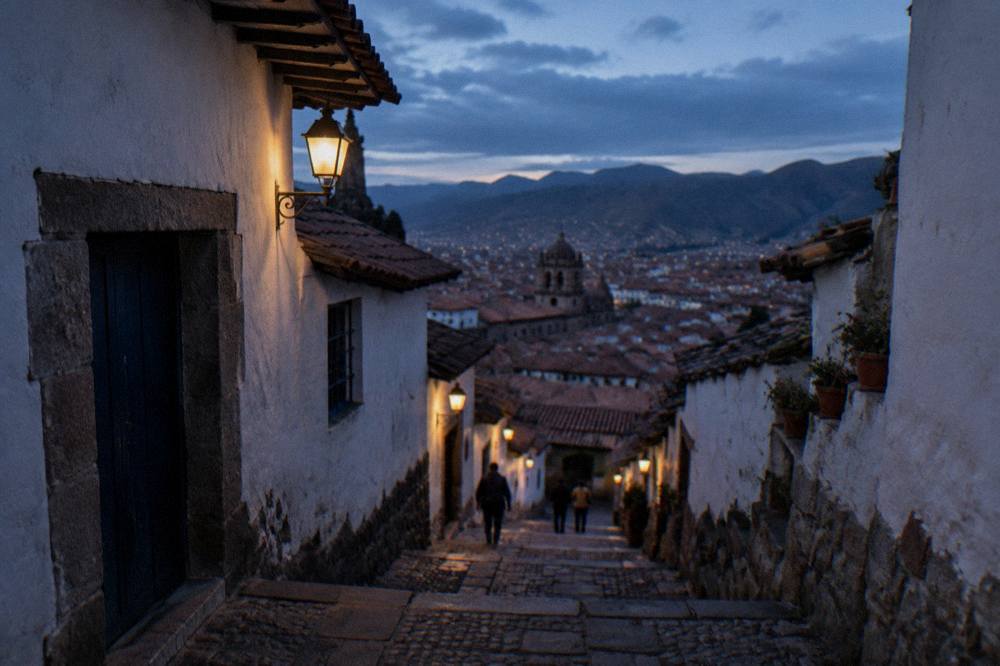
A few blocks away, Hatunrumiyoc street holds the twelve-angled stone, a large, finely fitted polygonal stone set into an Inca wall near the Plaza de Armas and San Blas. It is visible from the street, costs nothing, and needs no ticket; the twelve-angled stone page covers where to stand and what to look at. San Blas itself, the artisan quarter above the centre, is a district of steep lanes and small squares, all public.
Is San Pedro Market Free To Enter, And What Should You Expect To Pay Inside?
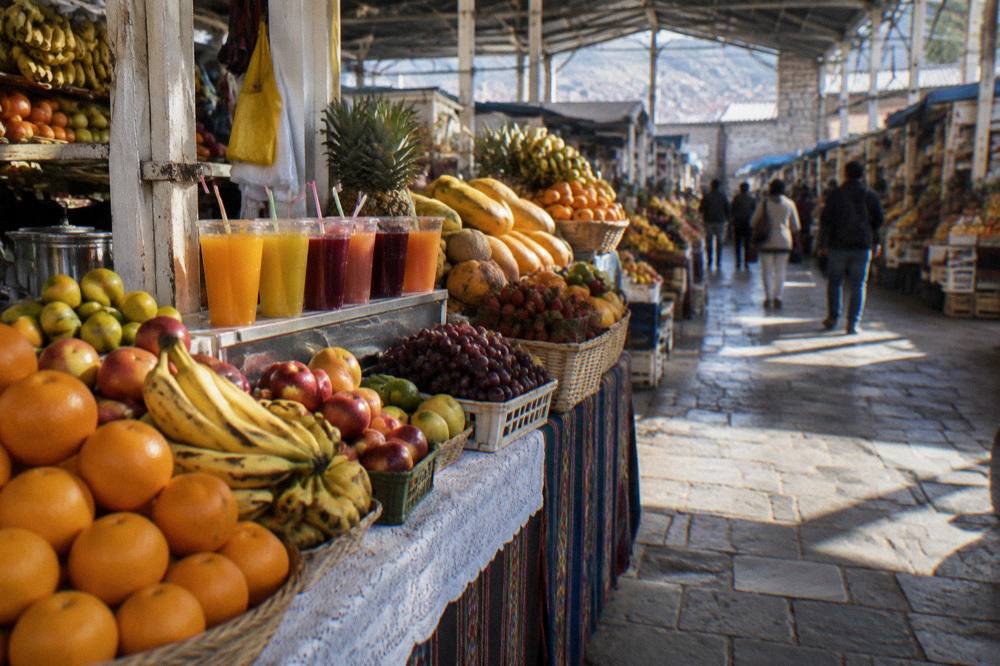
San Pedro Market is a public market and free to enter, browse and photograph; you pay only for what you buy. The market halls sit a few blocks from the Plaza de Armas and open daily. Inside, reported everyday prices from the site's verified research run about S/ 8 to 15 for a menu del dia and about S/ 2 to 5 for a cup of coca tea, always as reported ranges rather than fixed tariffs.
The market is the cheapest food experience in the city centre. Stalls sell fruit, juices, breads, meats and hot Andean dishes, and the juice counters and lunch stalls operate on local prices rather than tourist prices. The San Pedro Market guide covers the layout stall by stall, and the broader Cusco markets page places San Pedro among the city's other market halls.
Two honest cautions from the verified facts. First, hygiene standards at market stalls vary, and this site's food safety guidance for Cusco is worth reading before a first market lunch. Second, the reported price ranges above are everyday on-the-ground figures the facts pack holds as ranges, not official tariffs; individual stalls set their own prices.
| Item at San Pedro Market | Reported range | Notes |
|---|---|---|
| Menu del dia | about S/ 8 to 15 | Set lunch, reported range |
| Cup of coca tea | about S/ 2 to 5 | Reported range |
| Entry to the market hall | Free | Public market |
| Guided market visit | From the tour listing | Cooking-class tours include it |
A market walk is free; a market-and-kitchen afternoon is not, but it converts the same stalls into a meal you cook yourself. The featured class on this page does exactly that.
What Free Viewpoints Does Cusco Have Above The City?
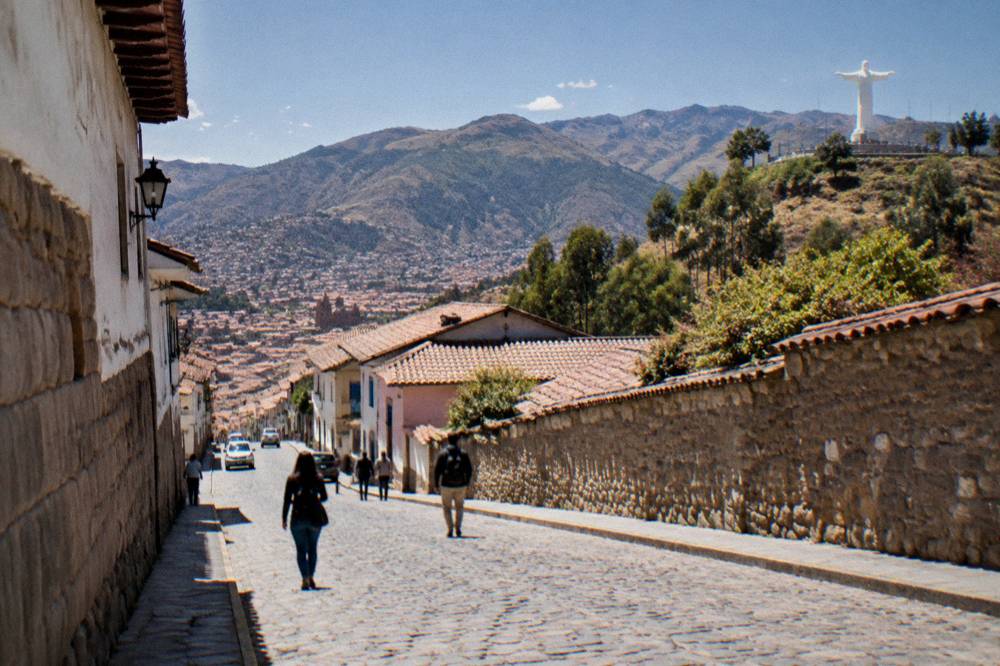
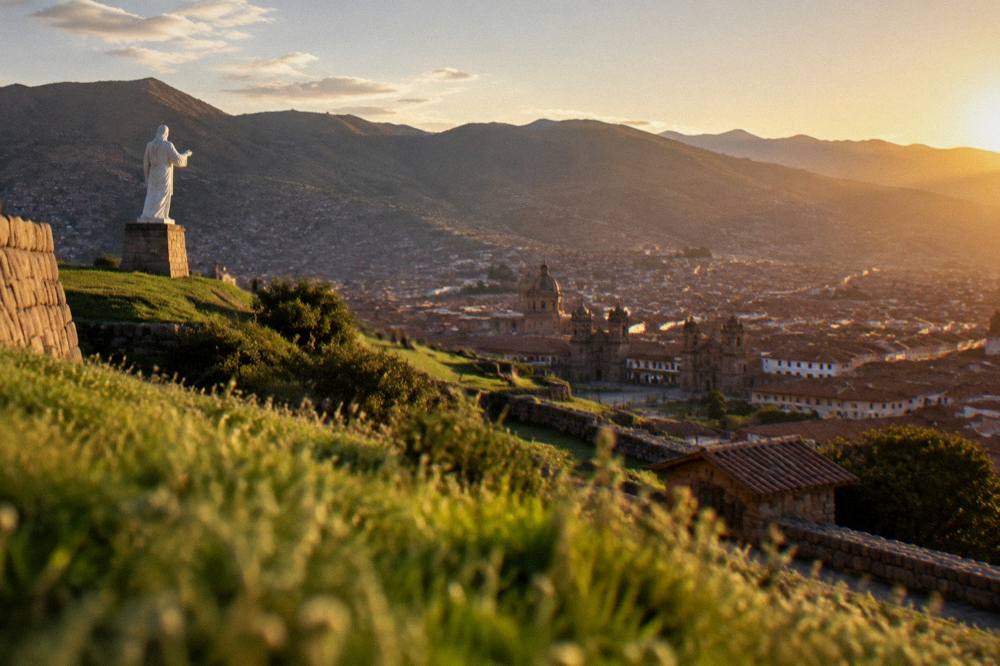
The walk up from San Blas toward the Cristo Blanco statue and the hills above the city is free, and the panoramic views over Cusco's red rooftops and the surrounding Andes cost nothing. The Cristo Blanco statue itself stands on a public hillside above the city. What is not free is the neighbouring archaeological zone: Saqsaywaman sits behind the Boleto Turistico's Circuit I, so a visitor walking up from the city can enjoy the views without a ticket but cannot enter the ruins.
The climb from the centre is a real walk at altitude, and the Cusco altitude guide explains why the first days in the city should be gentle: the CDC Yellow Book names Cusco as a rapid-ascent destination at roughly 3,350 m and prefers graded ascent wherever possible. The hills above San Blas put several hundred extra metres underfoot, which makes the viewpoint walk a better second-day activity than a first-morning one.
This site's Cusco viewpoints and photo spots page collects the full set of vantage points, including which are public hillside and which sit inside ticketed zones. The honest line is simple: the view is free, the ruins beside it are not.
Which Cusco Museums And Churches Are Free, And Which Are Not?
No Cusco museum or church on this site's verified list is confirmed free: the Inca Museum and the Museo de Arte Precolombino each charge about S/ 20 per peru.travel's published figures, the Qorikancha museum sits on the Boleto Turistico's Circuit II, and the Cathedral charges its own separate admission. The genuinely free cultural experiences in Cusco are the public spaces and the tip-based walks, not the buildings.
The Boleto Turistico's own FAQ lists its 16 sites across three circuits, and the city museums on Circuit II, including the Museo de Sitio Qorikancha, the Museo Historico Regional and the Museo de Arte Contemporaneo, are all inside that ticket. The ticket is sold in person only, at the COSITUC counter on Av. El Sol 103, daily from 07:30 to 18:00, and at most included sites. There is no online sale, a point COSITUC's FAQ states plainly.
| Cusco cultural site | Admission status | Source basis |
|---|---|---|
| Inca Museum | about S/ 20 foreign adult | peru.travel listing |
| Museo de Arte Precolombano | S/ 20 general, S/ 10 students | peru.travel listing |
| Qorikancha museum | Boleto Turistico Circuit II | COSITUC FAQ |
| Cusco Cathedral | Separate admission, not on the Boleto | Verified facts |
| Plazas, streets, Inca walls | Free public space | Public spaces |
The practical reading of that table: a visitor can spend days in Cusco on plazas, lanes, walls and viewpoints without a ticket, but the museum circuit and the Cathedral each carry their own cost. The Cusco museums page covers what each collection holds.
When Is The Best Time Of Year For Free Sightseeing In Cusco?
The best time for free, outdoor sightseeing in Cusco is the dry season, roughly May to September, when the WMO and SENAMHI historical normals for the Cuzco station show May to August bringing just 22.8 mm of rain combined, about 3.2 percent of the year's 707.8 mm. The wet season, roughly November to March, concentrates 71.9 percent of annual rain in December to March alone, which makes walking tours and viewpoint climbs wetter and less reliable.
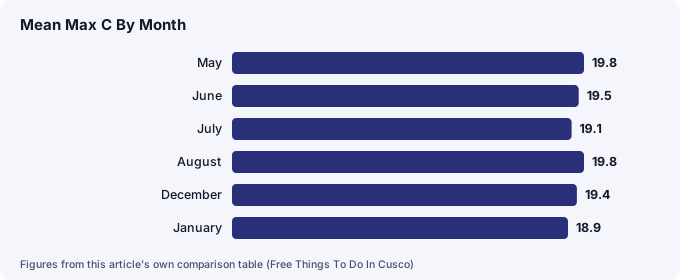
The trade-off is temperature. June and July are the driest months on the historical normal, with mean minimums of 0.3 C and 0.1 C respectively, so dry-season nights are frost-cold even though mean daily maximums hold between 19.1 and 19.8 C. Free sightseeing in Cusco is mostly outdoors, so the season matters more here than for a museum-heavy itinerary. The Cusco weather by month and best time to visit Cusco pages carry the full monthly table.
| Month | Mean max C | Mean min C | Rain mm |
|---|---|---|---|
| May | 19.8 | 2.5 | 8.7 |
| June | 19.5 | 0.3 | 1.5 |
| July | 19.1 | 0.1 | 4.0 |
| August | 19.8 | 1.6 | 8.6 |
| December | 19.4 | 6.4 | 122.7 |
| January | 18.9 | 6.6 | 145.3 |
Those figures come from the WMO World Weather Information Service record for the "Cuzco" station, data supplied by SENAMHI, and are a historical normal rather than a current forecast. The pattern they show is the reason the free walking tours and viewpoint walks are at their best in the southern-hemisphere winter months of June to August, which are dry, clear and cold at night, never "summer" in the northern-hemisphere sense.
Can You See Inca Ruins In Cusco Without Paying?
You can see Inca stonework in Cusco for free, but you cannot enter the main Inca ruins without a ticket: the visible Inca walls on Hatunrumiyoc and around the centre are public street fabric, while Saqsaywaman, Q'enqo, Puka Pukara and Tambomachay all sit behind the Boleto Turistico's Circuit I at S/ 70 for a foreign adult. COSITUC sells that partial ticket in person only, valid for one day on Circuit I.
This is the single most common confusion in budget planning for Cusco. The Inca walls inside the city, the foundations under colonial buildings, the twelve-angled stone: all street-level, all free. The four ruin sites on the hill above the city: all ticketed, all on Circuit I. A visitor on a strict zero-spend day can walk the lanes and the hillside viewpoints and still see Inca masonry, but the archaeological parks themselves are paid.
The four ruins of Cusco page and the Inca ruins in Cusco guide cover what each ticketed site holds. The Boleto Turistico page explains the integral and partial ticket structure in full, including the S/ 130 integral ticket valid for 10 days.
| Inca site or feature | Free or ticketed | Basis |
|---|---|---|
| Inca walls on Hatunrumiyoc | Free public street | Public space |
| Twelve-angled stone | Free, visible from street | Public space |
| Saqsaywaman | Boleto Circuit I, S/ 70 | COSITUC tarifario |
| Q'enqo, Puka Pukara, Tambomachay | Boleto Circuit I, S/ 70 | COSITUC tarifario |
| Qorikancha museum | Boleto Circuit II, S/ 70 | COSITUC tarifario |
What Free Things To Do In Cusco Work Well With Kids?
The free things to do in Cusco that work well with children are the plazas and pedestrian lanes around the centre, the San Pedro Market halls with their fruit and juice stalls, the tip-based GuruWalk tours of the historic centre, and the gentle upper lanes of San Blas, all public spaces with no admission charge. COSITUC's own FAQ adds that children are free to age 9 at the ticketed sites and pay the student price from 10 to 17 with ID, which softens the cost of the paid ruins.
The public plazas give children room to run that the narrow centre lanes do not, and the market is a sensory experience that costs nothing to walk through. The Cusco with kids guide builds full family days around these free anchors, mixing them with the paid sites where the child pricing applies.
One health note the CDC line in the verified facts supports: the CDC lists Cusco at approximately 3,350 m and advises talking to a doctor about high-altitude travel for children as for adults. Gentle first days, plenty of water and slow climbs are the sensible pattern for families as much as solo travellers.
How Do Free Days In Cusco Fit Into A Paid Itinerary?
The most efficient pattern is to anchor each day with one free element: a GuruWalk tip-based tour on day one for orientation, the plazas and San Pedro Market on the acclimatisation day, and the hillside viewpoints once the altitude feels settled, then layer the paid Boleto Turistico circuits and day trips around those free frames. This site's itinerary guides, from one to seven days, are built on exactly that mix, and the acclimatisation day page pairs free city walking with the reason the first 48 hours should be gentle.
Budget travellers should know which paid items genuinely earn their cost. The Boleto Turistico's S/ 130 integral ticket covers 16 sites over 10 days and makes sense for a full stay; the S/ 70 partials suit shorter visits. The Cusco costs page prices a whole trip on that basis, and the 1-day through 7-days itineraries slot the free items into each day's frame.
For days built around food, the cooking classes guide covers the paid options, including the featured class on this page, which pairs the free-to-enter San Pedro Market with a kitchen session.
What Does A Zero-Spend Day In Cusco Actually Look Like?
A realistic zero-spend day in Cusco looks like this: a morning GuruWalk tip-based tour of the historic centre, an hour browsing San Pedro Market, an afternoon walking the San Blas lanes and the Inca walls of Hatunrumiyoc, and a hillside walk toward the Cristo Blanco viewpoint before sunset over the red rooftops. Every element is a public space or a tip-based walk; the day costs nothing beyond food, water and the tip you choose to give the guide.
The morning walk is the anchor. GuruWalk's model means the listed price is zero and the guide is paid by tips, with How to Peru reporting S/ 20 to S/ 40 per person as a typical range for such walks in Peru. The market visit that follows needs no ticket, only restraint at the juice counter. The afternoon lanes and the viewpoint climb are free, though the getting around Cusco guide is worth reading for how the city's steep geography shapes any walking day.
Two things keep the day honest. The archaeological sites above the city stay behind their ticket, so a zero-spend day looks at Saqsaywaman from the hillside rather than entering it. And the weather decides how pleasant the outdoor hours are: the historical normals show the dry months of June and July delivering under 5 mm of rain each, while January averages 145.3 mm.
Where Do The Free Options End And The Paid Day Trips Begin?
The free options end at the city boundary: everything in this guide lives in Cusco's historic centre and its immediate hillside, while the day trips the region is famous for, Rainbow Mountain, Humantay Lake, the Sacred Valley and Machu Picchu, are all paid experiences with their own tickets, community fees or tour costs. Rainbow Mountain alone carries a community fee of S/ 25 to S/ 30 for foreigners, paid in cash, per the verified operator and peru.travel figures.
That boundary is worth respecting rather than blurring. The free city is rich; the paid region is spectacular; and pretending the second is free helps nobody. The Rainbow Mountain versus Palccoyo comparison covers two of the paid mountain day trips, and the single Machu Picchu page on this site, Machu Picchu, covers the citadel, whose tickets sell on the Ministry of Culture's platform and whose foreign adult prices run from about S/ 163 on standard routes.
For a low-cost middle ground between the free city and the paid peaks, the South Valley day trip on this page's trio is among the cheapest guided options on the roster, and the South Valley sites of Tipon and Pikillacta are themselves on the Boleto Turistico.
The South Valley trip deserves its own look, because it is the one paid option that behaves almost like a free day: a low per-person entry price on the booking page, a short loop out of the city, and sites that most first-time visitors never reach. Tipon's terraces and canals and the pre-Inca sprawl of Pikillacta sit on the Boleto Turistico, so a holder of the integral ticket adds almost nothing to the day's cost beyond the ride.
Common Questions About Free Things To Do In Cusco
Are The Free Walking Tours In Cusco Really Free?
They are free to join but tip based: GuruWalk, the platform that lists them, makes the pay-what-you-want model explicit, and the guides are paid by tips. How to Peru reports S/ 20 to S/ 40 per person as a typical tip range for free walking tours in Peru. No price is printed on the walk listings because none is charged up front.
Is Saqsaywaman Free To Visit?
No. Saqsaywaman sits on the Boleto Turistico's Circuit I, which COSITUC prices at S/ 70 for a foreign adult, valid for one day. The ticket is sold in person only, at the counter on Av. El Sol 103 and at most included sites, never online. The hillside views above the city near the site are free, but the ruins themselves are ticketed.
Is The Plaza De Armas In Cusco Free?
Yes, the Plaza de Armas is a public square and free at all hours. The buildings around it are not: the Cathedral charges its own admission and is not on the Boleto Turistico's 16-site list, while the Qorikancha museum sits on the ticket's Circuit II.
Can You See The Twelve-Angled Stone For Free?
Yes. The twelve-angled stone is a large, finely fitted polygonal stone set in an Inca wall on Hatunrumiyoc street, near the Plaza de Armas and San Blas, and it is visible from the public street at no cost. No ticket, queue or guide is needed to see it.
Is San Pedro Market Free To Enter?
Yes, San Pedro Market is a public market hall and free to enter and browse. Reported everyday prices inside run about S/ 8 to 15 for a menu del dia and about S/ 2 to 5 for a cup of coca tea, always as reported ranges, since individual stalls set their own prices.
What Is The Cheapest Way To See Cusco On A Budget?
Anchor each day on the free elements: a GuruWalk tip-based tour for orientation, the plazas and Inca walls of the centre, San Pedro Market for food, and the hillside viewpoints. Then decide which paid items earn their cost, most often the Boleto Turistico at S/ 130 integral or S/ 70 per circuit, and skip the rest. The city's public spaces carry the historic centre's best experiences at no charge.
Cusco rewards the visitor who spends nothing on the streets and everything on the peaks, and the balance between the two is what this site's Things To Do In Cusco Peru guides are built to help plan.