Andahuaylillas Church
Andahuaylillas is a quiet village in the South Valley of the Cusco region, and its church is one of the most decorated colonial interiors in Peru. This page reports what official sources and the site's verified data say about visiting it.
Short answer
Andahuaylillas is a village in the South Valley south of Cusco, Peru, whose church is celebrated for its painted interior. The church is not among the 16 sites on the COSITUC Boleto Turistico, and no verified opening hours or admission figure are published, so visitors should treat a stop here as part of a South Valley day trip and confirm arrangements with the operator's live listing.
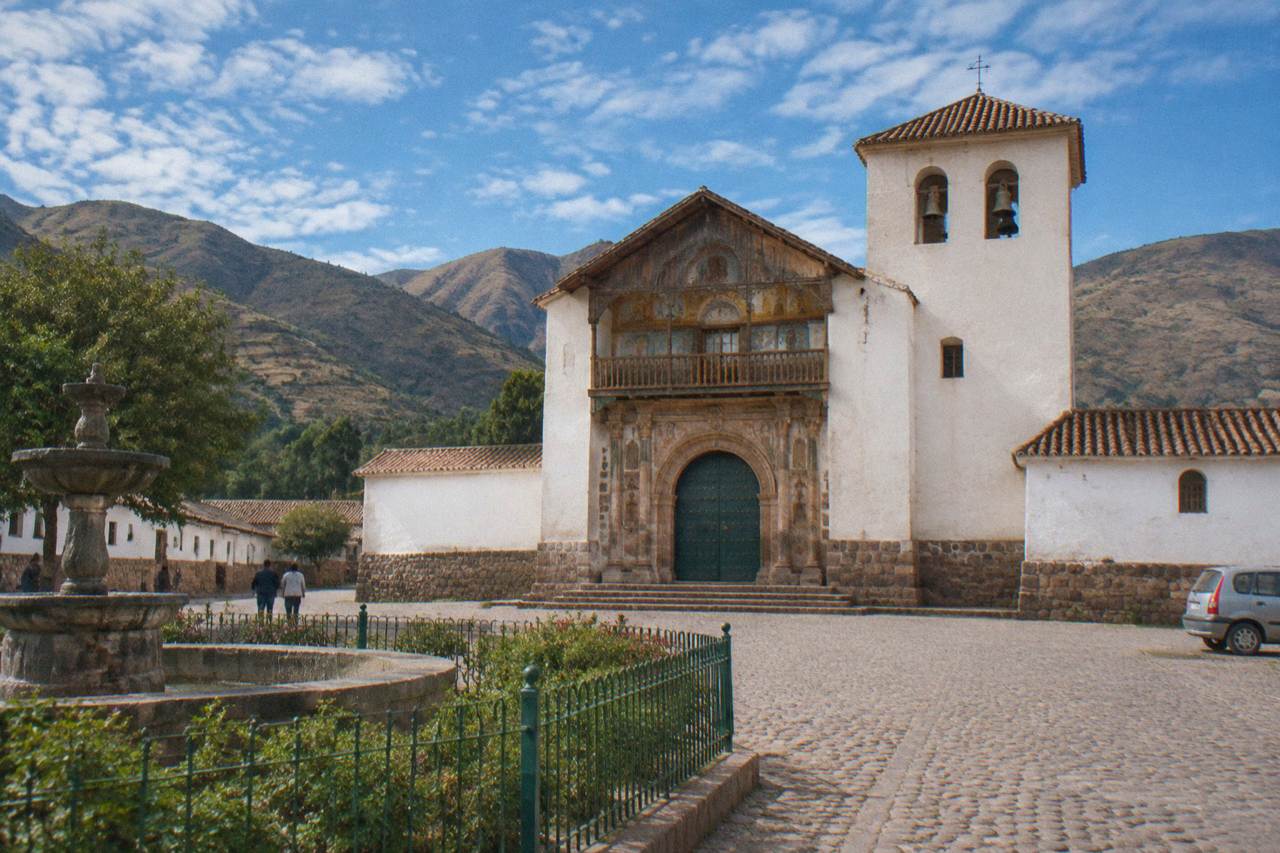
Andahuaylillas is a village in the South Valley of the Cusco region, in the southern Andes of Peru, and its church is one of the most painted, most gilded colonial interiors anywhere in the country. Cusco city, the historic regional capital at 3,335 m on the Plaza de Armas, sits to the north, and the South Valley spreads away from it along the road that eventually runs toward Puno and Lake Titicaca. The church stands on the village's small main square, a modest whitewashed facade that gives little hint of what is inside.
What Is The Andahuaylillas Church Near Cusco?
The Andahuaylillas church is a colonial-era church in the South Valley of the Cusco region, in the southern Andes of Peru, and it is best known for an interior covered in painted decoration and gilded woodwork. It is often described by travel writers as one of the finest village churches in the Andes. The building stands on the main square of Andahuaylillas, a quiet agricultural village whose setting is a world away from central Cusco.
The contrast is the whole point of the place. Cusco's own historic centre, a UNESCO World Heritage inscription of 1983, is dense with colonial churches built on Inca stone foundations, and the Cusco Cathedral and Qorikancha anchor that urban ensemble. Andahuaylillas belongs to a different tradition: the rural mission church, where decoration was used to speak to congregations in the countryside. Writers on Peruvian colonial art have long singled the church out for the density of its wall paintings, its carved and gilded altar work and its painted ceiling, and the nickname it often carries in guidebooks compares it to a famous painted chapel in Italy.
What this site can verify is narrower than what a guidebook can, and it is worth being clear about the difference. The facts pack behind this page holds no founding date, no builder, no dimensions and no measurement of any kind for the Andahuaylillas church, and this site's rules forbid inventing any of them. So the description here stays qualitative: a single-naved church, a painted interior, an ornate gilded altarpiece, and a ceiling whose decoration rewards standing in the middle of the nave and looking up. Visitors who want the full art-historical account should read the church's own materials on site.
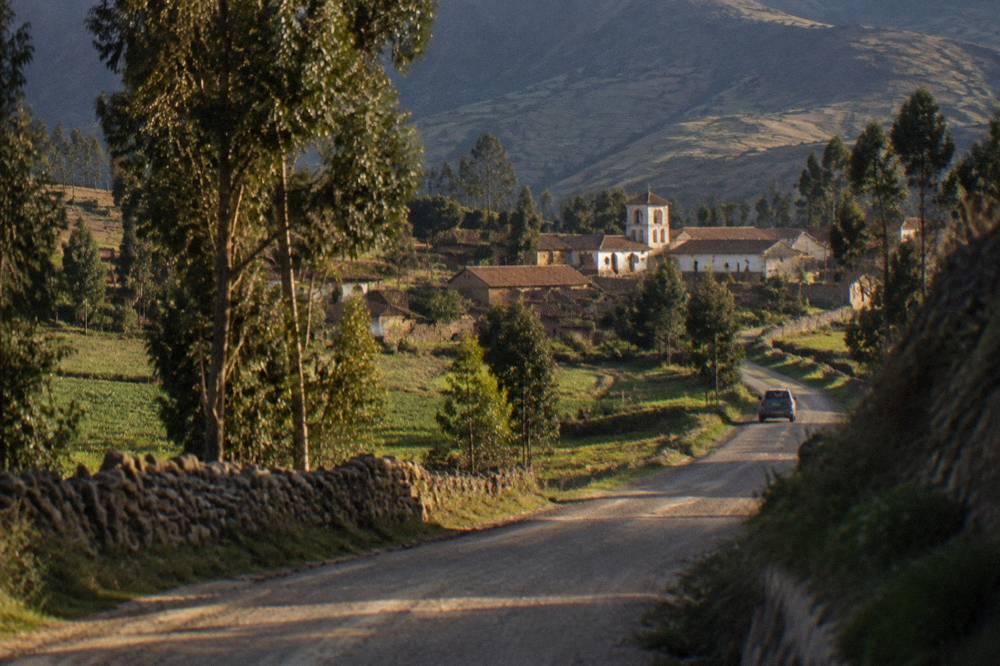
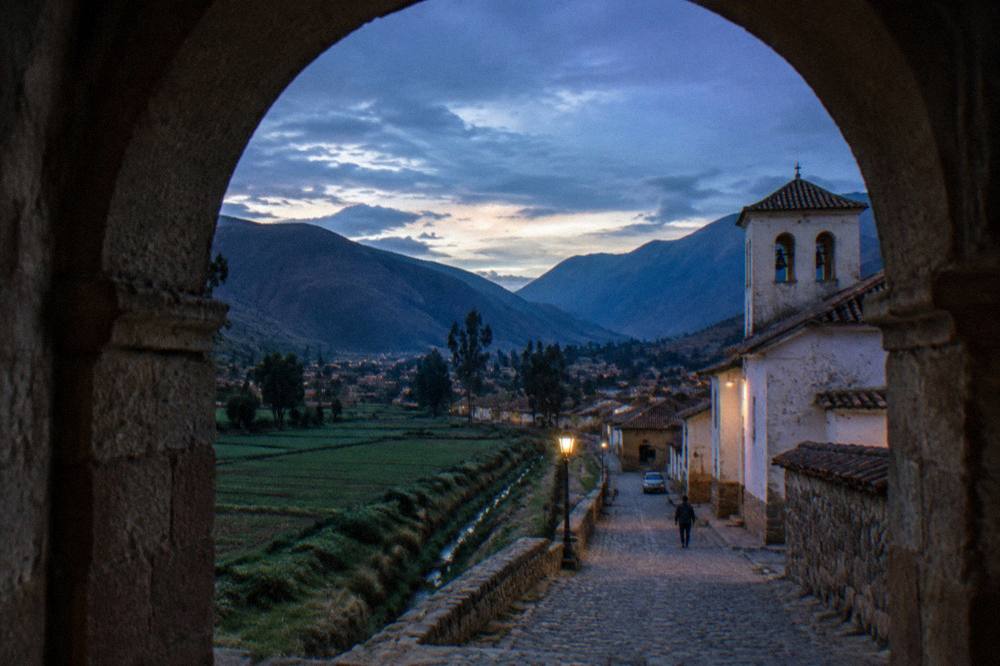
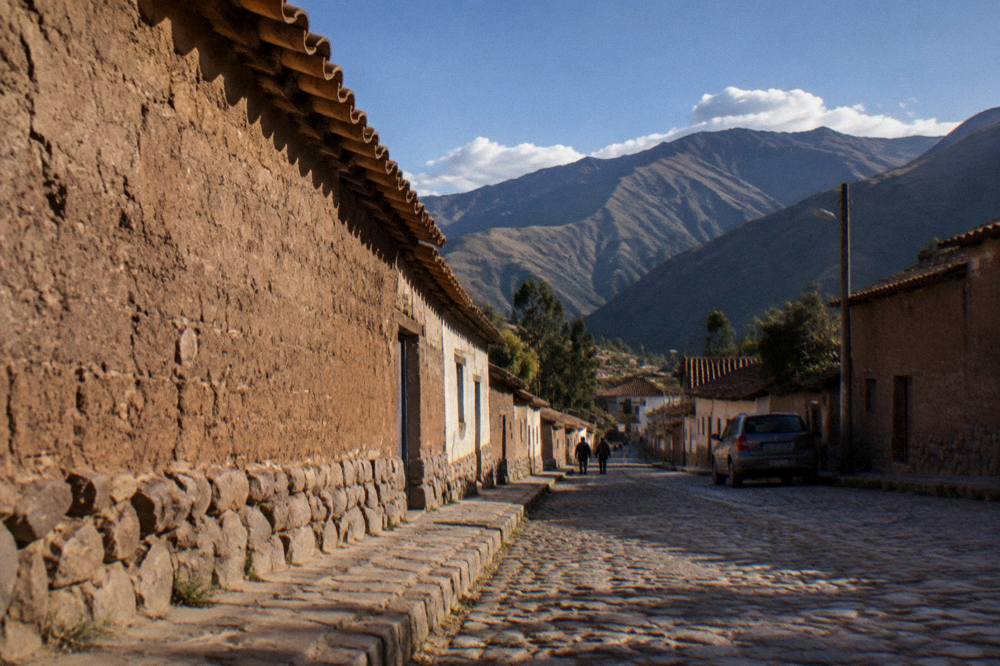
The village around the church is part of the experience. Andahuaylillas sits in a green valley at a lower elevation than Cusco, surrounded by fields, adobe walls and eucalyptus. The square in front of the church is shaded by trees, and the pace of the place is agricultural rather than touristy. Most people arrive as part of a South Valley day trip that also takes in the Inca sites of Tipon and Pikillaqta, and the church is the colonial chapter between two pre-Hispanic ones.
How Do You Get To Andahuaylillas From Cusco?
Andahuaylillas is reached from Cusco as a South Valley excursion, on the road that runs south from the city toward Puno, and the practical way to visit is a guided South Valley day trip or a private driver, since the village is not on the standard Sacred Valley tourist circuit. No verified public-transport fare or timetable for the route appears in this site's verified sources, so nothing exact is printed here.
The South Valley is the least touristy of Cusco's three main excursion zones. The Sacred Valley corridor to the northwest, through Pisac, Urubamba, Ollantaytambo and Chinchero, carries the bulk of the traffic, and the train to Machu Picchu runs along the same axis. The South Valley, by contrast, runs the other way, and its sites, Tipon, Pikillaqta and Andahuaylillas, see a fraction of the visitors. The MINCETUR open dataset of recorded site visits, which this site uses for its visitor figures, shows the scale of the difference: the dataset's top Cusco sites for 2025 include Machu Picchu, Saqsaywaman and Ollantaytambo with hundreds of thousands to over a million recorded entries each, while the South Valley sites sit far down the list.
Getting there independently is possible but takes planning. A taxi or private driver for the day is the other common option, and fares for that are agreed before the ride rather than published. The guided alternative removes all of that friction, and it is the common choice.
The site's roster carries a dedicated South Valley day trip product, and there are Sacred Valley options for comparison:
A South Valley day trip from Cusco typically strings the three sites together: the waterworks of Tipon, the pre-Inca planned settlement of Pikillaqta, and the painted church of Andahuaylillas, with lunch somewhere in between. The quad bike tour in the selection above is a different kind of South Valley-adjacent day out, running to Moray and the Maras salt mines on ATVs, and its operator's live listing shows the current price, rating and departure details. For travellers who prefer two wheels to a minibus, Check availability on the quad bike Moray and salt mines tour, whose own page on this site carries the full details.
What Do You See Inside The Andahuaylillas Church?
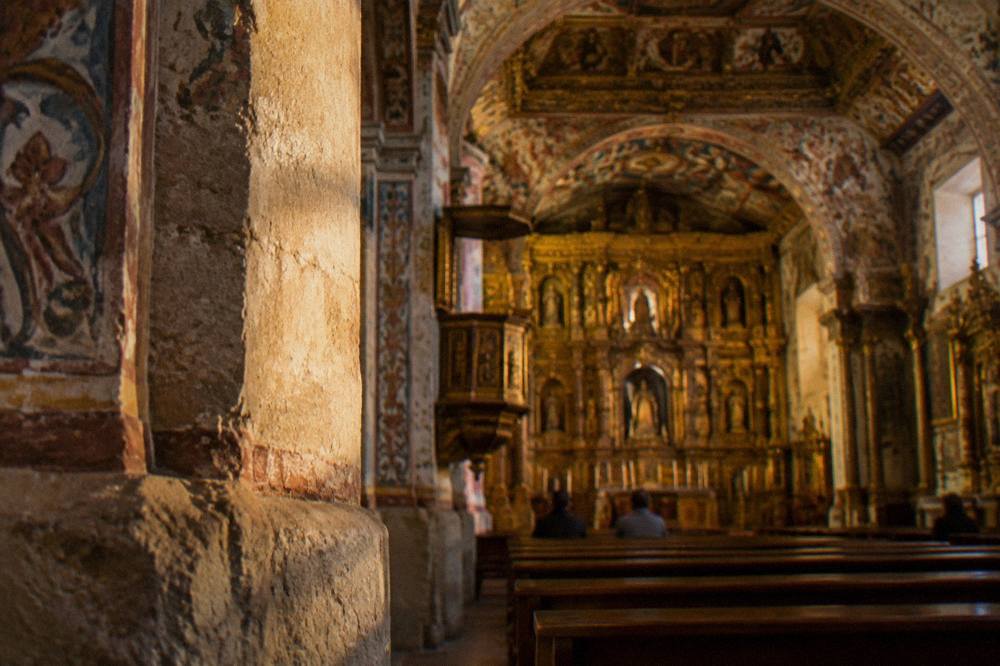
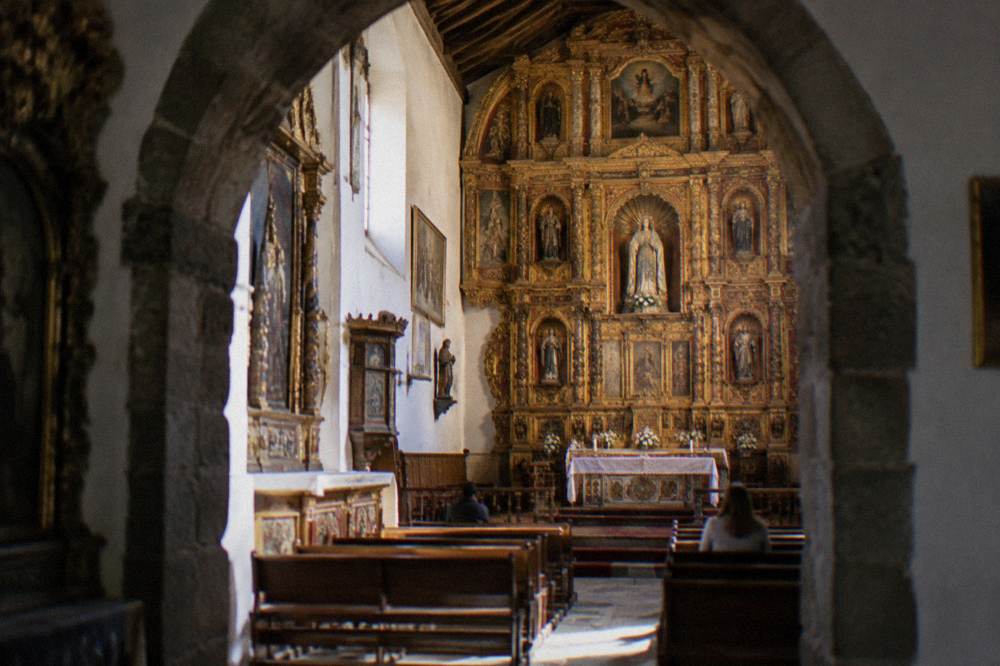
Inside the Andahuaylillas church a visitor finds walls covered in colonial-era painting, a richly gilded and carved altarpiece, and a decorated ceiling, an interior far more elaborate than the plain white facade suggests. The paintings include large narrative works and decorative schemes across the nave. No verified dimensions, artist names or dates for any individual work appear in this site's sources, so none are stated.
The first thing almost every description mentions is the surprise. From the square the church reads as a simple village building, white walls, a bell gable, a quiet entrance. Inside, the density of decoration is the opposite of that first impression. The nave's upper walls and ceiling carry painted schemes, the altarpiece is gilded and carved, and the overall effect is what earns the church its guidebook reputation. Photography inside churches in Peru is often restricted, and this site has no verified rule for Andahuaylillas specifically, so visitors should follow whatever the attendant or a local guide says on the day.
The painting programme is the church's claim to fame. Colonial Andean churches used painted interiors as teaching instruments, and Andahuaylillas is one of the fullest surviving examples of the approach in a rural setting. Writers on the subject describe didactic scenes, allegorical figures and ornamental borders working together across the walls. What this site will not do is attach a century, a school or a named painter to any of it, because the verified facts pack holds none of those, and invented history is the single most common fabrication on this destination.
The village square itself deserves a few minutes. The plane trees, the low adobe buildings around the edge and the views up the valley make it one of the more pleasant small squares in the Cusco region, and it is a place where the Andahuaylillas visit feels like a village stop rather than a site tick. The South Valley's lower elevation relative to Cusco also means the walking here is gentler than a day spent climbing around Saqsayhuaman or the hills above the Plaza de Armas.
For travellers building a fuller Cusco itinerary, the church pairs naturally with the city's other decorated interiors and museums, and the site's guides cover those in depth:
Is The Andahuaylillas Church On The Boleto Turistico, And What Does Entry Cost?
No verified source places the Andahuaylillas church on the COSITUC Boleto Turistico, and the 16-site official list does not include it, so a visit is arranged separately from the Boleto. No verified admission price or opening hours for the church appear in this site's sources, so this page prints none. The Boleto itself, S/ 130 integral for a foreign adult, covers the COSITUC's 16 listed sites, and the church is not one of them.
The Boleto Turistico del Cusco is run by COSITUC, and its official tarifario and FAQ pages, read directly for this site, define exactly what the ticket buys. The integral ticket for a foreign adult is S/ 130 (about US$38), valid for 10 days from the day of purchase, and the three partial circuits cost S/ 70 each (about US$20). Foreign students pay S/ 70 for the integral. Children are free to age 9, and ages 10 to 17 pay the student price with ID. The Boleto is sold in person only, at the counter on Av. El Sol 103 in Cusco, daily 07:30 to 18:00, and at most included sites. There is no online sale. The wider set of guides lives on Things To Do In Cusco Peru.
Here is the full official structure, from the COSITUC pages:
| Ticket | Price (foreign adult) | Validity | Sites |
|---|---|---|---|
| Integral (BTCI) | S/ 130 | 10 days | All 16 listed sites |
| Partial Circuit I | S/ 70 | 1 day | Saqsayhuaman, Q'enqo, Puka Pukara, Tambomachay |
| Partial Circuit II | S/ 70 | 2 days | Museo de Sitio Qorikancha, Museo Historico Regional, Museo de Arte Contemporaneo, Museo de Arte Popular, Centro Qosqo de Arte Nativo, Monumento a Pachacutec, Tipon, Pikillaqta |
| Partial Circuit III | S/ 70 | 2 days | Pisac, Ollantaytambo, Chinchero, Moray |
| Integral, foreign student | S/ 70 | 10 days | All 16 listed sites |
Two things follow from that table. First, the South Valley's two Inca sites, Tipon and Pikillaqta, are on the Boleto's Circuit II, so a South Valley day trip can partly run on a partial ticket if the visitor has not bought the integral. Second, Andahuaylillas is absent from the list, which is why this page treats the church as a separate stop with its own arrangements. Machu Picchu is likewise not on the Boleto; its tickets sell on the Ministry of Culture platform, and that topic belongs to the site's Machu Picchu page rather than here.
For everyday costs in the Cusco region, the verified ranges this site holds are these:
| Item | Reported range | Notes |
|---|---|---|
| Airport taxi to Cusco centre | about S/ 15 to 25 | Agreed before the ride |
| Menu del dia lunch | about S/ 8 to 15 | Reported range, varies by town |
| Cup of coca tea | about S/ 2 to 5 | Widely available in the region |
| Tourist SIM | about S/ 5 to 15 plus S/ 20 to 40 data | Reported range |
| Boleto Turistico integral | S/ 130 | Official COSITUC price, in person only |
The church's own entry arrangements, whatever they are on the day, sit outside every one of those figures, and a guided South Valley trip is the way to avoid having to work them out at the door.
What Else Is There To Do In Andahuaylillas And The South Valley?
A South Valley day from Cusco normally combines Andahuaylillas with the Inca water terraces of Tipon and the walled pre-Inca settlement of Pikillaqta, and the valley also holds smaller villages, markets and walking routes between them. Tipon and Pikillaqta are both on the Boleto Turistico's Circuit II. The South Valley overall receives far fewer recorded visitors than the Sacred Valley, which is its main practical attraction.
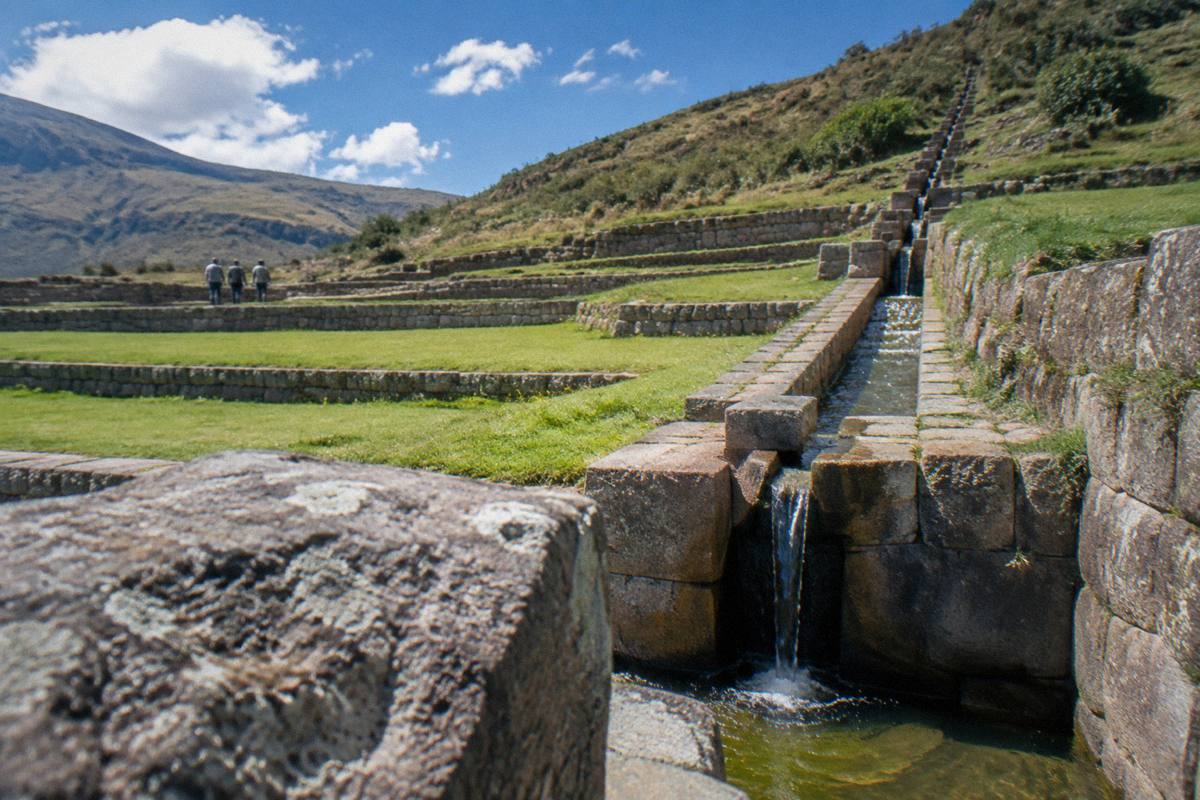
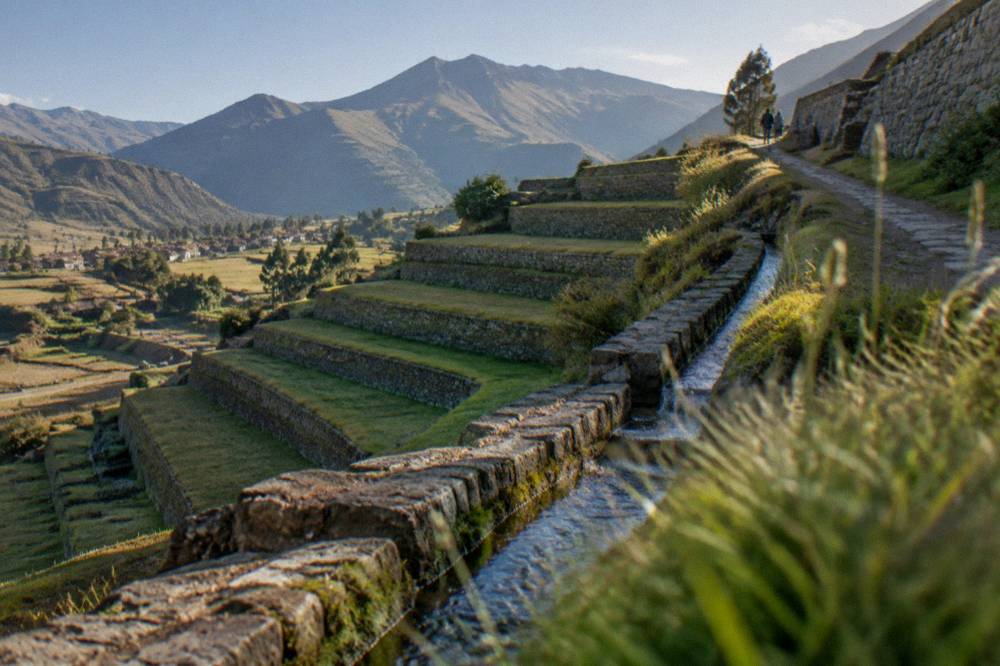
Tipon is the engineering stop. The site is a set of agricultural terraces and water channels cut into a hillside, and the water still runs through it. Pikillaqta is the scale stop: a planned, walled pre-Inca settlement of rectangular structures laid out across a dry plain, one of the largest sites of its kind in the Cusco region. Both are covered in their own pages on this site, Tipon and Pikillaqta, and both are on the Boleto Circuit II, which makes them the easiest pairing with the Andahuaylillas church on a single day.
Beyond the big three, the South Valley rewards slower travel. Urcos, further along the Puno road, holds a weekly market, and the smaller villages along the valley grow the produce that ends up in Cusco's San Pedro Market. The valley's lower elevation and greener fields make it a contrast with the high puna around Cusco, and travellers who have spent days at 3,335 m often notice the difference in how the walking feels. For elevation comparisons across the region, here are the figures this site holds:
| Place | Elevation | Source note |
|---|---|---|
| Cusco, Plaza de Armas | 3,335 m | PromPeru |
| Cusco airport | 3,310 m | OpenStreetMap |
| Moray | 3,385 m | Verified pack |
| Maras | 3,300 m | Verified pack |
| Pisac town | 2,972 m | Verified pack |
| Ollantaytambo town | 2,792 m | Verified pack |
| Machu Picchu citadel | 2,430 m | Official Machu Picchu site |
| Aguas Calientes town | about 2,040 m | Verified pack |
No verified elevation for Andahuaylillas itself appears in this site's sources, so none is printed; the valley's settlements sit below the Cusco basin, and the exact figure is not something this site will guess.
For visitors with more than a day to spare, the South Valley can be folded into a wider Cusco itinerary. The site's itinerary guides, from one day to a week, sequence the city, the Sacred Valley and Machu Picchu, and a South Valley morning slots most easily into a longer stay or into a day that would otherwise be lost to acclimatisation. The site's acclimatisation day guide covers the CDC Yellow Book's advice on graded ascent, which is worth reading before any first day in the region.
When Is The Best Time To Visit The South Valley Near Cusco?
The best time to visit Andahuaylillas and the South Valley is the dry season, roughly May to September, when clear days dominate, though the wet season, roughly November to March, brings greener fields and fewer fellow visitors. Cusco's climate is southern-hemisphere Andean: December to March carries 71.9 percent of the year's 707.8 mm of rain at the WMO and SENAMHI station record, while May to August together bring just 22.8 mm.
The climate table below is the historical normal for the "Cuzco" station, station 110 in the World Weather Information Service, with data supplied by SENAMHI, Peru's national meteorological service. The record is a historical normal and the averaging period is not stated on the record, so this site does not label it 1991-2020. Mean daily maximums stay between 18.8 and 20.9 C all year, which is the fact that surprises visitors most: the days are mild in every month.
| Month | Mean max C | Mean min C | Rain mm |
|---|---|---|---|
| Jan | 18.9 | 6.6 | 145.3 |
| Feb | 18.8 | 6.5 | 133.7 |
| Mar | 19.1 | 6.2 | 107.0 |
| Apr | 19.7 | 4.9 | 43.2 |
| May | 19.8 | 2.5 | 8.7 |
| Jun | 19.5 | 0.3 | 1.5 |
| Jul | 19.1 | 0.1 | 4.0 |
| Aug | 19.8 | 1.6 | 8.6 |
| Sep | 19.8 | 3.9 | 21.8 |
| Oct | 20.9 | 5.5 | 39.4 |
| Nov | 20.7 | 6.1 | 71.9 |
| Dec | 19.4 | 6.4 | 122.7 |
Two seasonal notes matter for a South Valley plan. First, June to August is winter in the southern hemisphere: dry, clear days, cold nights, and frost is common in June and July, when mean minimums sit at or near zero. A day trip to Andahuaylillas in those months means sun on the square by day and a cold start from Cusco. Second, the wet-season months bring rain, but the monthly totals show the shape of it: January and February are the wettest, and the rain typically falls in afternoon showers rather than all-day downpours. The painted interior of the church, it should be said, is one of the few Cusco-region sights that loses nothing to a wet afternoon.
What that means for packing, by season:
| Season | Months | Typical conditions | What to bring |
|---|---|---|---|
| Dry, winter | May to August | Clear days, near-freezing nights, frost June and July | Sun protection, warm layers for morning and evening |
| Shoulder | April, September, October | Mild days, light rain possible | Layers, light rain shell |
| Wet | November to March | Afternoon rain, green valley fields | Rain jacket, waterproof bag for camera |
Crowds follow the calendar rather than the weather. The MINCETUR dataset shows October 2025 drew 1.93 times the visitors of February 2025 at Machu Picchu, and the same dry-season concentration applies across the region. The South Valley is the quietest of the three excursion zones in every month, which is exactly why many travellers schedule it in the high season, when the Sacred Valley is at its busiest.
Should You Combine Andahuaylillas With A Longer Cusco Trip?
Andahuaylillas works best as a half-day or full-day South Valley chapter inside a Cusco trip of four days or more, and it slots naturally between city sightseeing and a Sacred Valley or Machu Picchu segment. For shorter trips the South Valley is usually the first thing cut, since the Sacred Valley and Machu Picchu hold the headline sights. The site's itinerary guides sequence all of these options.
A typical longer trip runs in a well-established order. The first day in Cusco is light, the city's historic centre and its museums taken slowly while the body adjusts to 3,335 m, and the CDC Yellow Book's preference for graded ascent is the reason the site's acclimatisation guide reads the way it does. Then comes the Sacred Valley, then Machu Picchu, and the South Valley either fills a spare day or replaces a second Sacred Valley day for travellers who have seen the main sites already.
For travellers who want more than sightseeing, the region's adventure roster is deep. The quad bike Moray and salt mines tour is the adventure option nearest to the South Valley axis, and the site's adventure activities guide covers the full range, from rafting on the Urubamba to paragliding over the Sacred Valley. Multi-day treks to Machu Picchu, the Inca Trail, the Salkantay and the Lares routes, are covered in their own guides, and the Inca Trail's rules matter enough that they get their own page: permits sell only through licensed agencies, the daily quota is 500 people including porters and guides, and the trail closes every February.
The Inca Jungle option in the selection above is the adventure multi-day for travellers who want bikes, rafting and hiking combined rather than a single long walk, and its operator's live listing shows the current price and departure schedule. Travellers weighing it against the other Machu Picchu routes can read the site's best Cusco tours guide for the full comparison, and the product card below prints the details.
Common Questions About The Andahuaylillas Church Near Cusco
Is the Andahuaylillas church worth visiting from Cusco?
For travellers with three or more days in the Cusco region, yes: the painted interior is one of the standout colonial interiors in Peru, and the South Valley day that contains it is the quietest of the region's standard excursions. For a two-day trip built around Machu Picchu, the South Valley is usually the thing that gets cut.
How far is Andahuaylillas from Cusco?
Andahuaylillas lies in the South Valley south of Cusco, on the road toward Puno, and day trips run there and back from the city. This site's verified sources hold no distance or journey-time figure for that exact route, so none is printed here; a guided South Valley tour states its schedule on the operator's live listing.
Is the Andahuaylillas church on the Boleto Turistico?
No. The COSITUC's official 16-site list does not include Andahuaylillas. The South Valley's Inca sites, Tipon and Pikillaqta, are on the Boleto's Circuit II, but the church is visited separately.
Can you visit Andahuaylillas, Tipon and Pikillaqta in one day?
Yes, and that is the standard way to do it. The three sites make up the classic South Valley day trip from Cusco, with the two Inca sites on the Boleto Circuit II and the church visited as a separate stop.
What is the best time of year to visit Andahuaylillas?
The dry season, roughly May to September, brings the clearest days, with May to August carrying just 22.8 mm of rain between them at the WMO and SENAMHI station record. The wet season, November to March, brings greener valley fields and fewer visitors, at the cost of afternoon rain.
Are there guided tours to the South Valley from Cusco?
Yes. The site's roster carries a South Valley day trip from Cusco, and guided Sacred Valley and adventure options run daily. Prices, ratings and schedules for every product render from the live listings on this site, and the operator's page shows current availability.
The Andahuaylillas church is the Cusco region at its quietest and most surprising: a plain white facade on a village square, and one of the most painted church interiors in the Andes behind it. Paired with Tipon and Pikillaqta it makes a full, low-crowd day out of the city, and it is a chapter of a Cusco trip that many visitors never know they missed.