Chinchero
Chinchero is the Sacred Valley's weaving town, a Boleto Turistico Circuit III site in the Cusco region of Peru, where Inca terraces and a colonial church on Inca walls sit above a living textile tradition.
Short answer
Chinchero is a weaving town on the high plateau of Peru's Sacred Valley, in the Cusco region, and one of the 16 sites on the Boleto Turistico's Circuit III. A foreign adult pays S/ 70 for the Circuit III partial, about US$20, or S/ 130 for the 10-day integral ticket, about US$38, bought in person only.
Chinchero is a weaving town on the high plateau of Peru's Sacred Valley, in the Cusco region of the southern Andes, and one of the 16 sites covered by the city's Boleto Turistico. The COSITUC tarifario, the official price list of the committee that runs that ticket, places it on partial Circuit III alongside Pisac, Ollantaytambo and Moray. That single fact shapes everything about a visit: what entry costs, how long the ticket lasts, and what else the same fee opens across the valley.
What Is Chinchero And Why Does It Matter To A Cusco Trip?
Chinchero is a weaving and farming town in the high country of the Sacred Valley, in the Cusco region of Peru, and the COSITUC tarifario places it on partial Circuit III of the Boleto Turistico alongside Pisac, Ollantaytambo and Moray. Its Inca agricultural terraces, the colonial church that stands on Inca wall foundations, and its living textile tradition make it the valley's main weaving stop.
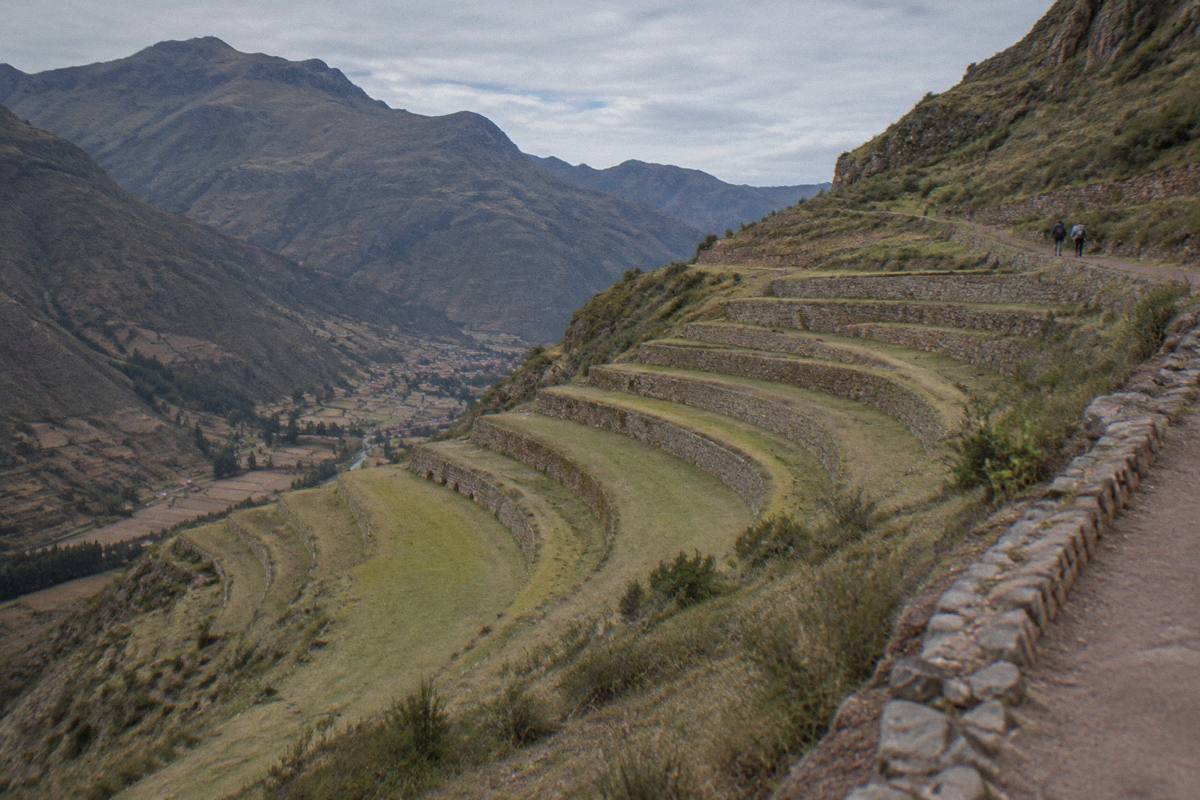
The setting is high ground. Measured elevations exist for Chinchero's neighbours, Moray at 3,385 m and Maras at 3,300 m, and for the valley floor towns below it, Pisac at 2,972 m and Urubamba at 2,870 m, but no separate figure for Chinchero itself, so this page leaves that number out rather than guess. What the record does show is character. Wide agricultural terraces step down the hillside, a colonial church rises on Inca stone foundations, and weaving with hand-spun wool and natural dyes runs through the town's daily life.
That layering is the Andean pattern the whole region shows. In the historic centre of Cusco itself, colonial churches stand on Inca stone foundations, and Chinchero carries the same combination in a smaller, quieter frame. The town sits on the plateau above the valley proper, which is why a visit usually pairs it with the sites on the floor: the circular terraces of Moray and the salt pans of Maras.
Each stop on that circuit has its own page on Things To Do In Cusco Peru, and this one covers Chinchero end to end: the ticket, the site, the weavers, the comparison with Pisac, the seasons and the airport that carries the town's name.
Is Chinchero On The Boleto Turistico And What Does Entry Cost?
Yes. Chinchero is one of the 16 sites on the Boleto Turistico del Cusco, on partial Circuit III, the Sacred Valley circuit. A foreign adult pays S/ 130 for the integral ticket, about US$38, valid 10 days, or S/ 70, about US$20, for the Circuit III partial, with a reported validity of 2 days. COSITUC sells the ticket in person only, never online.
The ticket is the practical answer to almost every Chinchero question. The COSITUC FAQ states that the integral ticket covers all 16 sites and that seeing them all needs a minimum of three days, while a partial circuit covers its own list only. The partials differ in length: Circuit I, the Saqsaywaman circuit around Sacsayhuaman, Q'enqo, Puka Pukara and Tambomachay, is reported as a 1-day ticket, while Circuits II and III are reported at 2 days each.
| Boleto Circuit | Sites Included | Reported Validity |
|---|---|---|
| I Saqsaywaman | Saqsaywaman, Q'enqo, Puka Pukara, Tambomachay | 1 day |
| II City | Museo de Sitio Qorikancha, Museo Historico Regional, Museo de Arte Contemporaneo, Museo de Arte Popular, Centro Qosqo de Arte Nativo, Monumento a Pachacutec, Tipon, Pikillaqta | 2 days |
| III Sacred Valley | Pisac, Ollantaytambo, Chinchero, Moray | 2 days |
Circuit II is the city circuit, and its anchor is the Qorikancha site museum at Qorikancha, the Inca temple beneath the church of Santo Domingo. Circuit III is the one that matters here: one partial ticket, S/ 70, opens Chinchero, Pisac, Ollantaytambo and Moray, which is the full set of major valley archaeological sites in a single purchase.
The price list by holder, from the COSITUC tarifario:
| Ticket Holder | Price | Notes |
|---|---|---|
| Foreign adult, integral | S/ 130 | 10 days, all 16 sites |
| Foreign student, integral | S/ 70 | Student ID required |
| Foreign tourist, any partial circuit | S/ 70 each | Circuit I, II or III |
| National tourist, integral | S/ 70 | 10 days |
| National student | S/ 40 | Student ID required |
| National tourist, partial | S/ 40 | Per circuit |
| Children to age 9 | Free | No ticket needed |
| Ages 10 to 17 | Student price | ID required |
Only students get a discount. The COSITUC FAQ is explicit that there is no teacher-card or youth-card rate, and children are free only to age 9. The Centro Qosqo de Arte Nativo, one of the Circuit II sites, charges from age 6, a detail worth knowing if that stop is on the list.
Purchase is the part that catches people out. The Boleto Turistico is not sold online at all. The main counter sits at Av. El Sol 103, the Galeria Turistica block in Cusco, open daily from 07:30 to 18:00, and most included sites sell the ticket at their own entrance as well. Four exceptions do not: the Museo Historico Regional, the Museo de Arte Popular, the Museo de Arte Contemporaneo and the Centro Qosqo de Arte Nativo. Validity starts on the day of purchase, so the ticket should be bought the day the circuit begins, not days ahead.
What Do You See At The Chinchero Archaeological Site?
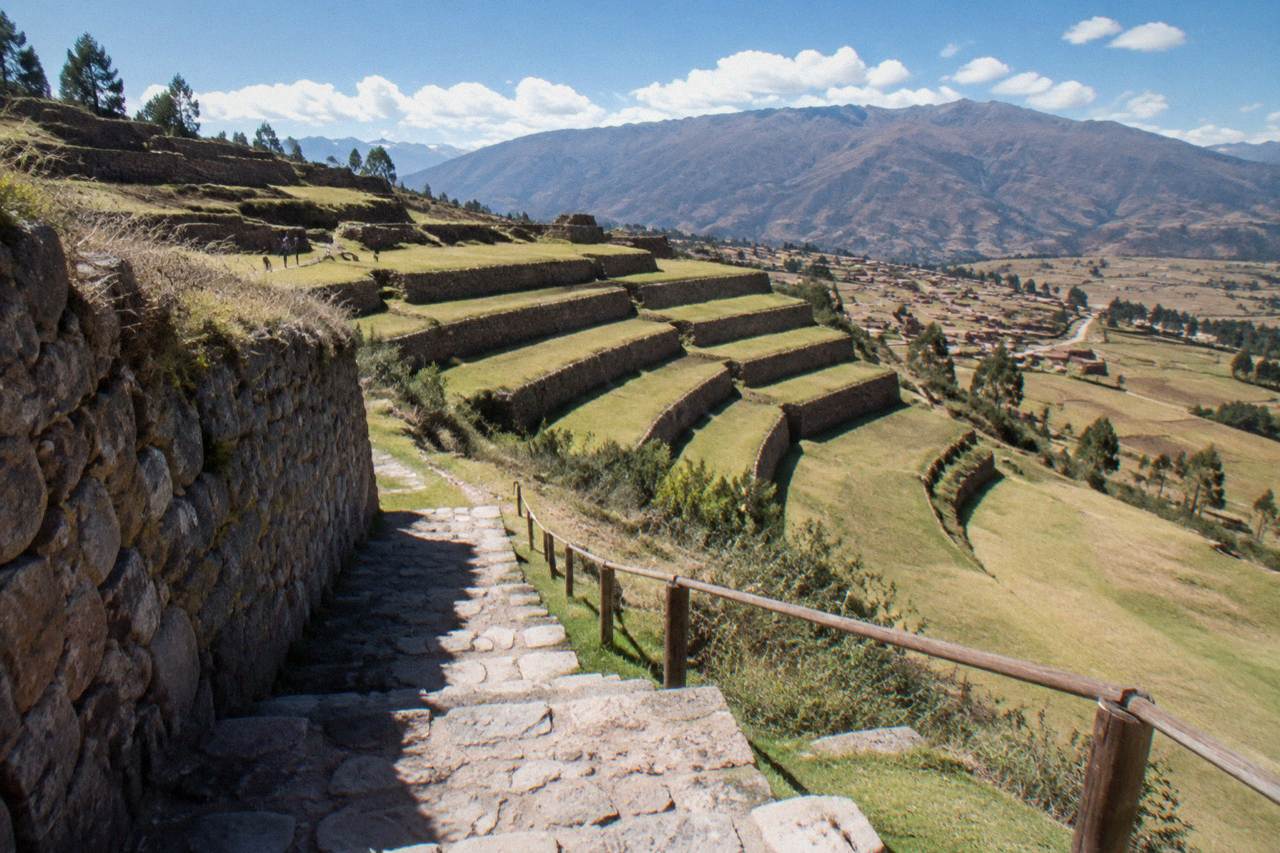
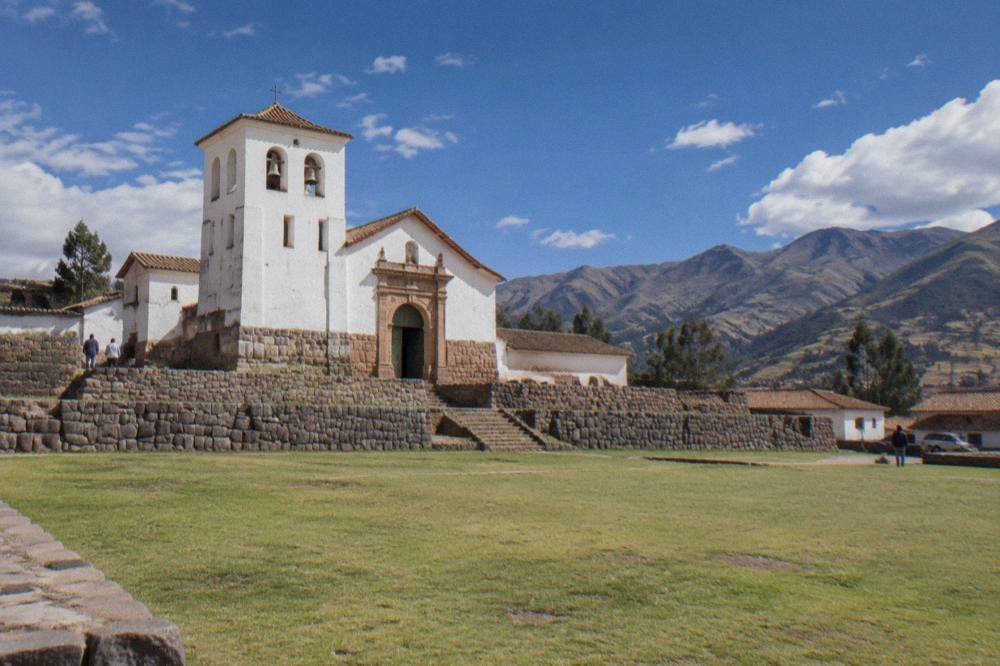
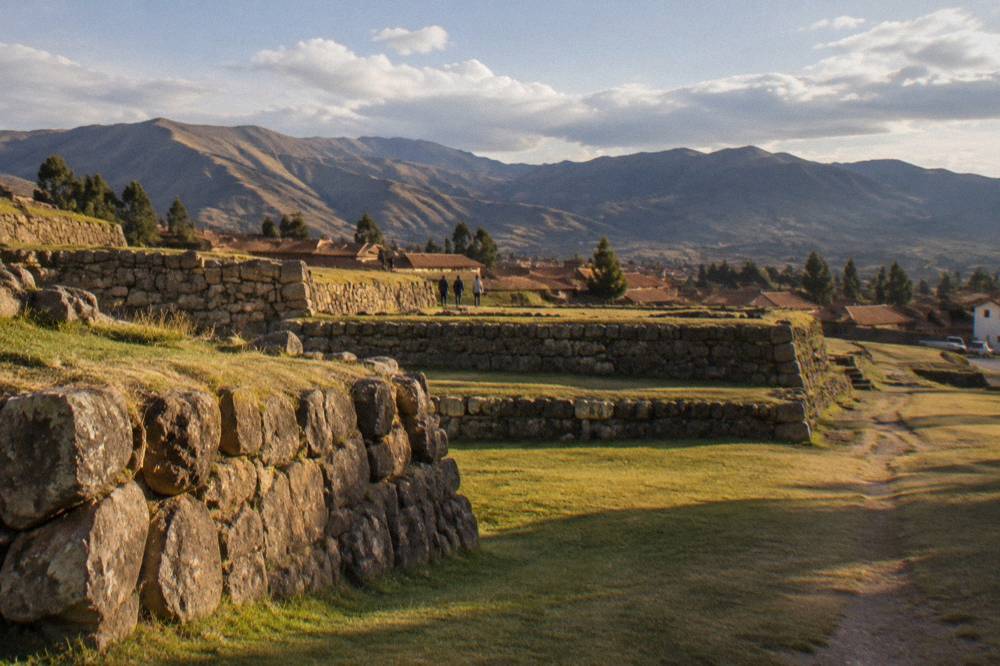
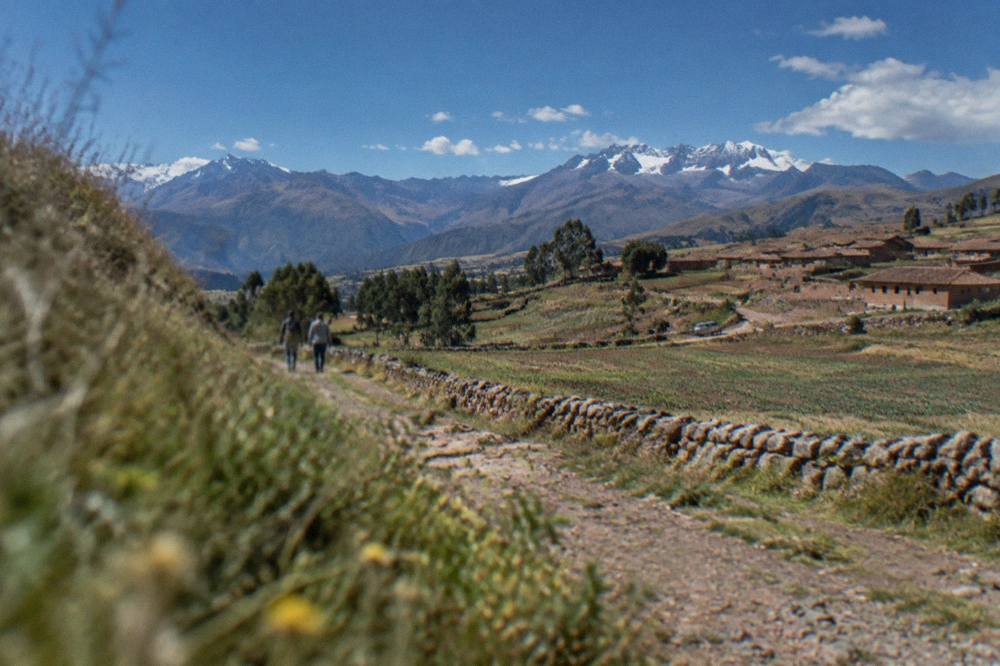
The site centres on wide Inca agricultural terraces cut into the hillside, finely fitted stone retaining walls, and the colonial church that stands on Inca foundations above them, the same pattern the historic centre of Cusco shows where colonial churches rose on Inca stonework. Entry runs through the Boleto Turistico's Circuit III, and the terraces, the church platform and the long views over the valley are the visit.
The terraces are the substance of the archaeological site. They are agricultural works, built to hold soil and water on a steep Andean slope, and they frame the town on the side that faces the valley. The stonework in the retaining walls is the finely fitted polygonal style the region is known for, and the platform the church occupies is Inca masonry that predates the building above it by an unknown stretch of time.
The church itself is the visual anchor. Colonial churches standing on Inca foundations are a documented pattern across the Cusco region, and Chinchero is one of the clearest examples a valley visitor will see: a single building where both layers are visible at once. The interior is described in general terms across travel literature as richly decorated, and the plain statement that carries to this page is simply that the structure sits on Inca walls, above Inca terraces, at the centre of a living town.
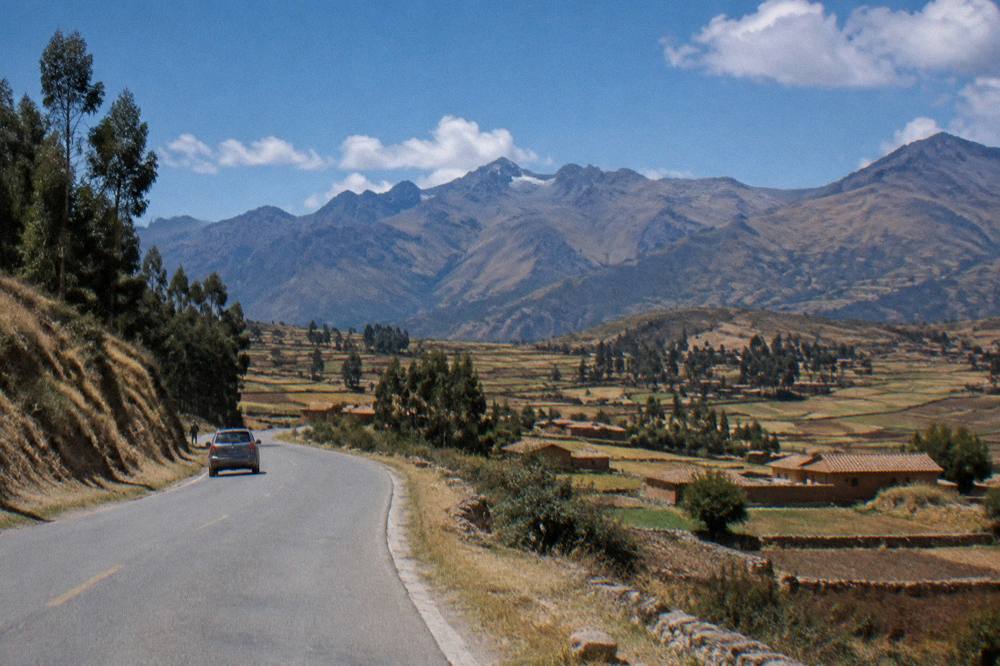
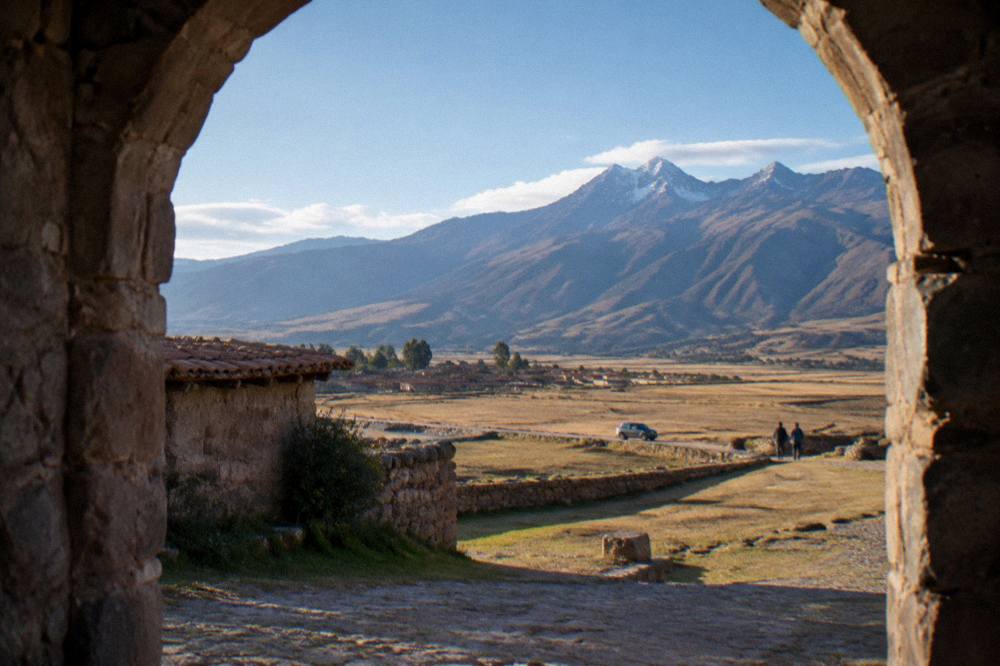
Around the site, the plateau opens. On a clear day the view runs across the valley toward the snow peaks of the Cordillera Vilcabamba, and the light at this altitude is the reason photographers give the stop time. The site is compact, which is what makes it work as one leg of a valley day rather than a destination on its own.
Why Is Chinchero Known For Weaving And Natural Dyes?
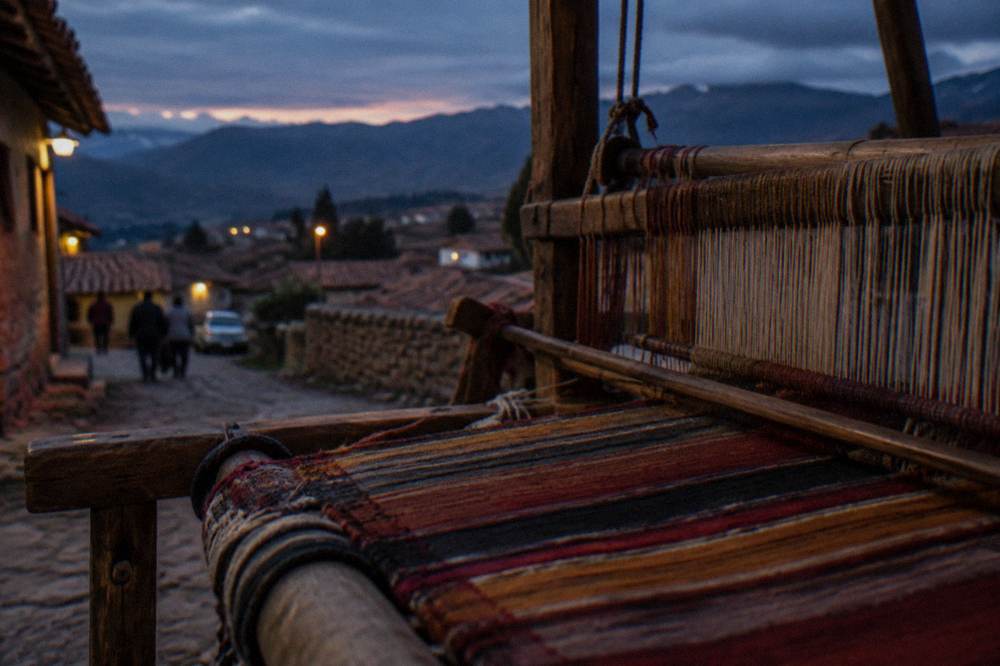
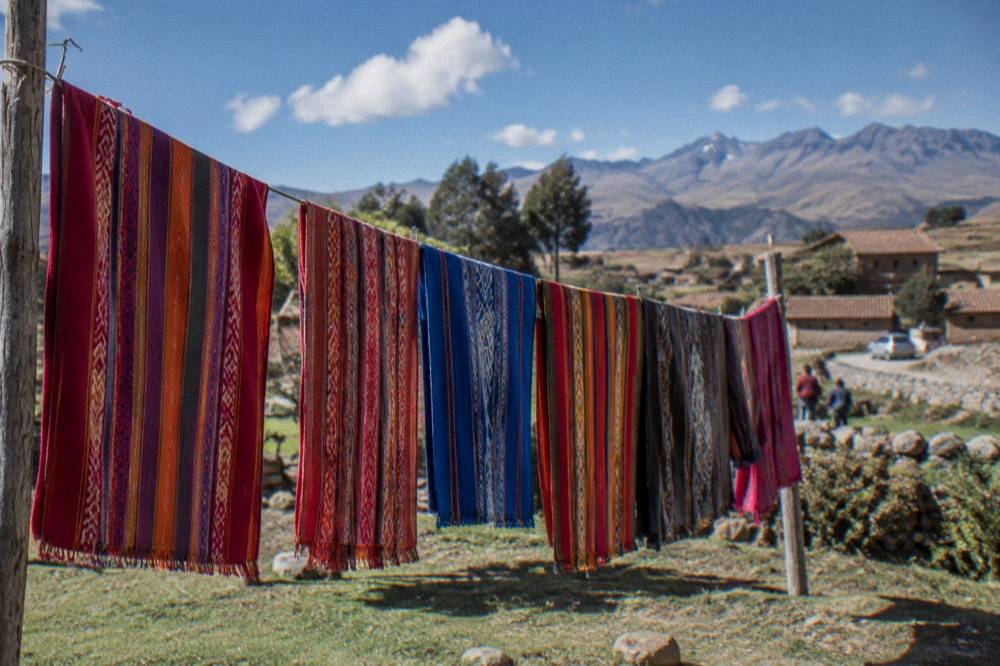
Chinchero's identity is textile: the town is known for hand-spun alpaca and sheep wool coloured with natural dyes and woven into cloth, and the weavers' demonstration is the stop's living half alongside the terraces. The roster of Cusco products treats it that way by name, among them a Moray, Maras salt mines and Chinchero weavers tour from Cusco.
The weaving claim is not decorative filler. A sold product on this site's roster is named for Chinchero's weavers, and its route pairs the stop with Moray and the Maras salt mines, which is the strongest available signal of what a visit actually contains: people spinning wool, dyeing it with plant and mineral colour, and weaving it on looms. The same tradition has a showcase nearer the city at Awana Kancha, the textile attraction on the road out of Cusco, where the South American camelids whose wool is used can be seen up close.
For buyers, the general rule that travels with Andean textiles is that hand-spun, naturally dyed pieces cost more than machine-made ones, and the difference is visible in the weave. This site carries a full guide to what to buy in Cusco elsewhere in its collection. No price for any individual textile at Chinchero is sourced on this page, so none is printed.
The practical way to see the weavers with the logistics handled is the featured valley product for this article, the Moray, Maras salt mines and Chinchero weavers tour, which covers the plateau trio in one guided loop from Cusco: Check availability.
How Do You Visit Chinchero From Cusco In A Day?
Chinchero is visited as one stop on a Sacred Valley day circuit from Cusco: the roster carries valley day trips that combine it with Moray and the Maras salt mines, and wider circuits that add Pisac and Ollantaytambo, all four of which sit on the Boleto's Circuit III partial. Independent entry is possible with the same ticket, bought in person in Cusco before travel.
The plateau pairing is the common shape. Moray, the circular terraced depressions that sit at 3,385 m, and the Maras salt mines, the working salt pans at 3,300 m, cluster on the same high ground as Chinchero, and the products sold from Cusco link the three in a single loop. The Maras salt mines are not among the 16 Boleto sites, so their fee is separate and paid on the spot.
| Sacred Valley Site | Entry | What You Pay |
|---|---|---|
| Chinchero | Boleto Turistico, Circuit III | S/ 70 partial or S/ 130 integral |
| Moray | Boleto Turistico, Circuit III | Same ticket |
| Pisac | Boleto Turistico, Circuit III | Same ticket |
| Ollantaytambo | Boleto Turistico, Circuit III | Same ticket |
| Maras salt mines | Not on the boleto | S/ 15 to 20, reported 2026 operator rates |
Guided options run from the plain to the loaded. A straightforward circuit covering Pisac, Ollantaytambo, the salt mines and Moray in one day is the standard shape:
A buffet lunch and a Portuguese-speaking guide option also exist on the roster for the same valley ground:
Independent travel is the alternative, and the honest framing is that this page carries no verified fare, timetable or journey time for any road route from Cusco to Chinchero, so none is printed. What the record does hold is the ticket logic: buy the Circuit III partial or the integral in Cusco, carry it to the site, and let the day's shape follow the plateau. Visitors heading onward from the valley to the citadel can read the site's single Machu Picchu day trip page for that leg of the route.
Chinchero Or Pisac: Which Sacred Valley Stop Fits Your Trip?
Both are Boleto Circuit III sites, and the choice is between the weaving town and terraces of Chinchero and the hillside archaeological park and valley town of Pisac, which sits at 2,972 m. The MINCETUR open dataset counted 560,578 recorded visits to Pisaq in 2025; it does not list Chinchero separately, so there is no measured crowd comparison, only the character of each stop.
Pisac is the bigger name on the same ticket. Its hillside terraces and the town below them form one of the valley's major parks, and the MINCETUR figures show the scale of its pull. Chinchero is the quieter, higher stop: fewer structures, more living craft, and a church platform instead of a full hillside complex. A traveller choosing one on a short visit is choosing between archaeology at scale and textiles in a working town.
The elevations the record does carry, all from verified sources:
| Place | Elevation |
|---|---|
| Plaza de Armas, Cusco | 3,335 m |
| Moray | 3,385 m |
| Maras | 3,300 m |
| Pisac town | 2,972 m |
| Urubamba | 2,870 m |
| Ollantaytambo | 2,792 m |
The pattern in that table is the valley itself: Cusco and the plateau sit high, around the 3,300 to 3,400 m mark, and the floor drops away toward Ollantaytambo. Anyone acclimatising should read the site's guide to Cusco altitude before planning a plateau day, since the CDC Yellow Book names Cusco as a rapid-ascent destination and prefers graded ascent.
For context on how the valley's sites actually rank in visitor volume, the MINCETUR open dataset for 2025:
| Cusco Site, 2025 | Recorded Visits |
|---|---|
| Santuario Historico de Machupicchu | 1,542,350 |
| Ciudad Inka de Machupicchu | 1,479,506 |
| Explanada de Saqsaywaman | 944,008 |
| Parque Arqueologico de Ollantaytambo | 891,526 |
| Moray | 773,916 |
| Pisaq | 560,578 |
A salt mines and valley circuit with a buffet lunch is the third guided shape on the roster for this ground:
When Is The Best Time Of Year To Visit Chinchero?
The dry season, roughly May to September, is the clearest window: at the WMO and SENAMHI Cuzco station, a historical normal, May to August together bring just 22.8 mm of rain against 707.8 mm for the year, while December to March carries 71.9 percent of it. Mean daily maximums stay between 18.8 and 20.9 C all year, and June and July nights drop to around freezing, with frost common.
This is the Southern Hemisphere, high Andes, so the year runs opposite to Europe and North America. June to August is winter: dry, clear and cold at night, with frost in June and July. November to March is the wet stretch, and December to March alone delivers roughly seven tenths of the year's rain. The plateau light that makes Chinchero's terraces photograph well is a dry-season phenomenon, and the wet season's afternoon cloud can close the long views toward the snow peaks entirely.
| Month | Mean Max C | Mean Min C | Rain mm |
|---|---|---|---|
| Jan | 18.9 | 6.6 | 145.3 |
| Feb | 18.8 | 6.5 | 133.7 |
| Mar | 19.1 | 6.2 | 107.0 |
| Apr | 19.7 | 4.9 | 43.2 |
| May | 19.8 | 2.5 | 8.7 |
| Jun | 19.5 | 0.3 | 1.5 |
| Jul | 19.1 | 0.1 | 4.0 |
| Aug | 19.8 | 1.6 | 8.6 |
| Sep | 19.8 | 3.9 | 21.8 |
| Oct | 20.9 | 5.5 | 39.4 |
| Nov | 20.7 | 6.1 | 71.9 |
| Dec | 19.4 | 6.4 | 122.7 |
The table is a historical normal supplied by SENAMHI, Peru's weather service, to the World Meteorological Organization for the Cuzco station, and it is not labelled to any modern averaging period. Two practical readings follow from it. Daytime is mild all year, never leaving the 18.8 to 20.9 C band, so a Chinchero visit is never about heat. Nights are the variable: a January night averages 6.6 C while a July night averages 0.1 C, so the dry season trades clear skies for cold mornings, and layers are the whole strategy. The site's month-by-month guide to Cusco weather carries this record in full.
What Is The Status Of The New Chinchero Airport?
The new Chinchero airport is not operating. Progress was reported at about 38.9 percent in mid-2026, with completion targeted for 2028 and flights expected in 2028 to 2029. Until it opens, every Cusco flight uses Alejandro Velasco Astete International Airport, about 6 km from the Plaza de Armas and 15 to 20 minutes by taxi, and the flight from Lima takes about 1 h 15.
The airport project is the reason Chinchero's name has travelled beyond the valley in recent years, and it is also the easiest place to state a wrong fact. It has not opened, it did not open in 2025 and it is not opening in 2026. Construction progress was reported at about 38.9 percent in mid-2026, with the control tower and terminal contracts awarded, completion targeted for 2028 and first flights expected in 2028 to 2029. Any itinerary that assumes a Chinchero arrival is built on a schedule that does not yet exist.
What exists today is Alejandro Velasco Astete, the city airport that handles every current Cusco flight. It sits about 6 km from the Plaza de Armas, a 15 to 20 minute taxi ride, and the airport taxi to the centre is reported at about S/ 15 to 25. The site's Cusco airport guide covers the current terminal in full, and the best time to visit Cusco guide pairs the seasons above with the crowd picture.
Common Questions About Chinchero
Is Chinchero on the Boleto Turistico?
Yes. Chinchero is one of the 16 Boleto Turistico sites, on partial Circuit III, the Sacred Valley circuit, together with Pisac, Ollantaytambo and Moray. The COSITUC tarifario prices the partial at S/ 70 for foreign tourists, about US$20, and the 10-day integral at S/ 130, about US$38.
How much does it cost to visit Chinchero?
Through the Boleto Turistico only: S/ 70 for the Circuit III partial ticket, about US$20, or S/ 130 for the integral covering all 16 sites, about US$38. Children to age 9 are free, and ages 10 to 17 pay the student price with ID. No separate Chinchero admission figure exists.
Can you buy the Boleto Turistico online?
No. The COSITUC sells the Boleto Turistico in person only, at the counter at Av. El Sol 103 in Cusco, open daily from 07:30 to 18:00, and at most included sites. Any website claiming to sell the official ticket is not the COSITUC.
What is Chinchero known for?
Weaving. The town is known for hand-spun alpaca and sheep wool, natural dyes and backstrap loom weaving, alongside its Inca agricultural terraces and the colonial church that stands on Inca foundations. A Moray, Maras salt mines and Chinchero weavers tour is among the products sold from Cusco.
Is the Chinchero airport open yet?
No. The new Chinchero airport is not operating. Progress was reported at about 38.9 percent in mid-2026, with completion targeted for 2028 and flights expected in 2028 to 2029. Until then, every Cusco flight uses Alejandro Velasco Astete International Airport.
Can you visit Chinchero and Moray on the same ticket?
Yes. Both are on the Boleto Turistico's Circuit III, the Sacred Valley partial, so one S/ 70 ticket covers the pair, with Pisac and Ollantaytambo as well. The Maras salt mines are not among the 16 Boleto sites and charge a separate fee of S/ 15 to 20, reported 2026 operator rates.