How To Avoid Food Poisoning In Cusco?
Practical, source-backed guidance on avoiding food poisoning in Cusco, Peru: which foods carry risk, what the CDC advises on water, and how to handle illness at 3,335 m.
Cusco, the historic city in the Andes of southern Peru, sits at 3,335 m at its Plaza de Armas, and its kitchens range from set-lunch counters to market stalls heaped with produce. The question travellers ask most often about eating there is a practical one, and the honest answer starts with the CDC. The CDC's Peru destination notice, which stands at Level 1, Practice Usual Precautions, advises avoiding contaminated water and drinking bottled, boiled or treated water, and its Yellow Book treats safe food and water habits as the baseline of prevention everywhere. This page reports what those sources and the site's verified facts say, in plain terms, about lowering the risk of food poisoning in Cusco.
How To Avoid Food Poisoning In Cusco?
The core prevention advice for Cusco is the CDC's: drink bottled, boiled or treated water, avoid raw or undercooked foods, and favour food that is freshly cooked and served hot. Peru's official travel guidance keeps the country at Level 1, Practice Usual Precautions, which means ordinary food hygiene is enough, not that no care is needed.
That is the whole of the sourced answer in one line, and everything else on this page is expansion. The CDC does not single out Cusco's restaurants or markets for warning; it treats Peru as a destination where usual precautions apply. What makes Cusco different from a low-altitude city is not the germs but the setting: the city is at 3,335 m, and a traveller who is also dealing with altitude has less margin for a rough night. The CDC Yellow Book names Cusco as a rapid-ascent destination, so digestive trouble and altitude symptoms can overlap in confusing ways.
A reasonable reading of the sources produces three habits. First, treat water as a decision, not a default: bottled, boiled or treated, per the CDC. Second, prefer heat: food cooked thoroughly and served hot carries less risk than food that has sat at ambient temperature, a general food-safety principle rather than a Cusco-specific claim. Third, apply extra caution to anything raw, from salads to peeled fruit and unrefrigerated sauces.
Which Foods Carry The Highest Risk In Cusco?
General food-safety guidance puts raw produce, unpasteurised dairy, undercooked meat and room-temperature buffet food in the higher-risk group, while thoroughly cooked, freshly served hot food sits in the lower-risk group. No source ranks specific Cusco dishes by risk, so any named-dish warning would be invented; the categories, not the menu items, are what the sources support.
That distinction matters because a competing guide would list dishes. The verified sources here do not: they give principles. Raw vegetables and fruit that you have not peeled yourself are a classic category to be careful with, and ceviche-style raw fish is the textbook undercooked-protein risk, though the sources do not rate Cusco's ceviche specifically. Unpasteurised dairy and sauces that sit in open jars at room temperature fall into the same category in general guidance.
The Andean staples behave differently. Cuy, or guinea pig, is eaten in the Andes, and it is typically roasted whole at high heat; the pack holds no price, restaurant or safety rating for it, so it stays a general mention. Soups, stews and grilled meats served straight from the fire are the lower-risk end of the spectrum, and a set lunch, the menu del dia, reported at about S/ 8 to S/ 15 (about US$2 to US$4), is usually built around exactly that kind of hot, freshly cooked food.
| Food category | General risk level | Practical step |
|---|---|---|
| Raw salads, unpeeled fruit | Higher | Peel fruit yourself or skip raw greens |
| Raw or undercooked fish and meat | Higher | Order thoroughly cooked dishes |
| Room-temperature buffet food | Higher | Choose food served hot, not held |
| Unpasteurised dairy, open-jar sauces | Higher | Prefer sealed or refrigerated items |
| Hot soups, stews, grilled dishes | Lower | Served fresh and steaming, lower risk |
| Bottled or boiled drinks | Lower | Matches the CDC's water advice |
For a structured way to eat through the city with a guide who knows the stalls, the Central Market Food Walking Tour pairs a downtown walk with tastings at San Pedro Market, and Check availability on the operator's live listing. A companion read is the site's guide to what to eat in Cusco, which covers the dishes themselves.
Is The Water Safe To Drink In Cusco?
The CDC's advice for Peru is to avoid contaminated water and to drink bottled, boiled or treated water. That is the full extent of the sourced verdict: the CDC does not publish a tap-water safety rating for Cusco, and this site does not extend the advice beyond what the CDC states.
The practical version is straightforward. Bottled water is widely available, boiling kills the organisms that matter, and treatment tablets or filters serve the same purpose. Ice is the quiet gap in many travellers' precautions: ice made from untreated water carries the same risk as the water itself, so the general principle is to ask or skip it.
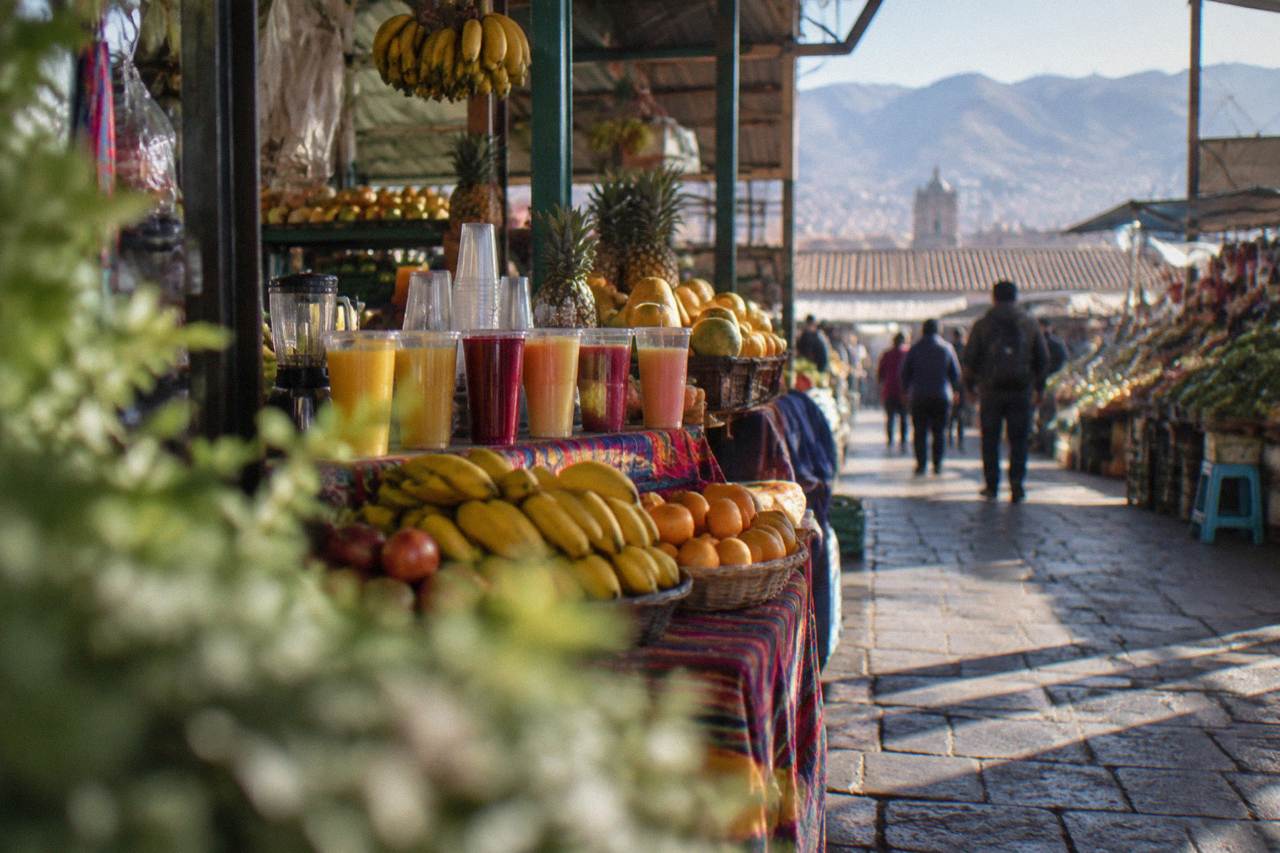
The same logic covers fruit juices. Fresh juices at a market are a highlight of Cusco, and the risk question is not the fruit but the water and ice that go into the blender and the glass. A traveller applying the CDC's line consistently either drinks juices made with bottled or boiled water or accepts the category as a calculated choice. Coca tea, reported at about S/ 2 to S/ 5 a cup, is served boiling, which puts it on the safe side of the water question by definition.
How Do You Choose A Safe Stall Or Restaurant In Cusco?
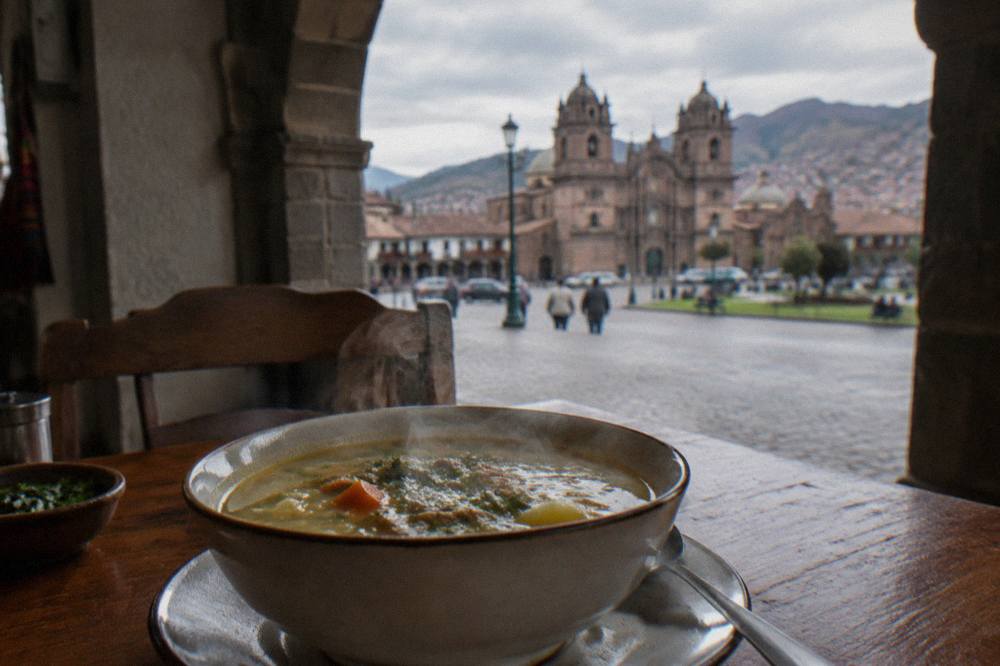
The sourced signals are heat, turnover and cleanliness: food cooked in front of you and served immediately, stalls with a fast flow of local customers, and visible hygiene carry lower general risk than food held at ambient temperature. No source rates named Cusco restaurants or stalls, so the choice rests on these observable categories, not on a ranking.
Turnover is the quietest of the three and the most useful. A stall selling out and replenishing through the day is not holding food for hours, and general food-safety guidance treats long ambient holding as the main risk multiplier. A busy counter is also, bluntly, a form of local endorsement, though the pack supports no popularity claim beyond that logic.
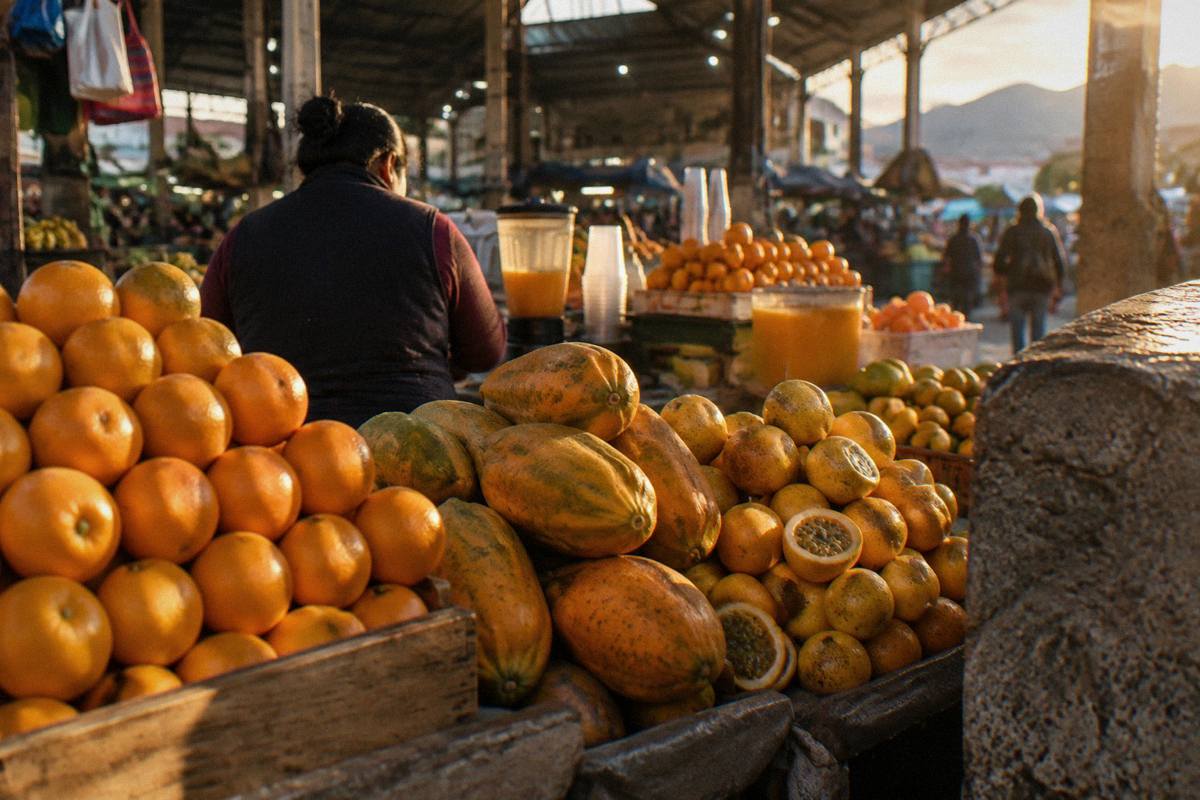
San Pedro Market, a real market at the old quarter's edge near San Pedro, is where this decision comes up. The market's hot-food counters, where soup and dishes are cooked and ladled in front of you, fit the lower-risk pattern; its raw juice and fruit stands fit the higher-risk one unless the water question is answered. A guided option such as the Central Market Food Walking Tour routes through exactly this with a local guide, and the site's answer on what to avoid in Cusco covers the wider set of pitfalls.
To eat through the market with a guide, book a cooking class with market tour here.
Does Altitude Change Food Poisoning Risk In Cusco?
Altitude does not change whether food carries pathogens, but it changes the experience of being ill: at 3,335 m, dehydration hits harder, and the CDC advises avoiding alcohol for the first 48 hours at high altitude because the symptoms of altitude illness and stomach trouble can blur together. The CDC recommends graded ascent and names Cusco as a rapid-ascent destination.
The overlap is the real issue. Nausea, headache and loss of appetite sit in both symptom sets, and a traveller who arrives by air, a rapid ascent in the CDC's framing, may not know which problem they are treating. The CDC's own practical line for Cusco is that travellers can descend to lower elevations to sleep for the first night or two and then begin their ascent, and it names Cusco and La Paz as the destinations where that trick applies. Acetazolamide is a prescription decision to make with a doctor, not a self-serve purchase; the site's answers on how likely altitude sickness is and how long to acclimatise carry the full detail.
Hydration is where food safety and altitude meet. Bottled or treated water, per the CDC, does double duty: it lowers the waterborne-risk side of food poisoning and it supports hydration at altitude, where the dry air and the altitude itself raise fluid needs. The site's answer on whether Cusco is colder than Machu Picchu explains the climate side of the same arrival picture.
What Should You Do If You Get Sick In Cusco?
The sourced steps are rehydration, rest, and getting medical help if symptoms are severe or persistent; Peru's official tourist infrastructure includes a 24-hour tourist police line (WhatsApp 980 122 335) and the iPeru tourist information service on WhatsApp +51 944 492 314, both of which can point a visitor toward assistance. No source gives a clinic ranking or a medication recommendation for Cusco.
Oral rehydration is the standard first move for any traveller's diarrhoea, and the CDC's bottled-water line covers how to prepare it safely. The judgment call is when to escalate: severe or bloody symptoms, high fever, or illness that prevents keeping fluids down are the classic escalation signs in general guidance. The pack holds no Cusco clinic list, so this page stops at the general signs and the official contact numbers above.
Prevention-wise, a small kit is a reasonable reading of the sources: rehydration salts, a treatment option discussed with a doctor before travel, and the discipline of the bottled-water rule. The site's answer on where to avoid in Cusco rounds out the safety picture, and Things To Do In Cusco Peru holds the city's full planning picture.
Common Questions About Avoiding Food Poisoning In Cusco
How to avoid food poisoning in Cusco?
Follow the CDC's Peru advice: drink bottled, boiled or treated water, and eat thoroughly cooked food served hot. Peru stands at CDC Level 1, Practice Usual Precautions, so ordinary hygiene habits, applied consistently, are the whole of the sourced guidance.
Can you drink the tap water in Cusco?
The CDC advises avoiding contaminated water and drinking bottled, boiled or treated water in Peru. It publishes no tap-water verdict for Cusco specifically, and this site does not extend the advice beyond that.
Is it safe to eat at San Pedro Market in Cusco?
No source rates the market's stalls for hygiene. The general categories apply: hot counters cooking food in front of you carry lower risk than food held at ambient temperature, and juices depend on the water and ice that go into them.
Is street food in Cusco risky?
No source rates Cusco street food as a category. General food-safety guidance puts freshly cooked, high-turnover street food at lower risk than raw or long-held food, so the observable signals matter more than the label.
Does altitude make food poisoning worse in Cusco?
Altitude does not change the food, but at 3,335 m dehydration bites harder and symptoms of altitude illness and stomach trouble overlap. The CDC advises graded ascent and avoiding alcohol for the first 48 hours at high altitude.
What should you do if you get sick in Cusco?
Rehydrate with safe water, rest, and seek medical help if symptoms are severe or persistent. The 24-hour tourist police line (WhatsApp 980 122 335) and iPeru (WhatsApp +51 944 492 314) can point visitors toward assistance.