Where Do The Locals Eat In Cusco?
Where do the locals eat in Cusco? A sourced answer covering San Pedro Market, menu del dia lunches, cuy, and the neighbourhood kitchens of the historic city in the Peruvian Andes.
Cusco, the historic city in the Andes of southern Peru, has a population of 428,450 according to the 2017 census carried out by Peru's national statistics institute, INEI, and most of those people do not eat on the Plaza de Armas. The restaurants ringing the main square price their menus for visitors. Residents of the city, which sits at 3,335 m at the Plaza de Armas according to PROMPERU, eat elsewhere: at the central market, at lunch counters serving a fixed menu del dia, and in the neighbourhood kitchens a few blocks uphill from the tourist core.
Where Do The Locals Eat In Cusco?
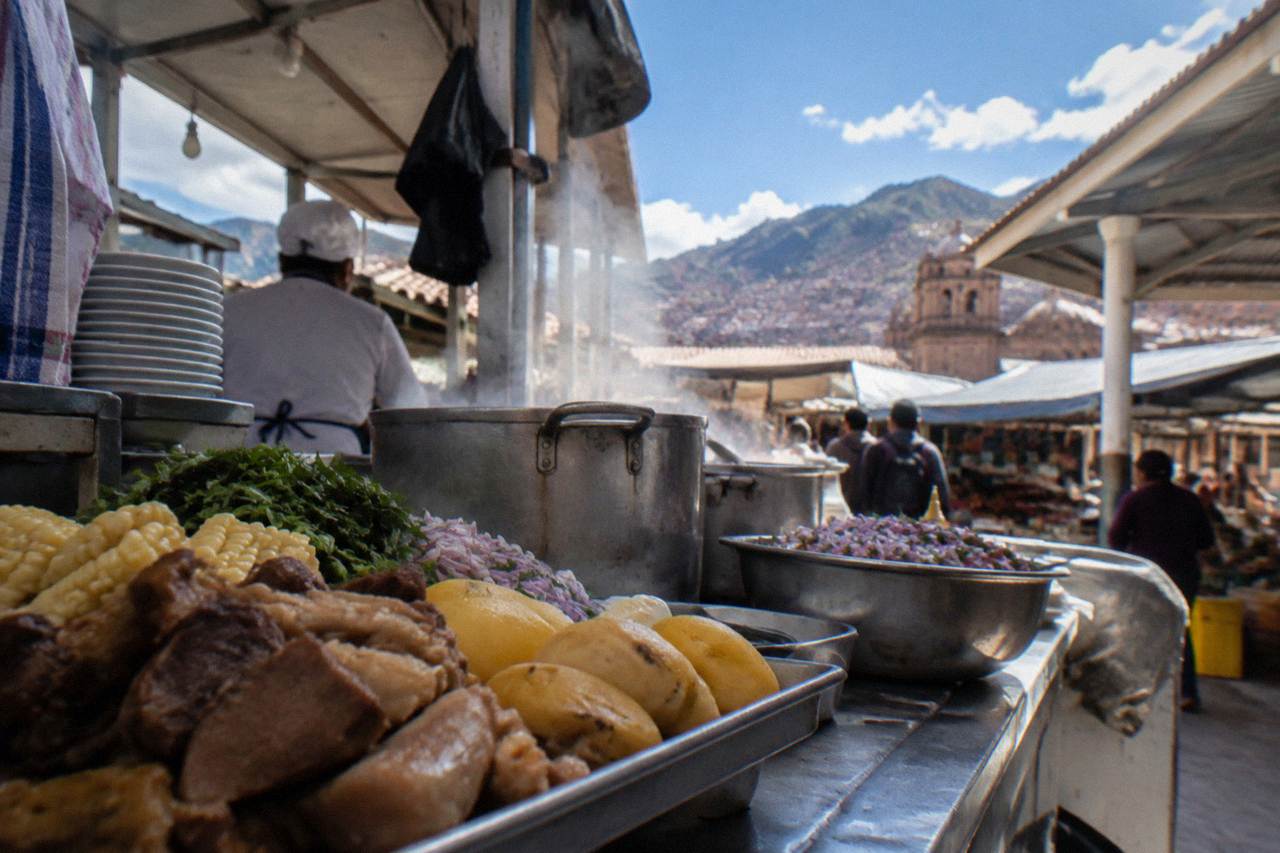
Cusco residents eat at the San Pedro central market, at small restaurants serving a fixed-price menu del dia lunch, and at neighbourhood picanterias and pollerias away from the Plaza de Armas. Reported set-lunch prices run from about S/ 8 to S/ 15, roughly US$2 to US$4, and the market's juice and food stalls are where the city's own population takes its main meal of the day.
That answer comes from sources rather than a single trip. PROMPERU's own city guide treats the central market as a working food destination, not only a sight, and the reported everyday price ranges held in this site's verified facts file put a menu del dia at S/ 8 to S/ 15 and a cup of coca tea at S/ 2 to S/ 5, figures collected from operators and travel sites in 2026 rather than from any official tarifario. The pattern is the standard one in Peruvian cities: the largest meal of the day is lunch, offered as a fixed menu with a starter, a main and a drink, and the places that sell it cheaply are the places that depend on repeat local customers rather than one-time visitors.
The geography matters. The tourist restaurants cluster on and immediately around the Plaza de Armas and along the streets leading into San Blas. A few blocks away, around the San Pedro market and in the flatter grid south of the centre, the character changes: the menus are in Spanish, the prices are in soles, and the dishes are the ones the region actually cooks. Peru's currency is the sol, written S/, quoted by the Central Reserve Bank at about S/ 3.4 to the US dollar.
What Kind Of Food Do Cusco Residents Actually Order?
The staples of a Cusco lunch are quinoa and barley soups, rocoto relleno, adobo, chicharron, fried trout, and cuy, the Andean guinea pig that remains a ceremonial dish of the region. Cuy appears on menus as a local speciality rather than an everyday plate, and no verified price for it exists, so this page prints none.
The verified facts file records the dishes but holds no sourced price for cuy, and the rule on this site is simple: a figure that is not verified does not go on the page. What can be said is qualitative. Cuy is the dish visitors ask about most, and it is a real, traditional food of the Cusco region, but the sources do not attach a price to it, and a plate of it is not what a local eats on an ordinary Tuesday.
The everyday plates are cheaper and less famous. Soup comes first in almost every set lunch, and the grain base is quinoa or kiwicha rather than bread. Trout from the region's rivers and lakes appears constantly, usually fried whole. Chicharron, fried pork, is a weekend plate. Adobo, a pork stew cooked in chicha, is the classic Sunday morning dish of the Cusco area. None of this is secret; it is simply served at prices and in portions sized for people who eat it every week.
| Item | Reported range (2026) | Notes |
|---|---|---|
| Menu del dia (set lunch) | S/ 8 to S/ 15 (about US$2 to US$4) | Reported by operators and travel sites, not an official tariff |
| Cup of coca tea | S/ 2 to S/ 5 | Market stalls and neighbourhood kitchens |
| Tourist SIM card | S/ 5 to S/ 15, plus a data pack S/ 20 to S/ 40 | Included as a planning range for comparing costs on the ground |
The table above is deliberately narrow. These are the only everyday food and drink figures the verified pack holds, each reported as a range from secondary sources, and none of them should be read as a fixed price. Anything else a vendor charges is shown or agreed before you order.
Is San Pedro Market Where Local People Shop And Eat?
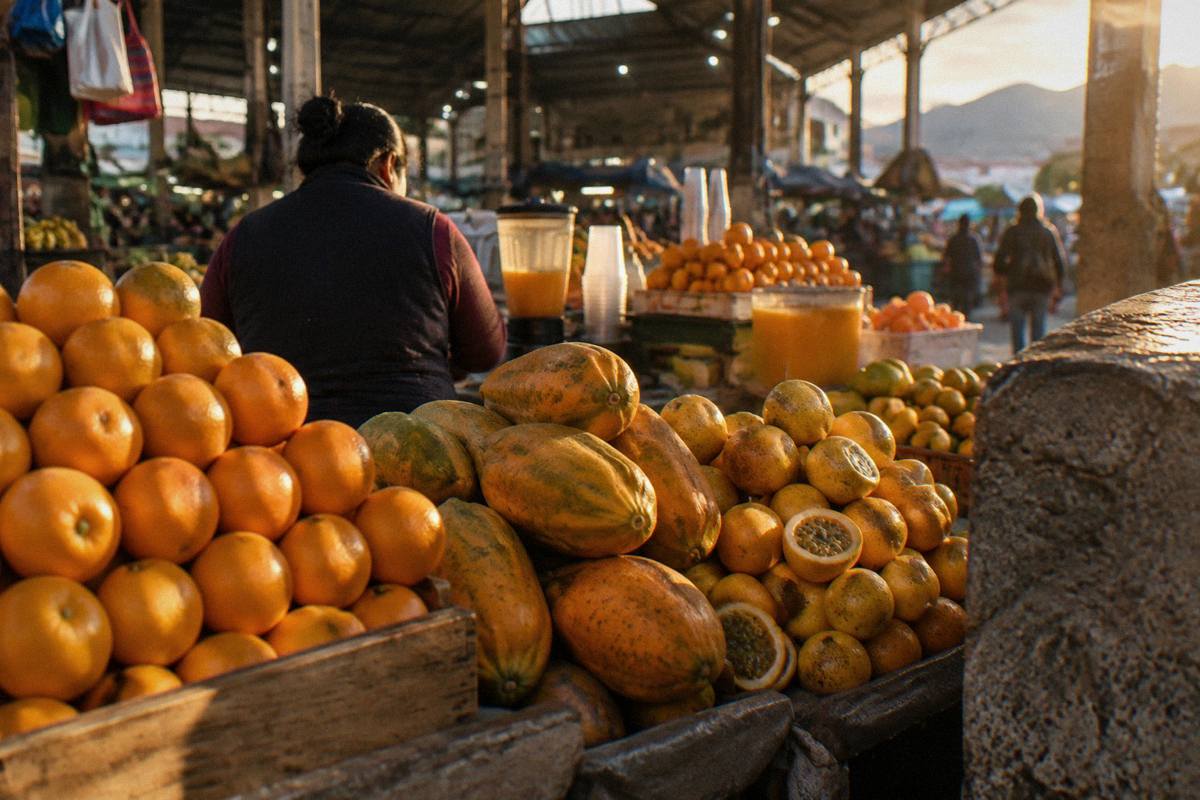
Yes. The San Pedro central market is the city's working food market, and its juice stalls, lunch counters and produce rows serve the resident population daily, not only visitors. PROMPERU lists it among the city's essential stops, and the site's own guide covers it in detail.
The market sits a short walk from the Plaza de Armas, on the flat ground south of the historic centre, and its position is exactly why it functions as a local institution: it is where people who live and work in the central city buy fruit, vegetables, bread, meat and cheese. The juice stalls blend whatever fruit is in season. The lunch counters inside and around the market serve the fixed menu described above at the lower end of the reported range.
Visitors sometimes hesitate at market hygiene. The CDC's Peru travel notice advises standard food and water precautions for the country, and the site's page on avoiding food poisoning in Cusco covers the practical side of that advice. The market's own stalls are where the volume is, and volume is a reasonable proxy for freshness when the customers are locals buying daily.
A guided route through the same food exists for anyone who wants the stalls translated. The Eat The Streets walking food tour from this site's roster is a small-group street food walk, limited to ten people or fewer, that tastes papas, meats and sweets and talks with the street food vendors; it can also be booked directly through Check availability.
The tour is one way in, not the only one. Walking the market alone with a few words of Spanish and small soles notes works too, and the vendors are used to both kinds of customer.
Where Do Cusco Families Go For A Weekend Meal Out?
Weekend eating in Cusco moves to the picanterias and pollerias of the outer neighbourhoods and to the towns of the surrounding valley, where restaurants serve grilled meat, chicharron and fried chicken at local prices. No verified price list exists for these places, so the honest description is geographic rather than financial.
The pattern is common to Peruvian cities and reported the same way in Cusco: Sunday is the day for a long family lunch, and the restaurants that depend on it sit where the rents are lower and the portions are larger. Fried chicken, pollo a la brasa, is the national default for a casual family meal. Chicharron is the festive pork plate of the region. Picanterias, the traditional spicy-stew houses of the Cusco area, are the local version of a Sunday destination. Other pages covering the same trip are gathered on Things To Do In Cusco Peru.
The site's guide to what to eat in Cusco covers the dishes themselves in detail. What this page adds is the where: the further a kitchen sits from the Plaza de Armas, the more of its custom is local, and the more its menu reflects what the region cooks for itself.
Do Any Cusco Restaurants Appear On Recognised International Lists?
One restaurant in the wider Cusco area appears on a recognised list: Mil, at Moray in the Sacred Valley, ranked number 49 on Latin America's 50 Best Restaurants 2025. The Michelin Guide lists no restaurants in Peru at all, so no Cusco restaurant carries a Michelin star.
These two facts are worth stating plainly because the internet garbles both of them. The Michelin Guide's list for Peruvian cuisine consists of restaurants outside Peru, in cities such as Sao Paulo, Dubai and Birmingham, and the guide's own page notes that covered areas are expanding, so a Peruvian selection may come. Until then, a claim that any Cusco restaurant is Michelin-starred is false. Latin America's 50 Best is a different list, and its 2025 edition placed Mil, overseen by Virgilio Martinez and Pia Leon of Central, at number 49. Mil sits at Moray in the Sacred Valley, not in Cusco city, and it is a destination restaurant rather than a local kitchen, but it is the one entry from the Cusco area that a recognised international ranking actually names.
For the food a visitor can only get by walking the streets with someone who knows the vendors, the roster's street food walk is the direct option, and the button above shows the operator's live listing.
How Do You Spot A Restaurant That Serves Locals Rather Than Tourists?
The reliable signs are a single printed menu del dia board in Spanish, prices listed in soles, a queue of people in work clothes at lunchtime, and a location off the streets that connect the Plaza de Armas to San Blas. None of these signs requires checking numbers, and together they separate the two food economies of the city.
Cusco runs two parallel restaurant systems. One prices in a currency visitors recognise, prints menus with photographs and sits within two blocks of the main square. The other prints a chalk board, turns over its tables twice at lunch and charges the reported S/ 8 to S/ 15 for the full set menu. The second system does not hide; it simply sits where the tour groups do not walk.
A few practical markers help. A kitchen that is busy at lunch and quiet at dinner is serving locals, because the main Peruvian meal is midday. A counter rather than tables is a good sign. A menu with two choices of soup and two choices of main is the fixed format, and it is the format that keeps the price down. The site's page on what to avoid in Cusco covers the other side of this coin: the overpriced or misleading venues that target visitors.
What About Cooking The Food Yourself?
Cusco has a strong cooking class scene built around the central market, and the roster on this site includes market-plus-class products where participants shop for ingredients and then cook them, which is the closest a visitor gets to eating the way a local household does.
To shop the stalls and cook the meal yourself, book a market tour and cooking class here.
The classes are a genuine window rather than a tourist invention, because they start where local cooking starts: at the market stalls, choosing the ingredients. Several products in the site's roster combine a San Pedro market walk with a hands-on class, and the cooking classes guide covers the category. The point for this page is that the market is not only where locals eat, it is where locals buy, and the two activities happen in the same aisles.
Common Questions About Where Locals Eat In Cusco
Where do the locals eat in Cusco?
At the San Pedro central market, at lunch counters serving a fixed menu del dia at a reported S/ 8 to S/ 15, and at neighbourhood picanterias and pollerias away from the Plaza de Armas. The main meal of the day is lunch, and the kitchens that depend on resident customers sit a few blocks from the tourist core.
Is cuy something Cusco residents eat regularly?
Cuy, the Andean guinea pig, is a traditional dish of the Cusco region and appears on local menus as a speciality, often for occasions rather than as an everyday plate. No verified price for a cuy dish exists in this site's sources, so none is printed here.
How much does a local lunch in Cusco cost?
Reported ranges from 2026 put a menu del dia, a set lunch of soup, main and drink, at about S/ 8 to S/ 15, roughly US$2 to US$4, and a cup of coca tea at about S/ 2 to S/ 5. These are operator and travel site figures, not an official tarifario, and prices vary by kitchen.
Are there any Michelin-starred restaurants in Cusco?
No. The Michelin Guide lists no restaurants in Peru; its list for Peruvian cuisine consists entirely of restaurants abroad. The one Cusco-area entry on a recognised international ranking is Mil, at Moray in the Sacred Valley, placed at number 49 on Latin America's 50 Best Restaurants 2025.
Is the San Pedro market safe for visitors to eat at?
The market is the city's working food market and serves residents daily. The CDC's Peru travel notice advises standard food and water precautions anywhere in the country, and the site's page on avoiding food poisoning in Cusco covers the practical steps.
What time do people in Cusco eat dinner?
No sourced figure exists for dinner times in Cusco, so this page states none. What the sources do support is that lunch is the main meal of the day in Peru, and the set-menu format exists to serve it.
The short version is that eating where Cusco residents eat is not a hidden skill: go where the fixed-price lunch boards are, go at midday, and walk the few blocks from the Plaza de Armas to where the menus stop being translated. The city's own population of 428,450 has to eat every day, and the kitchens that feed it are the ones this page has described, from the San Pedro market stalls to the Sunday picanterias of the outer neighbourhoods.