Cuy, Eating Guinea Pig In Cusco
Cuy, roasted guinea pig, is one of the Andes' oldest dishes and Cusco is its best-known stage. This guide explains what it is, how it is cooked, where it fits in the city's food culture, and what to expect at the table.
Short answer
Cuy is guinea pig, a traditional Andean dish that is usually roasted or fried whole and served at festivals, family gatherings and restaurants in Cusco and the surrounding highlands.
Cusco, the historic Inca capital high in the Andes of southern Peru, is a place where many travellers first meet cuy, the Andean dish of roasted guinea pig that has been eaten in these mountains for as long as people have lived here. The city sits at about 3,335 m on the Plaza de Armas, and its restaurants, markets and festival tables all carry versions of a dish that long predates the colonial churches standing on Inca stone foundations. This guide lays out what cuy actually is, how it is cooked and served, where it fits in Cusco's food culture, and what a visitor who wants to try it should know before ordering, in plain terms and without invented prices.
What Is Cuy, And Why Do People In Cusco Eat Guinea Pig?
Cuy is the Quechua name for the domesticated guinea pig, and in Cusco and the Peruvian Andes it is a traditional food, usually roasted or fried whole, rather than a pet. The animal is small, quick to raise in high-altitude households, and has been part of the Andean diet since long before the Spanish arrived, which is why the dish carries such weight in regional identity and festival cooking.
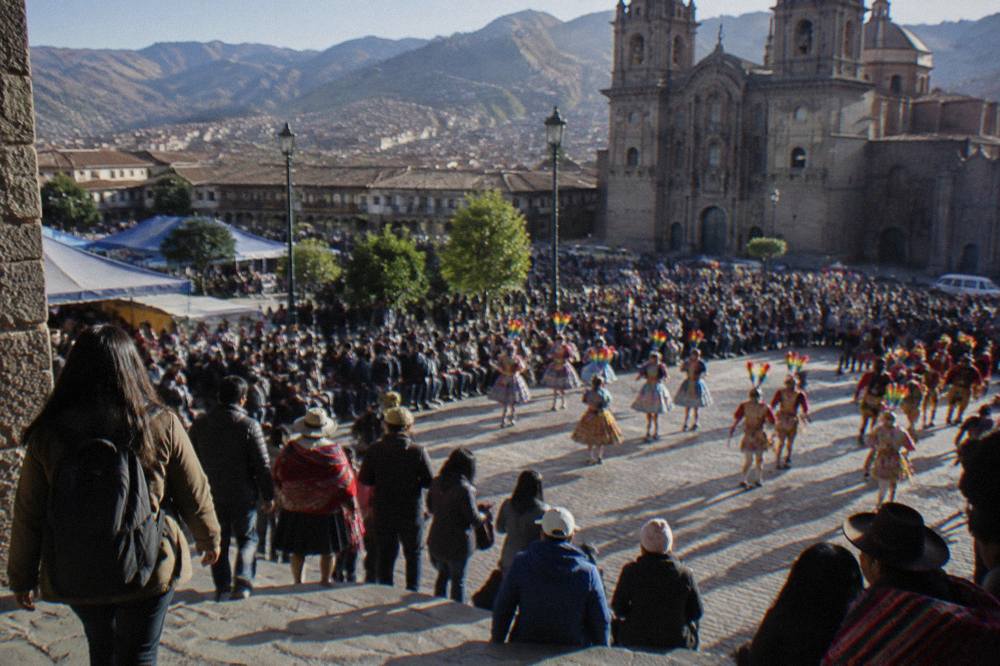
The animal thrives at altitude in a way that large livestock does not, and raising it needs little space, which explains its place in highland households. In Cusco, the historic city that UNESCO describes as carrying over 3,000 years of pre-Inca occupation before the Inca remodelled it, cuy belongs to a food tradition that runs deeper than any restaurant menu. Families serve it at celebrations, and it appears at festivals such as Inti Raymi season, when the city's Inca heritage is centre stage. PromPeru's food pages treat it as a signature Andean dish, not a curiosity.
That cultural weight cuts both ways for visitors. Some arrive wanting to try it precisely because it is unfamiliar; others find the idea difficult, since guinea pigs are companion animals elsewhere. Both reactions are common, and neither changes the fact that in the Cusco region the dish is ordinary food, eaten the way other cultures eat chicken or rabbit. If the whole presentation is too much, some kitchens serve it in smaller pieces, though no sourced menu or price list exists for this page to quote, so check the room.
How Is Cuy Cooked And Served In The Andes?
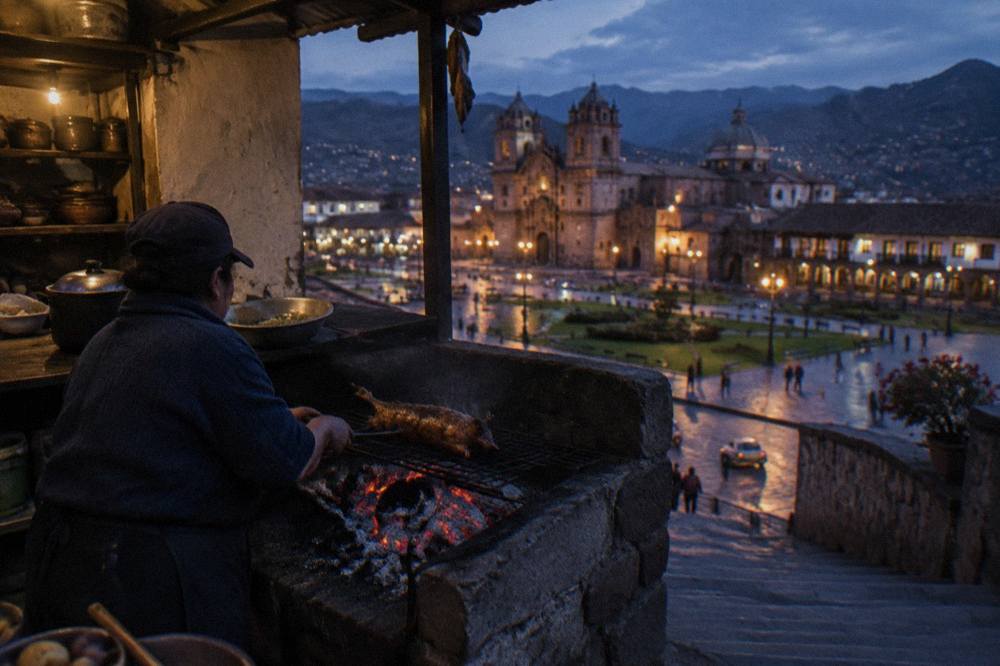
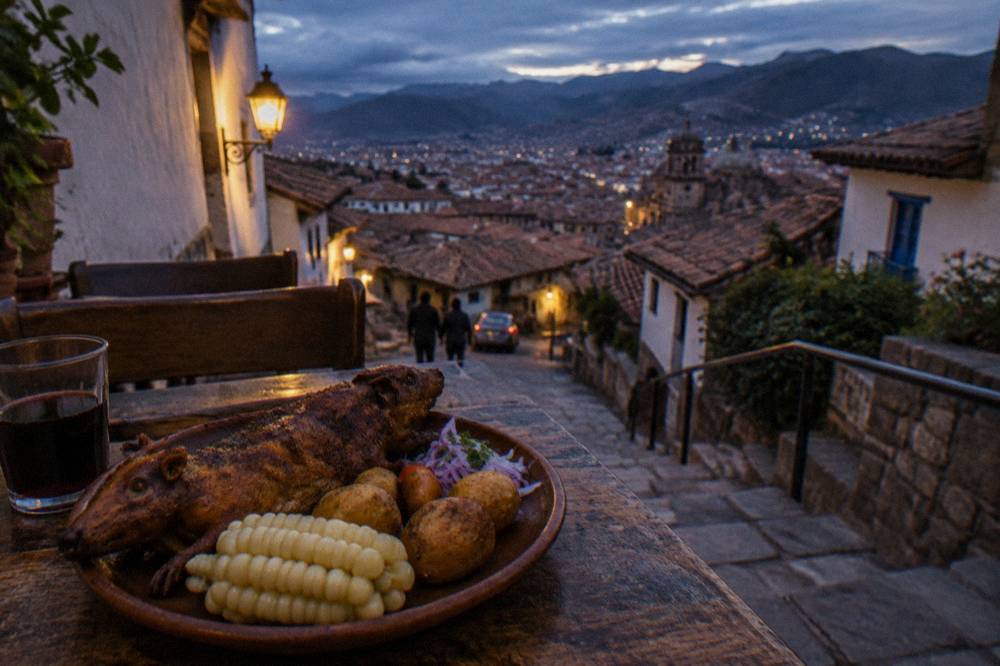
Cuy is most often roasted whole over fire or fried, then served flat on the plate with the head on, accompanied by potatoes, corn, and sometimes a spicy sauce, and the presentation is intentionally whole so the diner sees exactly what is being eaten. The classic Cusco preparation is cuy al horno, oven-roasted, while fried versions and chicharron-style preparations appear across the highlands.
The roasting process is simple and the accompaniments are the point. Andean potatoes, of which the region grows dozens of varieties, and large-kernel corn, both staples of the highland diet since Inca times, fill the plate alongside the meat. The meat itself is dark and lean, closer to rabbit than chicken in character, and there is not much of it on a single animal, which is why it is usually served whole rather than portioned.
Festival cooking takes a different route. In communities around Cusco, and at gatherings tied to the agricultural calendar, cuy is cooked over open coals, and serving it is a mark of respect to a guest. That context matters: for many families the dish is celebration food, not everyday fare. A traveller eating it in a Cusco restaurant is tasting a festive dish on an ordinary Tuesday, which is roughly like eating roast turkey in July.
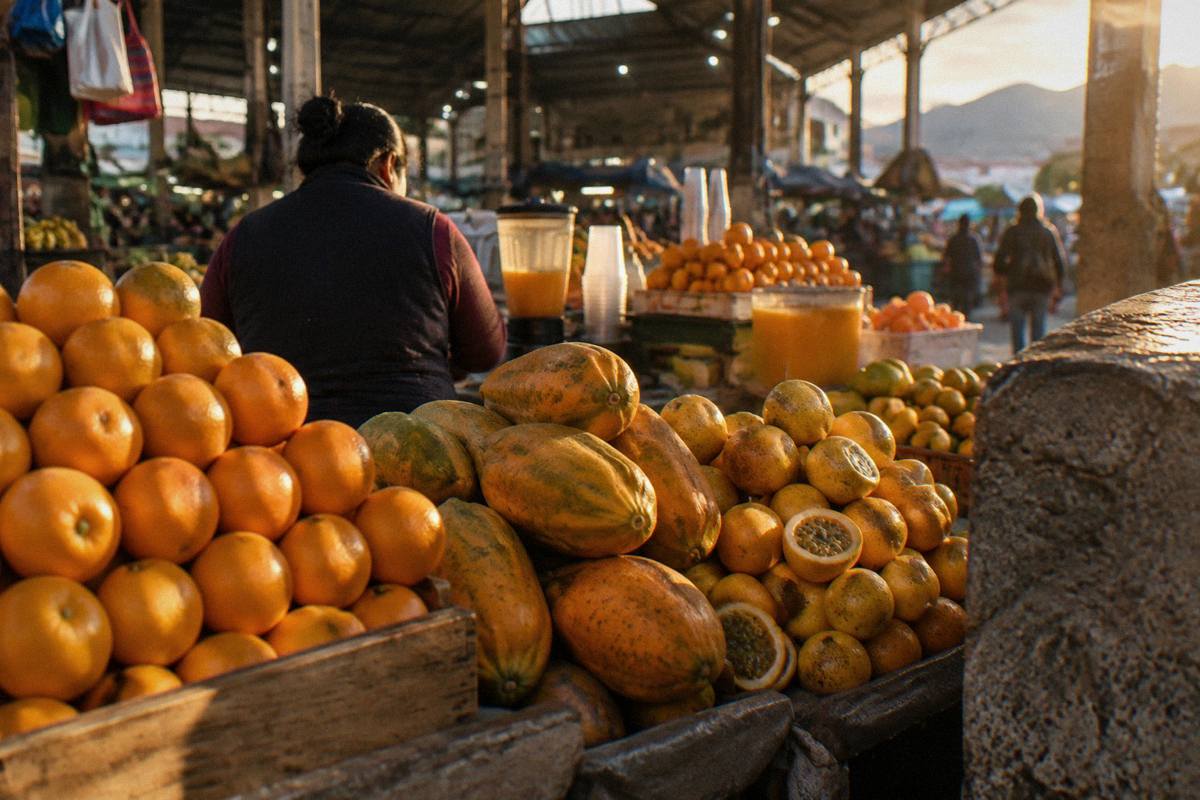
For visitors who want to understand Andean ingredients before or instead of tasting cuy, a market walk with a cook is one structured way in. The cooking class plus San Pedro Market tour on the roster, a hands-on Cusco cooking class and market visit, is a good primer on the staples that surround the dish, and the Cusco Cooking Classes and San Pedro Market Tour covers market shopping and kitchen technique in one outing.
Want to learn the Andean pantry hands on? Book a cooking class and market tour here.
Where Can You Try Cuy In Cusco?
Cuy appears on menus at restaurants around Cusco's historic centre and in the surrounding communities, and the honest answer on specific addresses is that no verified restaurant ranking or price list exists for this page to print, so the practical route is to ask locally, check menus in person, or book a food experience that includes it. What is verifiable is the pattern: the dish is strongest in traditional restaurants and at festival tables, not in tourist cafes.
The San Pedro Market area and the streets of the historic centre carry a mix of kitchens, some serving strictly local crowds and some aimed at visitors. The site's own guide to eating in Cusco covers the wider dish list, and the restaurant guide explains how the dining scene is organised, but neither can honestly rank a best cuy kitchen, and this page will not invent one. The dish also travels: communities in the Sacred Valley and around Pisac and Ollantaytambo serve it too, often in more traditional form than the city centre.
A second route is a guided food walk. The Curious Monkey street food walk on the roster, a small-group tour limited to ten people or fewer, stops to talk with vendors as well as taste, which suits travellers who want the context as much as the bite. Its live listing carries the current price, rating and dates.
For travellers who would rather build an evening around the city's food and bar scene after a daytime tasting, the related tour on this page is the Cusco pub crawl that moves through local bars and clubs from Plaza de San Blas. It is not a cuy tour, but it is a natural pairing for a night out in the Cusco nightlife scene, and Check availability on the operator's live listing for current dates and prices.
Whichever route a traveller picks, the same rule of thumb holds: read the printed menu, ask what the kitchen does best, and let the city's own rhythm set the pace. The three listings below cover the evening-and-beyond arc, from the pub crawl through the Sacred Valley's salt pans to the Machu Picchu entry ticket, and every price and rating renders from the live listings rather than from this page.
What Does Cuy Taste Like, And Is It Worth Trying?
The meat of cuy is dark, lean and tender, with a flavour most often compared to rabbit or dark-meat chicken, and the skin crisps during roasting much like crackling. Whether it is worth trying is a personal call, but the practical case is straightforward: it is a small portion of well-flavoured lean protein, and the experience is as much about the presentation and context as the taste itself.
The comparison to rabbit is the most common one, and it holds up in texture: fine-grained, not greasy, and quick to dry out if overcooked, which is why roasting whole over steady heat matters. The crisped skin is the part many people describe as the best bite. There is no sourced figure for how much meat one animal yields, so this page will not guess at grams, but a single cuy is a modest serving, and plates are built around it with potatoes and corn rather than the other way round.
The honest answer to "should I try it" depends on the traveller. If the goal is to understand highland food culture, cuy is close to unavoidable, and the versions served in and around Cusco are the real thing, not a tourist dilution. If the whole-animal presentation is a barrier, tasting a shared plate in a group setting is a gentler entry than a whole portion alone. Either way, it is one dish among many in a regional kitchen that also produces superb soups, corn dishes and roasted meats, all covered in the site's wider eating guide.
How Does Cuy Fit Into The Wider Andean Table Around Cusco?
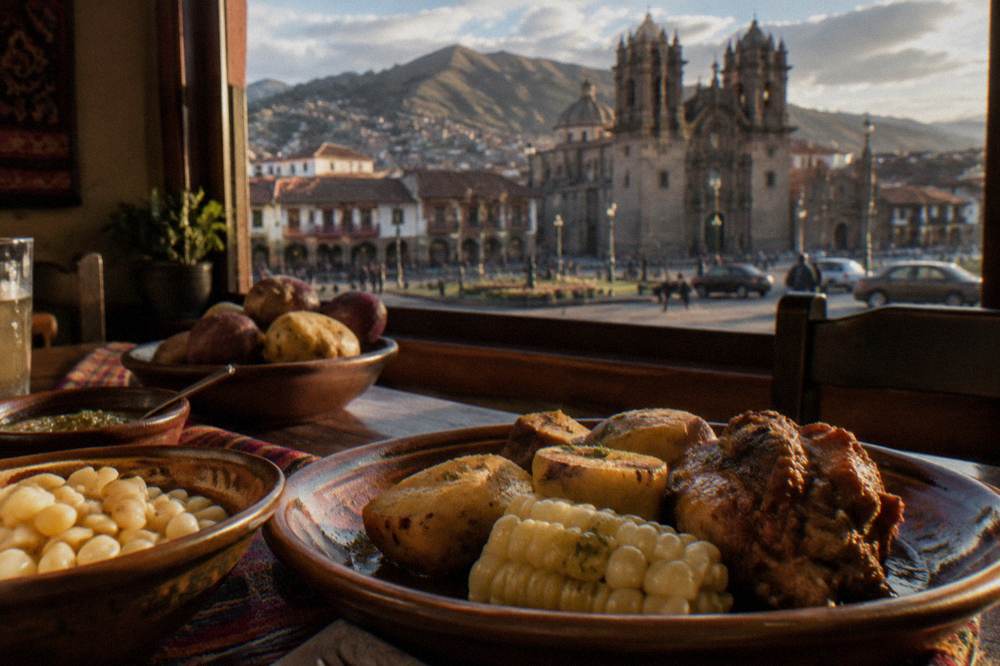
Cuy sits inside a highland food system built on potatoes, corn, quinoa, grains and roasted meats, and in Cusco it is one festive centrepiece among many staples, not the daily base of the diet. The everyday table leans on set lunches and market food, with cuy reserved for occasions, which is why a visitor can eat extremely well in Cusco for a week without ever meeting it.
The staples around it are worth knowing. Andean potatoes come in dozens of varieties, corn appears as large-kernel choclo and as the fermented drink chicha, and quinoa and other grains anchor soups. Roasted and fried meats fill everyday menus, and a reported set lunch, the menu del dia, runs about S/ 8 to S/ 15 (about US$2 to US$4) at the city's everyday kitchens, a secondary 2026 range from operator and travel sources, not an official tariff. A cup of coca tea, the classic altitude companion, is reported at about S/ 2 to S/ 5.
| Item | Typical Role | Reported Range |
|---|---|---|
| Cuy (roasted guinea pig) | Festive centrepiece, whole-animal service | No verified price, check the menu in person |
| Menu del dia set lunch | Everyday midday meal | About S/ 8 to S/ 15 |
| Coca tea | Altitude companion drink | About S/ 2 to S/ 5 |
| Andean potatoes | Standard accompaniment | Sold by weight at markets |
| Choclo (large-kernel corn) | Standard accompaniment | Sold by weight at markets |
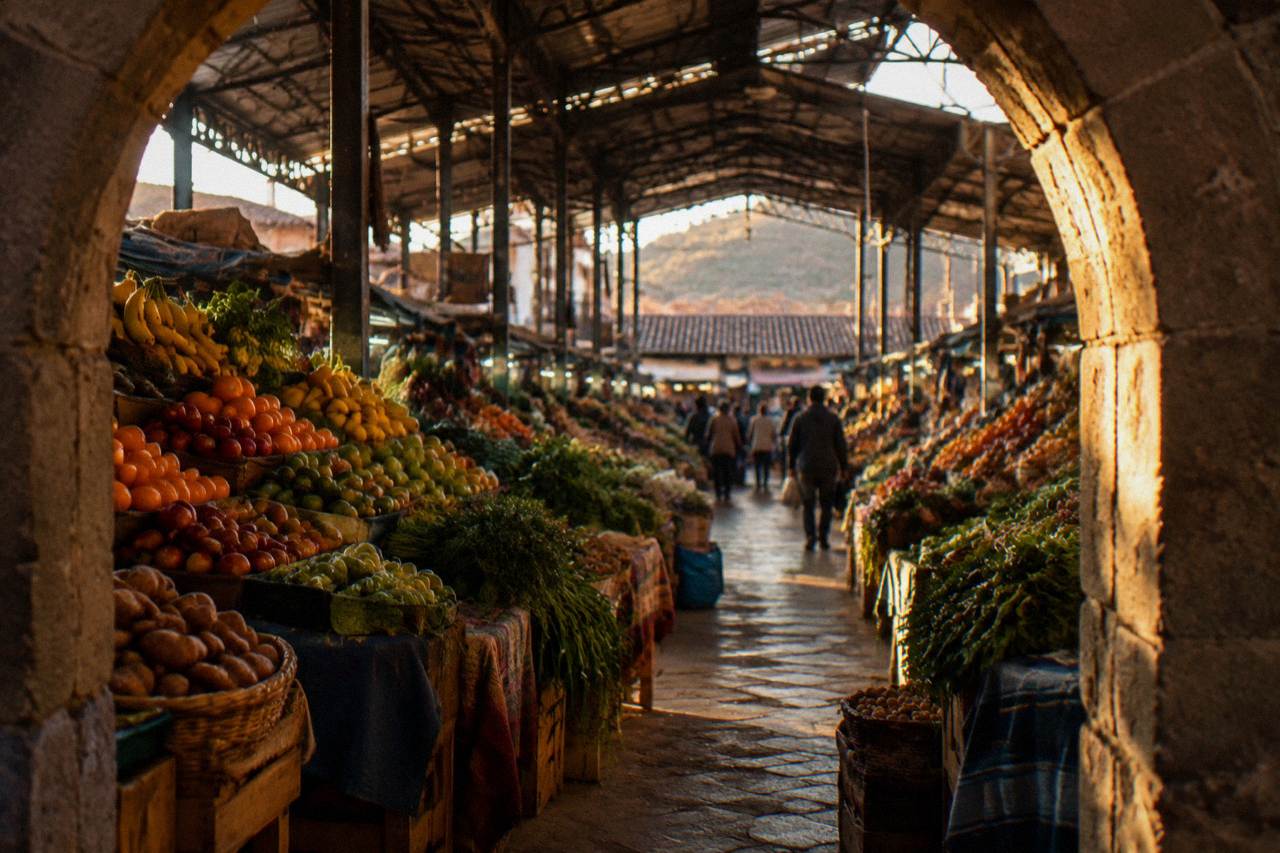
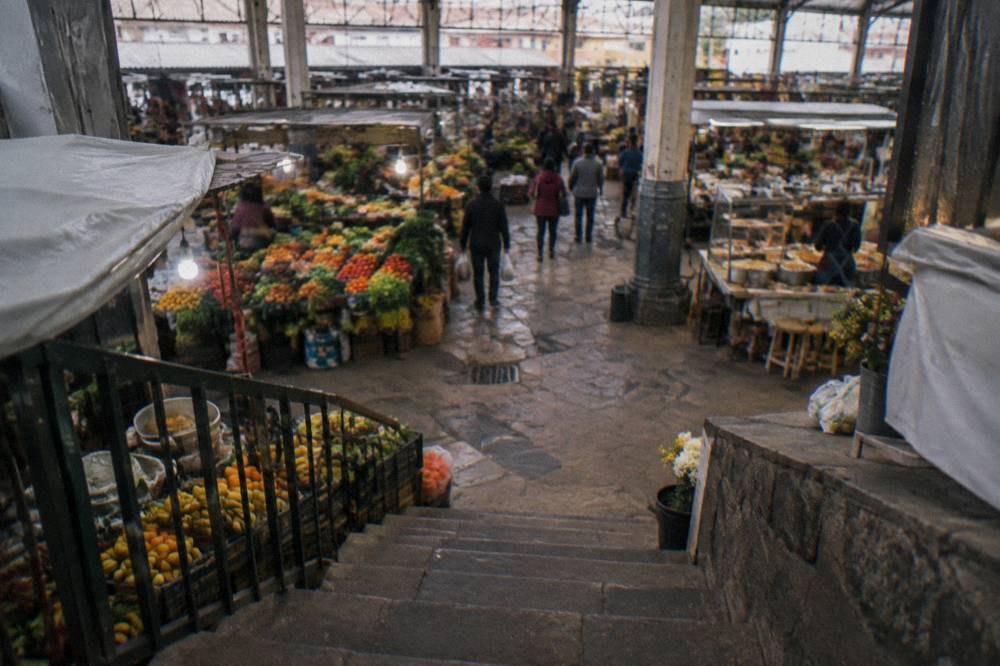
The market context is the other half of the story. The Cusco markets guide covers where the city shops, and San Pedro is the classic starting point, with its own site page. None of the market's operational details, stall counts, hours or founding dates, are sourced, so this page stays silent on them and describes the scene in general terms only.
What Should You Know About Altitude Before A Heavy Meal In Cusco?
Cusco's Plaza de Armas sits at 3,335 m, and the CDC's Yellow Book names the city as a rapid-ascent high-altitude destination, advising graded ascent where possible and calling acetazolamide a prescription decision with a doctor. A heavy, rich meal on the first night at altitude is a common-sense caution rather than a sourced medical rule, but the CDC's general advice on abrupt ascent is the part that is verifiable and worth following.
The CDC lists Cusco at approximately 3,350 m and notes that travellers can descend to lower elevations to sleep for the first night or two before beginning their ascent, a strategy it describes as sometimes removing the need for medication. It also advises avoiding alcohol for the first 48 hours at high altitude. Nobody publishes a day count for acclimatisation, and no sourced figure exists for the probability of altitude sickness among ordinary Cusco visitors; the CDC's "approaching 50 percent" line applies to abrupt-ascent situations where staged acclimatisation is not feasible, not to every traveller. The site's Cusco altitude guide carries the full detail.
What this means for a cuy dinner is modest and practical: the dish is festive food, and festivals in Cusco are tiring at 3,335 m. Eating well and drinking water is ordinary prudence. The medical content on this page ends where the CDC's wording ends, and anything beyond it belongs to a doctor, not a travel article.
| Altitude Fact | Figure | Source Basis |
|---|---|---|
| Cusco Plaza de Armas elevation | 3,335 m | PromPeru |
| Cusco per CDC Yellow Book | Approximately 3,350 m | CDC Yellow Book |
| Machu Picchu citadel elevation | 2,430 m | Official Machu Picchu site |
| Sacsayhuaman elevation | 3,701 m | Wikipedia (secondary) |
| Rainbow Mountain (Vinicunca) | About 5,000 m | Peru.travel and Wikipedia |
When Is The Best Time To Eat Your Way Around Cusco?
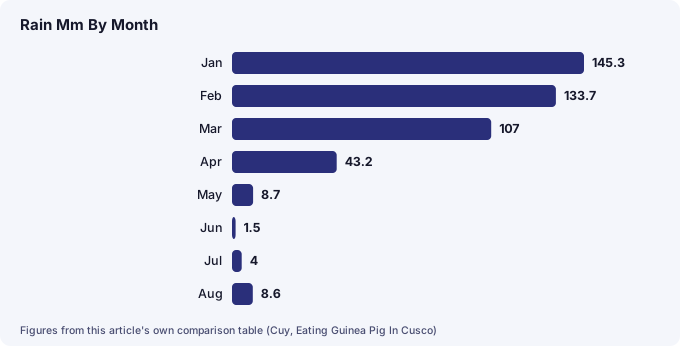
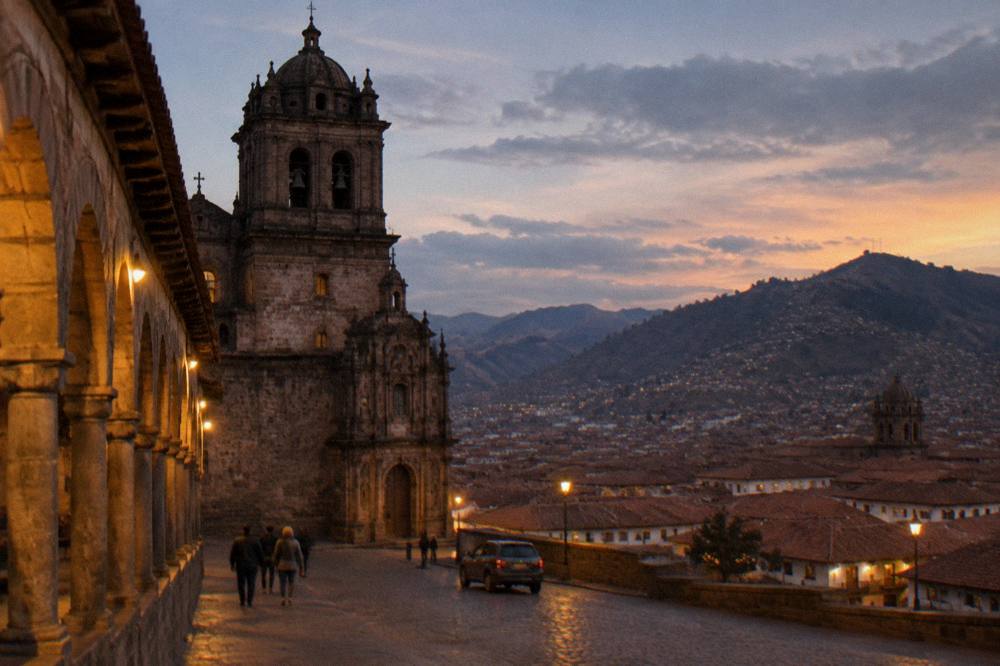
The dry season, roughly May to September, brings the clearest days and coldest nights to Cusco, while December to March carries 71.9 percent of the year's 707.8 mm of rain at the WMO and SENAMHI station for Cuzco, so the practical eating-weather answer is that dry months suit walking between markets and restaurants, and festival dates add the cultural layer. Mean daily maximums stay between 18.8 and 20.9 C all year, so daytime temperatures rarely spoil a meal.
The climate table below is a historical normal from the WMO World Weather Information Service station for Cuzco, data supplied by SENAMHI, and it is not a 1991-2020 series. It shows the pattern that matters for food travellers: rain concentrates hard in the wet months, and June and July nights drop to around freezing, with frost common in those months, while daytime highs barely move all year.
| Month | Mean Max C | Mean Min C | Rain mm |
|---|---|---|---|
| Jan | 18.9 | 6.6 | 145.3 |
| Feb | 18.8 | 6.5 | 133.7 |
| Mar | 19.1 | 6.2 | 107.0 |
| Apr | 19.7 | 4.9 | 43.2 |
| May | 19.8 | 2.5 | 8.7 |
| Jun | 19.5 | 0.3 | 1.5 |
| Jul | 19.1 | 0.1 | 4.0 |
| Aug | 19.8 | 1.6 | 8.6 |
| Sep | 19.8 | 3.9 | 21.8 |
| Oct | 20.9 | 5.5 | 39.4 |
| Nov | 20.7 | 6.1 | 71.9 |
| Dec | 19.4 | 6.4 | 122.7 |
Festival timing is the cultural half of the question. Inti Raymi, the Inca sun festival, falls on 24 June each year and moves from Qorikancha to the Plaza de Armas and then Sacsayhuaman, and the site's Inti Raymi guide covers it in full. The best time to visit Cusco guide and the month-by-month weather guide carry the complete planning picture. Festival weeks are when cuy and other traditional dishes are most visible, because celebration food follows celebration dates.
What Other Food Experiences Pair Well With A Cuy Tasting Trip?
The Cusco roster pairs a cuy tasting with market walks, cooking classes, chocolate workshops, mixology sessions and pub crawls, so the natural structure is a day of market and kitchen experiences followed by an evening in the city's bars, with the trio below covering the food-and-evening arc in one screen. Every price, rating and review count renders from the live listings, never from this page's prose.
The ChocoMuseo bean-to-bar workshop is the family-friendly half-day option, teaching chocolate from the cacao bean to the finished bar, and it suits travellers with children, a scenario the site's Cusco with kids guide expands on. The pisco sour mixology session covers Peru's national cocktail in a small group capped at twelve, and the cooking class with cocktails and market tour combines shopping, cooking and drinking in a single run. Each has its own live listing for current prices and dates.
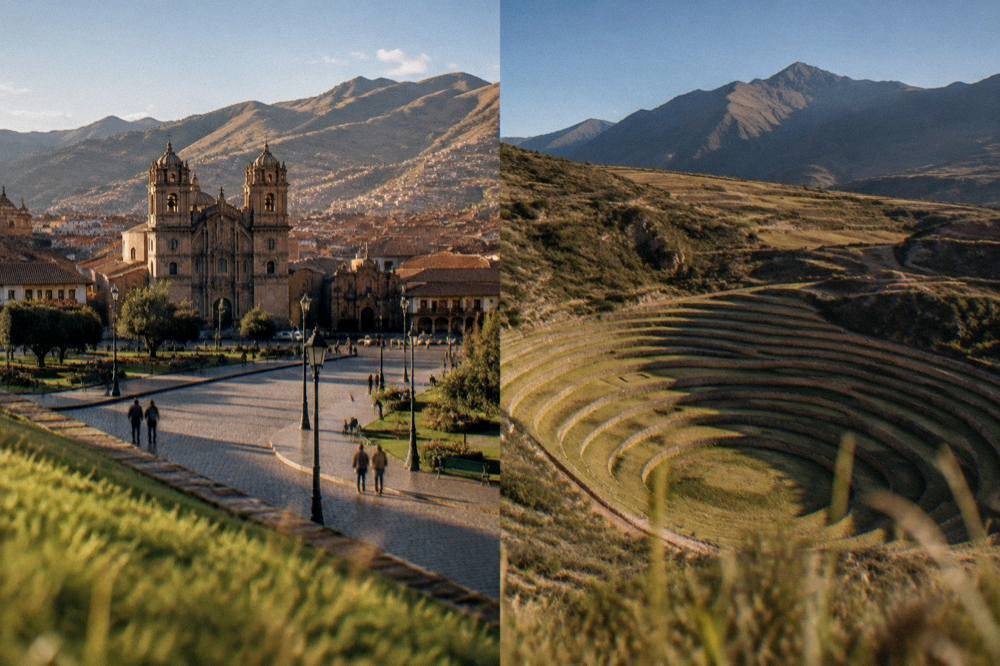
Beyond the city, food and landscape combine naturally. The Moray, Maras salt mines and Chinchero weavers trip in the trio below reaches the Sacred Valley's agricultural terraces and the salt pans that have fed the region's kitchens for centuries, and the Maras salt mines guide and Moray guide describe both. Moray is covered by the Boleto Turistico's Circuit III, and the Boleto Turistico guide explains the ticket, S/ 130 for the integral foreign-adult version, valid 10 days, sold in person only at the COSITUC counter on Av. El Sol 103.
What Should You Be Careful About When Ordering Cuy In Cusco?
The honest cautions are three: no verified price list for cuy exists, so check the menu before ordering; the whole-animal presentation surprises some diners, so know what is coming; and general food-safety prudence applies to any meat at altitude, with the CDC's Peru page advising safe food and water habits. None of these are reasons to skip the dish, only reasons to order it with eyes open.
On price, this page stays silent by design. No sourced cuy price exists in the verified facts behind this site, and inventing a range would be worse than saying nothing. Restaurant menus in Cusco print their own prices, and asking before sitting down is normal practice. The same rule applies to rankings: no restaurant here is named best, and no Michelin claim is made, because the Michelin Guide lists no restaurants in Peru at all.
On expectations, the dish arrives looking like what it is. The head is typically on, the body flat, the accompaniments simple. Diners who want a softer entry can share. On safety, the CDC's Peru destination page carries a Level 1 travel health notice, Practice Usual Precautions, and advises standard safe food and water habits; the site's is Cusco safe guide covers the wider safety picture, and the what to buy in Cusco companion pages cover shopping pitfalls.
Common Questions About Eating Cuy In Cusco
What is cuy?
Cuy is the Quechua name for the domesticated guinea pig, and in Cusco and the Peruvian Andes it is a traditional food, usually roasted or fried whole and served with potatoes and corn. It is celebration food in highland culture and a regular menu item in traditional Cusco restaurants.
What does cuy taste like?
The meat is dark, lean and tender, most often compared to rabbit or dark-meat chicken, and the roasted skin crisps like crackling. A single animal is a modest serving, and plates are built around it with Andean potatoes and large-kernel corn.
Where can I eat cuy in Cusco?
Traditional restaurants in and around Cusco's historic centre serve it, as do communities across the Sacred Valley. No verified ranking or price list exists, so the practical route is to check menus in person or join a guided food walk that includes local kitchens.
How much does cuy cost in Cusco?
No verified price exists for this page to print, and menus vary by kitchen. Check the printed menu before ordering, which is normal practice in Cusco restaurants, and treat any figure a guide quotes as that guide's own claim.
Is eating guinea pig in Peru legal and normal?
Yes. Cuy is a legal, traditional Andean dish with deep roots in the highland diet, and it is served openly in restaurants and homes across the Cusco region. Its status as a pet animal is a cultural difference, not a legal one.
Should I try cuy if I only have a short time in Cusco?
That is a personal call. The dish is a genuine piece of highland food culture, and a shared plate is a gentler entry than a whole portion. The wider Cusco table, covered in the site's eating guide, is excellent with or without it.
Cuy is one dish in a deep regional kitchen, and Cusco is the place where that kitchen is most accessible, at 3,335 m, between the market stalls of San Pedro and the festival tables of the dry season. Whether it becomes the story of the trip or just a footnote beside the potatoes and corn, the city's food culture, from its set lunches to its pisco sours, stands on its own, and Things To Do In Cusco Peru covers the rest of the plate.