SIM Cards And ESIM For Cusco
Reported prices for a tourist SIM card in Cusco run from about S/ 5 to S/ 15 for the card plus about S/ 20 to S/ 40 for a data pack, and an eSIM for Peru can be bought and installed before the flight. This guide sets out what the sources actually say, what the sol costs, and how the two options compare for a stay built around Cusco and the Sacred Valley.
Short answer
A tourist SIM card in Cusco is reported at about S/ 5 to S/ 15 for the card, plus about S/ 20 to S/ 40 for a data pack, bought in person with a passport. An eSIM for Peru is bought online before travel and activates on arrival, at prices set by each provider's own listing. Cusco sits at 3,335 m, uses the Peruvian sol at about S/ 3.4 to the US dollar, and runs on UTC-5 with no daylight saving.
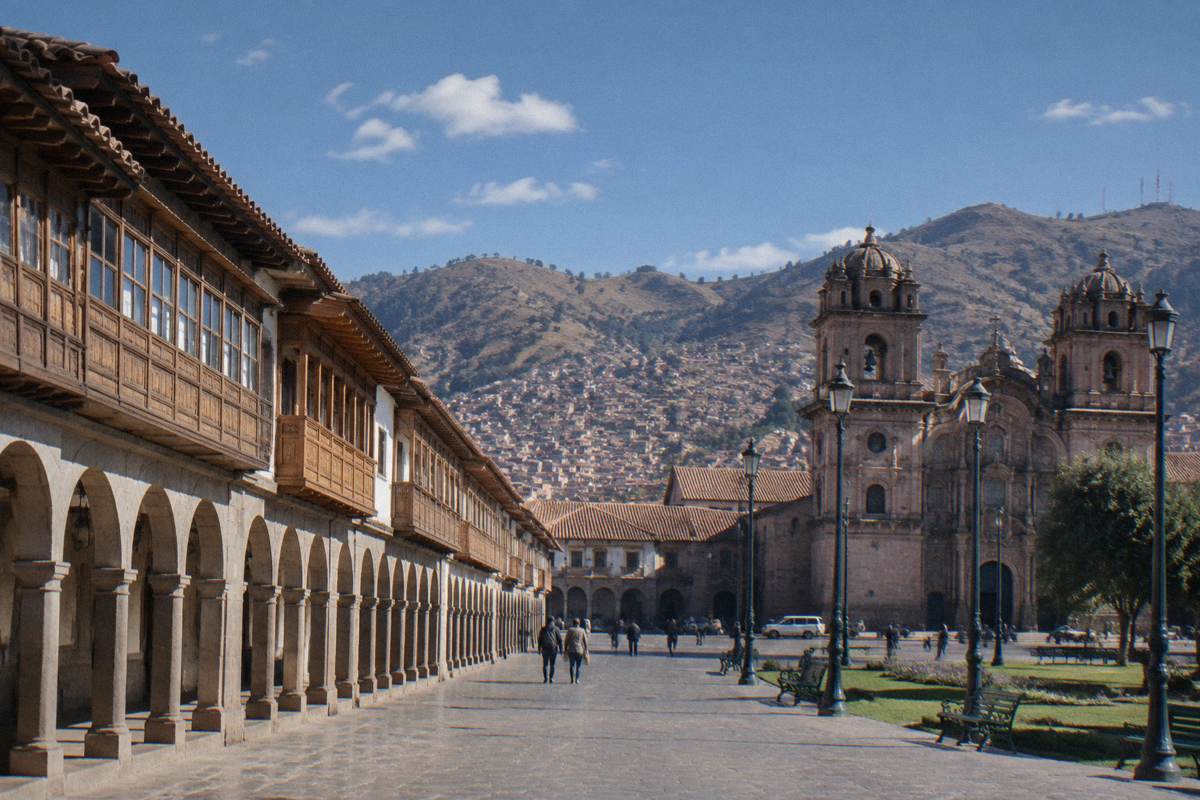
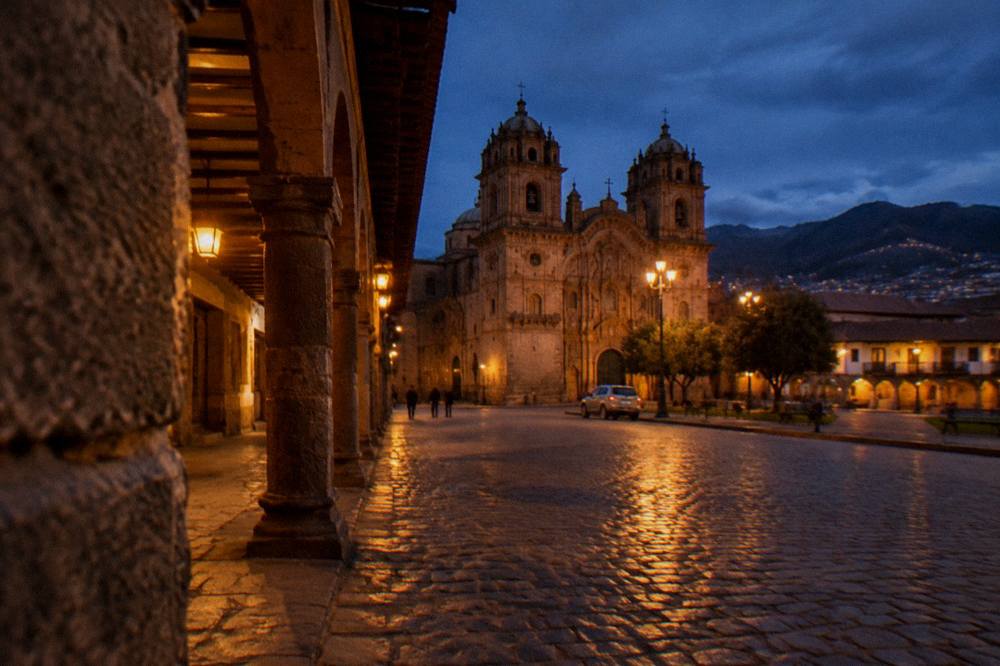
Cusco, the historic city in the Andes of southern Peru, sits at 3,335 m on the Plaza de Armas, and almost every visitor arrives by air at Alejandro Velasco Astete International Airport wanting one thing within the hour: a working data connection. The options are straightforward. A physical tourist SIM card is sold in person in Cusco, and an eSIM for Peru is bought online and installed before the flight. What the sources report on prices, and how the two routes compare for a trip that also takes in the Sacred Valley and Machu Picchu, is what this page sets out, in the words of the sources rather than in anyone's travel anecdote.
How Do You Get Mobile Data In Cusco?
There are two working routes to mobile data in Cusco: buy a physical tourist SIM card in the city, reported at about S/ 5 to S/ 15 for the card plus about S/ 20 to S/ 40 for a data pack, or buy an eSIM for Peru online before travel and install it on a compatible phone. Both need your passport for the physical route, and both run on Peru's mobile networks at an altitude of about 3,335 m.
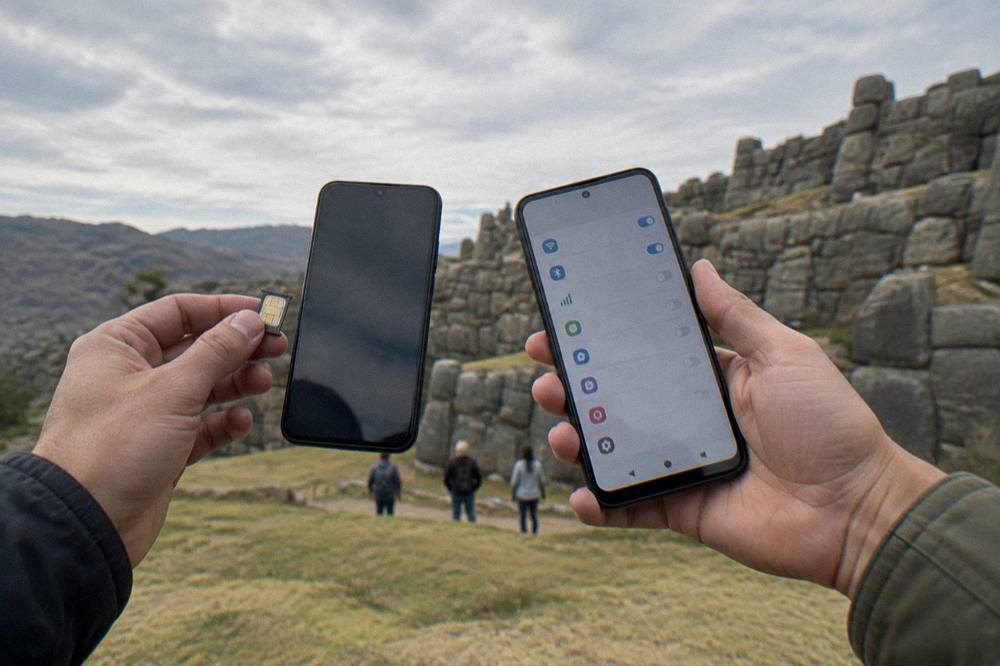
The physical route is the traditional one. Peru's carriers sell prepaid SIM cards over the counter in Cusco, in phone shops around the historic centre and at the airport, and activation requires identification: the passport is the document a foreign visitor uses. The eSIM route skips the counter entirely. An eSIM is a digital SIM profile downloaded to a compatible handset, bought from a provider's own listing before departure, and it typically activates when the phone first connects to a Peruvian network on arrival.
Neither route needs technical skill, but they differ in when you must act. A SIM card can be bought on arrival day, at the airport or in the centre. An eSIM must be bought and installed while you still have a connection, usually at home, because installing a profile without internet is the one step that catches travellers out. The Things To Do In Cusco Peru guide to getting around Cusco is useful reading once the phone works, since data makes every colectivo and taxi negotiation easier.
What Does A Tourist SIM Card Cost In Cusco?
A tourist SIM card in Cusco is reported at about S/ 5 to S/ 15 for the card itself, with a data pack adding about S/ 20 to S/ 40, so a connected first week plausibly lands somewhere between roughly S/ 25 and S/ 55 in total. These are reported ranges from operators and travel sites in 2026, not an official tariff, and the live price is whatever the shop or the listing states on the day.
At about S/ 3.4 to the US dollar, that reported total sits somewhere in the neighbourhood of US$7 to US$16, which is why almost every source frames Peruvian prepaid data as inexpensive by international standards. The ranges deserve their caveat, though. They come from operator pages and travel guides rather than from a published carrier tariff, and prices move. What a specific shop quotes on a specific day is the only figure that counts at the till.
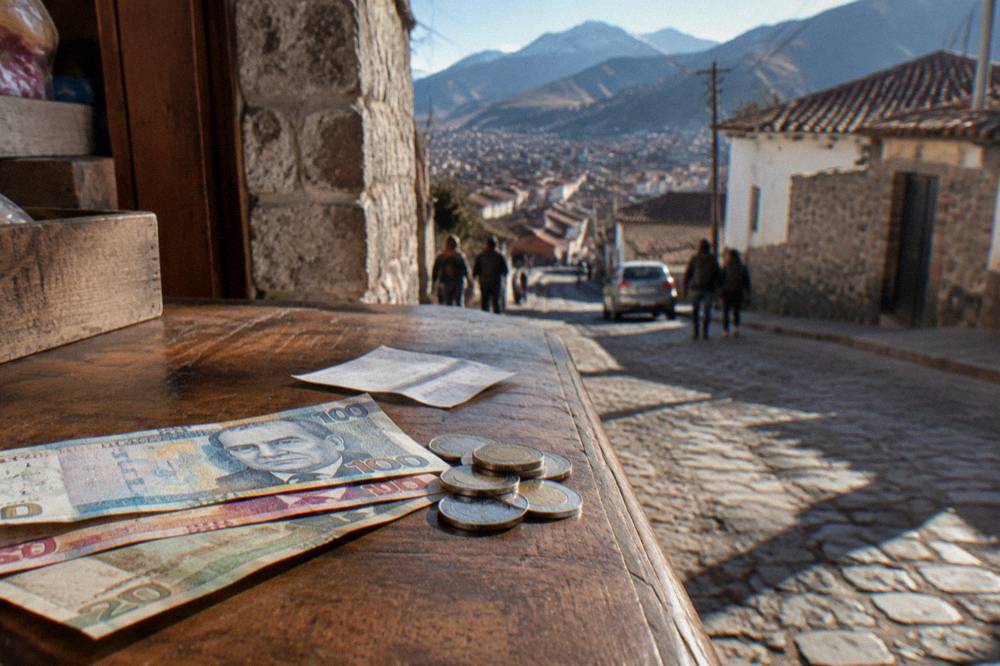
The everyday costs around the purchase put it in context. A cup of coca tea is reported at about S/ 2 to S/ 5, and a menu del dia, the set lunch that anchors Cusco's midday eating, runs about S/ 8 to S/ 15. A data pack is therefore in the same spending band as a few days of lunches. The table below collects the reported everyday ranges that matter on arrival day, including the airport taxi, which is reported at about S/ 15 to 25 for the ride into the centre.
| Item | Reported range | Notes |
|---|---|---|
| Tourist SIM card | S/ 5 to S/ 15 | Card only, bought in person with a passport |
| Data pack | S/ 20 to S/ 40 | Prepaid data allowance, loaded onto the SIM |
| Coca tea | S/ 2 to S/ 5 | Reported cafe price per cup |
| Menu del dia | S/ 8 to S/ 15 | Set lunch, about US$2 to US$4 |
| Airport taxi to centre | S/ 15 to S/ 25 | Reported range, agreed before the ride |
Money mechanics matter here too. Peru uses the sol, written S/, and the Central Reserve Bank quotes it against the US dollar; the site's money and ATMs guide covers withdrawal limits and card acceptance in detail. For the SIM purchase itself, carry soles in cash, because a small phone shop is not the place to discover a card's limits.
Once the phone is connected, the first thing worth doing with it is booking the parts of the trip that sell out or fill up. A central market food walking tour is one such use of a fresh data connection, and the food of Cusco guide gives the background.
How Does An ESIM For Peru Work?
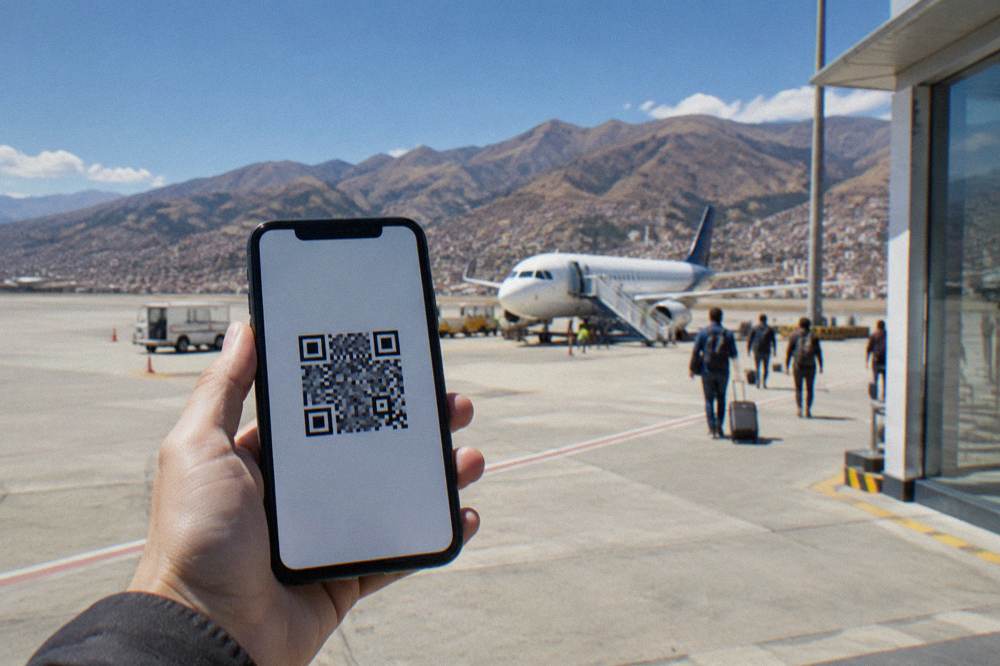
An eSIM for Peru is a digital SIM profile bought online from a provider's own listing, installed on a compatible phone before departure, and activated automatically when the handset first connects to a Peruvian network. No physical card changes hands, no shop visit is needed in Cusco, and the price and data allowance are whatever the provider's listing states, never a figure this page can honestly print.
The mechanics are simple and the sequencing is the part people get wrong. The profile must be downloaded and installed while the phone still has internet access, which in practice means at home, before the flight. On arrival in Cusco, the profile connects to a local network and the allowance starts. Providers set their own coverage terms, their own validity windows and their own top-up rules, and those details live on each listing, which is why a price printed here would be invented rather than reported.
Compatibility is the gate. A handset must support eSIM installation, and it must be unlocked, not tied to a home carrier's contract. Checking both takes a minute in the phone's settings and is the single step that decides whether this route is available at all. If the handset fails either test, the physical SIM card route in Cusco remains open, passport in hand.
The honest comparison is about behaviour, not just price. An eSIM means walking out of Cusco's airport already connected, with no counter queue and no Spanish-language negotiation. A physical SIM means a lower reported outlay in local currency and a local phone number, which some banks and apps prefer for verification codes. Neither is universally better; the choice follows the phone in your pocket and how much of the trip is planned in advance.
Where Do You Buy A SIM Card In Cusco?
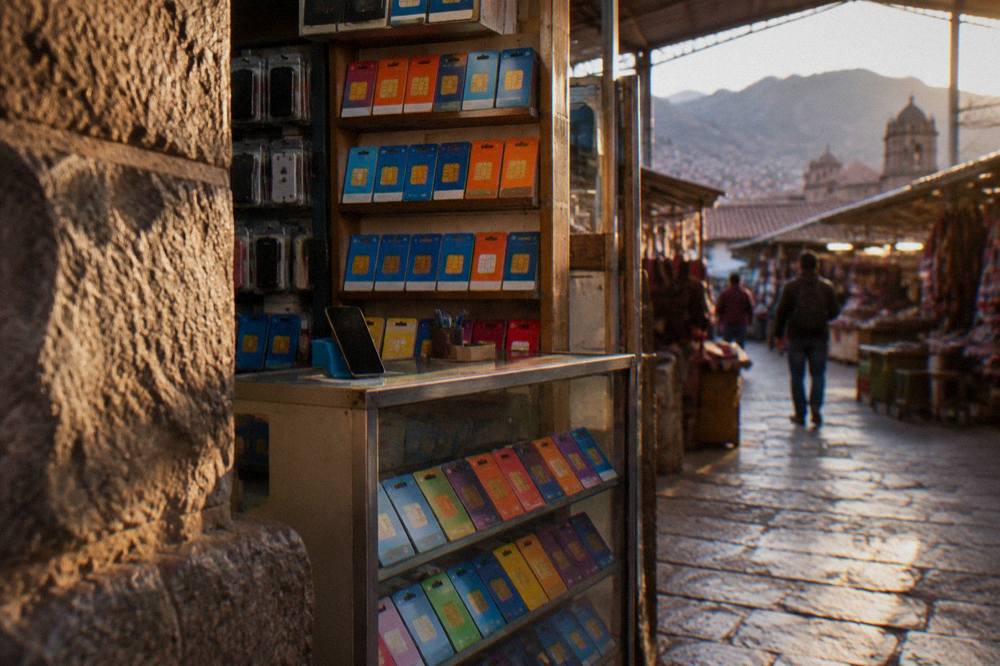
SIM cards in Cusco are sold at phone shops and kiosks in the historic centre and at Alejandro Velasco Astete International Airport, with the passport as the required identification for a foreign buyer. The airport is about 6 km from the Plaza de Armas, roughly 15 to 20 minutes by taxi, a ride reported at about S/ 15 to 25.
The airport option trades convenience for choice. Arriving passengers can buy a card and have it activated on the spot, which means data from the taxi onward. The centre option means more shops, more price comparison and the ability to walk to a second counter if the first quote is unappealing. Around the historic centre, phone retailers cluster within walking distance of the Plaza de Armas, and any shop selling prepaid cards will want the passport before activation.
The Cusco airport guide covers the arrival process end to end, including the transfer options into the centre. One practical note belongs here: the airport sits at 3,310 m and the Plaza de Armas at 3,335 m, and the Cusco altitude guide explains why the first hours in the city are better spent gently rather than running errands. Buying a SIM is a low-effort errand; walking it slowly is the right pace.
Does Coverage Hold Outside The City?
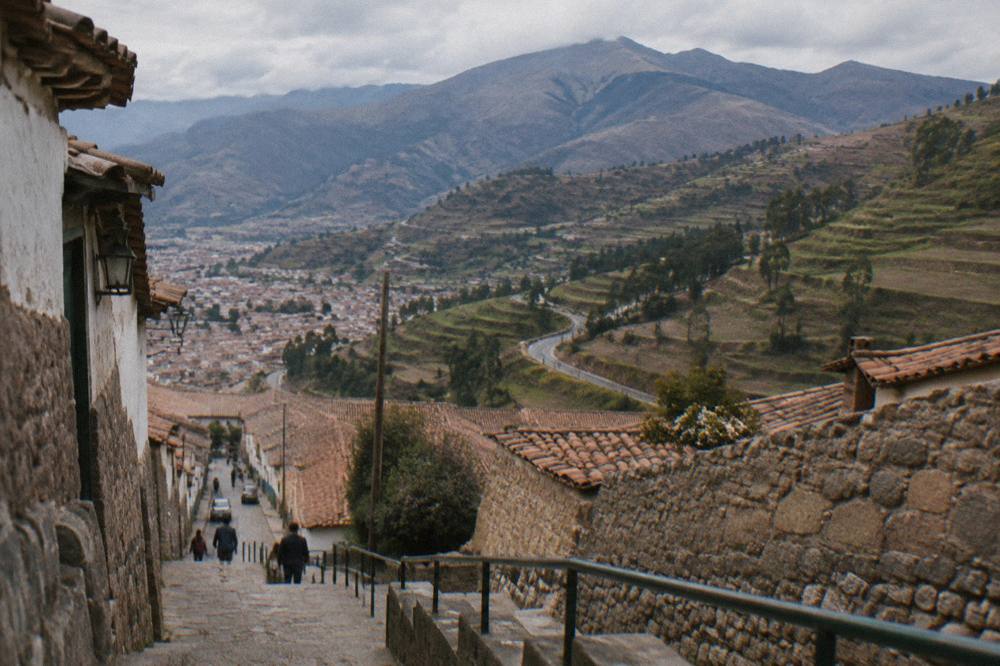
Peru's networks serve Cusco city and the main Sacred Valley tourist corridor, but no source in this site's research states a coverage map, a signal guarantee or a data-speed figure for any specific trail or viewpoint, so this page prints none. What the sources do establish is where the trips go: Pisac at 2,972 m, Ollantaytambo at 2,792 m, Moray at 3,385 m, and the Machu Picchu citadel at 2,430 m.
Honesty about coverage is more useful than a confident map. The valleys that carry the standard tourist routes, the Sacred Valley and the road toward Machu Picchu, are the country's busiest tourism corridor, and carriers publish their own coverage checkers, which is where any specific claim should be verified before a trip that depends on it. Remote hiking routes and high passes are a different matter, and a downloaded offline map is standard practice anywhere the signal cannot be assumed.
The day trips from Cusco vary enormously in how far they range. A South Valley day trip and a 2-day Sacred Valley and Machu Picchu tour by train both leave from the city, but the second spends a night away from any Cusco shop counter, which is exactly the situation a pre-installed eSIM or a loaded physical SIM handles well. The site's Sacred Valley guide and the Cusco to Ollantaytambo page cover the routes themselves.
How Does The Season Affect Your Data Needs?
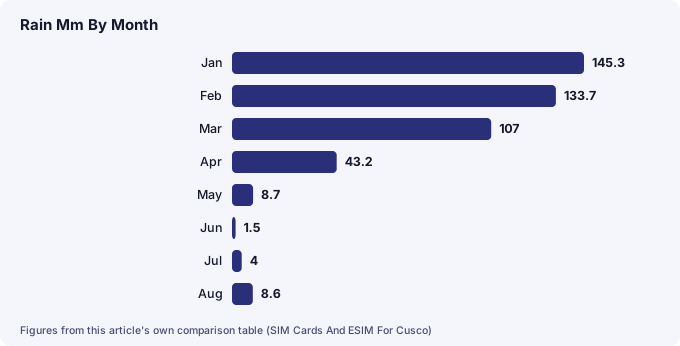
Cusco's dry season runs roughly May to September and the wet season roughly November to March, with December to March carrying 71.9 percent of the year's 707.8 mm of rain at the WMO and SENAMHI Cuzco station's historical normal, so the season changes how much you will lean on a phone for indoor plans, reroutes and weather checks, even though mean daily maximums stay between 18.8 and 20.9 C all year.
The climate table below is the full monthly set from the WMO World Weather Information Service record for the Cuzco station, data supplied by SENAMHI. It is a historical normal, not a current forecast, and the site's Cusco weather by month and best time to visit Cusco guides build on it in depth. For connectivity, the pattern that matters is simple: wet-season afternoons push plans indoors and push map-and-weather checking up, while dry-season frost nights in June and July make an early-morning departure the norm on mountain day trips.
| Month | Mean maximum C | Mean minimum C | Rain mm |
|---|---|---|---|
| Jan | 18.9 | 6.6 | 145.3 |
| Feb | 18.8 | 6.5 | 133.7 |
| Mar | 19.1 | 6.2 | 107.0 |
| Apr | 19.7 | 4.9 | 43.2 |
| May | 19.8 | 2.5 | 8.7 |
| Jun | 19.5 | 0.3 | 1.5 |
| Jul | 19.1 | 0.1 | 4.0 |
| Aug | 19.8 | 1.6 | 8.6 |
| Sep | 19.8 | 3.9 | 21.8 |
| Oct | 20.9 | 5.5 | 39.4 |
| Nov | 20.7 | 6.1 | 71.9 |
| Dec | 19.4 | 6.4 | 122.7 |
A connected phone earns its data pack in the wet season. Rain in Cusco concentrates hard: May to August together bring just 22.8 mm, while December to March brings 508.7 mm of the annual 707.8 mm. A traveller in January will check forecasts, move a Rainbow Mountain versus Palccoyo decision, and rebook a day trip on short notice, all of which assumes a working connection.
What Else Should You Sort On Arrival Day?
Arrival day in Cusco is best limited to three tasks: the connection, the money and a slow first meal, because the city sits at 3,335 m and the CDC Yellow Book advises graded ascent and names Cusco as a rapid-ascent destination, where abrupt arrival is exactly the situation its altitude guidance addresses.
The connection is covered above. The money is a cash question: soles for the SIM counter, for the reported S/ 15 to 25 airport taxi and for the markets, where cards are not the default. The Cusco markets guide explains what changes hands and how, and the best restaurants in Cusco page covers where the first slow dinner happens.
The altitude deserves the last word on day one. The CDC's guidance, summarised in the site's acclimatisation guide, prefers graded ascent, notes that travellers arriving by air at Cusco's elevation are arriving abruptly, and treats acetazolamide as a decision to make with a doctor, not a purchase to make at a kiosk. A working phone helps here too: it is how travellers reach a doctor, a pharmacy or their hotel if the first night goes badly. The site's is Cusco safe page covers the practical safety picture, including the tourist police contact details.
How Do SIM Cards And ESIM Plans Compare For A Cusco Trip?
A physical SIM card in Cusco costs less in reported terms, about S/ 5 to S/ 15 plus a data pack, and gives a local number, while an eSIM for Peru costs whatever the provider's listing states, installs before departure and works from the moment the plane lands; the right choice depends on the handset, the length of stay and whether the trip leaves the city for multi-day routes.
The comparison is best made on four axes rather than on price alone, since the eSIM side of the price comparison cannot be printed honestly here.
| Factor | Physical SIM card | eSIM for Peru |
|---|---|---|
| Where bought | Phone shops in Cusco and at the airport | Online, from a provider's own listing |
| When to act | On arrival, any day | Before departure, while connected |
| Identification | Passport, at the counter | Provider account, no local document |
| Local number | Yes, Peruvian | Usually no, data-only |
| Price basis | Reported S/ 5 to S/ 15 plus S/ 20 to S/ 40 data | Stated on the provider's listing |
| Best suited to | Longer stays, bank-app verification, budget | Short stays, multi-day trips, arrival-day connectivity |
For a short trip built around a 2-day Sacred Valley and Machu Picchu itinerary, the eSIM's install-before-you-fly model fits the schedule: there is no spare hour for a shop counter between landing and the first departure. For a week or more in the city, with cooking classes and market days on the plan, a local SIM's number and low reported cost add up. Both work on the same networks once active, and neither changes the fact that offline maps remain the fallback anywhere the signal cannot be guaranteed.
What Should You Know About Time Zones And Money When Planning Data?
Cusco runs on UTC-5 with no daylight saving, per the WMO station record for Cuzco, and Peru's currency is the sol, written S/, quoted against the US dollar by the Central Reserve Bank at about S/ 3.4 to the dollar, so data-plan purchases, top-ups and renewal reminders all arrive on one fixed clock and in one currency.
The fixed clock matters more than it sounds. A data pack bought on arrival starts counting its validity on local time, and with no daylight saving shift, a seven-day pack is seven clean days. The currency matters at the counter and in the app store alike: sol prices for physical top-ups, and provider-listed prices in dollars or euros for most eSIM plans. The conversion the site uses is fixed at about S/ 3.4 to the dollar, and the table below shows how the everyday figures on this page translate.
| Sol figure | About US$ at S/ 3.4 |
|---|---|
| S/ 15 | about US$4 |
| S/ 25 | about US$7 |
| S/ 40 | about US$12 |
| S/ 55 | about US$16 |
One last planning note ties connectivity to the calendar. Cusco's festival year, covered in the site's Inti Raymi and Cusco festivals guides, concentrates visitors in late June, and the where to stay in Cusco question gets harder in exactly those weeks. Booking with a working connection, from a phone that already has data, is the difference between a planned trip and a queue.
Whatever the connectivity choice, the first evening in Cusco is best spent low and slow, and the city's food is the natural way to do it. The featured market walk below is the site's pick for exactly that first night: a guided route through the central market that needs no planning energy, only a phone that already works.
Common Questions About SIM Cards And ESIM In Cusco
How much does a SIM card cost in Cusco?
A tourist SIM card is reported at about S/ 5 to S/ 15 for the card, plus about S/ 20 to S/ 40 for a data pack. These are reported 2026 ranges from operators and travel sites, not an official tariff, and the price at the counter is what counts.
Is an eSIM for Peru better than a physical SIM card?
Neither is universally better. An eSIM installs before departure and works on landing, which suits short trips and multi-day routes out of the city. A physical SIM costs less in reported terms and provides a local number, which suits longer stays. The handset's eSIM support decides whether the choice exists at all.
Do you need a passport to buy a SIM card in Cusco?
Yes. Activation of a prepaid SIM card in Peru requires identification, and for a foreign visitor the passport is the document the counter needs.
Can you buy a SIM card at Cusco airport?
Yes, prepaid cards are sold at Alejandro Velasco Astete International Airport, about 6 km from the Plaza de Armas and roughly 15 to 20 minutes by taxi into the centre, a ride reported at about S/ 15 to 25.
Does mobile data work at Machu Picchu?
No source in this site's research states a coverage guarantee or a signal figure for the Machu Picchu citadel, so this page prints none. Carriers publish their own coverage checkers, and offline maps are the standard fallback anywhere in the Andes where signal cannot be assumed.
How much is a data pack in Cusco?
A prepaid data pack is reported at about S/ 20 to S/ 40, loaded onto a tourist SIM bought for about S/ 5 to S/ 15. At about S/ 3.4 to the US dollar, the combined spend sits in the same band as a handful of set lunches.
The short version: buy the eSIM before the flight if the handset supports it, buy the SIM card on arrival day if it does not, carry soles for either, and spend the first connected evening planning the rest of the trip from a slow seat in the historic centre.