Money, ATMs And Cards In Cusco
Cusco runs on the Peruvian sol, and plenty of it in cash: the Boleto Turistico, market lunches and mountain trailhead fees all want soles, while cards cover hotels and restaurants. This guide sets out what the official tarifarios and reported price ranges actually say.
Short answer
Cusco uses the Peruvian sol (PEN), written S/, at about S/ 3.4 to the US dollar. Cards work in hotels and established restaurants, but cash is needed for the Boleto Turistico counter, market stalls, trailhead community fees and tips, so travellers withdraw soles from bank ATMs in the historic centre and carry small notes.
Cusco, the historic city in the Andes of southern Peru, runs on the Peruvian sol, and the city asks for it in cash more often than a visitor expects. The Boleto Turistico is sold in person at a counter on Av. El Sol. Trailhead community fees at Rainbow Mountain are collected in soles, by hand. Market stalls, colectivos and tips all run on notes. Cards have their place, in hotels and established restaurants, but the sol is the working currency of a day in this city at 3,335 m, and this guide sets out what the official tarifarios, the Central Reserve Bank's quotes and the reported on-the-ground ranges actually say, without inventing a single figure the sources do not carry.
What Currency Does Cusco Use?
Cusco uses the Peruvian sol (PEN), written with the sol sign and a space, as in S/ 130, and the Central Reserve Bank of Peru (BCRP) quotes it against the US dollar at roughly S/ 3.4 to the dollar. Prices on this site's tour listings are shown in US dollars, but everything on the ground in Cusco, from museum admission to a cup of coca tea, is priced in soles. There is no second currency and no border-zone dollar economy here.
The sol is a stable, freely traded currency, and the BCRP publishes its exchange rate daily. For planning purposes, "about S/ 3.4 to the US dollar" is the only rate worth holding in your head. Writing a precise rate into a notebook is pointless, because it moves, and because every kiosk and machine in Cusco applies its own margin on top of it anyway.
Coins and notes matter more than the rate does. Small notes are chronically scarce: a market vendor, a colectivo driver or a trailhead fee collector will struggle to change a S/ 100 or S/ 200 note. Withdrawing a mix and asking for smaller denominations where possible saves a great deal of standing around.
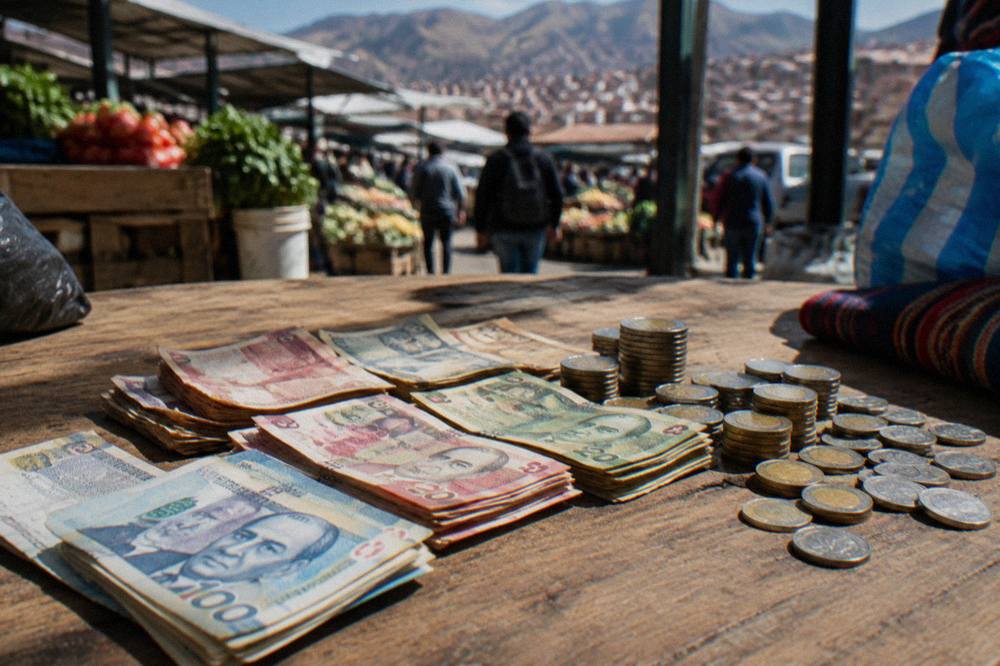
For conversions, the only figures this page can responsibly print are the rounded ones below, all at about S/ 3.4 to the dollar. Anything else invites a stale number into an article that will be read months from now.
| Soles | About US$ |
|---|---|
| S/ 11 | US$3 |
| S/ 20 | US$6 |
| S/ 25 | US$7 |
| S/ 30 | US$9 |
| S/ 70 | US$20 |
| S/ 130 | US$38 |
| S/ 163 | US$48 |
| S/ 211 | US$62 |
| S/ 292 | US$85 |
Should You Take Cash Or Cards To Cusco?
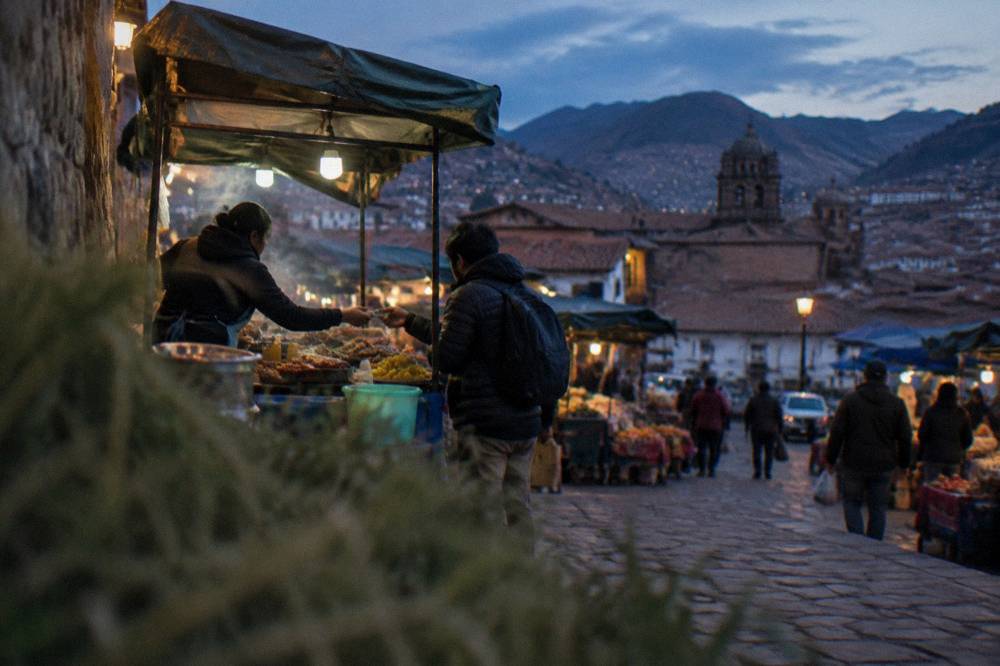
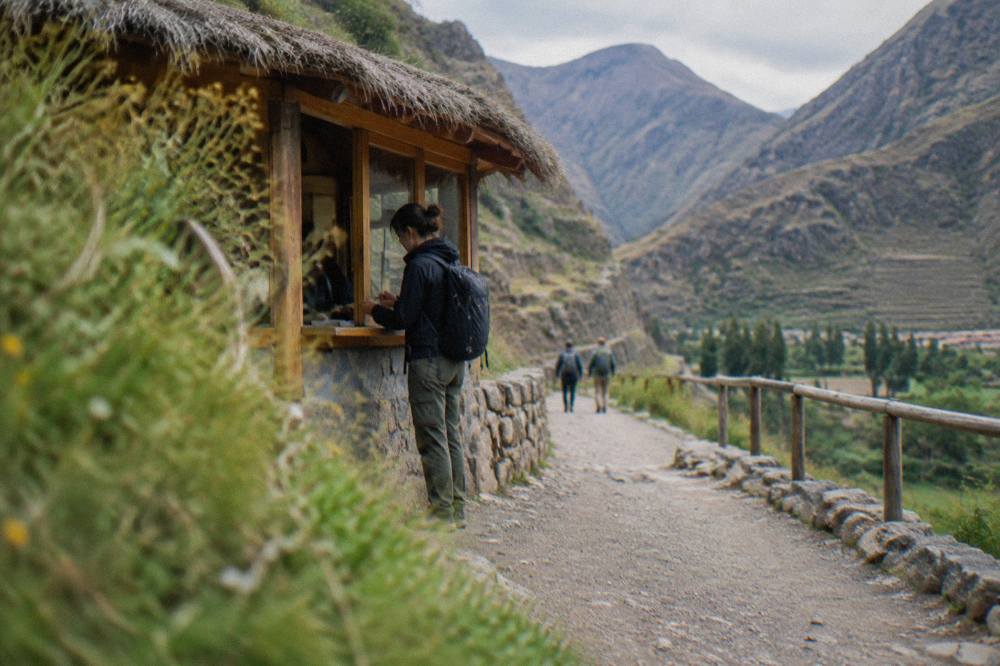
Both, with cash doing the heavy lifting. Cards are accepted in Cusco hotels, established restaurants and larger shops, but cash is what pays for the Boleto Turistico, which COSITUC sells in person only, for market and street food, for trailhead community fees such as the S/ 25 to S/ 30 Rainbow Mountain charge, and for tips. A traveller who lands with only a card will be stuck at the first ticket counter on Av. El Sol.
The dividing line is predictable. Anything with a printed receipt and a till probably takes a card. Anything involving a person standing outdoors with a roll of tickets wants soles in cash. That includes some of the most memorable spending in the region: the salt pans at Maras, the community fees at Palccoyo, and the small museums that make up Boleto Circuit II.
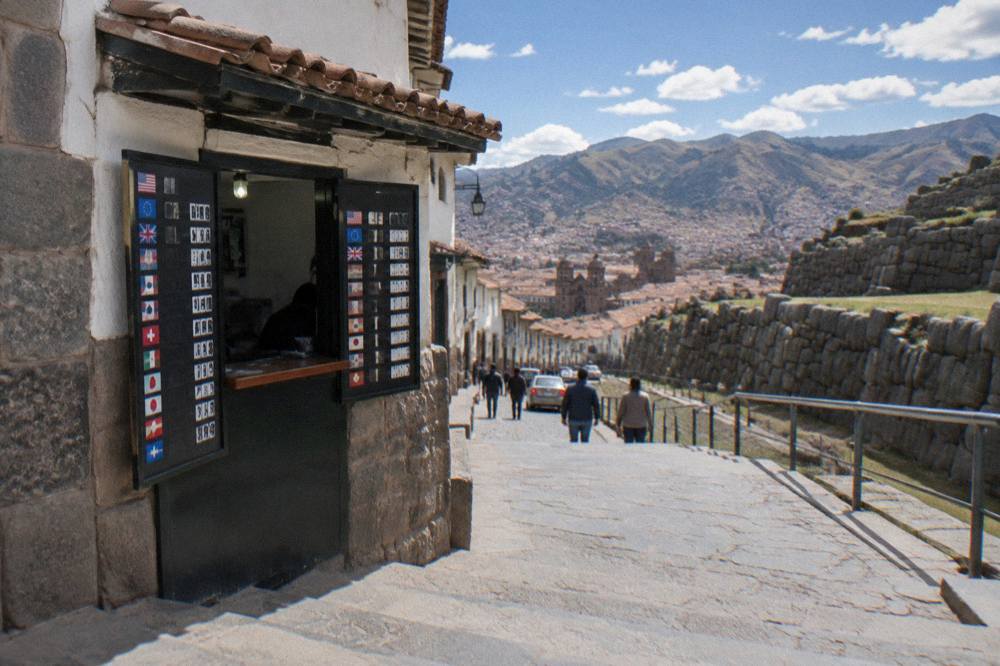
There is also a timing argument for cash. The Boleto Turistico counter at Av. El Sol 103 opens 07:30 to 18:00, daily, and the ticket is valid from the day of purchase, so buying it early on the first morning in the city makes sense. That purchase is a cash-or-card question the official FAQ settles: it is sold in person, at the counter or at most included sites, and not online at all. The full detail is on the site's Boleto Turistico guide.
Practical planning looks like this:
| Spending in Cusco | Cash or card | Notes |
|---|---|---|
| Hotel bill | Card usually fine | Established properties take cards |
| Restaurant with a printed menu | Card often fine | Carry cash as backup |
| Menu del dia lunch spots | Cash | Reported S/ 8 to S/ 15 |
| San Pedro Market stalls | Cash | Small notes help |
| Boleto Turistico counter | In person only | Not sold online |
| Trailhead community fees | Cash, soles | Rainbow Mountain S/ 25 to S/ 30 for foreigners |
| Taxis from the street | Cash | Agree the fare before the ride |
| Tips for guides | Cash | How to Peru reports S/ 20 to S/ 40 for free walks |
The site's Cusco markets guide and the what to eat in Cusco guide both spend a lot of time in cash-only territory, so the wallet matters as much as the appetite.
Where Are The ATMs In Cusco, And How Do You Use Them Safely?
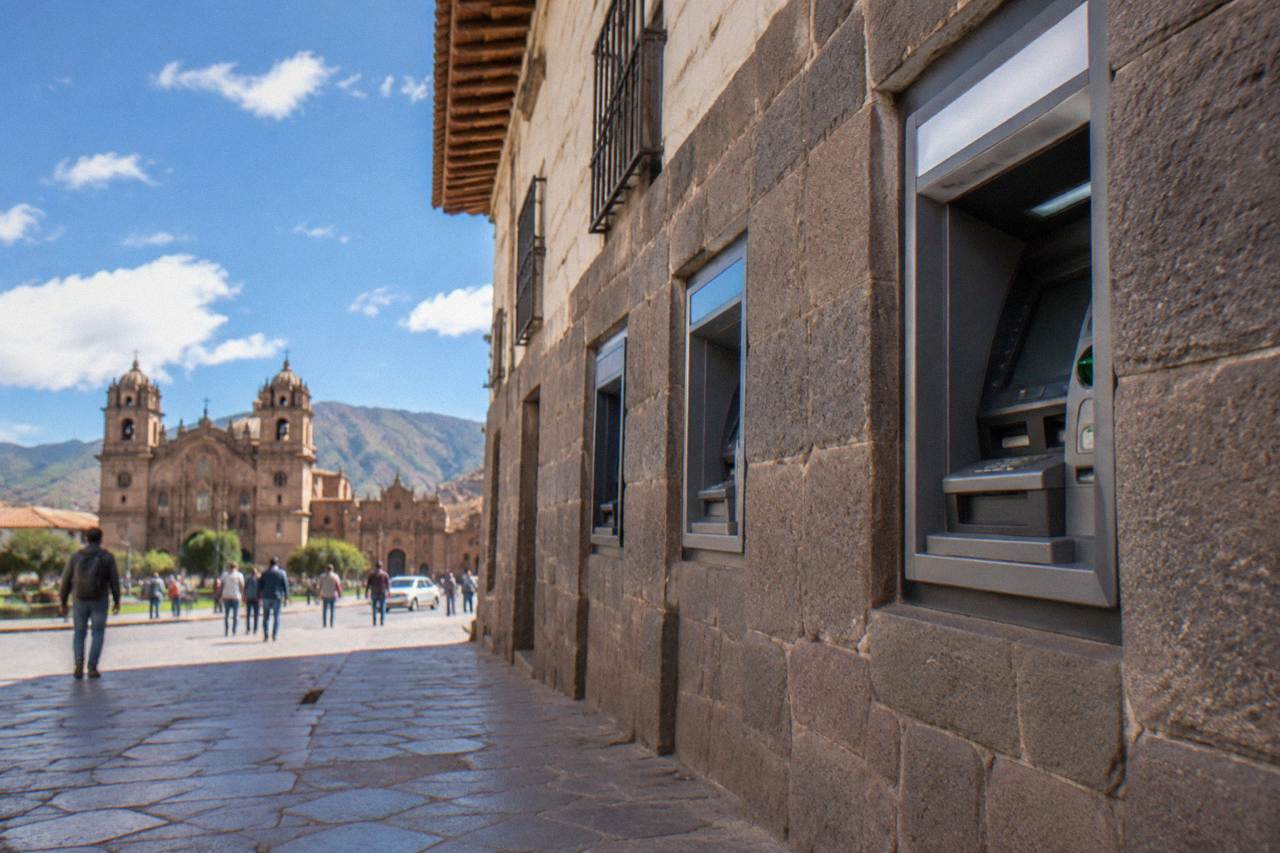
The ATMs in Cusco cluster around the Plaza de Armas and along Av. El Sol, where the main bank branches sit, and bank-owned machines are the ones to prefer. How to Peru reports per-transaction withdrawal caps typically running S/ 400 to S/ 700, with Banco de la Nacion MultiRed machines often fee-free for foreign cards but limited to S/ 400 per withdrawal. Airport and hotel machines are reported as the most expensive option.
That last point is worth dwelling on. The airport is about 6 km from the Plaza de Armas, and its machines are the first thing a tired arrival sees, which is exactly why they price the way they do. Waiting until the historic centre, and using a machine attached to a real bank branch with a staffed lobby, is the reported pattern among travellers who keep their fees down.
Declining the machine's offer to convert the withdrawal into your home currency is the other habit worth forming. That conversion is a service the machine sells, at a margin, and the safe advice is simply to decline it and let your own bank do the conversion.
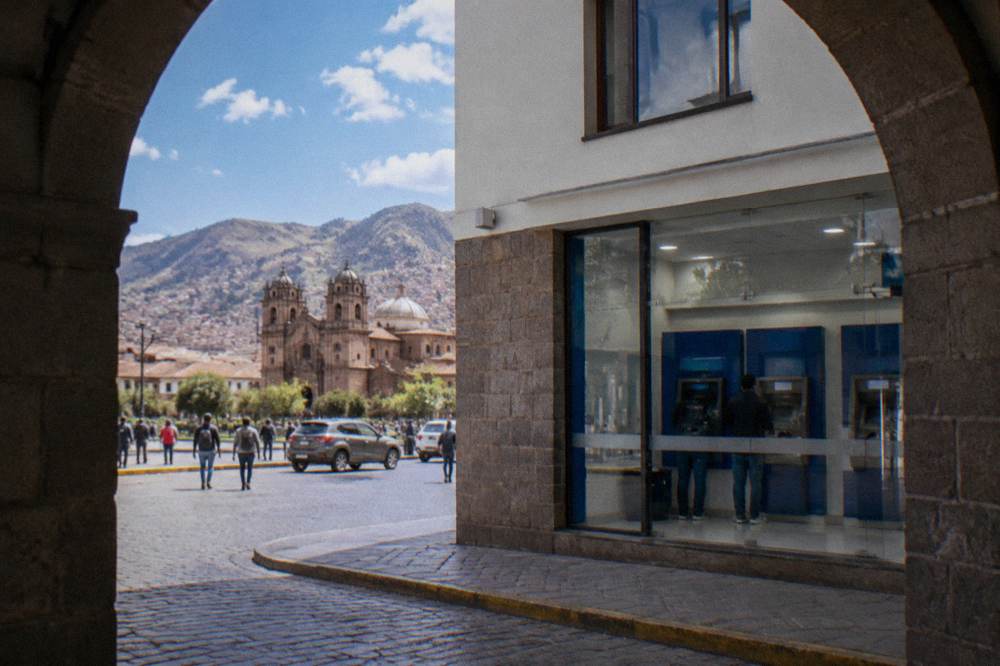
Safety around machines follows the same logic as anywhere at altitude with a tourist economy. The UK FCDO lists street crime as a significant problem in Cusco and other major cities and advises against walking alone in quiet areas at night, which is covered in more detail on the is Cusco safe guide. Withdrawing during the day, in pairs where possible, and pocketing the cash before stepping outside is the standard practice.
A night out is one of the few parts of Cusco life that can be settled entirely in advance. The Cusco nightlife guide covers the bar scene, and the related pub crawl here books online, so the budget for the evening is fixed before the first door opens: Check availability.
How Much Does Everyday Spending Cost In Cusco?
Reported 2026 ranges put a menu del dia, the set lunch, at S/ 8 to S/ 15 (about US$2 to US$4), a cup of coca tea at S/ 2 to S/ 5, and a tourist SIM at S/ 5 to S/ 15 plus a data pack at S/ 20 to S/ 40. An airport taxi to the centre is reported at about S/ 15 to 25. These are operator and travel-site ranges, not official tariffs, and they move with the season.
The pattern they describe is consistent: Cusco is a cheap city for the things locals buy and an imported-goods city for the things tourists buy. Lunch is cheaper than a coffee in many Western capitals. Anything with an imported brand name, electronics especially, costs more than at home.
| Everyday item | Reported range | Notes |
|---|---|---|
| Menu del dia set lunch | S/ 8 to S/ 15 | Market and lunch spots, cash |
| Cup of coca tea | S/ 2 to S/ 5 | Widely available |
| Tourist SIM card | S/ 5 to S/ 15 | Plus data pack S/ 20 to S/ 40 |
| Airport taxi to centre | About S/ 15 to 25 | Agree before the ride |
The SIM card deserves a note, because it changes how the rest of the money questions get answered. A working data connection means live exchange rates, ride apps that show a fare before the ride, and the Ministry of Culture's ticket platform in your pocket. The SIM cards and eSIM guide covers the purchase itself.
To sort your data connection before you land, book a travel eSIM here.
What Does The Boleto Turistico Cost, And Why Does It Want Cash?
COSITUC's integral Boleto Turistico for a foreign adult is S/ 130 (about US$38) and is valid for 10 days, while each of the three partial circuits costs S/ 70 (about US$20): Circuit I covers Saqsayhuaman, Q'enqo, Puka Pukara and Tambomachay, Circuit II covers the city museums and Qorikancha, and Circuit III covers Pisac, Ollantaytambo, Chinchero and Moray. Foreign students pay S/ 70 for the integral ticket.
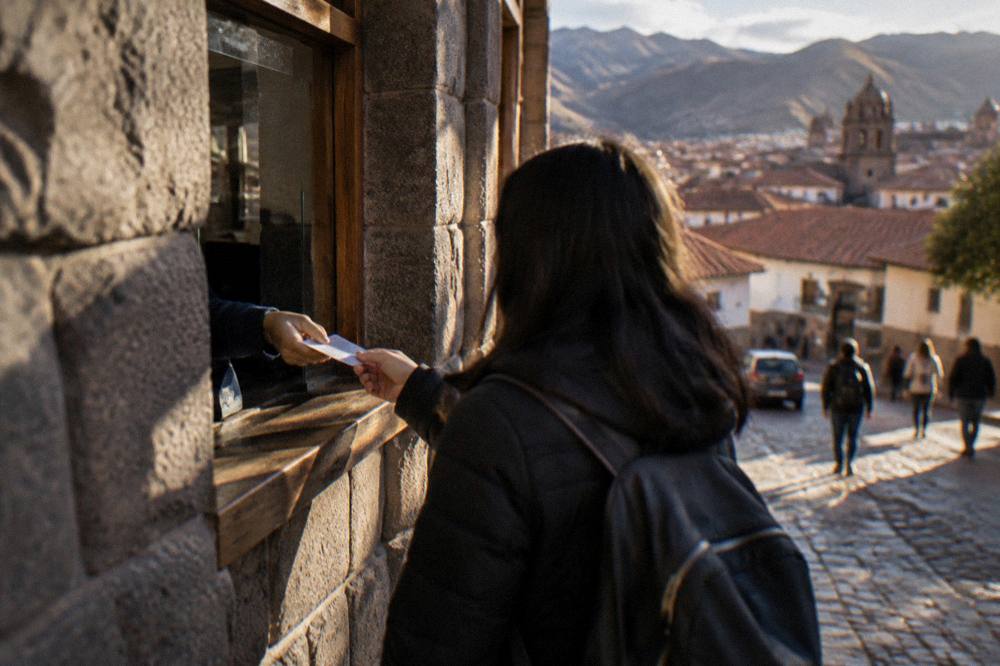
The ticket is sold in person only, at the central counter on Av. El Sol 103, open daily 07:30 to 18:00, and at most of the included sites. There is no online sale, no e-ticket and no reseller, which makes it one of the few large travel purchases in Peru that genuinely cannot be settled from a phone.
| Boleto Turistico option | Price (foreign visitors) | Validity |
|---|---|---|
| Integral ticket, adult | S/ 130 | 10 days |
| Integral ticket, student | S/ 70 | 10 days |
| Partial Circuit I (Saqsayhuaman) | S/ 70 | 1 day |
| Partial Circuit II (City) | S/ 70 | 2 days |
| Partial Circuit III (Sacred Valley) | S/ 70 | 2 days |
Children enter free to age 9, and ages 10 to 17 pay the student price with ID, per the COSITUC FAQ. The only discount category is students: there is no teacher or youth-card discount. Machu Picchu is not on the Boleto at all, a point the site's Boleto Turistico guide unpacks in full, because it is the single most common mix-up in Cusco trip planning.
Which Entry Fees In Cusco Are Not On The Boleto?
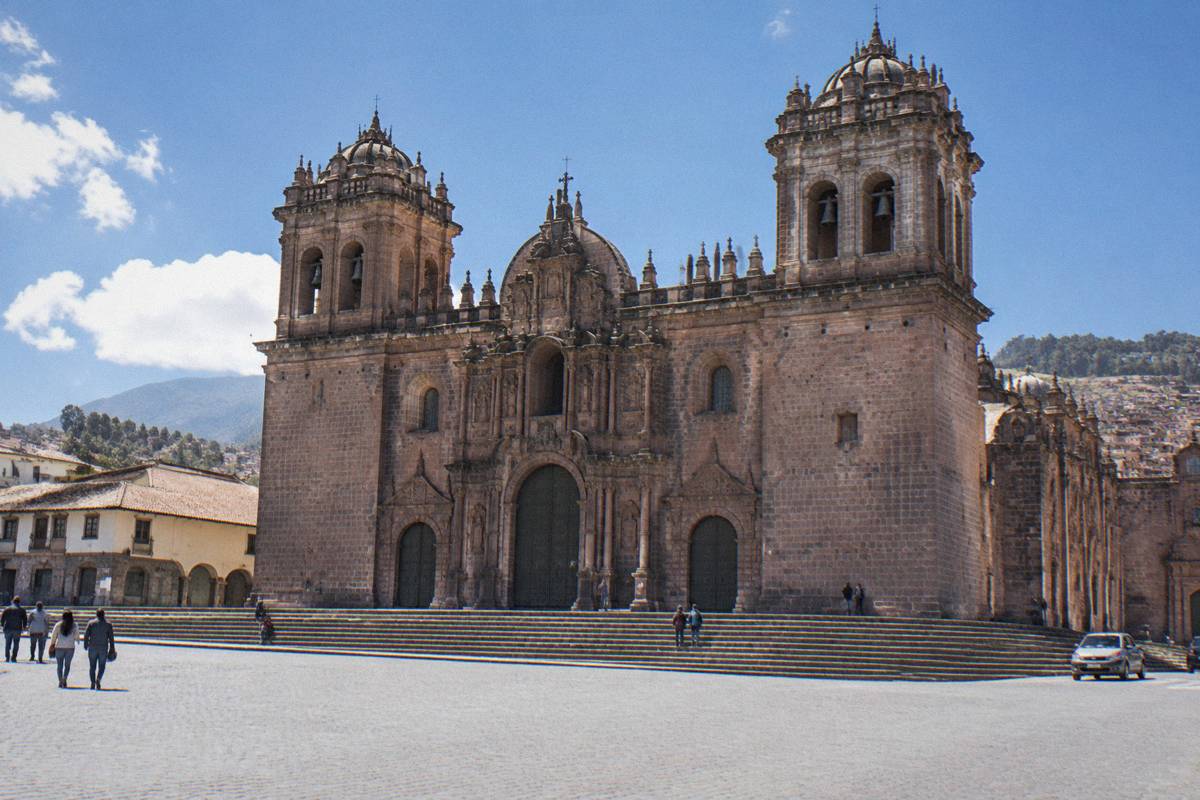
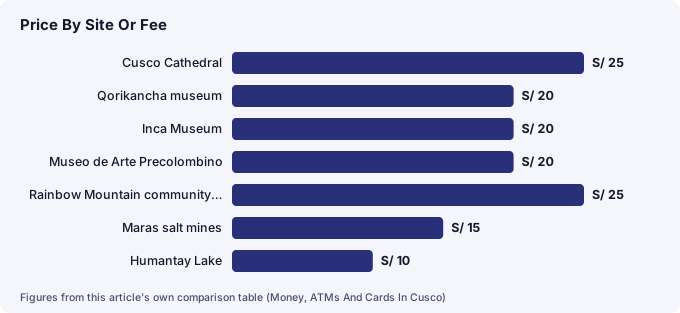
The Cusco Cathedral charges S/ 25, the Qorikancha museum S/ 20, the Inca Museum S/ 20 and the Museo de Arte Precolombino S/ 20 general or S/ 10 for students, per peru.travel listings, while off-boleto trailhead fees include Rainbow Mountain at S/ 25 to S/ 30 in cash, Palccoyo at about S/ 20, the Maras salt mines at S/ 15 to S/ 20 and Q'eswachaka at about S/ 20. Machu Picchu is sold separately on the Ministry of Culture platform, from about S/ 163 for foreign adults.
These are the fees that decide how much cash to carry on any given day. A Sacred Valley morning that takes in Maras and Moray needs small notes at the salt pans. A Rainbow Mountain dawn needs the community fee in soles at the trailhead, with no card machine in sight.
| Site or fee | Price | Source note |
|---|---|---|
| Cusco Cathedral | S/ 25 | peru.travel listing, dated |
| Qorikancha museum | S/ 20 | peru.travel; also on Boleto Circuit II |
| Inca Museum | S/ 20 | peru.travel |
| Museo de Arte Precolombino | S/ 20 general, S/ 10 student | peru.travel |
| Rainbow Mountain community fee | S/ 25 to S/ 30, cash | peru.travel and operators |
| Palccoyo | About S/ 20 | Operators, 2026 |
| Maras salt mines | S/ 15 to S/ 20 | Operators, 2026 |
| Q'eswachaka | About S/ 20 | Operator |
| Humantay Lake | S/ 10 to S/ 20 | Sources disagree, no single figure |
The Machu Picchu figure deserves its "from about" wording. Secondary sources put the foreign adult price at about S/ 163 for standard routes and S/ 211 for mountain routes, both including the S/ 11 SERNANP fee in force since 1 May 2026, and the official platform shows the live price at the moment of purchase. The site's day trips to Machu Picchu coverage walks through the ticket rules, which are strict: tickets are nominal, valid only for the stated date, hour, circuit and holder.
Is It Better To Exchange Money Or Withdraw It In Cusco?
No verified source in this pack rates exchange kiosks against ATMs in Cusco, so the honest answer is structural rather than numerical: bank ATMs convert at the interbank rate plus their own fees, exchange houses add a margin nobody publishes in advance, and the only quoted anchor is the BCRP's own rate of about S/ 3.4 to the dollar. Comparing the two on the day, with the amount actually received in hand, is the only reliable test.
What can be said with confidence is that changing money twice loses money twice. Arriving with US dollars and converting them once, either at a machine or a kiosk, is cheaper than converting at home into soles at a worse rate and then converting again in Cusco for small notes. Euros convert too, at roughly S/ 3.9 per euro in the BCRP's late-September 2026 quote, but the dollar is the comparison currency every counter in the city knows.
The practical sequence most reported by travellers looks like this: withdraw a moderate amount at a bank machine in the centre, spend down to small notes over a few days, and withdraw again when the supply of S/ 10s and S/ 20s runs dry. Large single withdrawals create the exact change problem the market stalls cannot solve.
How Does Tipping Work In Cusco?
How to Peru's 2026 guidance reports restaurant tips of up to 10 percent only where no servicio charge is already on the bill, free walking tour guides at S/ 20 to S/ 40 per person, day-tour guides at S/ 10 to S/ 20 per person, drivers at S/ 5 to S/ 10 per person, no tip for taxi drivers, and S/ 3 to S/ 5 per bag for trek porters. All of it is cash, all of it in soles, and none of it is an official tariff.
The free walking tours are the clearest case. GuruWalk lists several pay-what-you-want walks in Cusco, including the Free Tour in Cusco with local guide and the Yana walking tour of the historic centre, and the entire business model runs on the tip at the end. The site's free walking tours guide covers which walks exist and what they cover.
For a fuller picture of what a Cusco day costs end to end, the Cusco costs guide and the what to buy in Cusco guide carry the shopping side, including the alpaca question, where this page stays silent on prices because no verified band exists.
Common Questions About Money And ATMs In Cusco
Are ATMs easy to find in Cusco?
Yes. Bank branches and their machines cluster around the Plaza de Armas and along Av. El Sol in the historic centre, and there are machines at the airport about 6 km away. How to Peru reports per-transaction caps typically running S/ 400 to S/ 700, with Banco de la Nacion MultiRed machines often fee-free for foreign cards but limited to S/ 400 per withdrawal.
Can you pay by card everywhere in Cusco?
No. Hotels, established restaurants and larger shops take cards, but the Boleto Turistico is sold in person only, market stalls want cash, trailhead community fees such as Rainbow Mountain's S/ 25 to S/ 30 for foreigners are collected in soles, and tips are always cash.
Should you bring US dollars to Cusco?
Dollars convert readily, and the BCRP quotes the sol at about S/ 3.4 to the dollar, but almost nothing on the ground is priced in dollars. Dollars are best treated as a one-time conversion input rather than spending money, and soles withdrawn locally from a bank machine do the daily work.
How much cash should you carry per day in Cusco?
Enough for the day's fees, food and tips in small notes. A menu del dia runs a reported S/ 8 to S/ 15, a coca tea S/ 2 to S/ 5, and a day tour's tip S/ 10 to S/ 20 per person for the guide, so the honest answer is that it scales with the day's plan rather than with a fixed figure.
Do you need cash for Machu Picchu?
The ticket itself is bought on the Ministry of Culture platform or in person at Machu Picchu Pueblo, at from about S/ 163 for foreign adults on standard routes including the S/ 11 SERNANP fee. Around the site, cash in soles covers meals, tips and small purchases, so a day's worth of small notes is worth carrying.
Is it safe to use ATMs in Cusco at night?
The UK FCDO advises against walking alone in quiet areas at night and lists street crime as a significant problem in Cusco, so the reported practice is to withdraw during the day, use machines attached to staffed bank branches, and pocket the cash before leaving the lobby.
The short version of all of this: soles in the pocket, small notes in reserve, cards for the hotel and the restaurants with tills, and the big official prices, the S/ 130 Boleto and the Machu Picchu ticket, settled at their own counters and platforms before the day starts. For everything else this city offers, the Things To Do In Cusco Peru homepage carries the full range of guides, tours and day trips, each with its own costs spelled out.