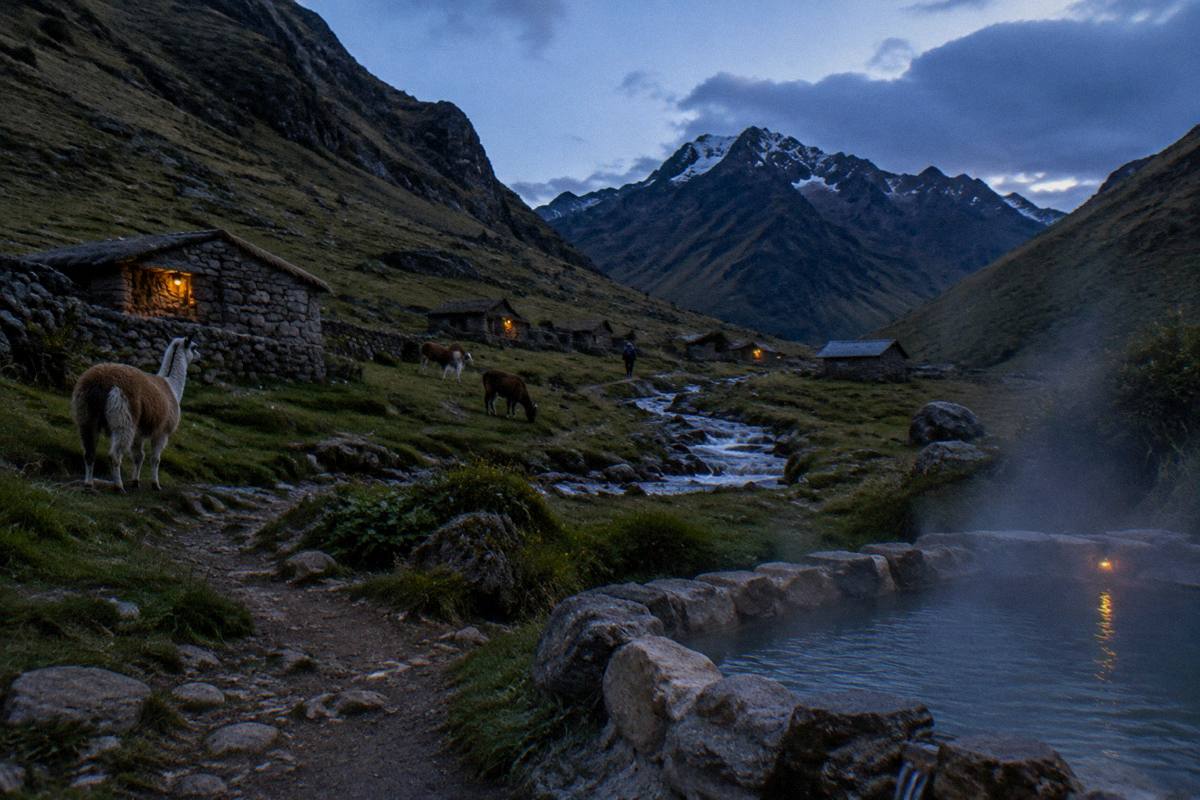
Choquequirao Trek From Cusco: What To Know Before You Go
Choquequirao is a remote Inca archaeological site in the Cusco region of Peru, reached on foot rather than by train, and the trek to it is one of the most demanding outings the area offers. This guide sets out what verified sources say about the trek, the season, the costs and the preparation, without inventing a single number.
Short answer
Treks are described here in general terms, covering the season, the altitude rules and the permit landscape.
Choquequirao sits in the high Andes of the Cusco region of southern Peru, the same region that holds Cusco city at 3,335 m and the Machu Picchu citadel at 2,430 m, but it belongs to a different world of travel. There is no train, no ticket platform queue and no shuttle bus line: the site is reached by road from Cusco and then on foot, which is the single fact that shapes everything about a visit. The Peruvian state tourism board promotes it as a remote Inca archaeological complex, and the widely used description of it as a quieter counterpart to Machu Picchu is qualitative and safe: it is an Inca site, it is far from the region's transport spine, and its visitor counts are a small fraction of Machu Picchu's. What follows is a research summary, not a trip report: every figure is checked against its source, and where no reliable figure exists, this page stays quiet rather than guessing.
What Is Choquequirao And Where Is It Relative To Cusco?
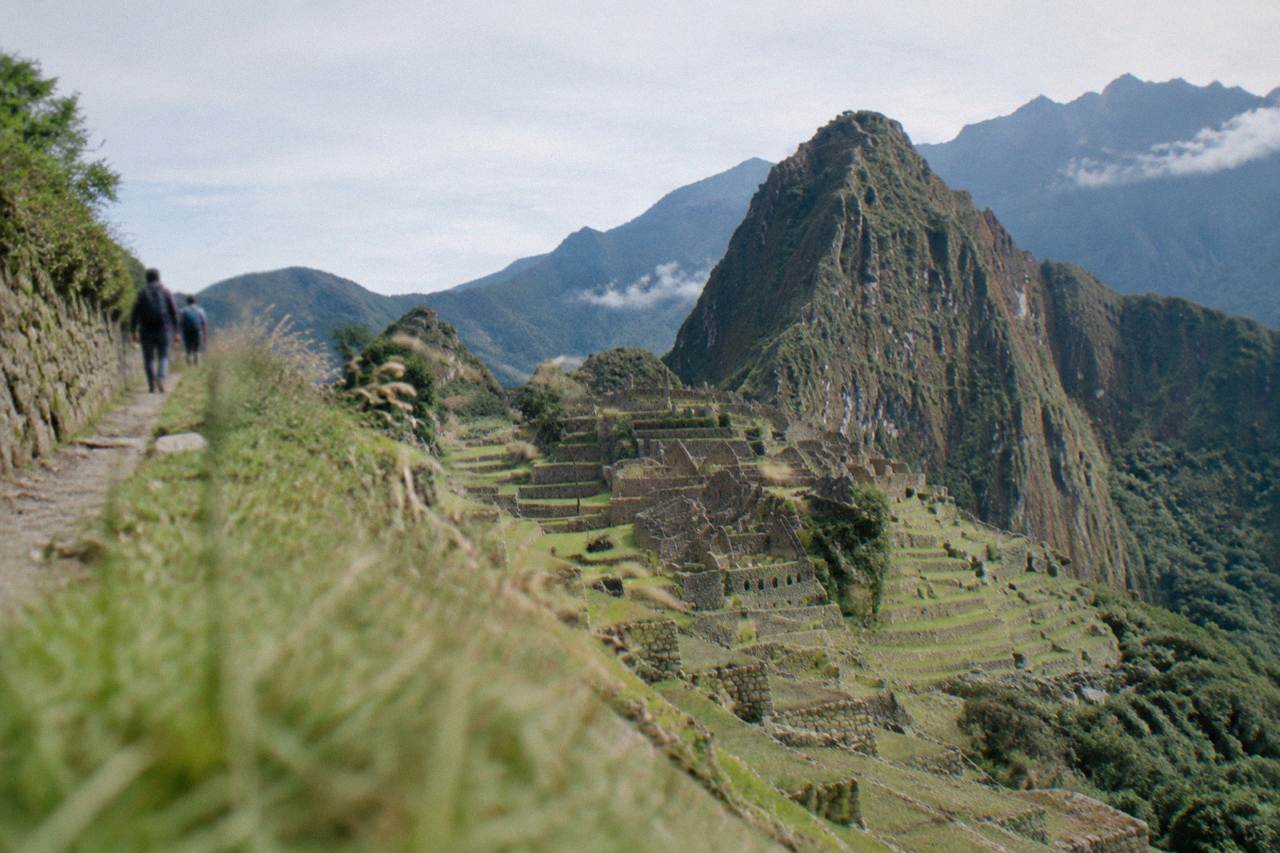
Choquequirao is a large Inca archaeological site in the Cusco region of southern Peru, built on a spur high above a river canyon and reached only after a walk in, with no rail line and no road to the ruins themselves. It sits in the same broad Vilcabamba landscape as Machu Picchu, but it sees a small fraction of the visitors, and Cusco city remains the practical base for every approach.
The site is best understood as the region's commitment test. Machu Picchu is served by train, bus and a Ministry of Culture ticket platform; Choquequirao is served by legs. That difference explains why the two sites are not really competitors: one is a logistics exercise with a timed entry slot, the other is a multi-day walk with a ruin at the end of it. The qualitative contrast is fair and well documented: Machu Picchu recorded 1,479,506 visitors in 2025 in the MINCETUR open dataset, while Choquequirao does not even appear in that dataset's list of individually counted Cusco sites, which is itself a measure of how far it sits from the region's main tourist flow.
What the site offers, in plain terms, is terraces, ceremonial structures and a setting that the Peruvian tourism board describes as remote and hard to reach. That silence is deliberate. Plenty of pages quote confident figures for this trek; the honest position is that none of them can be confirmed here, and a reader planning the walk should get the route specifics from a licensed operator at the moment of booking.
For context on the landscape, the site sits in the same high-Andes world as the rest of the region's trekking. Cusco's Plaza de Armas is at 3,335 m per PROMPERU, Sacsayhuaman stands at 3,701 m, and the treks out of the region climb into country that is higher still. The general Cusco altitude guide covers how the elevation affects every activity in the region, and it applies to this trek more than to most.
How Hard Is The Choquequirao Trek Compared With Other Treks From Cusco?
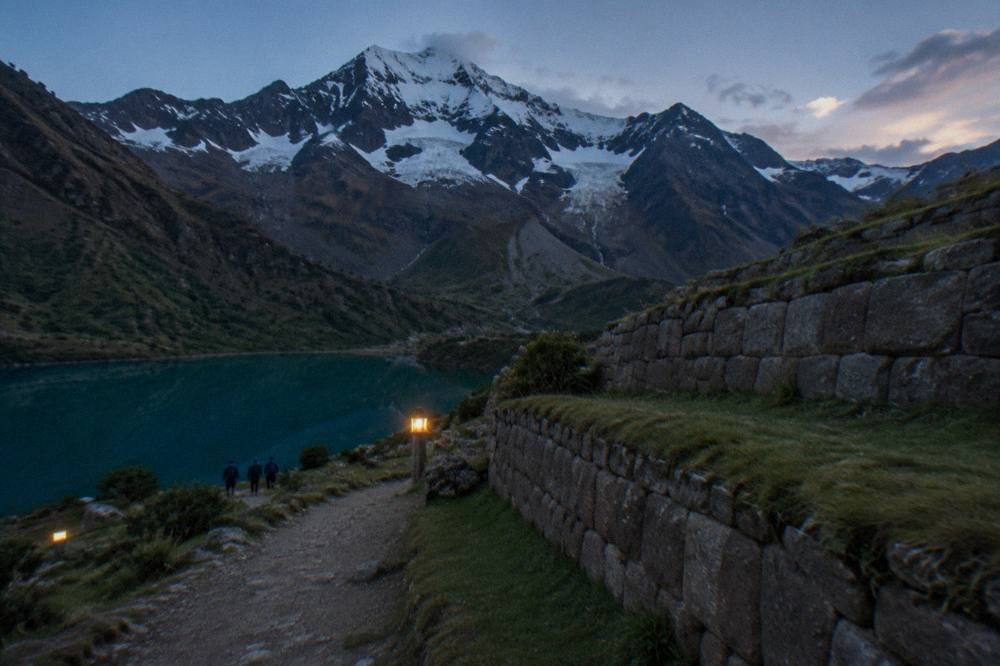
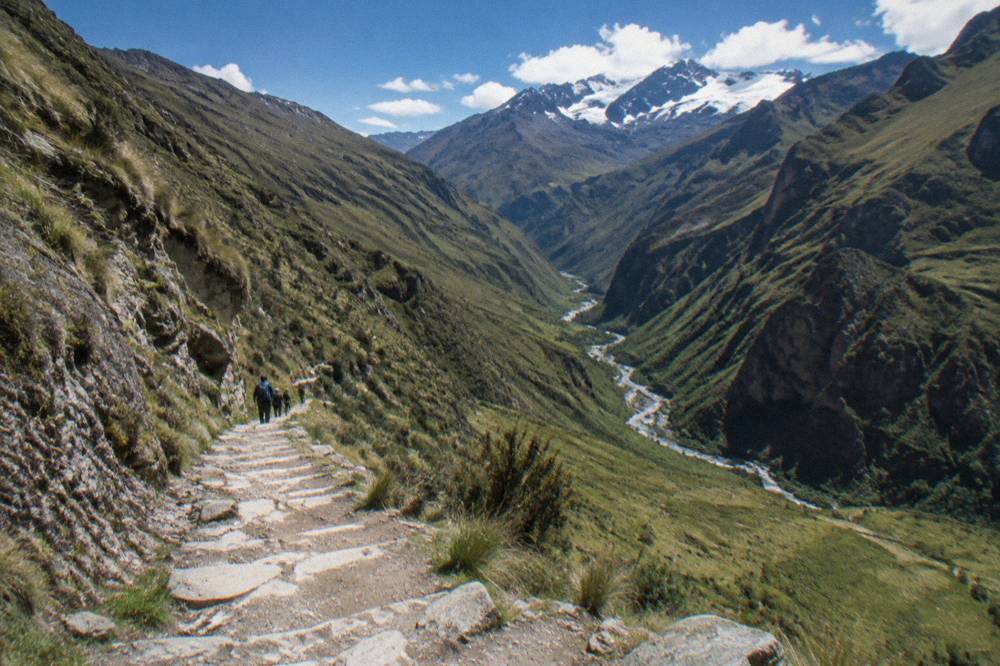
The Choquequirao trek is generally described as the hardest of the standard multi-day treks offered from Cusco, harder than the Inca Trail and the Salkantay trek, because it descends into a canyon and climbs back out repeatedly with no gentle day. No verified source gives a trail length, a daily elevation figure or a difficulty grade, so the honest comparison is structural: canyon walking, no train exit, and a return leg that repeats the hardest terrain.
The comparison matters because visitors to Cusco tend to choose between a small set of well-trodden options. The Inca Trail is permit-controlled, capped at 500 people a day including porters and guides, sold only through licensed agencies, and closed every February. The Salkantay trek and the Lares trek are agency-organised alternatives with high passes and hot springs respectively. Choquequirao shares their high-Andes character but not their infrastructure: it is the one where the walk itself, not the permit, is the barrier.
That barrier is also the appeal. Operators describe the site as one of the last places in the region where a visitor can stand among major Inca terraces without sharing them with a crowd, and the MINCETUR visitor dataset backs the framing indirectly: the individually counted Cusco sites are dominated by Machu Picchu, Ollantaytambo, Saqsaywaman and Pisac, and Choquequirao is not on the list at all. A trek this demanding also rewards proper support, and a fully guided option is a reliable way to manage it. The classic Salkantay trek to Machu Picchu, run as a small-group hike, is the roster's flagship guided multi-day trek from Cusco, and it can be compared directly on the operator's live listing; see the tour's own page on this site at Classic 5-Day Salkantay Trek details or Check availability.
For a reader weighing guided versus independent, one neighbour stands out: Inca Trail permits cannot be bought independently at all, only through licensed agencies. For Choquequirao the permit question does not arise in the same way, but the physical demands push many trekkers toward an operator anyway, and the packing, mule and camping logistics are exactly what an agency handles. The general day hikes from Cusco guide covers shorter options for building up to a trek of this scale.
When Is The Best Time Of Year To Trek To Choquequirao From Cusco?
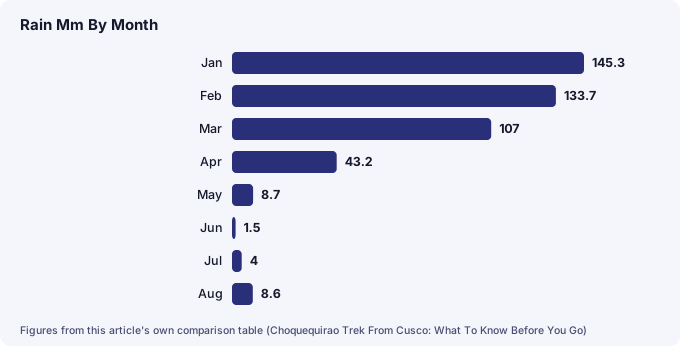
The dry season, roughly May to September, is the window for the Choquequirao trek, because the Cusco region concentrates its rain from December to March, when the December to March months carry 71.9 percent of the year's 707.8 mm at the WMO and SENAMHI Cuzco station. June to August brings frost at night in Cusco, but the mean daily maximum stays between 18.8 and 20.9 C all year.
The climate record behind that answer comes from the "Cuzco" station, data supplied by SENAMHI to the World Weather Information Service, and it is a historical normal rather than a 1991 to 2020 table. The pattern it shows is the one that governs every trek in the region: a hard split between a dry winter and a wet summer, remembering that this is the Southern Hemisphere, so June to August is winter, dry, clear and cold at night, never "summer". A canyon trek with river crossings and steep dirt paths is a different proposition in the wet months, and the same logic applies to the region's other big walks, as the best time to visit Cusco guide and the month-by-month Cusco weather breakdown set out in full.
| Month | Mean max C | Mean min C | Rain mm |
|---|---|---|---|
| Jan | 18.9 | 6.6 | 145.3 |
| Feb | 18.8 | 6.5 | 133.7 |
| Mar | 19.1 | 6.2 | 107.0 |
| Apr | 19.7 | 4.9 | 43.2 |
| May | 19.8 | 2.5 | 8.7 |
| Jun | 19.5 | 0.3 | 1.5 |
| Jul | 19.1 | 0.1 | 4.0 |
| Aug | 19.8 | 1.6 | 8.6 |
| Sep | 19.8 | 3.9 | 21.8 |
| Oct | 20.9 | 5.5 | 39.4 |
| Nov | 20.7 | 6.1 | 71.9 |
| Dec | 19.4 | 6.4 | 122.7 |
The seasonal split in rain is stark enough to plan around. SENAMHI's own framing is that the high Cusco basin receives 94 percent of annual precipitation between October and April, and the station table shows May to August bringing just 22.8 mm between them, 3.2 percent of the annual total. Frost nights peak in June and July, which matters for camping gear but not for daylight walking conditions.
One calendar note belongs here even though it concerns a different trail: the Inca Trail closes every February, so visitors combining treks or travelling in the wet core should check the status of any specific route with their agency rather than assuming a uniform rule. Never treat a reported closure of any trail as permanent; individual route closures in this region come and go.
How Should You Prepare And Acclimatise In Cusco Before The Trek?
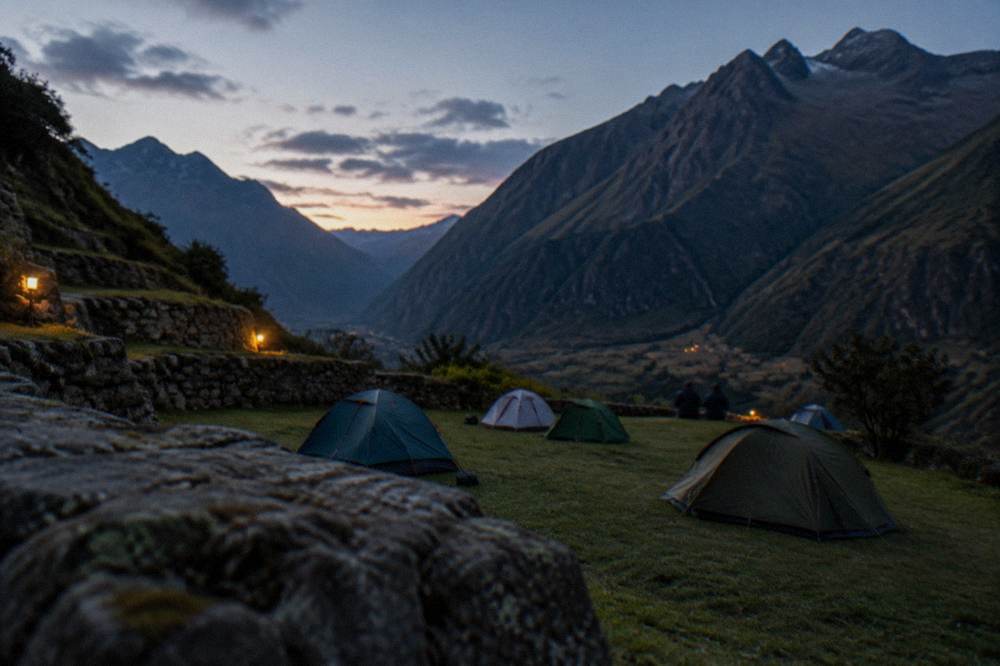
The CDC Yellow Book advises graded ascent over rapid arrival, and it names Cusco explicitly as a rapid-ascent destination at approximately 3,350 m, which is why acclimatisation days in the city before a canyon trek are the standard preparation. The CDC says rates of altitude illness approach 50 percent in abrupt-ascent situations where staged acclimatisation is not feasible, and it suggests acetazolamide as a prescription decision to discuss with a doctor.
That is the full extent of what a health section on this page can honestly say. No verified source gives a probability of altitude sickness for trekkers specifically, a number of acclimatisation days that works for everyone, or an oxygen figure for any point on this route, and inventing one would be the most dangerous thing a page like this could do. What the CDC does state, beyond the ascent rules, is practical: travellers arriving by air at Cusco's altitude can consider spending the first nights sleeping lower before climbing higher, alcohol is best avoided for the first 48 hours at altitude, and the Peru travel health notice stands at Level 1, Practice Usual Precautions, with a recommendation to talk to a doctor about high-altitude destinations.
The acclimatisation days themselves are not dead time, and Cusco is well built for filling them gently. The dedicated acclimatisation day guide lays out a low-exertion first day in the city, and the free things to do in Cusco guide covers walks that cost nothing. A quieter option that keeps the body working without straining it is a culture workshop: the Textile Workshop Experience in the Cusco region, a private class run with Andean women artisans, sits in the roster as exactly that kind of half-day activity, and its details and current price are on the operator's live listing.
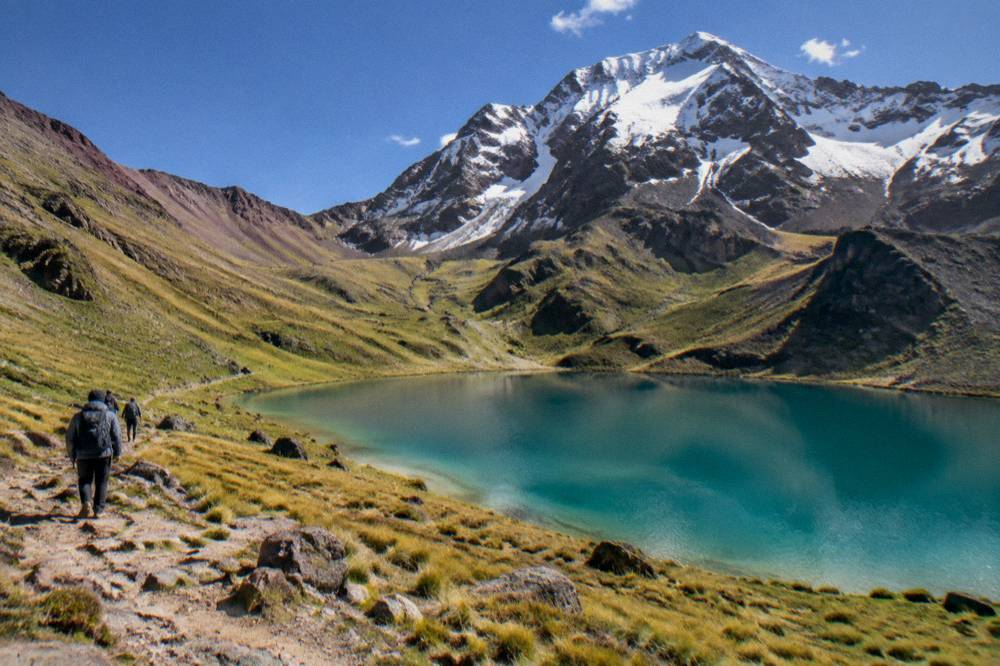
A useful test hike before committing to a canyon trek is a guided day walk at altitude, and the Humantay Lake full-day excursion from Cusco is the roster's most-booked option in that slot, with breakfast and a buffet lunch included. The lake sits at about 4,200 m per the secondary sources in the research pack, sources that disagree enough that no single figure should be treated as official, but the outing works well as a readiness check for anything longer and steeper. Full details render on the card below.
For food and rest before the walk, the what to eat in Cusco guide and the where to stay in Cusco guide cover the practical side of the city, and neither requires any strenuous reading.
What Does A Choquequirao Trek Cost Compared With The Inca Trail?
No verified source gives an official price for the Choquequirao trek, so this page prints none; the comparison that can be made honestly is structural. The Inca Trail's government permit portion is reported at about S/ 292, US$77 to 85, from secondary sources, permits are sold only through licensed agencies at 500 people a day including staff, and the trail closes every February.
That permit figure is a secondary-source number and is labelled as such; the official tariff is on the stay-silent list, so it is never presented here as a state price. The Inca Trail comparison is the one buyers actually make, and the honest framing is that the Inca Trail carries a capped, agency-only permit system with a government fee, while Choquequirao's costs are dominated by the trek's own logistics: the days of walking, the mule support, the camping and the guide. Those costs sit in an operator's quotation, not in a published tariff, which is why this guide sends readers to live listings rather than to a price table.
For the region's other big walks, the same rule applies: product prices on this site render from verified listing data, never from a writer's keyboard. The Salkantay trek guide and the Lares trek guide describe those options in the same general terms, and the booking cards on each page carry the live figures.
| Item | Verified figure | Source basis |
|---|---|---|
| Inca Trail daily quota | 500 people, including porters and guides | Pack, section 4 |
| Inca Trail sales channel | Licensed agencies only, never independent | Pack, section 4 |
| Inca Trail February | Closed every February | Pack, section 4 |
| Inca Trail permit, government portion | About S/ 292 (US$77 to 85), secondary | Pack, section 4 |
| Choquequirao official price | No verified figure; stay silent | Stay-silent list |
| Choquequirao trail length or duration | No verified figure; stay silent | Stay-silent list |
Two smaller costs in the region are verified and worth knowing for the wider trip. The Boleto Turistico del Cusco, sold in person only at the COSITUC counter on Av. El Sol 103 and at most included sites, costs S/ 130 for a foreign adult integral ticket valid for 10 days, or S/ 70 per partial circuit, and it covers 16 sites, none of which is Machu Picchu and none of which is Choquequirao. The Boleto Turistico guide has the full site list.
| Boleto Turistico ticket | Price, foreign adult | Validity |
|---|---|---|
| Integral (16 sites) | S/ 130, about US$38 | 10 days |
| Partial Circuit I (Saqsayhuaman) | S/ 70, about US$20 | 1 day |
| Partial Circuit II (City) | S/ 70, about US$20 | 2 days |
| Partial Circuit III (Sacred Valley) | S/ 70, about US$20 | 2 days |
| Foreign student integral | S/ 70, about US$20 | 10 days |
How Do You Get To The Choquequirao Trailhead From Cusco?
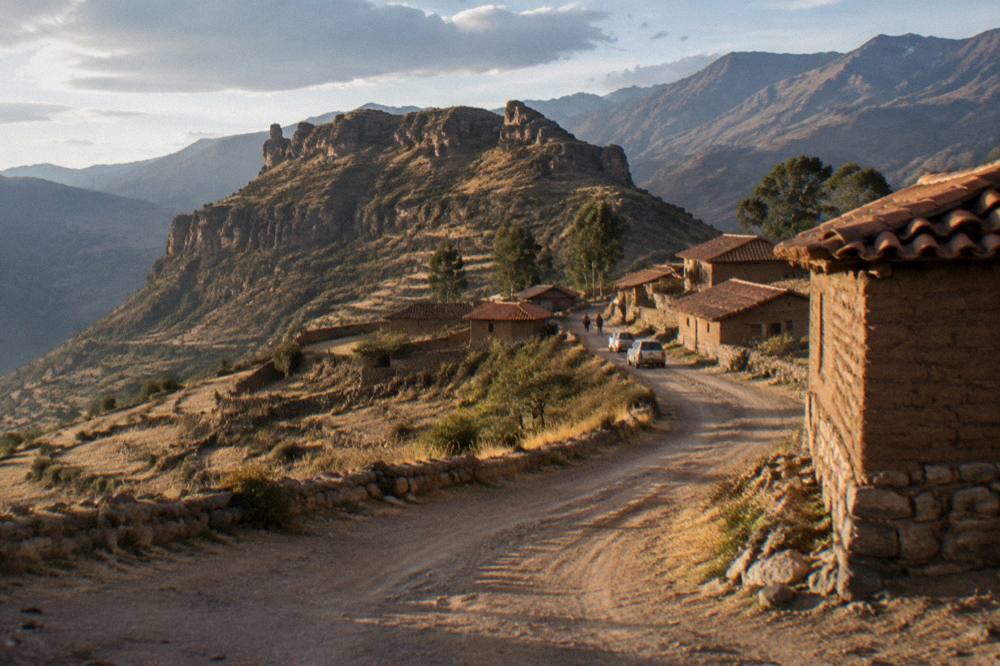
Every approach to Choquequirao starts in Cusco with a road journey to a trailhead west of the city, followed by a walk in on foot; there is no train and no bus to the ruins, which is the structural difference between this site and Machu Picchu. No verified source in this site's research pack gives a road distance, a driving time or a colectivo fare for the Cusco to trailhead leg, so this page prints none of them.
The transport picture for the region as a whole is well documented, and it frames the choice. Machu Picchu is served by PeruRail and Inca Rail from the Poroy and San Pedro stations on the Cusco side, with the bimodal bus-plus-train combination used when Cusco-area track is out of service; that is a sibling site's topic and gets only this mention here. Choquequirao sits outside that rail world entirely. The practical implication is that the journey is arranged as part of the trek package: agencies run the road leg, and the walking begins where the road ends.
For the wider trip, the getting around Cusco guide covers the city's transport options, and the Cusco airport guide handles arrival. On the ground, everyday price ranges are small ones: an airport taxi to the centre is reported at about S/ 15 to 25, a menu del dia runs about S/ 8 to 15, and a cup of coca tea about S/ 2 to 5. Longer road fares are shown or agreed before the ride and belong to the operator's quotation, not to this page.
Altitude is the other thing that changes along the way. The region's key elevations are verified and worth keeping in mind, because a trek that starts from Cusco begins high and only climbs.
| Place | Elevation | Source note |
|---|---|---|
| Cusco, Plaza de Armas | 3,335 m | PROMPERU |
| Cusco airport | 3,310 m | OSM record |
| Sacsayhuaman | 3,701 m | Secondary |
| Machu Picchu citadel | 2,430 m | Official site |
| Aguas Calientes town | About 2,040 m | Secondary |
| Humantay Lake | About 4,200 m | Secondary, sources disagree |
| Vinicunca (Rainbow Mountain) | About 5,000 m | Secondary and PROMPERU |
Note what that table quietly shows: Cusco is higher than Machu Picchu, by roughly 900 m, a difference the pack states directly. Trekkers who acclimatise in Cusco have already done the hardest part of the altitude work before the trailhead.
Is Choquequirao Worth It Instead Of Machu Picchu?
For a visitor who wants Inca architecture without crowds and is fit enough for a canyon trek, Choquequirao is the region's strongest answer; for everyone else, Machu Picchu remains the practical choice, with 1,479,506 visitors in 2025 against a site that does not even appear in the MINCETUR counted list. The two are not substitutes: one is a logistics exercise, the other a commitment, and many visitors to Cusco do the first and admire the second from a distance.
The Machu Picchu side of the comparison has exactly one page on this site, the Machu Picchu day trip guide, and the ticketing detail belongs to a sibling site, so it gets only this sentence here. What this page can add is the framing the numbers give. Machu Picchu's 2025 total of 1,479,506 visitors, of whom 1,140,714 were foreign, came through a system capped at 4,500 daily entries on normal days in 2026 and 5,600 on listed high-season dates, with three circuits and ten routes since 1 June 2024. Choquequirao's absence from the individually counted site list is the clearest statement of the difference.
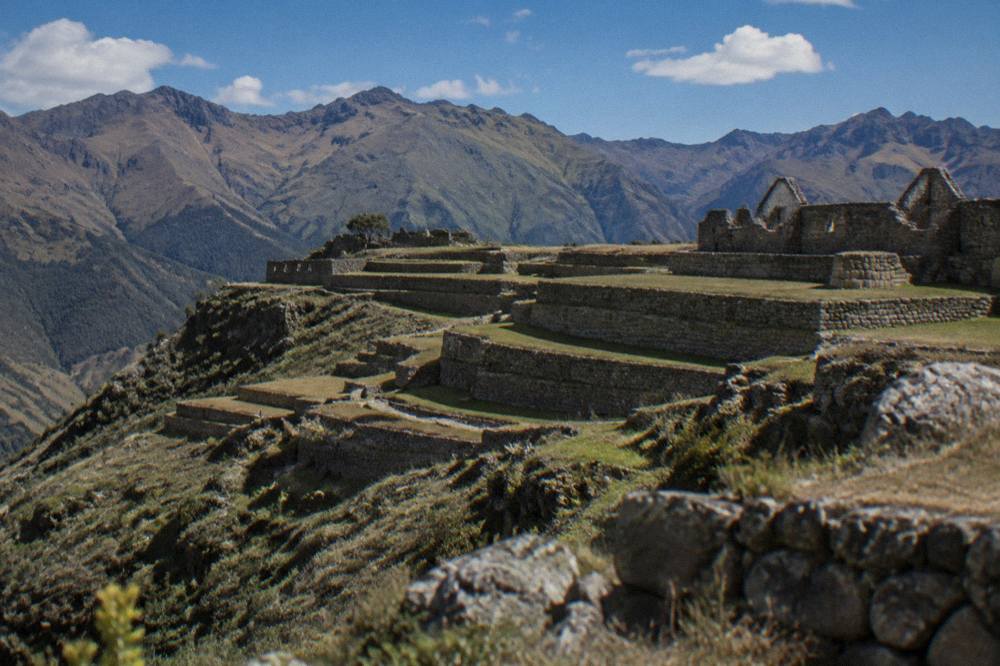
The honest answer to "worth it" depends on the trekker. The walk is demanding by general repute, the site is genuinely remote, and the reward is Inca terraces in near-silence. It does not support a difficulty grade, a crowd count or a "better than Machu Picchu" verdict, and any page offering those is guessing. A sensible middle path for many visitors is to trek Choquequirao with an agency and to see Machu Picchu separately by train, using the Cusco and Machu Picchu itinerary guide for the combination.
For visitors who want the trek experience with more infrastructure, the guided alternatives in the roster are the honest comparison set, and the cards below render their live prices and ratings from verified listing data rather than from memory.
Among those alternatives, the Humantay Lake full-day excursion deserves a second look even for committed Choquequirao trekkers, because it doubles as a shakedown hike: a guided day at altitude with meals included, booked on the operator's live listing, tells a visitor a great deal about how their body handles the Andes before they commit to a canyon. The card below carries its figures.
Common Questions About The Choquequirao Trek
How far is Choquequirao from Cusco?
No verified source in this site's research pack gives a road distance or a trail length for the Choquequirao route from Cusco, so this page prints none. What is verified is the structure of the journey: a road leg from Cusco to a trailhead, then a walk in on foot, with no train and no bus to the ruins. Route specifics belong to a licensed operator's itinerary at the moment of booking.
Is the Choquequirao trek harder than the Inca Trail?
It is generally described as the harder of the two, because it descends into a canyon and climbs back out, while the Inca Trail is permit-capped at 500 people a day and closed every February. No verified source gives a difficulty grade or elevation figure for either route, so the honest comparison is structural rather than numerical.
Do you need a permit for Choquequirao like the Inca Trail?
The Inca Trail's permit system, sold only through licensed agencies with a reported government portion of about S/ 292, US$77 to 85, does not extend to Choquequirao in the same form. The Choquequirao trek is arranged through operators for logistics reasons, mules, camping and guides, rather than because of a capped daily permit. Any current access rules should be confirmed with the booking agency.
When is the best month to trek to Choquequirao?
The dry season, roughly May to September, is the window. December to March carries 71.9 percent of the year's 707.8 mm of rain at the WMO and SENAMHI Cuzco station, while May to August brings just 22.8 mm between them. June and July bring frost at night, and June to August is winter in the Southern Hemisphere, never summer.
Can you visit Choquequirao and Machu Picchu on the same trip?
Yes, and many visitors do, though not on the same trek. Machu Picchu is reached by train from the Cusco side with timed entry slots and three circuits, while Choquequirao is reached on foot. The Cusco and Machu Picchu itinerary guide covers combining the region's highlights, and a licensed agency can sequence both.
How many days does the Choquequirao trek take?
The trek's duration is not printed here, as the exact day count depends on the route and the operator's itinerary. Operators offer it as a multi-day outing with camping, and the exact day count depends on the route and the operator's itinerary, both of which are shown on the live listing at the moment of booking.
The last word belongs to the planning principle that runs through every page on this site, including Things To Do In Cusco Peru: the region rewards visitors who match the outing to their fitness and their calendar, and Choquequirao is the outing that asks the most of both.