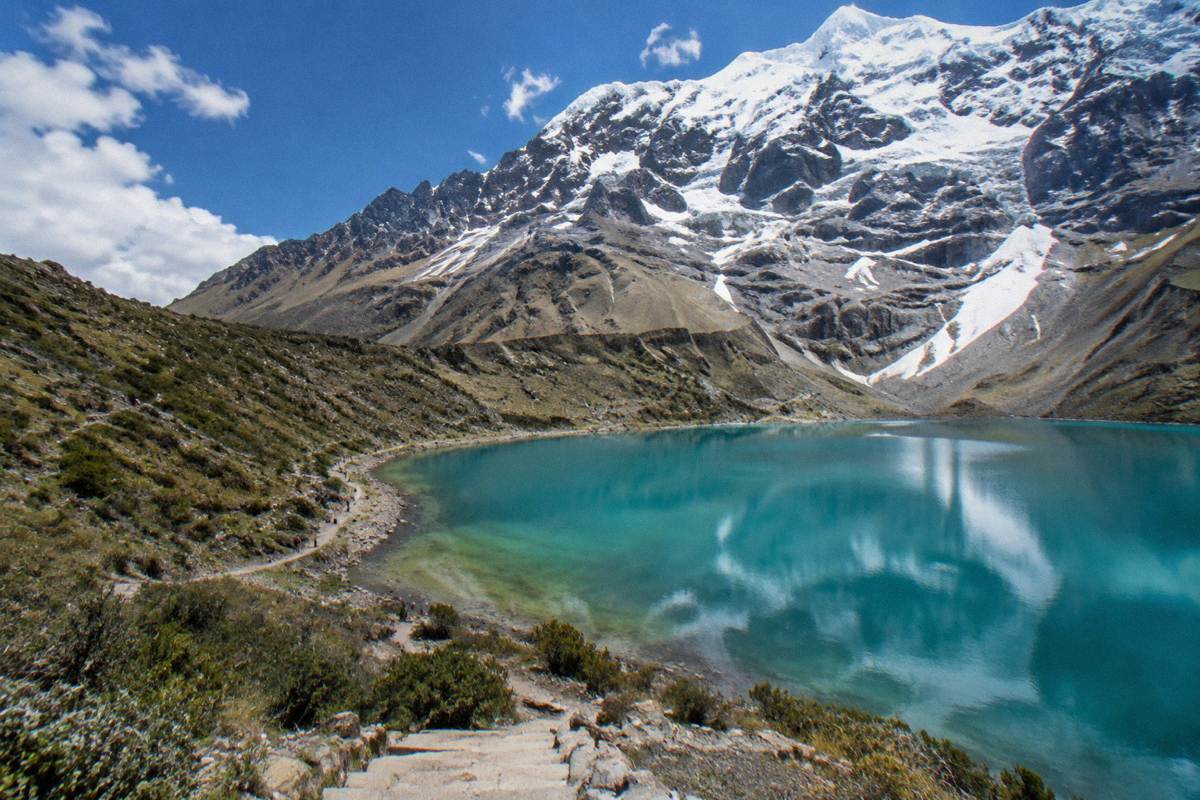
Humantay Lake From Cusco
Humantay Lake stands at about 4,200 m above Cusco, higher than any ruin on the city circuit and below only Palccoyo and Rainbow Mountain among the standard day trips. Here is what the official and operator sources say about the fee, the tours, the altitude advice and the season.
Short answer
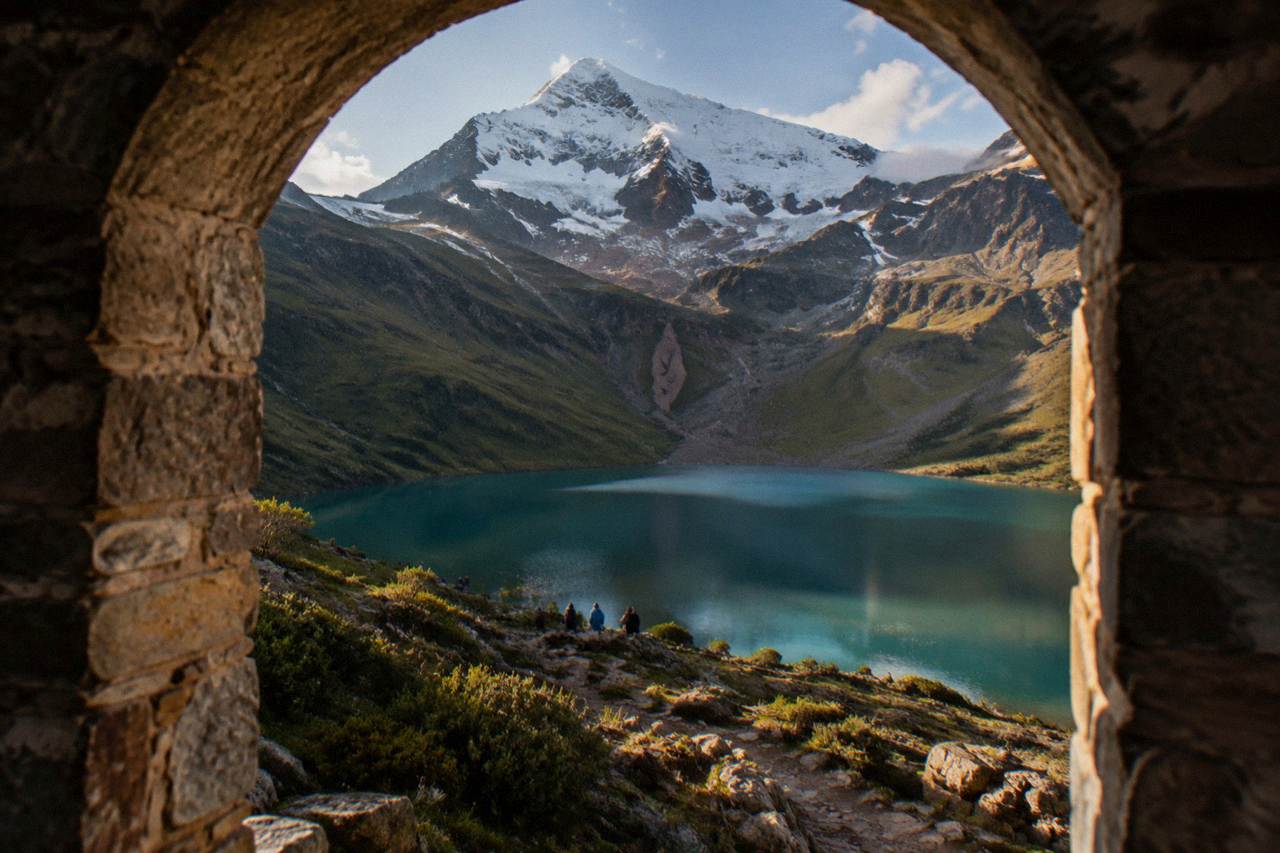
Humantay Lake is a high-Andean lake at about 4,200 m, reached on a guided day trip from Cusco (3,335 m). A community fee reported at S/ 10 to S/ 20 is paid in soles cash at the site, and the Boleto Turistico does not cover it. The dry season, roughly May to September, is the best window, with frost-cold nights in June and July.
Humantay Lake sits at about 4,200 m in the Andes of southern Peru, far above Cusco, the regional capital whose Plaza de Armas stands at 3,335 m. Of the standard day trips out of the city, only Palccoyo and Rainbow Mountain reach higher. This page sets out what the official and operator sources say about the elevation, the fee, the tour options, the altitude advice and the months that suit the visit best.
Where Is Humantay Lake And How High Is It?
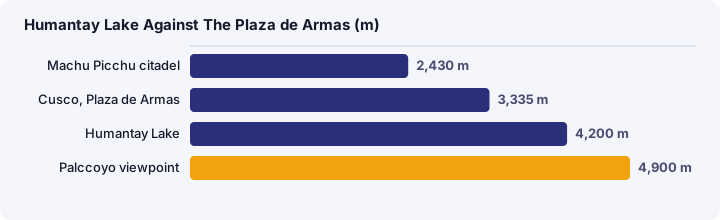
Humantay Lake is a high-Andean lake at about 4,200 m, visited on a day trip from Cusco, whose Plaza de Armas stands at 3,335 m. That places the lake above every site on the standard city and Sacred Valley circuits: Sacsayhuaman rises to 3,701 m, Ollantaytambo town sits at 2,792 m and the Machu Picchu citadel at 2,430 m. Among day-trip destinations, only the Palccoyo viewpoint at 4,900 m and Rainbow Mountain at about 5,000 m reach higher.
The lake is a natural site rather than an archaeological one. The Inca monuments that fill a Cusco itinerary, from Sacsayhuaman above the city to the terraces of Pisac and Ollantaytambo, all stand below 3,800 m, and the citadel of Machu Picchu sits lower still at 2,430 m, with the railway town of Aguas Calientes at about 2,040 m beneath it. Humantay belongs to a different set of destinations: the mountain day hikes where the draw is altitude, water and open country rather than stonework.
That elevation ladder matters for planning, because the jump from the city to the lake is the single biggest climb a Cusco visitor commonly makes in one day. PromPeru puts the Plaza de Armas at 3,335 m and the airport at 3,310 m, so a flight into Cusco already lands a traveller high. The lake then adds a further band of altitude on top of the city, which is why the CDC advice in the next section belongs on this page and not in a footnote.
| Place | Elevation | What it is |
|---|---|---|
| Cusco, Plaza de Armas | 3,335 m | PromPeru figure for the main square |
| Cusco airport | 3,310 m | Alejandro Velasco Astete, about 6 km from the centre |
| Sacsayhuaman | 3,701 m | Highest of the city ruins, on the Boleto Circuit I |
| Humantay Lake | about 4,200 m | The destination of this page |
| Palccoyo viewpoint | 4,900 m | The lower Rainbow Mountain alternative |
| Rainbow Mountain (Vinicunca) | about 5,000 m | The highest of the standard day trips |
| Machu Picchu citadel | 2,430 m | Lower than Cusco by roughly 900 m |
| Aguas Calientes town | about 2,040 m | The railway town below Machu Picchu |
How Hard Is The Humantay Lake Walk?
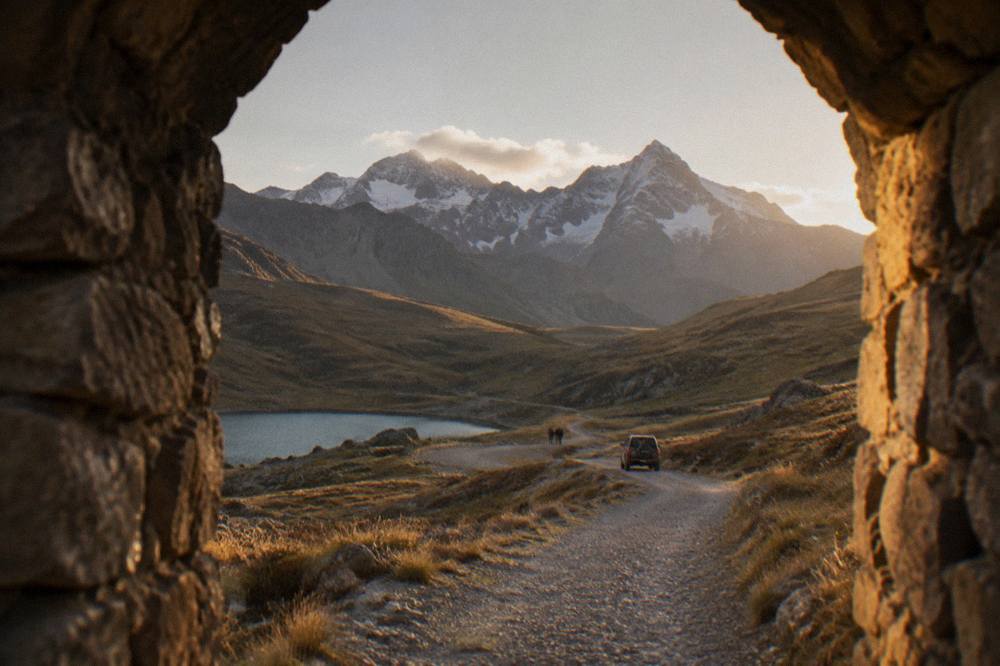
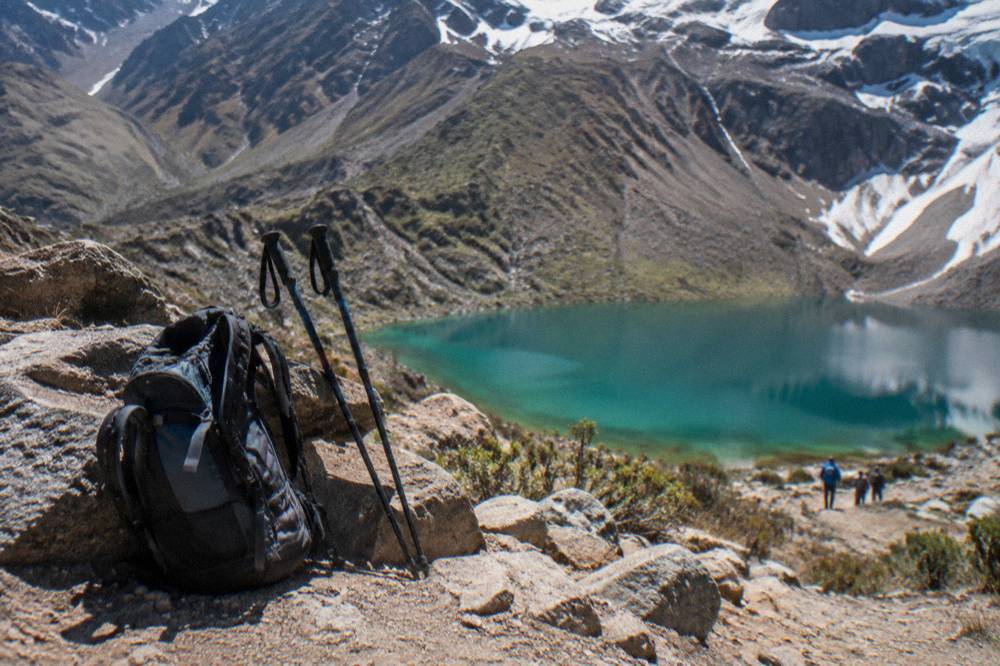
The difficulty at Humantay Lake is the altitude rather than the mileage: the lake sits at about 4,200 m against Cusco's 3,335 m, and the CDC Yellow Book names Cusco as a rapid-ascent destination reached by air. No official trail length or gradient is published for the walk, so any distance a seller quotes is the seller's own. The Yellow Book prefers graded ascent, lists acetazolamide as a prescription decision with a doctor, and advises against alcohol for the first 48 hours at high altitude.
The CDC frames the risk around how you arrive. Its Yellow Book puts rates of altitude illness approaching 50 per cent in situations of rapid ascent by air or road where staged acclimatisation is not feasible, and Cusco is one of the destinations it names in that context, listed at approximately 3,350 m. The same chapter sets out ascent rules with hard numbers, summarised below, and they speak to where you sleep: a day walk up to a lake is not a sleeping altitude, but the city you sleep in before it is.
| CDC Yellow Book rule | The figure |
|---|---|
| First night's sleeping altitude | Do not go from low altitude to 2,750 m or above in a single day |
| Once above 3,000 m | Raise sleeping altitude by no more than 500 m per night |
| For every 1,000 m gained | Allow one extra acclimatisation night |
| Acetazolamide prophylaxis | 125 mg twice daily, or 250 mg twice daily above 100 kg, a prescription decision with a doctor |
| Alcohol | Avoid for the first 48 hours at high altitude |
| Cusco's listing | Named a rapid-ascent destination, at approximately 3,350 m |
The Yellow Book also offers a Cusco-specific option: it notes that travellers at destinations like Cusco can descend to elevations lower than the airport to sleep for the first night or two before beginning their ascent. The Sacred Valley gives that room to drop, with Ollantaytambo at 2,792 m, Urubamba at 2,870 m and Pisac town at 2,972 m, all below the city. A traveller who sleeps a night or two in the valley before a Humantay day is following the graded pattern the CDC prefers; the Sacred Valley day trips guide covers where those nights fit.
No sourced figure exists for the probability of altitude sickness on this specific walk, how many days acclimatisation takes, or how much coca tea helps. Bodies differ, symptoms warrant a doctor, and the CDC's Peru travel notice says plainly that Machu Picchu and the highlands are high-altitude destinations to discuss with a clinician before travel.
What Does A Humantay Lake Tour From Cusco Include?
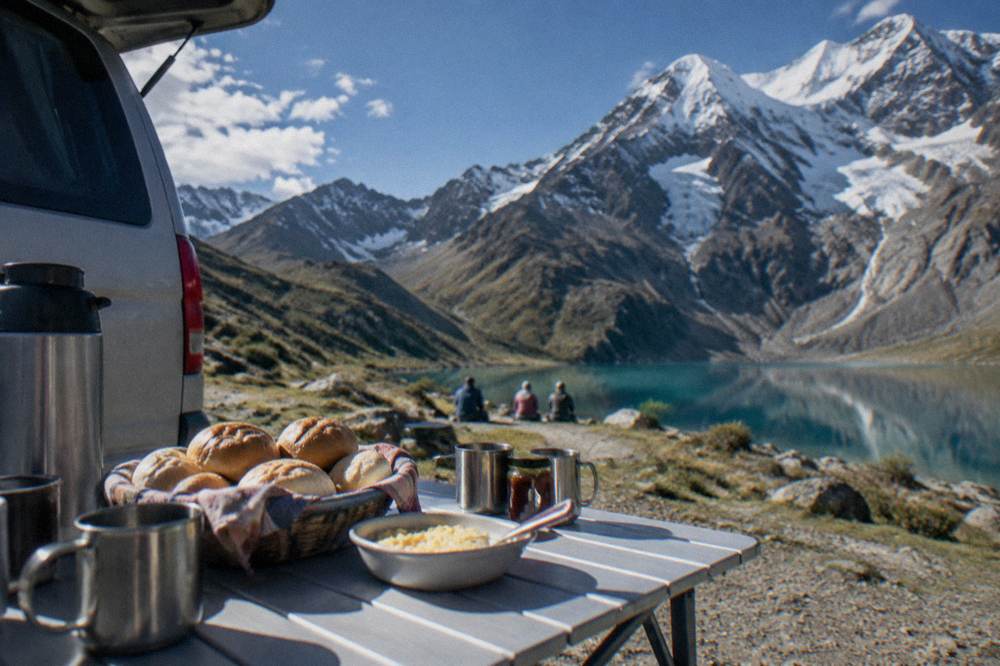
The Humantay products on this site's roster are guided day trips from Cusco that bundle road transport, a guide and meals. The featured card, Cusco: Humantay Lake Tour with Breakfast and Buffet Lunch, carries both meals in its own title, and the second option, Excursion to Humantay Lake Full Day from Cusco, is built the same way. Prices, ratings and durations render on the product cards themselves and are never typed into prose.
What the guided format buys is simple: the transport chain from a Cusco hotel out into the high country and back, a guide who knows the route and the fee arrangements, and food before and after the walk. The featured listing is the one this page sends readers to first, and its live availability is on the operator's listing: Check availability. The roster also carries the full-day excursion version for travellers comparing the two.
Both Humantay cards sit in the mountain-day-hike kind alongside the other high-altitude day trips. A traveller weighing them against each other is really weighing the same lake reached with different inclusions, since the destination, the elevation and the community fee are identical in every case. The cards print what each one bundles, and the fee at the site is paid separately in cash regardless of which card is booked.
For travellers building a wider Cusco week, the lake pairs naturally with a lower-altitude day: a city morning among the Qorikancha and Cusco Cathedral or a market walk through San Pedro Market costs nothing like the altitude the lake charges. The comparison pages below cover how the high days stack against each other.
What Does Humantay Lake Cost To Visit?
Humantay Lake charges a community fee reported at S/ 10 to S/ 20 per person, paid in soles in cash at the site. The fee sits outside the Boleto Turistico, which covers 16 state-run sites in and around Cusco and no natural attractions, so the boleto buys nothing here. Tour prices and ratings render from the product cards, and the sol trades at about S/ 3.4 to the US dollar.
The Boleto Turistico is worth understanding precisely because it does not apply. COSITUC's integral ticket costs S/ 130 for a foreign adult and is valid for 10 days from the day of purchase, covering 16 sites across three circuits: Sacsayhuaman, Q'enqo, Puka Pukara and Tambomachay on Circuit I, the city museums and Qorikancha's site museum on Circuit II, and Pisac, Ollantaytambo, Chinchero and Moray on Circuit III. Partial circuits cost S/ 70 each. COSITUC sells the boleto in person only, at the counter on Av. El Sol 103 and at most included sites; there is no online sale. None of those 16 sites is a lake, a mountain or a community-owned natural attraction, which is the pattern for every high-altitude day trip out of the city.
The cash fees at those natural and community sites are reported by operators and official pages in 2026, and they are paid on the spot in soles. The table below shows how the other day trips handle entry, from the salt pans of Maras to the rebuilt Inca bridge at Q'eswachaka.
| Day-trip site | Entry cost | How it is paid |
|---|---|---|
| Humantay Lake | S/ 10 to S/ 20 | Soles cash at the site, sources disagree on the figure |
| Rainbow Mountain (Vinicunca) | S/ 25 to S/ 30 | Soles cash, depending on the access route |
| Palccoyo | about S/ 20 | Soles cash, reported by operators in 2026 |
| Maras salt mines | S/ 15 to S/ 20 | Soles cash, reported in 2026 |
| Q'eswachaka bridge | about S/ 20 | Soles cash, reported by an operator |
| Waqrapukara | No ticket, or a community contribution of S/ 10 to S/ 20 | Soles cash where collected |
| Moray | On the Boleto Turistico, Circuit III | S/ 70 partial or S/ 130 integral |
| Machu Picchu | From about S/ 163 standard routes, S/ 211 mountain routes | Ministry of Culture ticket platform |
The featured tour card prints its own price, rating and review count, and the box below checks live availability for the guided day with breakfast and buffet lunch included.
A budget note on the money itself: Peru's currency is the sol, written S/ 130 for one hundred thirty soles, and card surcharges at the boleto counter or small community fee points are not part of the verified picture. Cash in soles is the working currency at every natural site in the table above, and an exchange rate of about S/ 3.4 to the US dollar is the honest shorthand; any live rate belongs to the day you change money.
When Is The Best Time Of Year For Humantay Lake?
The dry season, roughly May to September, is the window the climate data supports: at the WMO's Cuzco station, supplied by SENAMHI, May to August together bring just 22.8 mm of rain against a 707.8 mm annual historical normal, while December to March carries 71.9 per cent of the year's rain. June to August is winter in the southern hemisphere: dry, clear days, cold nights and frost in June and July.
The monthly normals below come from the World Weather Information Service record for the Cuzco station, a historical normal rather than a recent-decade average, and they describe the city at 3,335 m rather than the lake at about 4,200 m. The pattern they show is the one the whole region follows: mean daily maxima barely move, holding between 18.8 and 20.9 C in every month of the year, while rainfall swings from 1.5 mm in June to 145.3 mm in January. The cold is a night phenomenon, with the July mean minimum at 0.1 C and the June minimum at 0.3 C, and SENAMHI's own pages note that frost season runs through the June and July peak.
| Month | Mean max C | Mean min C | Rain mm |
|---|---|---|---|
| Jan | 18.9 | 6.6 | 145.3 |
| Feb | 18.8 | 6.5 | 133.7 |
| Mar | 19.1 | 6.2 | 107.0 |
| Apr | 19.7 | 4.9 | 43.2 |
| May | 19.8 | 2.5 | 8.7 |
| Jun | 19.5 | 0.3 | 1.5 |
| Jul | 19.1 | 0.1 | 4.0 |
| Aug | 19.8 | 1.6 | 8.6 |
| Sep | 19.8 | 3.9 | 21.8 |
| Oct | 20.9 | 5.5 | 39.4 |
| Nov | 20.7 | 6.1 | 71.9 |
| Dec | 19.4 | 6.4 | 122.7 |
For a mountain day, the wet season cuts both ways. The lake is fed by snowmelt and the high country is at its greenest after the rains, but a wet-season day on a high trail means mud, cloud and a walk in the wet, and the same months carry the region's heaviest rain. Shoulder months sit between the two poles: April brings 43.2 mm and September 21.8 mm, with October at 39.4 mm, each a compromise between clear skies and thinner crowds. The best time to visit Cusco question has its own fuller treatment.
How Does Humantay Lake Compare With Other Mountain Day Trips?
Humantay Lake at about 4,200 m is the lowest of the three marquee mountain day trips from Cusco: the Palccoyo viewpoint stands at 4,900 m and Rainbow Mountain, Vinicunca, at about 5,000 m. Each charges its own community fee in soles cash, and each is a long day out of the city on the road. The full head-to-head, including which walk suits which kind of day, has its own answer page on this site.
The comparison that matters is altitude against effort. Humantay is the shortest climb of the three in elevation terms and the only one that ends at water; Palccoyo is a viewpoint reached on a steadier high plateau; Vinicunca is the highest and the one where the altitude question is sharpest. The dedicated comparison pages carry the detail: the Rainbow Mountain day trip guide, the Palccoyo alternative and the direct question Humantay versus Rainbow Mountain.
| Mountain day trip | Elevation | Reported fee | Covered on this site |
|---|---|---|---|
| Humantay Lake | about 4,200 m | S/ 10 to S/ 20 | This page |
| Palccoyo viewpoint | 4,900 m | about S/ 20 | /day-trips/palccoyo/ |
| Rainbow Mountain (Vinicunca) | about 5,000 m | S/ 25 to S/ 30 | /day-trips/rainbow-mountain/ |
Beyond the three, the roster and the region offer other high days: the Ausangate seven lakes trek reaches the glaciated country south-east of the city, and Waqrapukara pairs a high hike with an archaeological site where entry is either free or a small community contribution. For travellers who want the altitude without a mountain day at all, the lower valley holds the answer, from Moray's circular terraces at 3,385 m to the colonial church at Chinchero.
The Rainbow Mountain and Red Valley product below is the roster's most-reviewed high-mountain card after the Humantay options, and it prints its own figures on the card.
Can You Visit Humantay Lake Without A Tour?
An independent visit is possible in principle: the lake takes its community fee at the site in soles cash, and it is not part of any official online ticketing platform. The practical gap is transport. Public fares for the route from Cusco are not published in any verified source, so any local vehicle is a price agreed before the ride, and the guided roster products remain the fully documented options.
What independence changes is everything around the lake rather than the lake itself. A guided card fixes the departure, the meals, the fee handling and the return; an independent day fixes none of those, and the fare rules on this site are deliberately silent, because no verified Cusco-to-Humantay fare exists to print. The same honesty applies to timing: no sourced timetable for the route appears anywhere in the published material, so the day's shape is the traveller's own to arrange.
The fee itself is the one fixed cost. It is reported at S/ 10 to S/ 20 per person in soles cash, with sources disagreeing on the exact figure, and it is collected at the site rather than sold in advance. Nothing in the verified sources suggests a booking system, a timed entry or a guide requirement of the kind Machu Picchu's platform operates; the lake is a community site with a community fee, and the cash is carried in soles.
For travellers who prefer independence elsewhere in the region, the pattern is the same across the natural sites: the Q'eswachaka bridge and Waqrapukara days also run on cash fees and agreed transport, while the state sites on the Boleto Turistico and Machu Picchu itself are the ticketed exceptions. The Huchuy Qosqo day hike is another walk that suits a self-planned day.
What Should You Wear And Pack For Humantay Lake?
The climate normals argue for layers above all: mean daily maxima in Cusco hold between 18.8 and 20.9 C in every month of the year, but the July mean minimum is 0.1 C and frost is common in June and July, so a dry-season day can run from strong sunshine to freezing within its own hours. Rain governs the rest: December averages 145.3 mm against 1.5 mm in June. The walk finishes at about 4,200 m, higher than the city it starts from.
The seasonal table below turns the twelve-month normals into three planning bands. The dry winter band, May to August, is the clear-sky window with the coldest nights; the shoulder band around April, September and October trades a little rain for milder nights; the wet band, November to March, is the green season and the mud season at once. The bands describe the city's station record, and the lake at about 4,200 m runs colder than every line in it.
| Season band | Months | Mean max C | Mean min C | Rain per month |
|---|---|---|---|---|
| Dry winter | May to August | 19.1 to 19.8 | 0.1 to 2.5 | 1.5 to 8.7 mm |
| Shoulder | April, September, October | 19.7 to 20.9 | 3.9 to 5.5 | 21.8 to 43.2 mm |
| Wet | November to March | 18.8 to 20.7 | 6.1 to 6.6 | 71.9 to 145.3 mm |
Packing follows the bands. A dry-season kit for a high day is warm layers for the early and late hours, a shell for the afternoon, and footwear for a mountain trail; a wet-season kit adds real rain gear and accepts that the views are a negotiation with the cloud. The fuller treatment of clothing across the whole region, including the city days that need none of this, sits in the what to wear in Cusco guide, and the altitude advice in the CDC section above is the other half of the preparation.
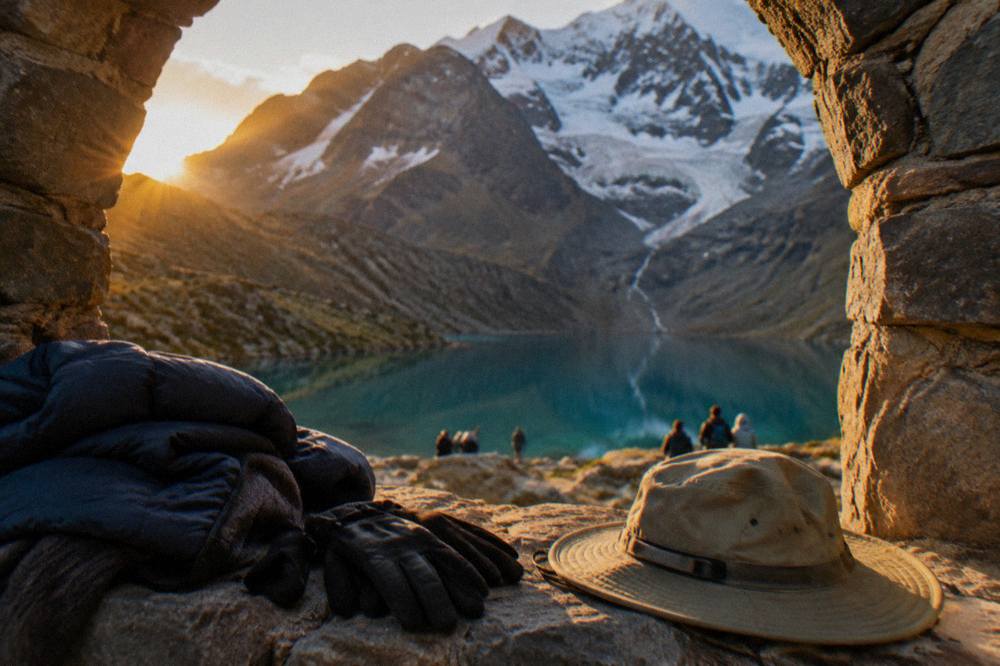
Is Humantay Lake Worth The Day From Cusco?
For a traveller with a spare day in Cusco and a tolerance for altitude, the case is straightforward: the lake sits at about 4,200 m, higher than anything on the city circuit or in the Sacred Valley, for a community fee of S/ 10 to S/ 20 in soles cash, and the roster carries guided products with meals bundled in. The trade is the long day on the road and the thin air at the top.
The honest framing is that Humantay is a specialist day. A first-time Cusco visitor with three days should spend them on the city, the valley and Machu Picchu before spending one on a mountain lake; a visitor with a fourth day, or one who has already seen the citadel, is choosing between this and the two higher mountains. Between those three, Humantay is the water, the lowest and the one where the walk ends at a shoreline rather than a ridge.
The Things To Do In Cusco Peru roster holds the two Humantay cards and the wider mountain set, and the trio below puts the lake day beside its two closest rivals for a side-by-side comparison of what each card includes.
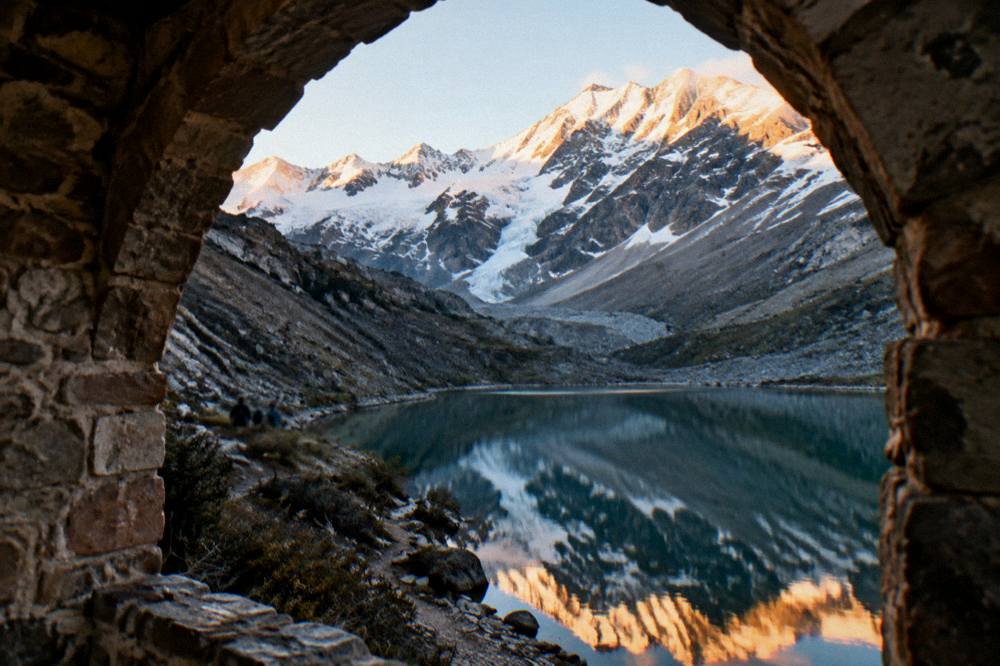
Common Questions About Humantay Lake
How high is Humantay Lake?
The lake sits at about 4,200 m, against Cusco's Plaza de Armas at 3,335 m. Only the Palccoyo viewpoint at 4,900 m and Rainbow Mountain at about 5,000 m reach higher among the standard day trips from the city.
What is the entry fee for Humantay Lake?
A community fee reported at S/ 10 to S/ 20 per person is paid in soles cash at the site; sources disagree on the exact figure, so no single number is printed. The fee is separate from any tour price and is not covered by the Boleto Turistico.
Is Humantay Lake covered by the Boleto Turistico?
No. The Boleto Turistico covers 16 state-run sites across three circuits, from Sacsayhuaman to Moray, and no natural attractions. Machu Picchu is also outside it, sold on the Ministry of Culture's own platform.
Can you do Humantay Lake and Rainbow Mountain on the same day?
The roster carries no product that combines the two, and both are long days out of the city in opposite high-country directions. The comparison page Humantay versus Rainbow Mountain covers how the two walks stack up when you must choose.
When is the best month to visit Humantay Lake?
The dry season, roughly May to September, is the window the station record supports: May to August together bring just 22.8 mm of rain at the Cuzco station against a 707.8 mm annual normal. June and July bring frost-cold nights in exchange for the clearest days.
Do you need altitude medicine for Humantay Lake?
The CDC Yellow Book prefers graded ascent and names Cusco as a rapid-ascent destination, and it lists acetazolamide as a prescription decision to make with a doctor, at 125 mg twice daily or 250 mg twice daily above 100 kg. No sourced figure exists for the probability of altitude sickness on this walk; symptoms warrant a doctor.
Can you visit Humantay Lake without a guide?
An independent visit is possible in principle: the community fee is paid at the site in soles cash and no guide requirement appears in the verified sources. The practical gap is transport, since no verified public fare for the route from Cusco is published, and any local vehicle is a price agreed before the ride.