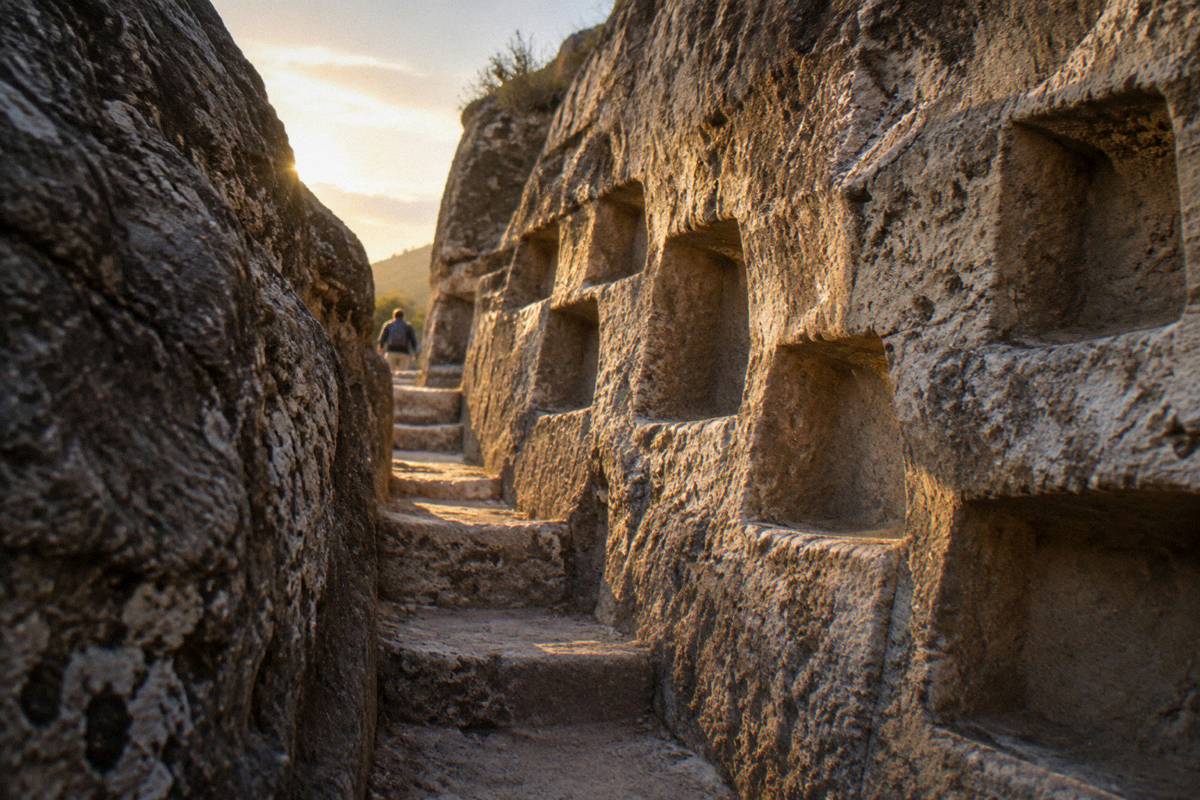
Puka Pukara
Puka Pukara sits on the hills north of central Cusco, one of the four Inca sites covered by the Boleto Turistico's Circuit I together with Sacsayhuaman, Q'enqo and Tambomachay.
Short answer
Puka Pukara is an Inca archaeological site on the hills north of central Cusco, included on the Boleto Turistico's Circuit I partial ticket at S/ 70 for foreign adults, or on the S/ 130 integral ticket valid 10 days. Most visits pair it with Q'enqo, Tambomachay and Sacsayhuaman on a half-day loop above the city.
Puka Pukara stands on the hills north of central Cusco, the historic city in the Andes of southern Peru whose Plaza de Armas sits at 3,335 m. The name is usually translated from Quechua as "red fortress", a reference to the colour the local stone takes on in certain light. It is one of the four Inca sites on Circuit I of the Boleto Turistico del Cusco, alongside Sacsayhuaman, Q'enqo and Tambomachay, and it is the stop most half-day city tours reach after Q'enqo on the road toward Tambomachay. This page lays out what the site holds, what entry costs under the COSITUC ticket system, how the visit fits into a day above the city, and how it compares with its three Circuit I neighbours.
What Is Puka Pukara In Cusco?
Puka Pukara is an Inca archaeological site on the hills north of central Cusco, made of walls, terraces, enclosures, stairways and water channels built from the area's reddish stone. Its function is not settled, and the COSITUC ticket that covers it lists it simply as one of the four sites of Circuit I, together with Sacsayhuaman, Q'enqo and Tambomachay.
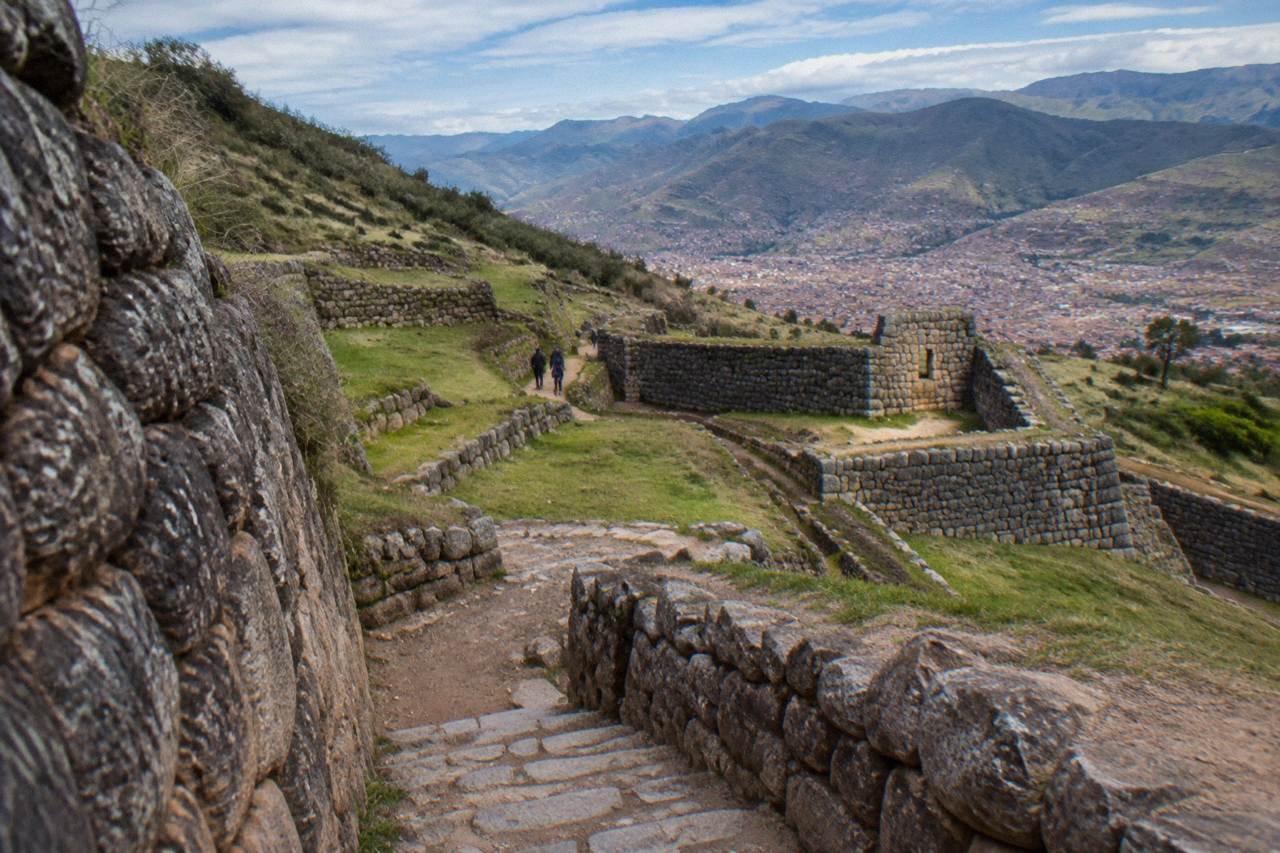
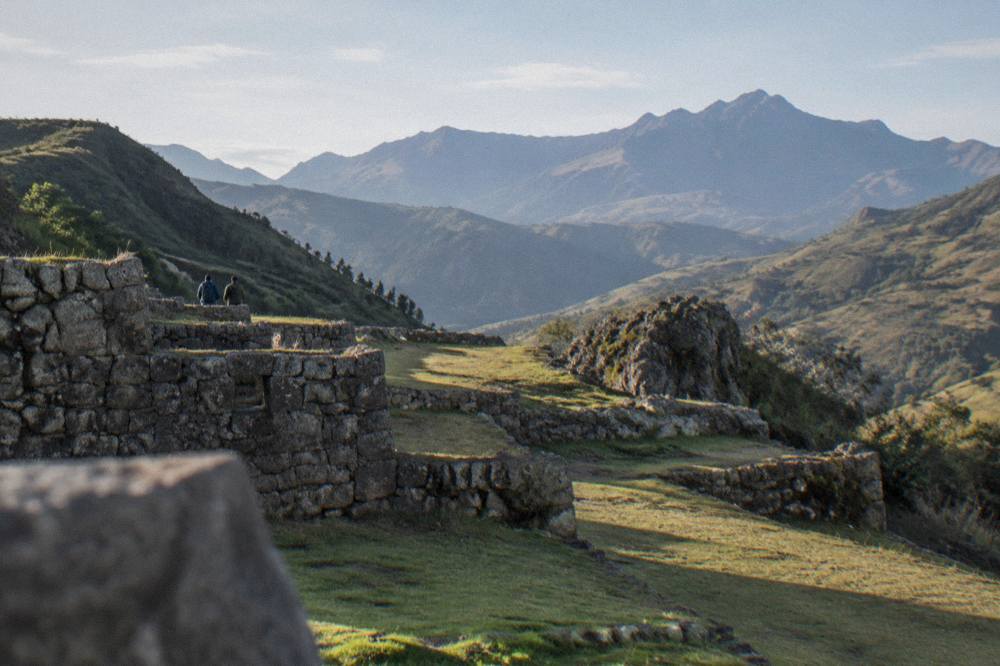
The site is compact. A visitor walks through successive levels: outer walls, a lower terrace area, a set of rooms and passages on the upper level, and lookouts over the valley that drops toward the historic centre. The stonework here is rougher than the fine masonry of Sacsayhuaman's main walls; Puka Pukara's builders used a mix of fieldstone and worked blocks, and the layout reads more as a way station or control point than as a ceremonial complex. Because the archaeological record for the site does not settle its purpose, honest descriptions stick to what is visible: the plan, the materials, the water channels and the commanding position over the road that runs along the hills above Cusco.
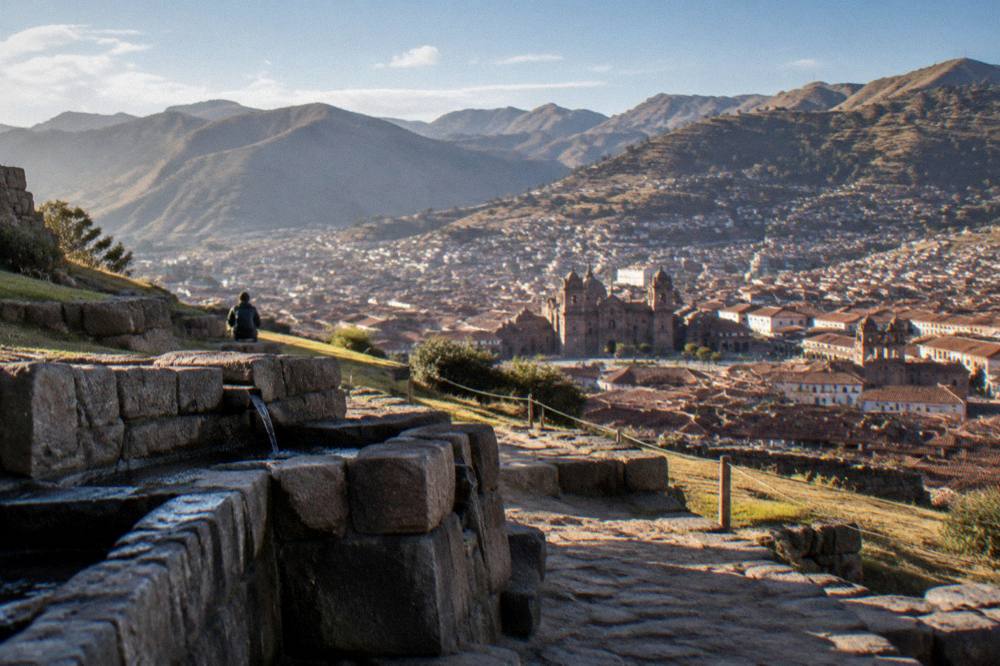
The setting does half the work. From the upper level the view sweeps across the hills toward Cristo Blanco and down over the red roofs of the city, with Sacsayhuaman's esplanade visible to the west. The Ministry of Culture's ticket platform treats Puka Pukara as part of the same circuit as its three neighbours, and the four sites sit along the same road a short drive north of the Plaza de Armas. The COSITUC FAQ notes that validity of the integral ticket begins the day it is bought, which matters for planning: a visitor who buys the ticket in the morning can use it for the ruins loop that same day.
How Much Does Puka Pukara Cost To Visit?
Puka Pukara has no separate entry fee: it is covered by the Boleto Turistico del Cusco. The integral ticket for a foreign adult costs S/ 130, about US$38, and is valid 10 days; the Circuit I partial ticket, which covers Sacsayhuaman, Q'enqo, Puka Pukara and Tambomachay, costs S/ 70, about US$20.
The COSITUC tarifario gives foreign students the integral at S/ 70, and children are free to age 9, with ages 10 to 17 paying the student price with ID. Only students receive a discount; there is no teacher or youth-card reduction. The ticket is sold in person only, never online: at the central counter at Av. El Sol 103 (Galerias Turisticas), open daily 07:30 to 18:00, and at most included sites. A visitor arriving in Cusco without the boleto can buy the Circuit I partial at the sites themselves in most cases, though the safest plan is the Av. El Sol counter, which the FAQ lists first.
| Ticket | Price (foreign adult) | About US$ | What it covers | Validity |
|---|---|---|---|---|
| Integral (BTCI) | S/ 130 | US$38 | All 16 sites on the three circuits | 10 days |
| Circuit I partial | S/ 70 | US$20 | Sacsayhuaman, Q'enqo, Puka Pukara, Tambomachay | 1 day (reported) |
| Circuit II partial | S/ 70 | US$20 | City museums, Tipon, Pikillaqta | 2 days (reported) |
| Circuit III partial | S/ 70 | US$20 | Pisac, Ollantaytambo, Chinchero, Moray | 2 days (reported) |
| Foreign student integral | S/ 70 | US$20 | All 16 sites | 10 days |
The choice between the integral and the partial is arithmetic. A visitor planning only the four-ruins loop above the city pays S/ 70 for Circuit I and is done. A visitor who also intends to see Pisac, Ollantaytambo, Chinchero or Moray in the Sacred Valley, or the city museums on Circuit II, is better served by the S/ 130 integral, since two partials already cost S/ 140. The COSITUC FAQ states that covering all 16 sites needs a minimum of three days, so the integral's 10-day validity exists precisely for travellers spreading the visits across a longer stay. Note what the ticket does not cover: Machu Picchu sells separately on the Ministry of Culture's platform, and the Maras salt mines charge their own community fee.
| Circuit | Sites included | Site count |
|---|---|---|
| Circuit I | Sacsayhuaman, Q'enqo, Puka Pukara, Tambomachay | 4 |
| Circuit II | Museo de Sitio Qorikancha, Museo Historico Regional, Museo de Arte Contemporaneo, Museo de Arte Popular, Centro Qosqo de Arte Nativo, Monumento a Pachacutec, Tipon, Pikillaqta | 8 |
| Circuit III | Pisac, Ollantaytambo, Chinchero, Moray | 4 |
For travellers who prefer a guided loop over self-directed visits, the half-day city tour that covers the four ruins is the standard product, and the operator's live listing carries the current price and departure details.
How Do You Get To Puka Pukara From Central Cusco?
Puka Pukara sits on the road that runs along the hills north of central Cusco, past Sacsayhuaman and Q'enqo and on toward Tambomachay. There is no verified public transport timetable for the site in this site's research, so the reliable options are a booked half-day tour, a taxi arranged for the loop, or the walking route up from the city via Sacsayhuaman.
The geography is simple. The four Circuit I sites sit in a line above the city: Sacsayhuaman closest, then Q'enqo, then Puka Pukara, then Tambomachay at the far end of the loop road. A taxi hired for the circuit waits at each site, and this is the pattern most independent visitors use. The alternative is the guided half-day tour, which picks up at central hotels and covers all four stops in sequence; the tour does not include the boleto itself, so the ticket still has to be bought in person at the counter or at a site. Visitors staying near the Plaza de Armas can also walk up to Sacsayhuaman first and continue along the road, though the walk to Puka Pukara from the centre is a sustained climb at altitude, and the CDC Yellow Book advises graded ascent and a conservative first day at 3,335 m.
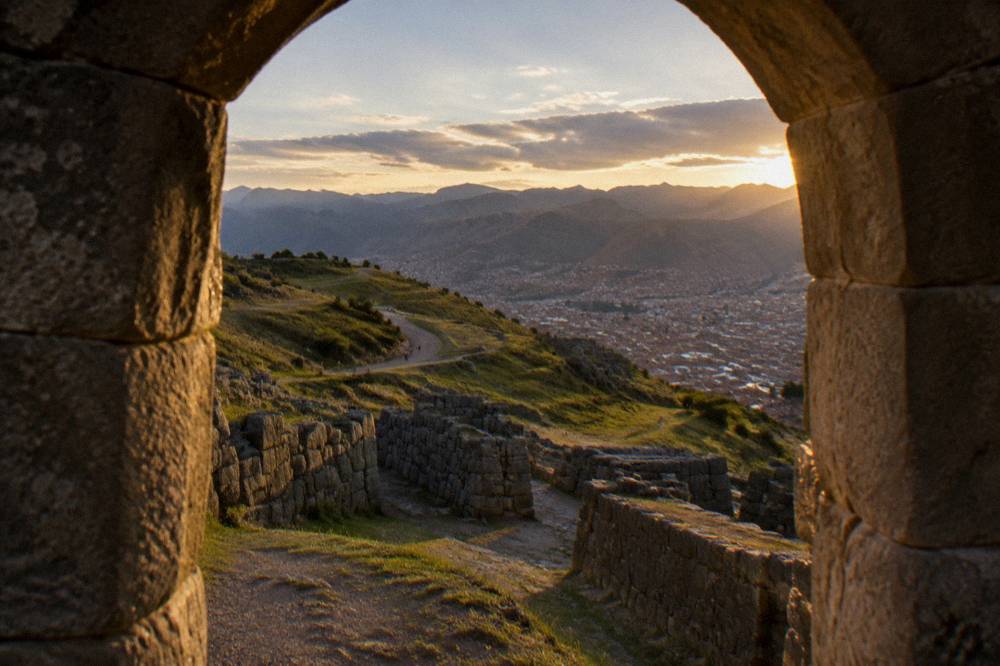
Altitude shapes the plan more than distance does. The hills north of the centre sit higher than the Plaza de Armas; Sacsayhuaman's esplanade is recorded at 3,701 m, and the road to Tambomachay keeps climbing past it. The CDC names Cusco as a rapid-ascent destination and recommends that travellers who arrive by air take the first day gently, avoid alcohol for the first 48 hours and consider acetazolamide as a prescription decision with a doctor. A sensible pattern, consistent with that advice, is to spend the arrival day in the centre, at the Plaza de Armas or San Pedro Market, and save the four-ruins loop for day two.
What Can You Actually See At Puka Pukara?
Visitors see a compact set of Inca structures: outer walls of mixed fieldstone and worked blocks, terraced levels, rectangular rooms and passages, stairways cut and built into the hillside, and the remains of water channels, all arranged around a central plaza-like space with long views over Cusco and the surrounding hills.
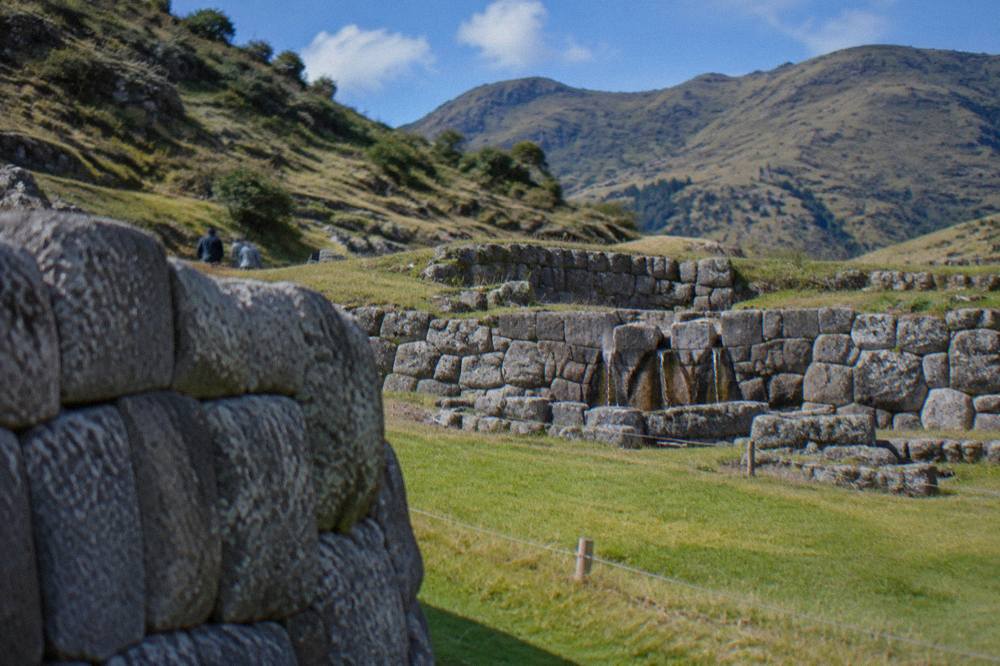
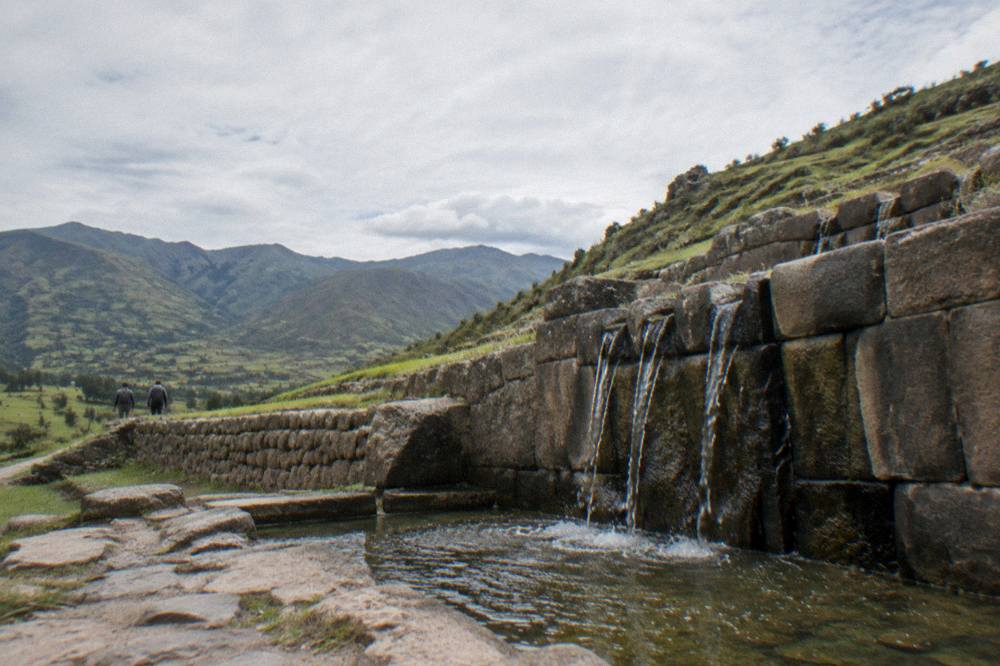
The walk through the site follows the terrain. The lower level holds the outer walls and the first terraces; a stairway leads up through a walled passage to the upper enclosures, where the rooms open onto each other in a plan that suggests a compound rather than a single ceremonial space. On the far side, the ground drops away toward the valley, and the lookouts give the site its drama: on a clear dry-season day the view runs across the city basin to the mountains beyond, and the light that gives the site its "red" name is most visible in the late afternoon, when low sun warms the stone. The water channels are worth slowing down for. Like the channels at Tambomachay, the next stop up the road, they show the Inca command of moving water across steep ground, and they are the clearest sign that the site was built to function, whatever its exact purpose was.
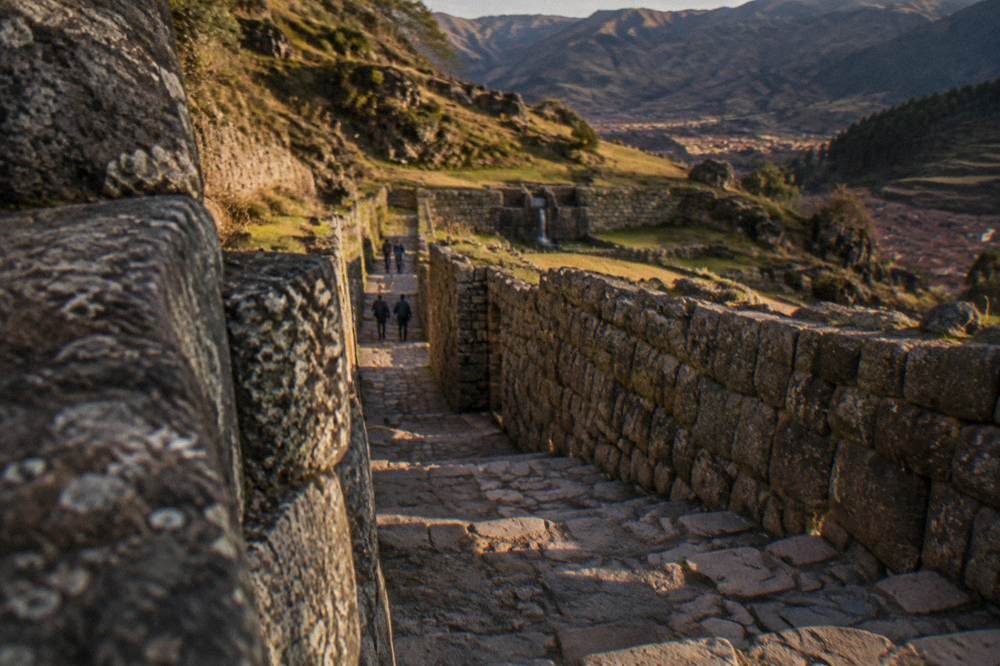
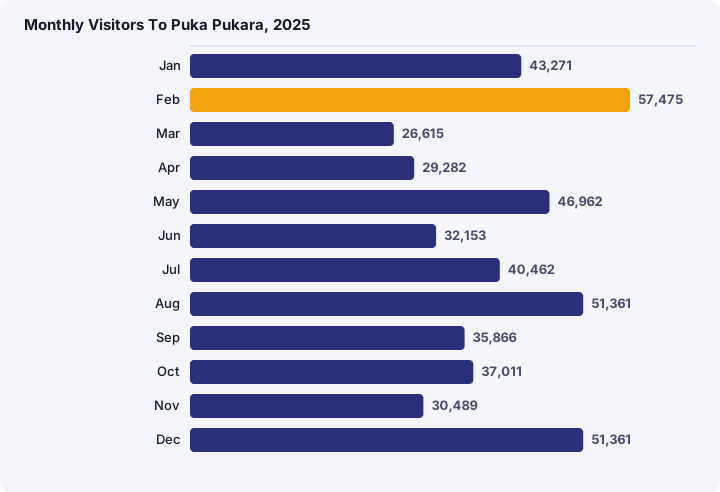
The site rewards a slow circuit. Half an hour covers the main level; an unhurried hour lets a visitor trace the channels, read the plan from the upper lookout and watch the light move across the walls. Guides on the half-day tours typically give the group 20 to 30 minutes here, which is enough for the highlights but not for the far corners, so travellers who want the full circuit should either visit independently or plan to linger after the group moves on. There are no figures in this site's research for a visitor count at Puka Pukara itself; the MINCETUR open dataset records visits for the Sacsayhuaman esplanade, 944,008 in 2025, as the closest measured site on the circuit, which indicates the scale of traffic on the loop road without saying anything precise about this stop.
When Is The Best Time Of Day To Visit Puka Pukara?
The dry season, roughly May to September, gives the clearest views and the most reliable conditions, and within a day the late afternoon light is the one that shows the reddish stone the site is named for. Mornings work best for travellers pairing the loop with a tour, since Cusco's climate normals show rain concentrated from December to March, when 71.9 percent of the year's 707.8 mm falls.
The climate record for the WMO/SENAMHI "Cuzco" station, a historical normal, shows how lopsided the year is. December, January, February and March together deliver 508.7 mm of the 707.8 mm annual total, while May to August combined bring just 22.8 mm, 3.2 percent of the year. Mean daily maximums stay between 18.8 and 20.9 C all year, so the difference between seasons is not daytime heat but rain and night cold: the mean July minimum at the station is 0.1 C, and SENAMHI's frost guidance puts the heladas season across June and July. A wet-season visit is entirely possible, but the views that make Puka Pukara memorable can disappear into cloud, and the site's exposed upper level offers little shelter.
| Month | Mean max C | Mean min C | Rain mm |
|---|---|---|---|
| Jan | 18.9 | 6.6 | 145.3 |
| Feb | 18.8 | 6.5 | 133.7 |
| Mar | 19.1 | 6.2 | 107.0 |
| Apr | 19.7 | 4.9 | 43.2 |
| May | 19.8 | 2.5 | 8.7 |
| Jun | 19.5 | 0.3 | 1.5 |
| Jul | 19.1 | 0.1 | 4.0 |
| Aug | 19.8 | 1.6 | 8.6 |
| Sep | 19.8 | 3.9 | 21.8 |
| Oct | 20.9 | 5.5 | 39.4 |
| Nov | 20.7 | 6.1 | 71.9 |
| Dec | 19.4 | 6.4 | 122.7 |
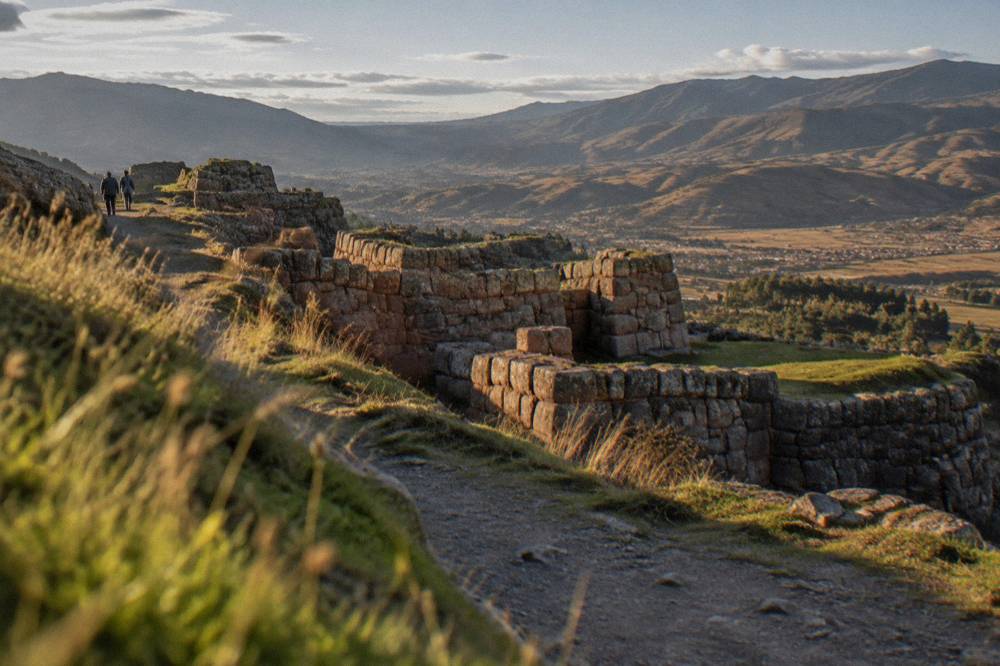
Within the dry season, the time of day matters for light and for crowds. Tour groups run the loop in the morning and early afternoon, so the site is quietest toward the end of the day, and the low sun at that hour is exactly what brings out the red tones in the stone. The trade-off is temperature: high on the hills above the city, a June or July afternoon can slide toward frost once the sun drops, so layers matter.
How Does Puka Pukara Compare With Q'enqo, Sacsayhuaman And Tambomachay?
Puka Pukara is the most compact and the least monumental of the four Circuit I sites: Sacsayhuaman carries the scale and the fine masonry, Q'enqo the carved rock and ceremonial atmosphere, Tambomachay the water fountains, and Puka Pukara the wide views and the quick, satisfying circuit of walls and terraces.
Each site answers a different question. Sacsayhuaman, at 3,701 m, is the headline stop: vast esplanade, monumental walls, and the stage for Inti Raymi each 24 June, when the ceremony's main event plays out before grandstand crowds. Q'enqo, next along the road, is a carved limestone outcrop with passages and a chamber, a site that feels ceremonial in a way Puka Pukara does not. Tambomachay, the far stop, is built around water: channels and spring-fed basins in a small, shaded site at the top of the loop. Puka Pukara sits between them and plays the role of the viewpoint and the way station, the place where the layout of the whole road above the city becomes visible.
| Site | Circuit I order from the centre | What stands out | Recorded elevation |
|---|---|---|---|
| Sacsayhuaman | 1 | Monumental walls, esplanade, Inti Raymi stage | 3,701 m |
| Q'enqo | 2 | Carved rock, passages, ceremonial chamber | not in this site's research |
| Puka Pukara | 3 | Walls, terraces, water channels, wide views over Cusco | not in this site's research |
| Tambomachay | 4 | Spring-fed fountains and channels | not in this site's research |
The comparison matters for planning because the four sites share one ticket and one road. A half-day covers all four comfortably with a vehicle; a full day on foot from the centre is possible for fit walkers but turns the afternoon into a long descent. Travellers with only a morning should do Sacsayhuaman and Q'enqo and, if time allows, continue to Puka Pukara, which is the quickest of the four to see. Travellers with a spare afternoon and the ticket already bought can do the reverse: up to Tambomachay by taxi first, then back down through Puka Pukara and Q'enqo, ending at Sacsayhuaman for the light on the walls. More on the full loop is in the four ruins of Cusco guide.
Can You Visit Puka Pukara On A Guided Tour From Cusco?
Yes. The standard product is the half-day city tour that covers Sacsayhuaman, Q'enqo, Puka Pukara and Tambomachay in one loop with hotel pickup, and a walking tour of the historic centre makes a lighter pairing. Free GuruWalk tip-based walks cover the city itself rather than the ruins, so the four-ruins loop needs either a booked tour or independent travel.
The half-day tour is the practical choice for many visitors. It handles the road, the sequence and the commentary, and it leaves the afternoon free for the city. The ticket is separate: the boleto is bought in person at Av. El Sol 103 or at a site, so a traveller on a morning tour either buys it the day before or buys it at the first stop. The operator's live listing carries the current price, the pickup window and the group size. For travellers who prefer the city on foot, a shorter guided walk of the centre, past the Cathedral and Qorikancha, pairs well with a self-guided or tour-based ruins loop on a separate day.
The two tour styles serve different halves of the day. The half-day ruins loop runs on the hills above the city, while the shorter walking tour stays down in the centre among the colonial churches and Inca walls, which makes it a gentler option for an arrival day before the altitude work begins.
GuruWalk's free walks deserve a specific mention because the naming matters. The roster carries several real GuruWalk entries in Cusco, tip-based and free to join, including the YANA walking tour of the historic centre run by Yana Tour Operator and Frank Emerson's free tour with a local guide. These walks stay in the city; none of them covers Puka Pukara, so a traveller set on the ruins should not expect a free walk to get there. The free walks are the right tool for the centre, and the paid half-day tour or a taxi is the right tool for the hills. See the free walking tours in Cusco guide for the full picture.
For the afternoon after a morning on the hills, Cusco offers indoor options that suit the altitude-conscious first days. The ChocoMuseo's bean-to-bar chocolate workshop, this site's featured pick, is a hands-on session where participants roast and grind cacao and mould their own chocolate, a warm, seated activity that works well when the body is still adjusting to 3,335 m; the workshop's page carries the live price and times. The ChocoMuseo attraction page has more on the museum side of the house.
What Should You Combine With Puka Pukara On A Longer Stay?
Travellers with more than a day in the region pair the four-ruins loop with a Sacred Valley day trip, a lake or mountain day hike, or a southward journey toward Puno, and the 10-day integral boleto rewards spreading the 16 sites across the stay rather than rushing them into one crowded day.
The integral ticket's 10-day validity is built for this. A common pattern is: arrival day in the centre, the four-ruins loop on day two, a Sacred Valley day covering Pisac, Ollantaytambo, Chinchero and Moray on Circuit III, and then the bigger journeys. The MINCETUR dataset shows the scale of the valley's draw: Ollantaytambo's archaeological park recorded 891,526 visits in 2025, Moray 773,916 and Pisac 560,578, all on the same Circuit III partial or the integral. For travellers heading onward, the scenic day trip toward Puno along the Route of the Sun, with lunch included, is the roster's standard southward product, and the Sacred Valley guide covers the valley options in depth.
| Cusco-region site (MINCETUR 2025) | Recorded visits 2025 |
|---|---|
| Santuario Historico de Machupicchu | 1,542,350 |
| Ciudad Inka de Machupicchu | 1,479,506 |
| Explanada de Saqsaywaman | 944,008 |
| Parque Arqueologico de Ollantaytambo | 891,526 |
| Moray | 773,916 |
| Pisaq | 560,578 |
The mountain day hikes are the other half of the region's offer. Humantay Lake, a full-day excursion from Cusco with breakfast and buffet lunch, is the roster's most-booked lake trip, and Rainbow Mountain and Palccoyo draw the high-altitude crowds; the community fee at Vinicunca runs S/ 25 to S/ 30 in cash for foreigners, and Palccoyo's viewpoint sits at 4,900 m per PromPeru. Those days are demanding at altitude, and the CDC's graded-ascent advice applies: the four-ruins loop, at a modest climb above the city, is the sensible early-itinerary choice, with the high peaks saved for after the body has had days, not hours, to adjust. The day hikes from Cusco guide ranks the options.
Common Questions About Puka Pukara In Cusco
Is Puka Pukara Included On The Boleto Turistico?
Is Puka Pukara included on the Boleto Turistico?
Yes. Puka Pukara is one of the four sites on Circuit I of the Boleto Turistico del Cusco, together with Sacsayhuaman, Q'enqo and Tambomachay. The Circuit I partial ticket costs S/ 70 for foreign adults, about US$20, and the S/ 130 integral ticket, valid 10 days, also covers it. The ticket is sold in person only, at the Av. El Sol 103 counter or at most included sites.
Can you walk to Puka Pukara from central Cusco?
Yes, the route runs up through Sacsayhuaman and along the loop road, but it is a sustained climb at altitude from the Plaza de Armas at 3,335 m, and the hills sit higher still. The CDC advises a conservative approach in the first days at altitude. Many visitors take a taxi for the loop or join a half-day tour instead of walking the full circuit.
How long does a visit to Puka Pukara take?
The site is compact: the main circuit of walls, terraces, rooms and lookouts takes between 30 minutes and an hour. Guided half-day tours typically allow a shorter stop within the four-ruins loop, so travellers who want the full circuit at their own pace should visit independently or plan to linger after a tour.
What does the name Puka Pukara mean?
The name is usually translated from Quechua as "red fortress", a reference to the reddish tone the local stone shows in certain light, especially in the late afternoon. The site's exact historical function is not settled, so descriptions stick to what is visible: the walls, terraces, water channels and its commanding position over the road above Cusco.
Is Puka Pukara worth visiting without Sacsayhuaman?
On its own it is the least monumental of the four Circuit I sites, and the ticket covers all four, so there is little reason to isolate it. The site earns its stop with the views over Cusco, the water channels and the quick circuit, and it sits directly on the road between Q'enqo and Tambomachay, so it adds minutes rather than hours to any loop.
Do children pay for Puka Pukara?
Children are free to age 9 on the Boleto Turistico, and ages 10 to 17 pay the student price with ID, per the COSITUC FAQ. The same terms apply across all 16 sites on the ticket, including the whole of Circuit I.
For everything else above the city, the Sacsayhuaman and Q'enqo pages continue the Circuit I story, and Things To Do In Cusco Peru holds the full site index. Puka Pukara is the quiet hinge of the four-ruins loop: small enough to underestimate, and the place where the road above Cusco finally shows the whole city at once.