Qenqo
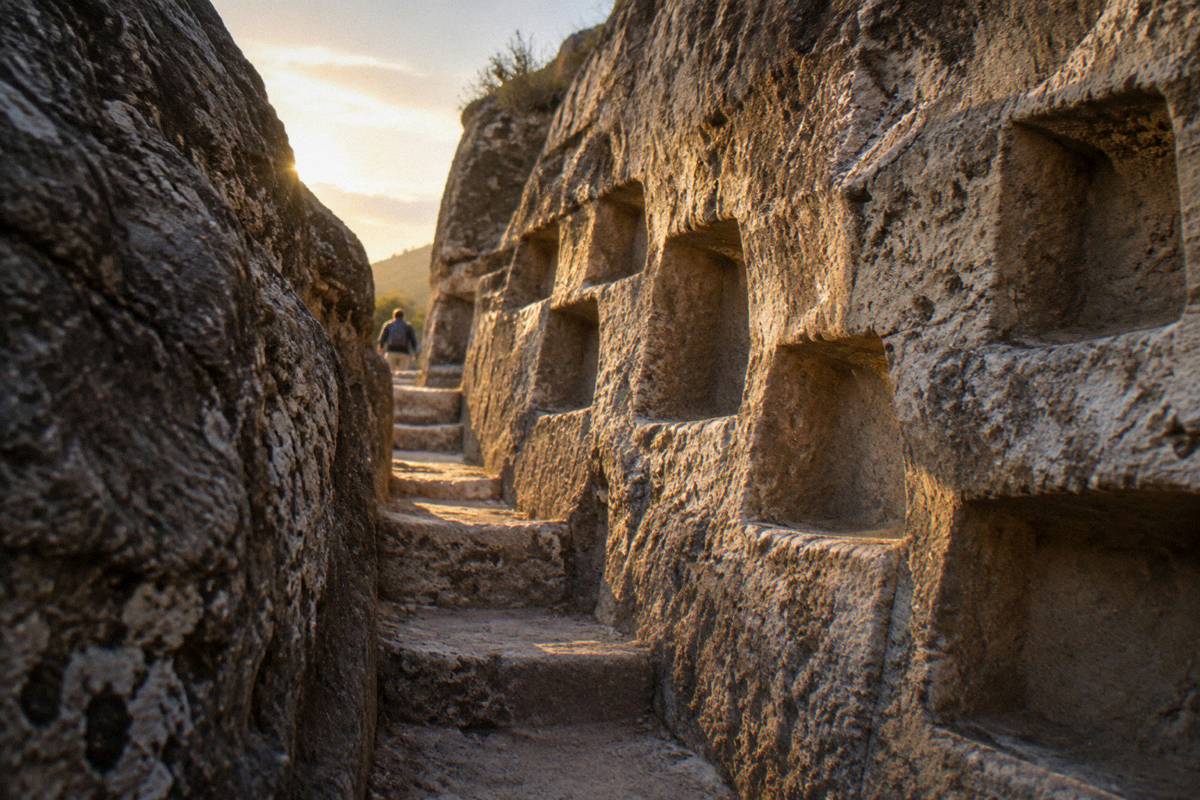
Qenqo is one of the four Inca sites on the Boleto Turistico Circuit I, a carved limestone outcrop on the hills above Cusco whose channels, niches and carved passageways are among the most distinctive stonework in the region.
Short answer
Qenqo is a carved ceremonial limestone site on the hills north of Cusco, Peru, covered by the Boleto Turistico Circuit I together with Sacsayhuaman, Puka Pukara and Tambomachay.
Qenqo is a carved limestone ceremonial site on the hills above Cusco, the historic city in the Andes of southern Peru, and it is one of the four Inca sites covered by the Boleto Turistico Circuit I together with Sacsayhuaman, Puka Pukara and Tambomachay. The Peruvian sol is the currency on the ground, the integral Boleto for a foreign adult is S/ 130, and the site sits high enough that the same altitude advice that applies to the Plaza de Armas at 3,335 m applies here with more force, because these hills stand higher still. What makes Qenqo different from every other stop on the circuit is the rock itself: instead of walls built of fitted stones, the builders carved directly into a natural limestone outcrop, cutting channels, niches, steps and a passageway straight through the rock.
What Is Qenqo In Cusco?
Qenqo is a ceremonial site carved directly into a natural limestone outcrop on the hills north of Cusco, and it belongs to the Boleto Turistico Circuit I alongside Sacsayhuaman, Puka Pukara and Tambomachay. COSITUC, the ticket body, lists it among the 16 sites on the ticket, and unlike most Inca sites in the region its main features are cut into living rock rather than built up from fitted stones.
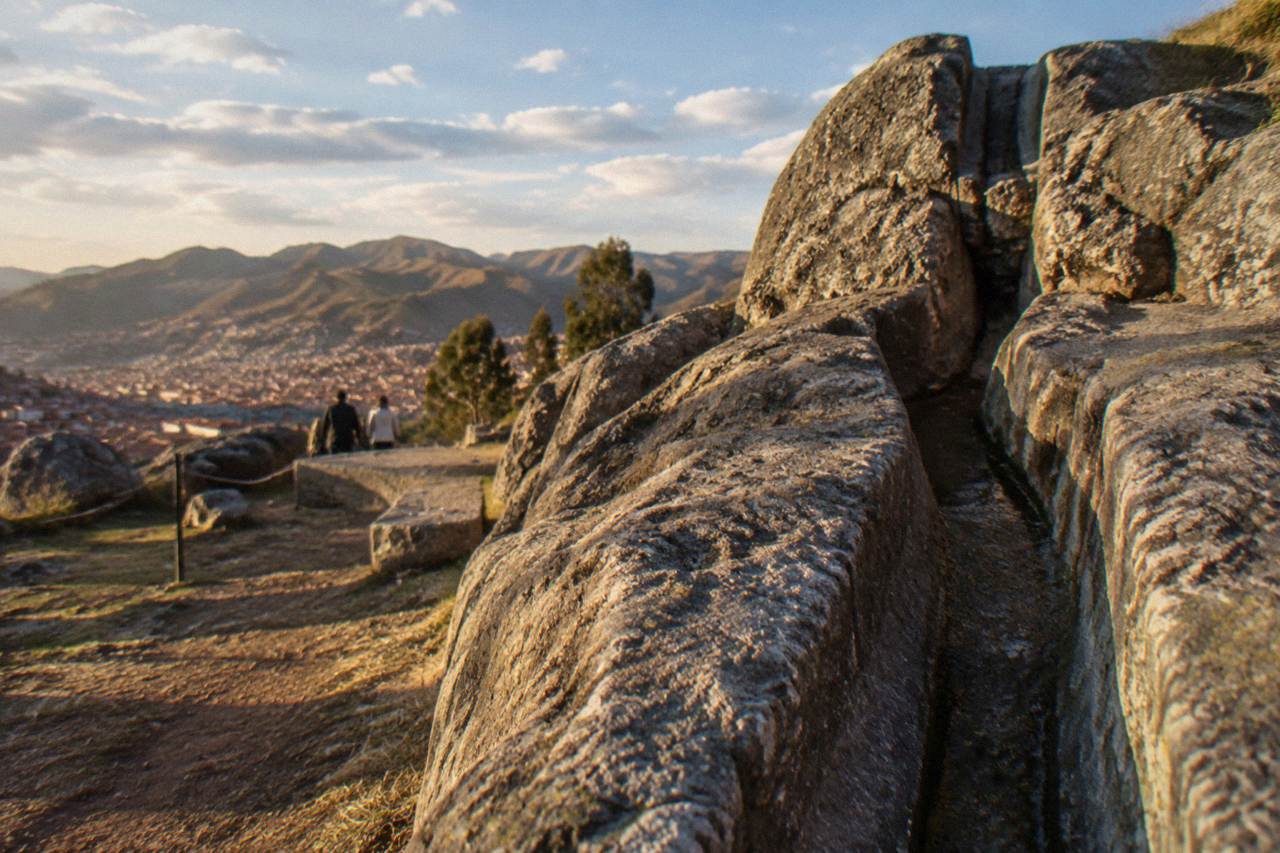
The name is usually translated from Quechua as "labyrinth" or "maze", a reference to the zigzag channels cut into the top of the outcrop and the narrow passageway carved through the rock itself. Visitors arrive at a large natural rock formation, walk around carved steps and niches, and can enter the passageway, a tunnel-like space cut into the limestone. On the upper part of the outcrop, a series of channels runs across the surface, and a carved monolith stands at the heart of the complex. The site is one of the most distinctive pieces of stonework in the Cusco region precisely because so little of it was built in the conventional sense: the rock was already there, and the carving shaped what existed.
No source in the verified facts pack attaches a construction date, a builder or a ruler to Qenqo, and this page stays silent on all of those. What can be said is qualitative: Cusco was the Inca capital, and ceremonial sites cluster on the hills around it, of which Qenqo is one. The site is also spelled Q'enqo in body prose and older sources, and appears on some maps as Qenko or Kenko; the spelling on this page's own title, Qenqo, is the one used throughout.
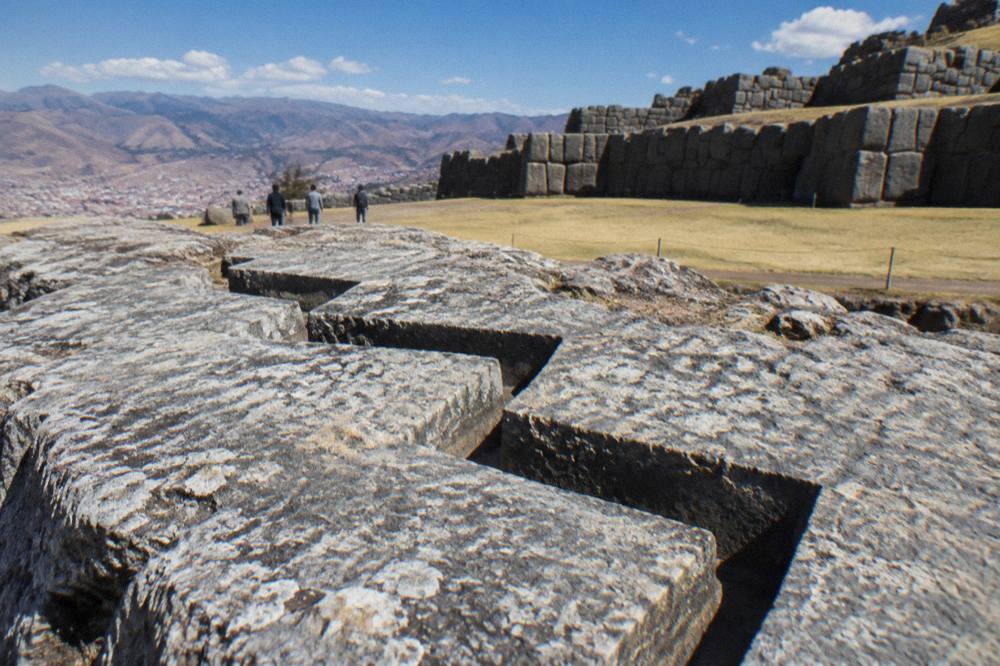
The four Circuit I sites sit in a chain on the hills above the city and can be seen in one half-day loop: Sacsayhuaman first as the largest, then Qenqo, then Puka Pukara and Tambomachay further along the road. A half-day city tour covering the four ruins is the featured product for this page, and the operator's live listing carries the current price, rating and duration. The half-day four-ruins city tour from Cusco is the simplest way to see Qenqo with transport between the sites included, since the sites are spread along the hill road and walking between them involves sustained climbing at altitude.
How Much Does Qenqo Cost, And Does The Boleto Turistico Cover It?
Qenqo has no separate entry price of its own: it is covered by the Boleto Turistico del Cusco, and COSITUC lists it on Circuit I. The integral ticket for a foreign adult is S/ 130, about US$38, valid 10 days, and the Circuit I partial ticket is S/ 70, about US$20, reported as valid for 1 day. COSITUC sells the ticket in person only, never online.
The counter is at Av. El Sol 103, the Galerias Turisticas in central Cusco, open daily 07:30 to 18:00, and most included sites also sell the ticket on the spot. Children are free to age 9, ages 10 to 17 pay the student price with ID, and the only discount category COSITUC recognises is students: there is no teacher or youth-card discount. The integral ticket covers all 16 sites across the three circuits; the partial tickets cover one circuit each, and COSITUC's own FAQ notes that validity starts the day you buy it and that covering all 16 sites needs a minimum of three days.
| Ticket | Price, foreign adult | Validity (reported) | Sites included |
|---|---|---|---|
| Integral (BTCI) | S/ 130, about US$38 | 10 days | All 16 sites on all three circuits |
| Circuit I partial (Saqsaywaman) | S/ 70, about US$20 | 1 day | Sacsayhuaman, Qenqo, Puka Pukara, Tambomachay |
| Circuit II partial (City) | S/ 70, about US$20 | 2 days | Qorikancha site museum, regional and contemporary art museums, popular art museum, Centro Qosqo de Arte Nativo, Pachacutec monument, Tipon, Pikillacta |
| Circuit III partial (Sacred Valley) | S/ 70, about US$20 | 2 days | Pisac, Ollantaytambo, Chinchero, Moray |
| Foreign student integral | S/ 70, about US$20 | 10 days | All 16 sites, with student ID |
One warning worth repeating: Machu Picchu is not on the Boleto in any form, and Circuit III does not include it. Machu Picchu tickets sell on the Ministry of Culture platform or in person at Machu Picchu Pueblo, a separate system entirely. This site keeps a single page on the citadel at Machu Picchu, and the Cusco to Machu Picchu train is covered only briefly there because it belongs to a sibling site.
What Do You Actually See At Qenqo?
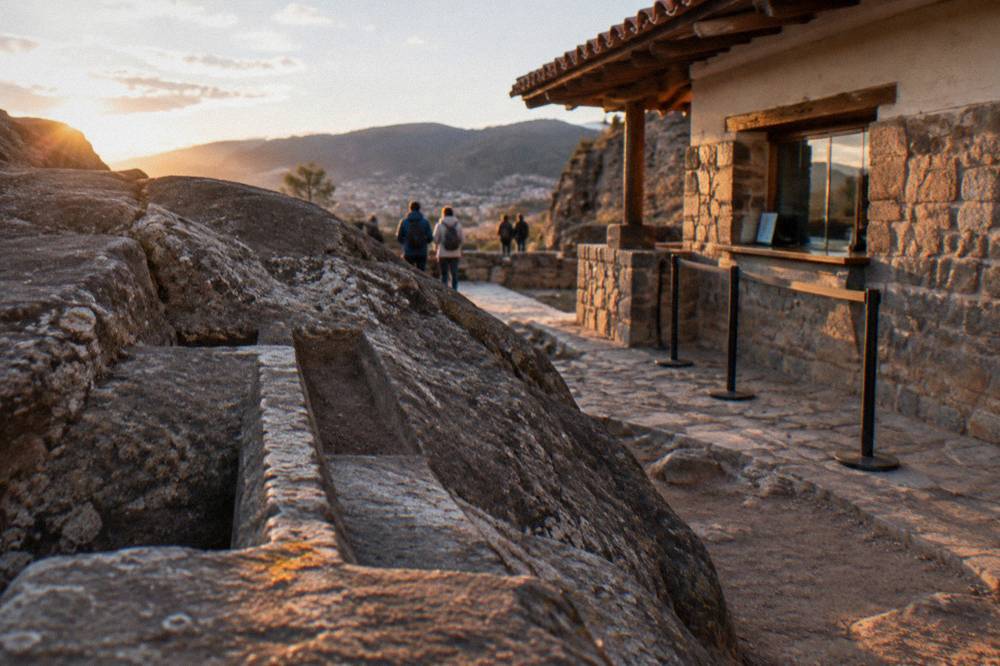
The two features visitors remember are the carved passageway cut straight through the limestone outcrop, entered by steps and lit only from its openings, and the zigzag channels on the upper surface of the rock, which run across the outcrop toward a basin. Around both stand niches, carved steps and a monolith at the heart of the complex.
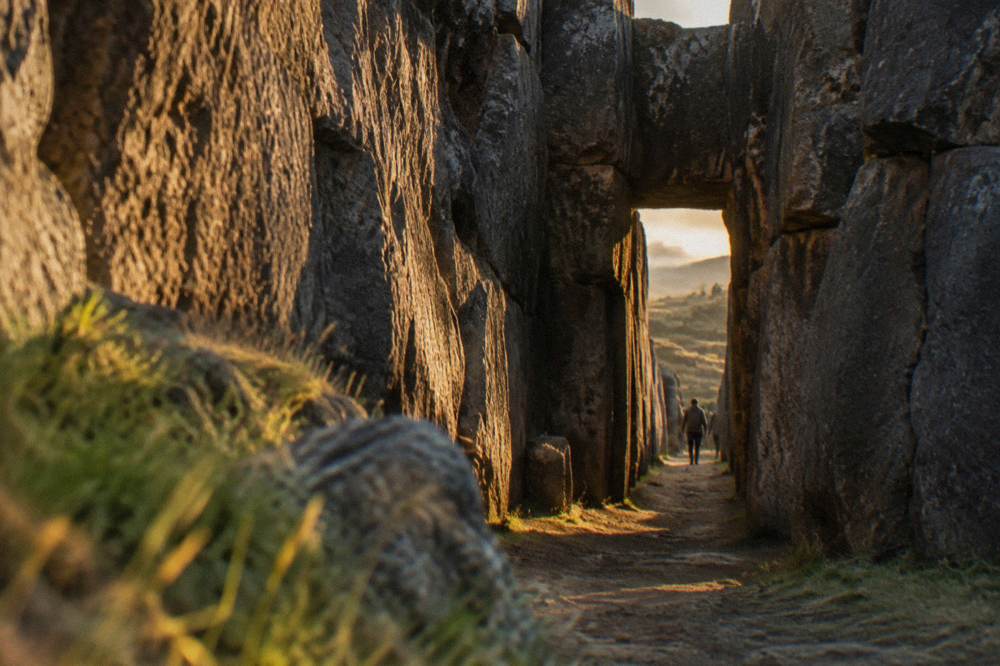
The passageway is the site's most striking space. Cut into the rock itself, it runs beneath the outcrop with openings at either end, and the interior is plain, cool and enclosed, a sharp contrast to the open hillside outside. Above it, the channels are cut in a zigzag pattern across the top of the rock, and they converge where the stone forms a basin.
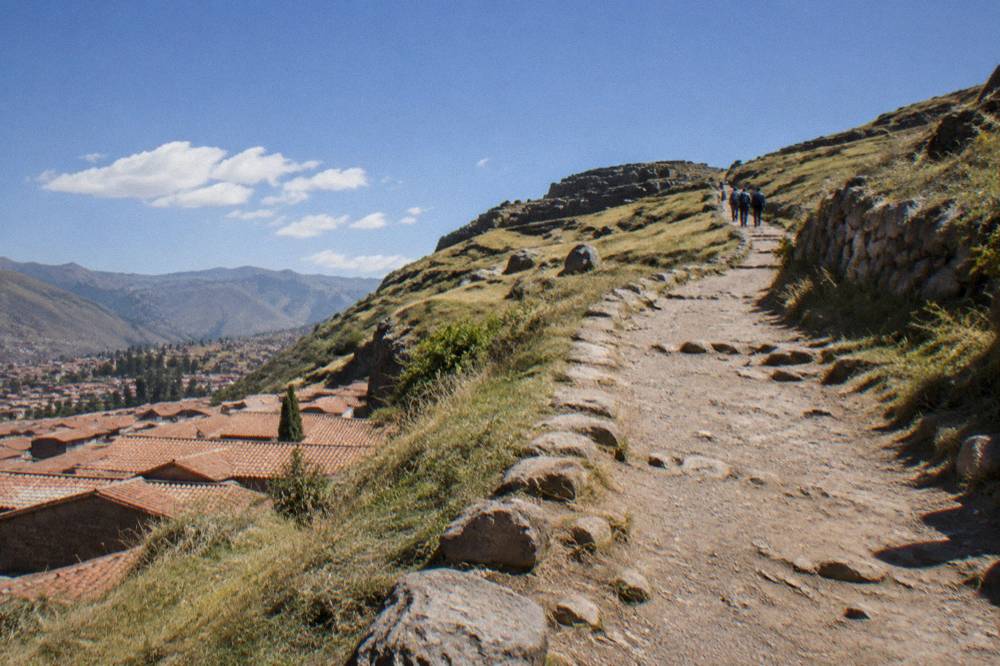
Around the outcrop, the hillside opens toward Cusco below and the surrounding hills. Sacsayhuaman stands as the largest of the four Circuit I sites, and the Cristo Blanco statue is another landmark on these same northern hills; the pack gives no distances or walking times between the sites, so plan on transport rather than assuming a short stroll. The altitude matters here more than in the city centre: the hills above Cusco stand higher than the Plaza de Armas at 3,335 m, and the CDC Yellow Book names Cusco as a rapid-ascent destination where graded ascent is preferred.
A practical note on timing: no verified source gives Qenqo's opening hours, so check at the ticket counter or with a tour operator before planning an early or late visit. What the pack does give is the regional context. The dry season runs roughly May to September, with clear days, cold nights and frost in June and July; the wet season runs roughly November to March, and December to March carries 71.9 percent of the year's 707.8 mm of rain at the WMO/SENAMHI Cuzco station, a historical normal. Carved stone is slippery when wet, and the channels and passageway are the parts of the site where that matters most.
| Month | Mean max C | Mean min C | Rain mm | Season note |
|---|---|---|---|---|
| May | 19.8 | 2.5 | 8.7 | Dry season begins, cold nights |
| June | 19.5 | 0.3 | 1.5 | Frost nights, peak clear-sky weeks |
| July | 19.1 | 0.1 | 4.0 | Frost nights, coldest minimums |
| August | 19.8 | 1.6 | 8.6 | Dry, cold nights |
| December | 19.4 | 6.4 | 122.7 | Wet season, rain most days |
| January | 18.9 | 6.6 | 145.3 | Wettest month |
The table above is drawn from the WMO/SENAMHI historical normal for the Cuzco station, supplied by SENAMHI to the World Weather Information Service. Mean daily maximums stay between 18.8 and 20.9 C all year in Cusco, so daytime visits are mild in every month; it is the nights and the rain that change the character of the year.
How Do You Get To Qenqo From Central Cusco?
The honest answer is that the verified facts give no distance, walking time or fare for the trip from central Cusco to Qenqo, so this page states none. What is established is directional: Qenqo sits on the hills north of the city together with Sacsayhuaman, Puka Pukara and Tambomachay, and a half-day city tour that covers the four ruins includes transport between them.
Visitors who want to arrange their own transport have several options in general terms. Taxis operate throughout Cusco, and the airport taxi to the centre is reported at about S/ 15 to 25, which gives a sense of local taxi pricing without stating a fare for this specific route. Ride-hailing is available in Cusco, though it works differently from Lima. The site is also a stop on the standard four-ruins circuit that most Cusco tour operators run, which is why the featured tour on this page is the half-day city tour: it removes the question of transport between four spread-out sites at altitude. The wider set of guides lives on Things To Do In Cusco Peru.
For visitors who prefer to walk some of the hills, the site's own page on walking from Cusco to Sacsayhuaman exists as a sibling guide, but this page claims no walking time for Qenqo itself. What can be said is that any walking on these hills involves sustained climbing from the city centre at 3,335 m, and the CDC Yellow Book advises graded ascent and names Cusco as a place travellers sometimes descend from to sleep lower before beginning their ascent. Acclimatisation advice is on this site's own Cusco altitude page.
Should You Visit Qenqo On A Tour Or By Yourself?
Both work, because the Boleto Turistico admits independent visitors at every Circuit I site and a guide is not required at Qenqo. A tour adds interpretation that the carved rock does not supply on its own, plus transport along the hill road between four sites; independent visits add flexibility on timing and the freedom to linger at the passageway and channels.
The trade-off is mostly about interpretation and altitude. The carvings at Qenqo are enigmatic, and without a guide the site can read as a short stop: a rock, some channels, a tunnel. With a guide, the niches, the monolith and the zigzag channels get context, though any ceremonial explanation is guiding tradition rather than established fact, and this page repeats none of it as certain. The featured half-day tour covers the four ruins in one loop with transport included, and its live listing carries the current price, rating and duration.
Independent visitors buy the Boleto at the Av. El Sol counter or at the sites, arrange their own transport, and set their own pace. The free walking tours this site covers elsewhere focus on the historic centre rather than the hill sites, so a free walk is not a substitute for the circuit. For combining Qenqo with a longer stay, the best Cusco tours guide compares the main options.
What Should You Combine With Qenqo On The Same Day?
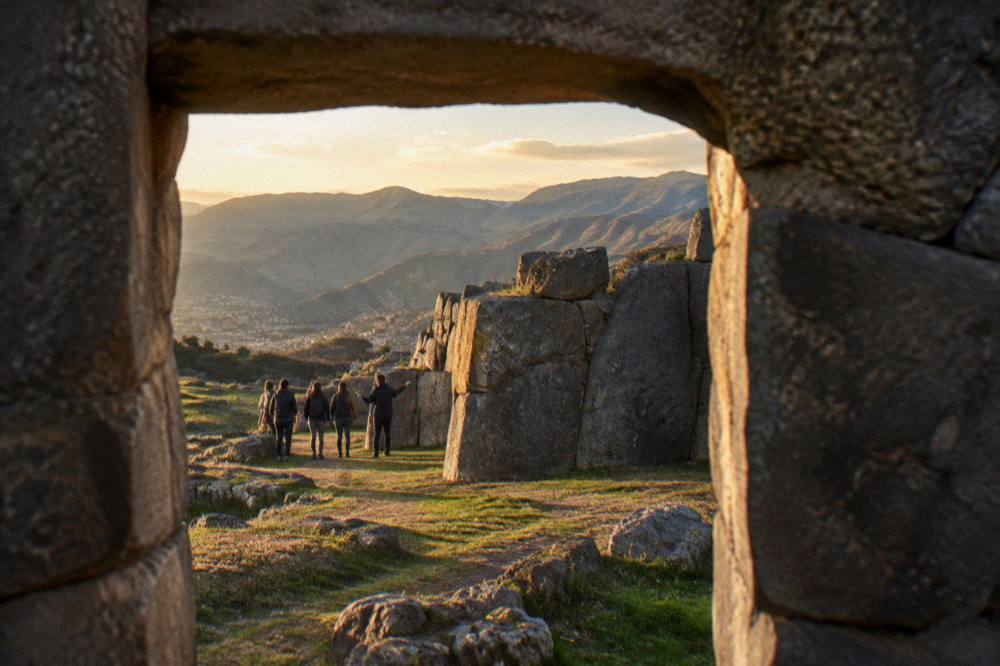
The natural combination is the full Circuit I: Sacsayhuaman, Qenqo, Puka Pukara and Tambomachay, four sites on the same hills, one partial ticket at S/ 70 or the integral at S/ 130, typically done in a half-day loop from Cusco. The rest of the day is free for the historic centre, which the Boleto's Circuit II covers on separate sites.
Sacsayhuaman is the anchor of the circuit, the vast walled site whose explanada recorded 944,008 visits in 2025 in the MINCETUR open dataset, the third-highest recorded figure among Cusco sites that year after the Machu Picchu sanctuary and citadel counts. Qenqo, Puka Pukara and Tambomachay are smaller stops along the same road: Puka Pukara a compact walled complex, Tambomachay known for its water channels and fine stonework. Each has its own page on this site, at Sacsayhuaman, Puka Pukara and Tambomachay.
| Circuit I site | What the visitor sees | On the Boleto |
|---|---|---|
| Sacsayhuaman | Large walled site with massive fitted stones and an open explanade | Circuit I |
| Qenqo | Carved limestone outcrop with channels, niches and a rock passageway | Circuit I |
| Puka Pukara | Compact walled complex with rooms, terraces and viewpoints | Circuit I |
| Tambomachay | Fine stonework with water channels and niches | Circuit I |
After the hills, the city centre fills the rest of the day. The Plaza de Armas, the Cusco Cathedral and the Qorikancha site museum, on the Boleto's Circuit II, are the standard afternoon, and the twelve-angled stone sits a few blocks from the square on Hatunrumiyoc street. Visitors with more days in the region can extend to the Sacred Valley sites on Circuit III, Pisac, Ollantaytambo, Chinchero and Moray, which this site covers in its Sacred Valley guide.
Is Qenqo Worth Visiting, And How Does It Compare With The Other Hill Sites?
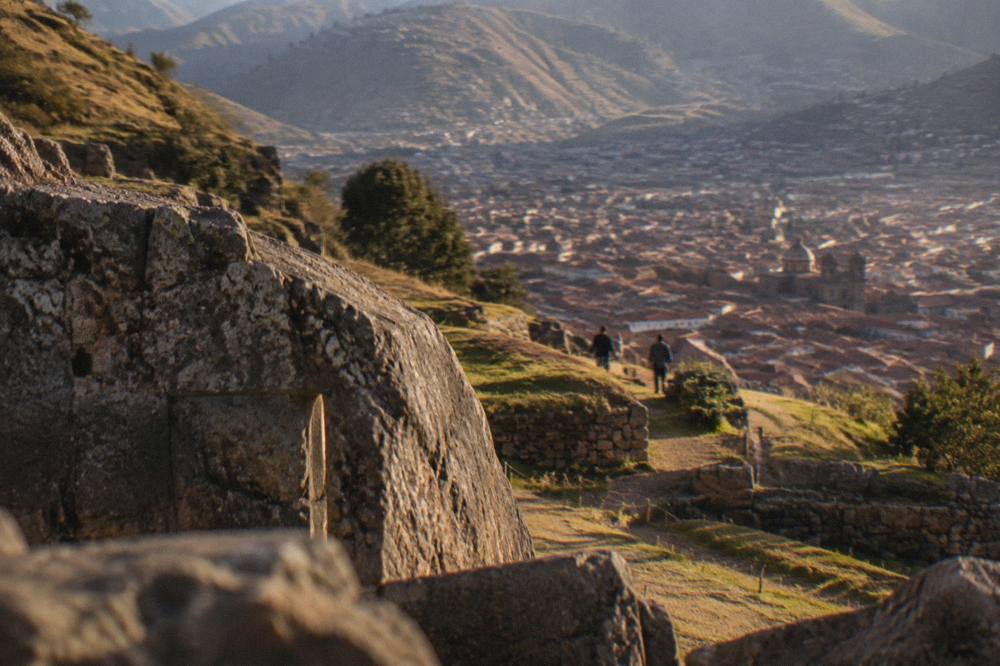
Qenqo is worth visiting for one reason that no other site in the region offers: it is the place where the builders carved directly into living rock, cutting a passageway, channels and niches into a natural limestone outcrop. Sacsayhuaman is bigger and more imposing, but Qenqo is the more unusual piece of work, and it costs nothing extra once the Boleto is bought.
For visitors deciding how to spend a first day in Cusco, the four Circuit I sites work well as an acclimatisation-day outing: they sit above the city, the loop is short, and the afternoon stays free. This site's acclimatisation day guide places the hill circuit in exactly that role. For visitors with only one full day, the choice is between the hills and the Sacred Valley, and the Sacred Valley in one day answer page weighs that trade-off.
The comparison table below places Qenqo among its neighbours on the same ticket.
| Site | Character | Strongest feature | Circuit |
|---|---|---|---|
| Sacsayhuaman | Monumental | Massive fitted stone walls, open explanade | I |
| Qenqo | Carved | Rock-cut passageway and zigzag channels | I |
| Puka Pukara | Compact | Walled rooms and hillside viewpoints | I |
| Tambomachay | Refined | Water channels in fine stonework | I |
Visitors planning longer treks should note that Qenqo is a city-site, not a trek stop: the Inca Trail, Salkantay and Lares routes all head out from the Cusco region toward Machu Picchu, and this site covers them in its Inca Trail and Salkantay trek guides. The Inca Trail closes every February and permits sell only through licensed agencies, 500 people a day including porters and guides.
For travellers whose route continues beyond the hills, two other directions from Cusco pair naturally with a Qenqo visit. The Route of the Sun runs between Puno and Cusco through high-altitude Andean scenery, and a full-day tour with lunch covers it in either direction, which suits visitors arriving from or heading toward Lake Titicaca. Its live listing carries the current price, rating and duration.
Trek-minded visitors, meanwhile, often pair a first day of city and hill sightseeing with a multi-day route toward Machu Picchu later in the trip. The short Salkantay trek is one such option, crossing high Andean passes before descending toward the citadel, and its live listing carries the current price, rating and duration.
Common Questions About Qenqo In Cusco
Is Qenqo included in the Boleto Turistico?
Yes. COSITUC lists Qenqo on Circuit I of the Boleto Turistico, together with Sacsayhuaman, Puka Pukara and Tambomachay. The Circuit I partial ticket for a foreign tourist is S/ 70, and the integral ticket covering all 16 sites is S/ 130, valid 10 days. The ticket is sold in person only, at the Av. El Sol 103 counter in Cusco, daily 07:30 to 18:00, and at most included sites.
Can you buy the Boleto Turistico online before visiting Qenqo?
No. COSITUC states that the Boleto Turistico is not sold online; purchase is in person only, at the central counter at Av. El Sol 103 in Cusco or at most of the included sites. Any site or seller offering the ticket online is not the official channel.
Is Qenqo the same as Q'enqo?
Yes, they are the same site. Q'enqo is a common spelling in body prose and older sources, and Qenko and Kenko also appear on maps. This site uses Qenqo in its titles and headings, and the name is usually translated from Quechua as a reference to the maze-like channels carved into the rock.
How far is Qenqo from Cusco city centre?
This page states no distance or walking time, because no verified source in this site's facts pack gives one for that exact journey. What is established is directional: Qenqo sits on the hills north of Cusco together with the other three Circuit I sites, which are typically reached by taxi, tour transport or a guided half-day loop rather than on foot.
What was Qenqo used for?
The verified facts do not establish a function. The site consists of a carved limestone outcrop with zigzag channels, a rock-cut passageway, niches and a monolith, and ceremonial explanations are common in guiding, but no source this site holds states the purpose as fact. What can be said is that Cusco was the Inca capital and ceremonial sites cluster on the hills around it.
Is a guide required at Qenqo?
No verified rule requires a guide at Qenqo, and the Boleto admits independent visitors. A guide adds interpretation of the carvings, and the half-day four-ruins city tour that covers Qenqo includes both a guide and transport between the spread-out Circuit I sites.
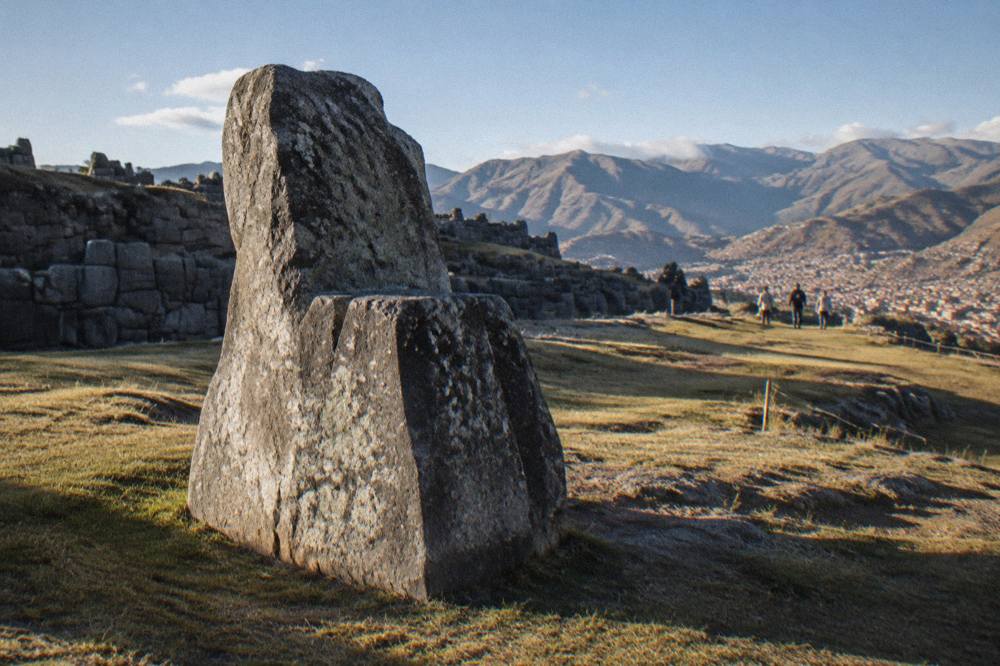
Qenqo earns its place on the Circuit I loop for a reason no other site in the Cusco region can claim: the work was cut into the rock rather than raised from it. Visitors who pair it with Sacsayhuaman, Puka Pukara and Tambomachay on a single Boleto circuit get the fullest picture of the Inca hills above the old capital, and the carved channels and passageway of Qenqo are the part of that picture that stays in the memory longest.