Buying Alpaca In Cusco
Cusco's markets and workshops sell more alpaca knitwear than any other city in Peru, and the difference between a genuine baby alpaca sweater and a synthetic lookalike is invisible on the shelf. This guide explains what the fibre actually is, how to test it, where the reliable sellers are, and how to keep the piece soft for years.
Short answer
Real alpaca fibre has no lanolin, keeps its softness after washing, and passes a simple burn test that synthetics fail. The safest buys in Cusco are dedicated fibre shops and weaving cooperatives rather than blanket stalls aimed at day visitors; the Awana Kancha living museum outside the centre shows the whole process from animal to loom before you spend anything.
Cusco sits at 3,335 m in the Andes of southern Peru, and for centuries the communities around it have bred alpacas and woven their fleece into some of the softest natural fibre garments sold anywhere. The city's position as the region's tourist hub means its shops and markets now carry everything from hand-loomed baby alpaca to mass-produced acrylic printed with an alpaca silhouette, often displayed side by side with nothing but the price tag to tell them apart. This page is a research guide to that gap: what alpaca fibre is, how to verify it, where in Cusco the reliable sources sit, and what to do with the sweater once it has crossed the border. For the companion question of what a blanket should cost, the site's dedicated answer page covers the price question in detail at what an alpaca blanket costs in Cusco.
Why Is Cusco The Place To Buy Alpaca Knitwear?
Cusco is the commercial centre of the Peruvian alpaca world because the high-altitude grasslands around it, and across the wider Andes, are where the animals live, and the city's historic role as a weaving and trading hub means finished garments, raw fleece and working cooperatives all converge on its markets and workshops. The Peruvian government's tourism board promotes alpaca textiles as one of the country's signature purchases, and the fibre industry has a visible retail presence in the historic centre. That concentration is the practical reason to shop here rather than in Lima: the selection is wider, the connection to the source is shorter, and the chance of finding a cooperative that both raises the animals and weaves the cloth is real rather than theoretical.
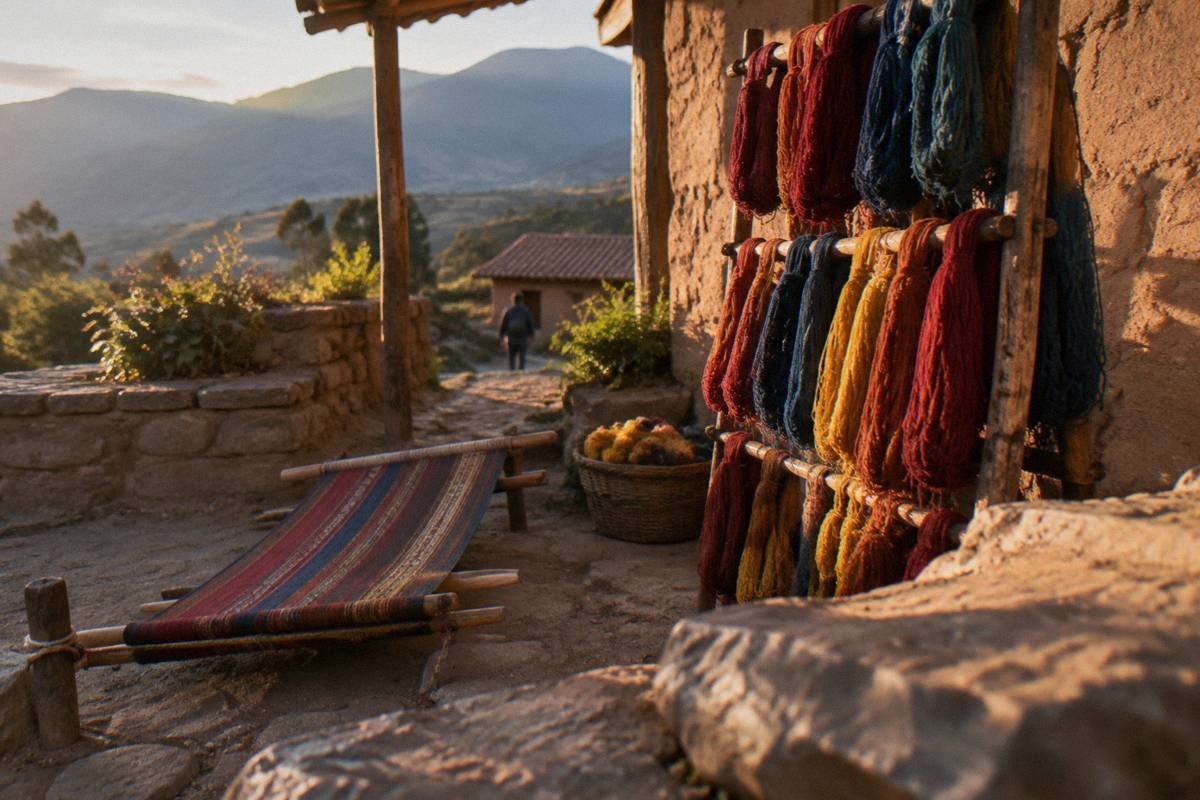
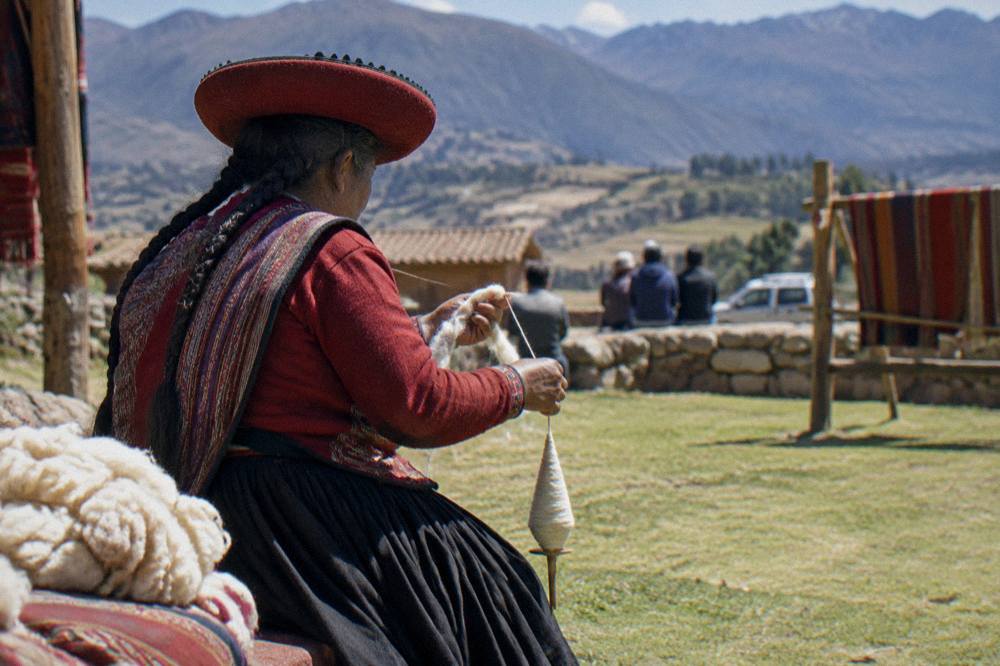
The city's own textile traditions run deep. The Awana Kancha living textile museum on the road out toward the Sacred Valley keeps llamas, alpacas and vicunas on site and demonstrates the full chain: shearing, natural dyeing with plants and insects, hand-spinning and backstrap loom weaving. Watching that process before buying anything changes how a shopper reads a garment. A hand-loomed piece shows slight irregularities in the weave, a soft non-uniform edge and colour variation from natural dyes, while a machine-knitted piece is perfectly regular, and that regularity is itself information.
It is also worth being honest about what the market has become. The volume of visitors passing through Cusco, which the Ministry of Culture's own ticketing data shows arriving in the millions each year for Machu Picchu alone, has produced a large trade in cheap synthetic garments printed with alpaca imagery. The genuine article is absolutely still here, in dedicated fibre shops, in the workshops of San Blas and in the cooperative stores, but the default stall aimed at a day visitor is not the place to assume quality. The rest of this guide is about telling those two worlds apart.
How Can You Tell Real Alpaca From A Fake In A Cusco Market?
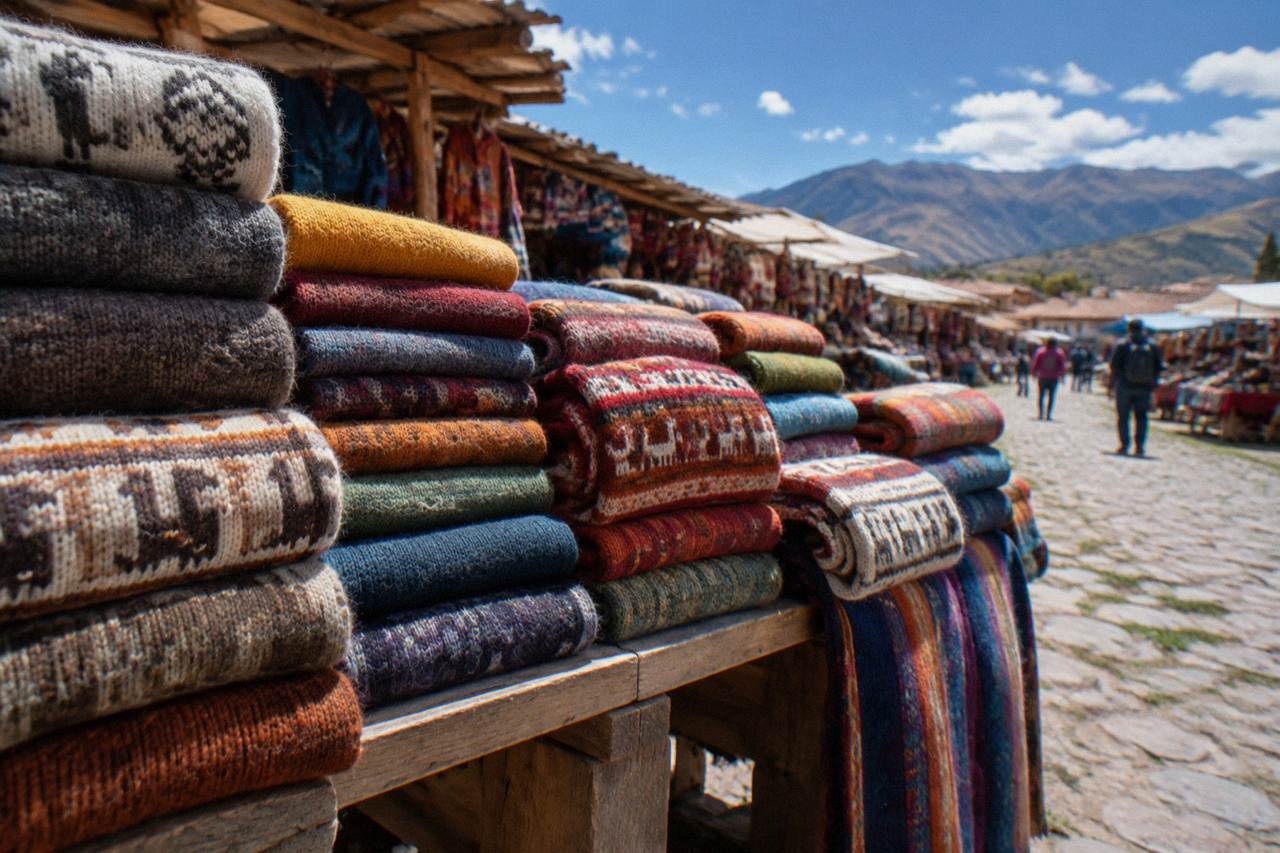
The reliable tests are the burn test on a loose thread, the touch test for the cool, dense, lanolin-free feel of animal fibre, and the label test for the fibre composition, because Peruvian law requires honest labelling and a reputable seller will state the blend on the tag. Synthetic imitations, almost always acrylic or a wool-acrylic blend, feel plasticky and warm up in the hand within seconds, because plastic fibre traps heat differently from animal hair. Alpaca, by contrast, feels cool at first contact and has a dense, slightly slippery softness that does not feel greasy, since alpaca carries no lanolin the way sheep's wool does.
The burn test is the decisive one and any confident seller should permit it. Pull a single thread from an inside seam or a hidden edge, hold it to a flame and read the result: animal fibre smells like burnt hair, burns slowly and leaves a crushable black ash, while acrylic melts into a hard bead, shrinks away from the flame and gives off a chemical smell. The table below summarises what to look for.
| Test | Real alpaca | Acrylic or blended imitation |
|---|---|---|
| First touch | Cool, dense, slightly slippery | Warms quickly, feels light and airy |
| Burn test on a loose thread | Smells of burnt hair, crushable ash | Melts to a hard bead, chemical smell |
| Label or tag | States fibre content and blend | Vague, or says "alpaca style" |
| Pilling after rubbing | Minimal on quality fibre | Forms surface pills quickly |
| Price relative to the stall | Not the cheapest item on display | Suspiciously cheap for its size |
| Stitching and edges | Finished, often hand-sewn details | Overlocked, glue-backed badges |
Two cautions keep the tests honest. First, a blend is not a fraud: many good garments mix alpaca with sheep wool or a small synthetic share for durability, and the label should simply say so. The dishonest item is the one sold as pure alpaca that is not. Second, "baby alpaca" is a fibre grade, the finest first shearing, not a claim that the garment came from a young animal, and it is the grade most counterfeited precisely because it commands the highest interest. When a seller resists the burn test or the label question, that resistance is the answer.
The what to buy in Cusco guide places alpaca knitwear in the wider context of the city's shopping, from textiles to ceramics, and the Cusco markets guide maps the individual markets if the plan is to shop independently rather than in a dedicated shop.
A walking tour with a local guide is one of the more efficient ways to shop the historic centre, because guides know which streets carry the dedicated fibre shops and which stalls are worth skipping, and the walk between them passes the Inca walls and colonial courts that give the shopping districts their shape.
Where Should You Buy An Alpaca Sweater In Cusco?
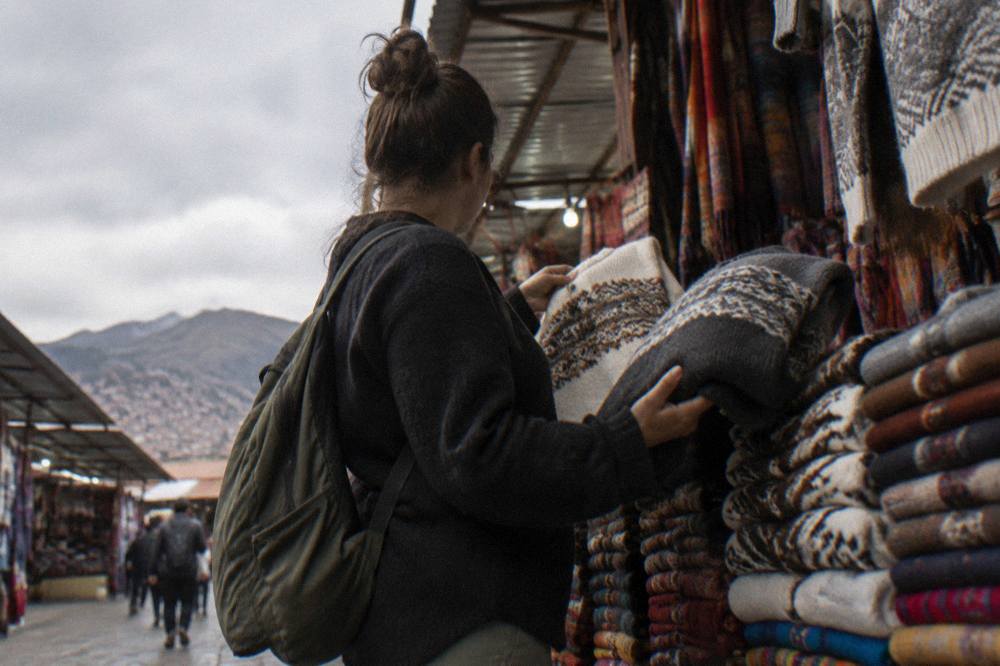
The safest sources in order are dedicated fibre shops with stated fibre content, the weaving cooperatives and workshops in and around San Blas, the Awana Kancha textile centre on the Sacred Valley road, and only then the general artisan markets, with the plaza-adjacent souvenir stalls as the last resort. Dedicated shops cost more and deliver certainty: the garment is labelled, the staff can answer fibre-grade questions, and returns are possible. Cooperatives deliver provenance: the piece is often woven by the person selling it or a neighbour, and the money stays local. The general markets deliver price and require every test in the previous section.
The geographic pattern matters. The streets immediately around the Plaza de Armas carry the highest rents and the most transient footfall, so the product there skews toward the fast souvenir end. San Blas, the artisan quarter uphill from the plaza, holds working studios and smaller shops where the seller is often the maker. The larger artisan markets sit within walking distance of the centre and mix genuine hand-loomed pieces with imports, stall by stall, so each purchase needs its own verification. Awana Kancha, a short drive out of the centre, is the one venue where the entire production chain is demonstrated before the shop.
| Source type | Strength | What to verify |
|---|---|---|
| Dedicated fibre shop | Labelled content, consistent grades, returns | That the label matches the burn test |
| San Blas workshop | Maker-sold, hand-loomed, local income | Weave irregularities as a sign of hand work |
| Awana Kancha centre | Full process demonstrated on site | Nothing, the provenance is visible |
| Large artisan market | Range and room to negotiate | Everything, stall by stall |
| Plaza souvenir stall | Convenience | Fibre content, aggressively |
A half-day guided city tour pairs well with a shopping afternoon: it covers the cathedral quarter, Qorikancha and the ruins above the city, including Sacsayhuaman, and returns to the centre with the day's second half still open for the shops of San Blas and the markets. The tour's own listing carries the current price, the rating and the departure details.
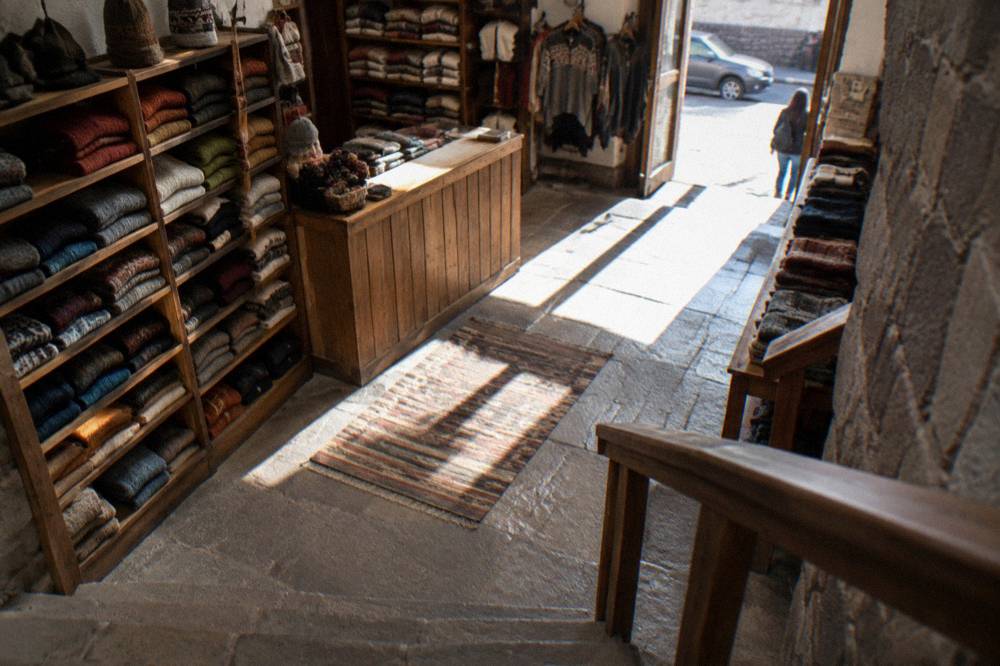
What Is The Difference Between Alpaca, Baby Alpaca, Llama And Sheep Wool?
Alpaca is a hollow, lanolin-free animal fibre that is warmer for its weight than sheep's wool and naturally comes in more than twenty undyed shades; baby alpaca is the finest grade of that same fibre, from an animal's first shearing, and llama fibre is the coarser cousin that is often sold in rustic, chunky pieces, while sheep's wool is the cheaper, springier and more familiar baseline. The distinction that matters at the point of sale is softness against skin. Baby alpaca is fine enough for most people to wear directly against the neck; standard alpaca suits sweaters and outer layers; llama suits rugs, thick scarves and rustic ponchos where the prickle is part of the character.
The hollow core of the alpaca hair is what gives the fibre its warmth without weight, and the absence of lanolin is why the fibre suits people who find sheep's wool itchy and why it carries less of the natural smell after rain. The trade-off is that alpaca has less natural elasticity than sheep's wool, so a pure alpaca knit can lose its shape if it is hung on a hanger for months; the care section below covers that. The undyed shade range, from white through fawn, brown and grey to near black, is worth knowing when shopping, because a naturally coloured garment cannot hide a fibre blend behind a dye.
| Fibre | Feel | Warmth for weight | Typical garment | Notes for the buyer |
|---|---|---|---|---|
| Baby alpaca | Very fine, soft | High | Scarves, fine sweaters | The grade most often faked |
| Standard alpaca | Soft, dense | High | Sweaters, hats, gloves | Cool to first touch |
| Llama | Coarser, hairy | High | Rugs, chunky ponchos | Prickle is normal, not a defect |
| Sheep's wool | Springy, familiar | Moderate | Everyday knitwear | Cheapest of the animal fibres |
| Acrylic | Soft but plasticky | Low | Souvenir jumpers | Fails the burn test |
Vicuna, the wild relative of the alpaca, exists at the top of this ladder and is strictly regulated, which is why genuine vicuna garments are rare and expensive enough that a cheap "vicuna" scarf on a market stall is not a find but a mislabel. Awana Kancha keeps vicunas on site precisely so visitors can see the animal and understand why the fibre is protected. A seller claiming vicuna at a market price is telling you the label is decorative.
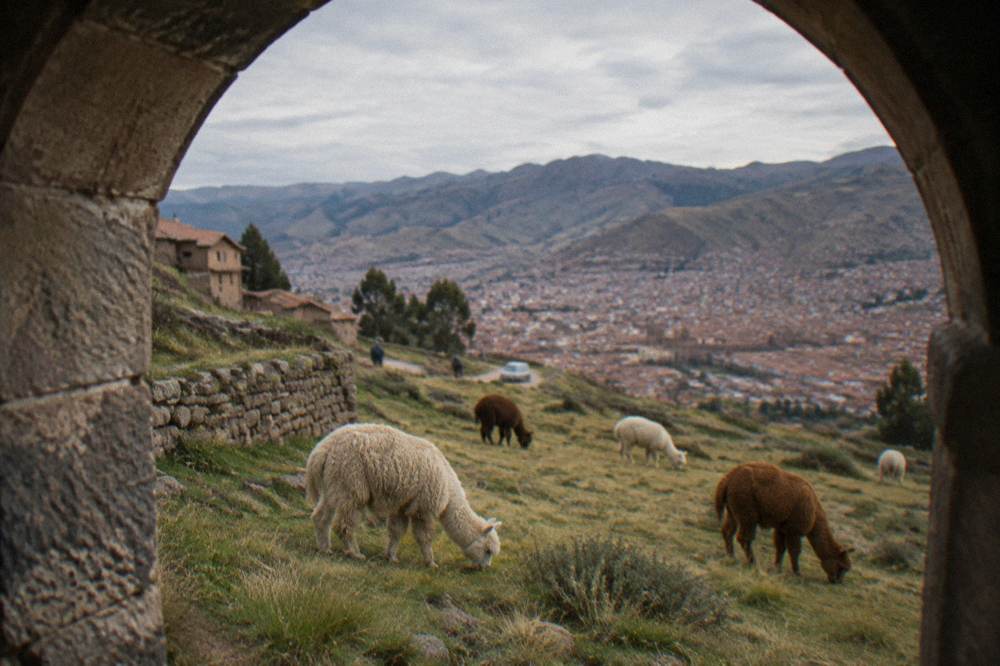
What Should You Check Before Handing Over Money?
Before paying, check the fibre content label, run the burn test if the seller permits it, turn the garment inside out to inspect the stitching and seams, stretch a small area gently to see if it springs back, and confirm the return policy if the shop is established, because every one of those checks takes under a minute and each catches a different failure mode. The label catches the outright lie, the burn test catches the blend sold as pure, the seam inspection catches the garment that will come apart at the shoulder in a season, and the stretch test catches a knit that has lost its structure through poor finishing.
The inside of a garment is where its quality is written. Look for even stitching, finished seams, a neckline that lies flat and no glue anywhere, because glue is the signature of badge-and-embroidery souvenir production rather than knitwear construction. Check the buttons and zips too: hand-finished pieces from the better workshops use horn, wood or shell buttons, while the souvenir tier uses light plastic. Then hold the piece up to the light: a loosely knit garment will show the light through the fabric, and while that is not a defect in a lacy scarf, it is in a sweater meant for Andean winters.
The fit question deserves a note specific to altitude. Cusco's dry, cold nights mean sweaters here are often cut generously, and a garment that feels roomy in the shop at 3,335 m will feel the same at home; the mistake is buying tight, because pure alpaca does not stretch back as reliably as wool. The Cusco altitude guide covers the acclimatisation side of a first day in the city, and the is Cusco safe guide covers the ordinary street awareness that applies to carrying purchases around the centre, which is the same common sense as any tourist city.
| Check | What passes | What fails |
|---|---|---|
| Fibre label | States content and blend | Missing or vague |
| Burn test | Burnt-hair smell, crushable ash | Melting bead, chemical smell |
| Seams inside out | Even, finished, no glue | Overlocked with glue badges |
| Stretch test | Springs back to shape | Stays slack |
| Light test on a sweater | Opaque knit | Loose, see-through fabric |
| Seller questions | Answers grade questions freely | Changes the subject |
Shopping and sightseeing combine naturally on the Sacred Valley route, because the valley towns of Pisac, Ollantaytambo and Chinchero are weaving centres in their own right and the two-day guided circuit that continues on to Machu Picchu passes through them with time to look. The listing carries the price, the rating from its reviews and the full itinerary.
How Do You Care For An Alpaca Sweater After You Get It Home?
Alpaca knitwear should be hand washed cold with mild soap, never wrung or hung, dried flat on a towel away from direct heat, and stored folded with cedar rather than in plastic, because the fibre's lack of elasticity and its hollow core mean the two things that ruin it are weight and heat, not water. The absence of lanolin means alpaca does not need the harsh washing that sheep's wool sometimes does, and a well-made piece will keep its softness through years of gentle washing. Moths are the storage enemy, and cedar blocks or dried lavender do the preventive work.
The washing sequence is simple. Fill a basin with cold water and a small amount of mild soap or a wool wash, submerge the garment and squeeze gently without rubbing, then rinse in cold water of the same temperature, since a temperature shock can felt animal fibre. Press the water out between folded towels, never twist, and lay the piece flat on a dry towel, reshaping the collar and cuffs while it is damp. A radiator or a tumble dryer will shrink and stiffen it; a flat, airy surface will not.
| Care task | Correct method | What ruins the fibre |
|---|---|---|
| Washing | Cold hand wash, mild soap | Hot water, machine agitation |
| Drying | Flat on a towel, reshaped | Hanging, radiators, dryers |
| Storage | Folded, cedar nearby | Plastic bags, hangers |
| Pilling | Fine-tooth comb or sweater stone | Pulling pills by hand |
| Moths | Cedar or lavender, clean garments | Storing worn, unwashed knitwear |
| Travel home | Folded in the suitcase, not compressed flat for weeks | Vacuum bags for long storage |
Pilling is worth a word because it is often misread. A few pills at friction points, under a bag strap for instance, are normal on any animal fibre and lift off cleanly with a sweater comb or a fine-tooth comb. Heavy immediate pilling across the whole garment, the kind that appears after a few wears, is the signature of a short-staple or heavily blended knit, and it is one of the few quality signals that only shows in use. This is the practical reason the burn test and the stretch test matter at the moment of purchase rather than after the trip home.
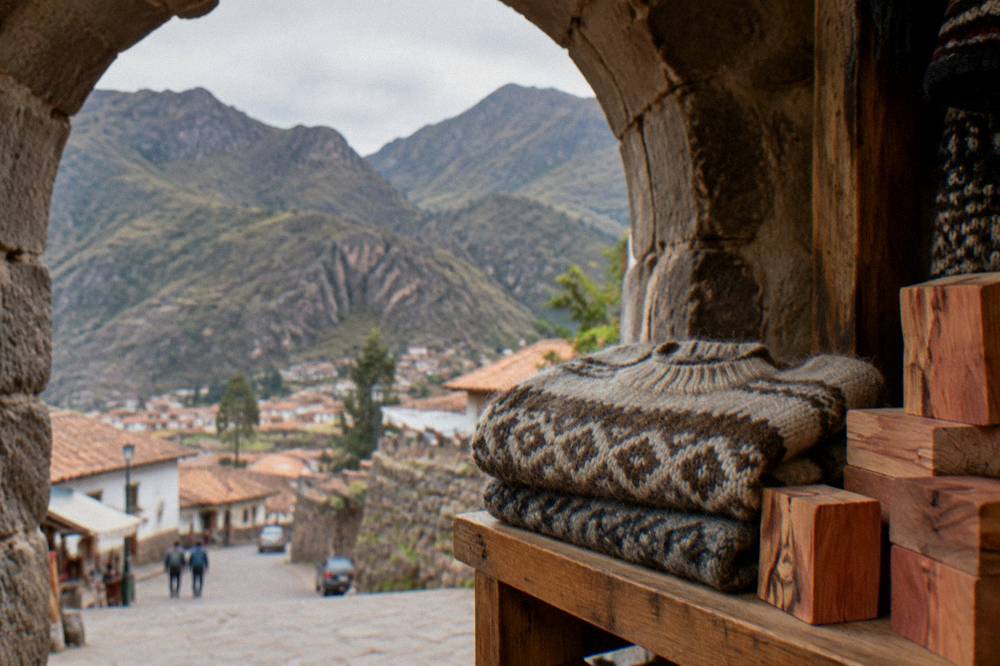
When Is The Best Time Of Year To Shop For Alpaca In Cusco?
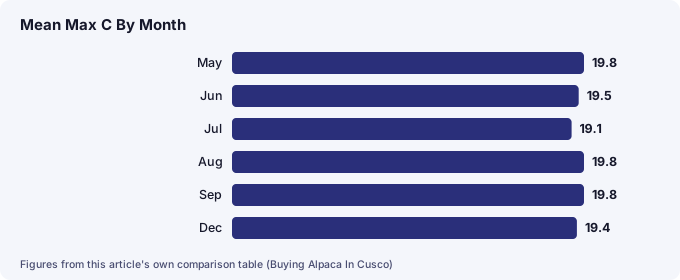
The dry season, roughly May to September, is the comfortable window for shopping the outdoor markets and walking between the San Blas workshops, while the wet season, roughly November to March, brings the rain that makes the covered markets and dedicated shops the practical choice, and June's Inti Raymi festival week is the one period when the centre is at its most crowded. The climate data for the city, from the WMO station record supplied by SENAMHI, shows the pattern clearly: December to March delivers 71.9 percent of the year's 707.8 mm of rain, while May to August together bring just 22.8 mm. The Cusco weather by month guide carries the full table.
| Month | Mean max C | Mean min C | Rain mm | Shopping note |
|---|---|---|---|---|
| May | 19.8 | 2.5 | 8.7 | Dry, cold nights, easy market walking |
| Jun | 19.5 | 0.3 | 1.5 | Inti Raymi month, centre at its busiest |
| Jul | 19.1 | 0.1 | 4.0 | Frost nights, driest stretch |
| Aug | 19.8 | 1.6 | 8.6 | Dry, high-season footfall |
| Sep | 19.8 | 3.9 | 21.8 | Dry season tail, quieter streets |
| Dec | 19.4 | 6.4 | 122.7 | Wet, Santurantikuy craft fair on 24 December |
The historical normals above come from the WMO World Weather Information Service record for the Cuzco station, supplied by SENAMHI; mean daily maximums stay between 18.8 and 20.9 C all year, so a sweater bought in July for the frost nights will still suit a September evening. The Santurantikuy fair on the Plaza de Armas every 24 December is the one wet-season date that rewards a shopper, a traditional craft fair in the heart of the city, and the best time to visit Cusco guide weighs the seasons for the whole trip, not only the shopping.
The Inti Raymi guide covers the festival itself, which draws grandstand crowds up to Sacsayhuaman every 24 June. For a shopping-focused trip the practical read is that festival week fills the centre, and the artisan stalls expand to meet it, so the selection widens while the average quality per stall does not. The verification habits from earlier in this guide matter more, not less, in the busy weeks.
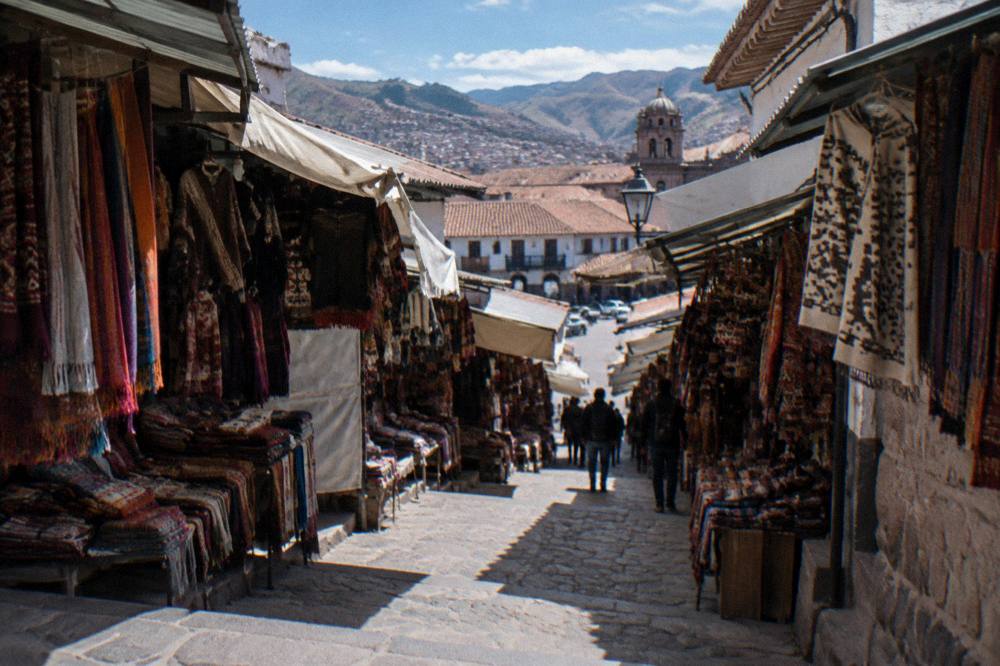
Can You Buy Alpaca Directly From Weaving Communities Near Cusco?
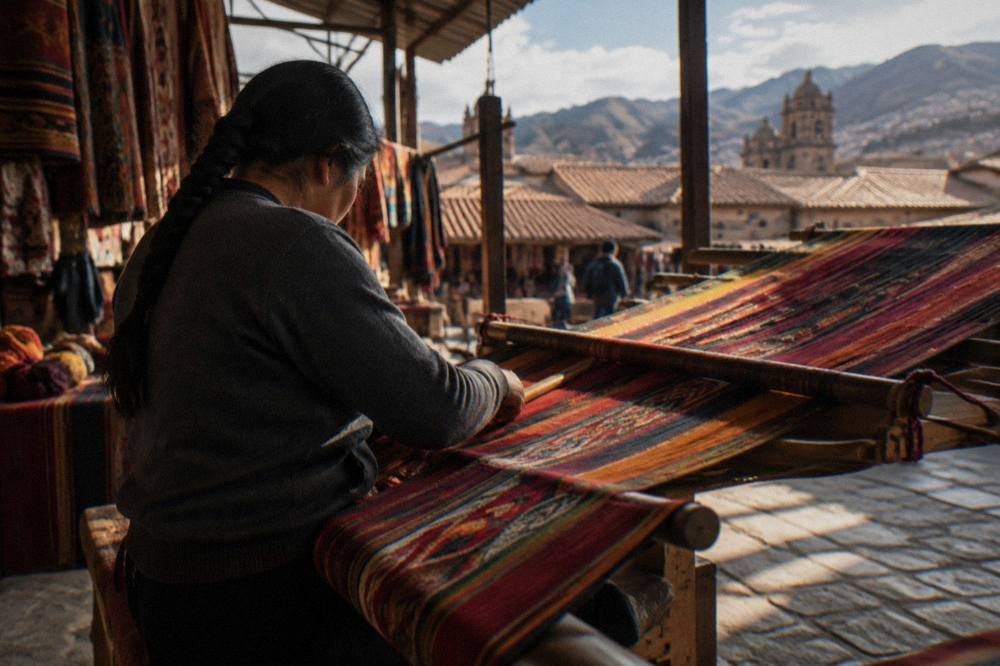
Yes, and the direct route runs through the weaving centres and cooperatives of the Sacred Valley, above all Chinchero, whose community weaving association demonstrates the full process from raw fleece to finished cloth, plus the Awana Kancha centre on the valley road and the workshop networks of San Blas in the city itself. Buying at the source shortens the chain between the maker and the money, and it answers the provenance question in a way no label can: when the person selling the piece has the loom it came from in the next room, the fibre question usually resolves itself.
Chinchero, one of the towns on the Cusco to Ollantaytambo corridor, is the best-known weaving community within day-trip range of the city. Its weavers work with naturally dyed yarn, and the dye demonstration, cochineal insects crushed to red, plants boiled for greens and yellows, is part of the visit. The pieces sold after the demonstration are hand-loomed, and the price reflects the hours in them. The same logic applies to the valley's other weaving towns, and to the cooperative shops in the city that aggregate work from surrounding communities.
The honest caveat is time. A cooperative visit is an afternoon, not a stall stop, and it suits a trip that has a Sacred Valley day in it more than a tight city-only schedule. For a shorter visit, the practical compromise is the city's dedicated fibre shops and the Awana Kancha centre, both of which stock cooperative work with the provenance explained. The what to eat in Cusco guide rounds out a valley or city day between the shops.
The scenic Route of the Sun day trip toward Puno is another option that pairs travel with textiles, since the road crosses the high plateau where alpacas and llamas actually graze, and the journey makes sense of the fibre in a way a city shop cannot. Puno itself lies outside this site's scope, which stays with Cusco and its region.
The listing for that scenic day trip carries the current price, the rating from its reviews and the departure details, and the same is true of every product card on this site: the figures render from the verified listing data rather than from prose.
Common Questions About Buying Alpaca In Cusco
Is An Alpaca Sweater From Cusco Worth Buying?
Alpaca fibre is warmer for its weight than sheep's wool, has no lanolin so it suits many people who find wool itchy, and a well-made piece from a dedicated shop or cooperative will last for years of gentle care. Whether it is worth buying depends on buying the real thing: the burn test and the fibre label separate a genuine garment from the synthetic souvenir tier, and the difference in daily wear is large.
How Do You Spot Fake Alpaca In A Cusco Market?
Run the burn test on a loose thread: animal fibre smells of burnt hair and leaves a crushable ash, while acrylic melts into a hard bead with a chemical smell. Touch is the first clue, since alpaca feels cool and dense while synthetic warms quickly in the hand, and the label should state the fibre content and any blend.
What Does Baby Alpaca Actually Mean?
Baby alpaca is a fibre grade, the finest grade from an alpaca's first shearing, not a garment from a young animal. It is the softest and most valuable grade, which makes it the one most often counterfeited, so the burn test and a reputable seller matter most at this end of the market.
Can You Wash An Alpaca Sweater In A Machine?
Hand washing in cold water with mild soap is the safe method. Machine agitation and hot water will felt and shrink animal fibre. Press water out between towels, dry the garment flat and store it folded with cedar rather than on a hanger, because pure alpaca has less elasticity than sheep's wool and can lose its shape under its own weight.
Where Can You See How Alpaca Textiles Are Made Near Cusco?
The Awana Kancha living textile centre on the Sacred Valley road keeps alpacas, llamas and vicunas on site and demonstrates shearing, natural dyeing, spinning and weaving. The weaving community of Chinchero in the Sacred Valley runs similar demonstrations, and the San Blas quarter in the city holds working studios.
Is It Better To Buy Alpaca In The Markets Or The Shops?
Dedicated fibre shops offer labelled content and returns, cooperatives offer provenance and local income, and the general markets offer range and price but require the burn test and the seam inspection on every purchase. The stalls closest to the Plaza de Armas skew toward the fast souvenir tier, so quality verification matters most there.
The pattern across all of this is simple: the fibre is genuinely excellent, the city is genuinely the right place to buy it, and the only real skill involved is verification. A burn test, a label, an inside-out look at the seams and a willingness to walk one street further from the plaza turn a souvenir purchase into a garment that outlasts the trip. More on the city's shopping, food and planning is collected across Things To Do In Cusco Peru, and the dedicated answer page on blanket prices sits alongside it for the cost question this guide deliberately leaves to the listing and the label.