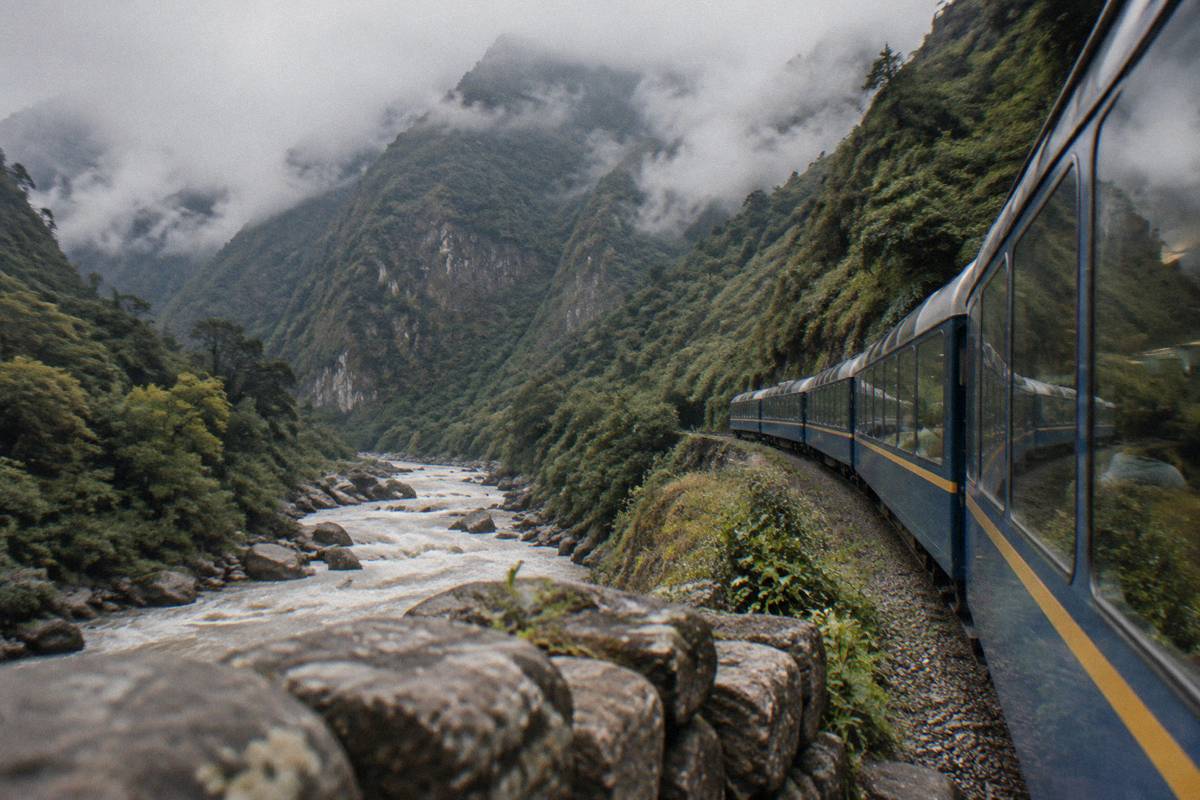
Should I Do Rainbow Mountain Or Machu Picchu First?
Should you do Rainbow Mountain or Machu Picchu first from Cusco? The order that altitude, tickets and the calendar suggest.
Trips to Cusco, the historic Inca capital in the Andes of southern Peru at 3,335 m, try to fit both Rainbow Mountain and Machu Picchu into a single week, and the order matters more than almost any other planning decision. The two sites sit at very different elevations, run on completely different ticket systems, and answer to different calendars. The Ministry of Culture's rules for Machu Picchu and the community fee system at Rainbow Mountain, point to a clear sequence.
Should I Do Rainbow Mountain Or Machu Picchu First?
Do Machu Picchu first, then Rainbow Mountain, if the trip allows only a strict sequence and the dates are flexible. Machu Picchu tickets are nominal, tied to one date, one hour and one circuit, so that booking fixes the trip's spine; Rainbow Mountain is a cheaper, more flexible day trip that can slot around it. The one strong exception: if you arrive already acclimatised, either order works.
The reason the Machu Picchu booking should anchor the itinerary is the ticket rule. Since the September 2026 ministerial resolution, tickets are issued in the visitor's name and are valid only for the stated date, hour, circuit and holder. No date change is possible beyond a single passport-number typo correction. Rainbow Mountain, by contrast, is reached on tours that run frequently and carry a community fee of S/ 25 to S/ 30 for foreigners, paid in cash at the trailhead, with no advance nominal ticket at all. The rigid booking comes first, and the flexible day fills the gap.
Altitude argues the same way in most cases. Cusco sits at 3,335 m, the Machu Picchu citadel at 2,430 m, and Rainbow Mountain at about 5,000 m. Going to Machu Picchu first means descending to sleep lower in Aguas Calientes, at about 2,040 m, which the CDC Yellow Book itself names as a tactic for Cusco arrivals. Rainbow Mountain's summit altitude is the highest point of the whole trip, and it rewards a body that has already spent days at Cusco's elevation. The Machu Picchu day trip guide covers the citadel side in full.
Why Altitude Decides The Order From Cusco
Cusco at 3,335 m is higher than Machu Picchu at 2,430 m, but Rainbow Mountain at about 5,000 m is the highest of the three by a wide margin, and the CDC Yellow Book advises against gaining sleeping altitude too fast. That makes the low site first and the 5,000 m site last the sequence altitude physiology prefers, and it is the order the CDC's own Cusco guidance implies.
The CDC Yellow Book lists Cusco as a high-altitude destination of approximately 3,350 m and advises travellers to avoid going from low altitude to a sleeping altitude of 2,750 m or more in a single day. Once above 3,000 m, it says, sleeping altitude should move by no more than 500 m per night, with an extra night for every 1,000 m gained. The same page notes that in cases like Cusco, travellers can descend to elevations lower than the airport to sleep for a night or two before beginning the ascent. Machu Picchu's citadel at 2,430 m and the town of Aguas Calientes at about 2,040 m are both well below Cusco.
Rainbow Mountain inverts that comfort. At about 5,000 m, the viewpoint is the highest named point on a typical Cusco itinerary, and no sourced figure exists for the oxygen level there, so any specific claim about it would be invented. The CDC notes rates of altitude illness approaching 50 percent in abrupt-ascent situations where staged acclimatisation is not feasible, which is the situation a day-one Rainbow Mountain departure creates. The acclimatisation day itinerary and the page on altitude pills for Cusco cover the practical side, and acetazolamide remains a prescription decision to make with a doctor.
| Site | Elevation | Ticket system | Fee level |
|---|---|---|---|
| Cusco, Plaza de Armas | 3,335 m | None for the streets | Free |
| Machu Picchu citadel | 2,430 m | Ministry of Culture platform, nominal | From about S/ 163 (about US$48) foreign adult, standard routes |
| Aguas Calientes town | About 2,040 m | None | Free |
| Rainbow Mountain (Vinicunca) | About 5,000 m | Community fee at the trailhead | S/ 25 to S/ 30 (about US$7 to US$9), cash |
| Palccoyo viewpoint | 4,900 m | Community fee | About S/ 20 reported by operators |
How The Ticket Rules Differ Between The Two Sites
Machu Picchu tickets are nominal, tied to one date, hour, circuit and holder, with a guide recommended but not mandatory, while Rainbow Mountain has no advance ticket at all: you pay a community fee of S/ 25 to S/ 30 in cash on the day. Because only the Machu Picchu booking is rigid, it should be locked in first and the Rainbow Mountain day arranged around it.
The Machu Picchu rule set changed in September 2026. A guide is recommended, not mandatory, under Article 17.1 as rewritten by RM 000334-2026-MC. Daily capacity in 2026 is 4,500 on normal days and 5,600 on the flagged high-season dates: 1 January, 2 to 5 April, 19 June to 2 November, and 30 to 31 December. A new sales system began a 30-day trial on 22 September 2026, with no advance reservation requirement, a short window to pay before the slot is released, and the ticket issued in the visitor's name on payment; the official Ministry of Culture platform shows the live position. There are three circuits and ten routes since 1 June 2024, and foreign adult entry runs from about S/ 163 on standard routes and S/ 211 on the mountain routes, figures from secondary sources that include the S/ 11 SERNANP fee in place since 1 May 2026.
Rainbow Mountain could hardly be more different. Access is organised by tour operators and local communities, the fee is collected in cash at the trailhead, and nothing about the visit is tied to a named ticket bought weeks ahead. That asymmetry is the practical case for booking Machu Picchu, or a trek that includes it, first. The Inca Trail 4-Day Trek to Machu Picchu with a Vistadome train return is one way to fix that anchor, since the Inca Trail permit covers Machu Picchu entry, permits are sold only through licensed agencies under a 500-person daily quota, and the trail closes every February. Check availability
What If You Only Have Time For One?
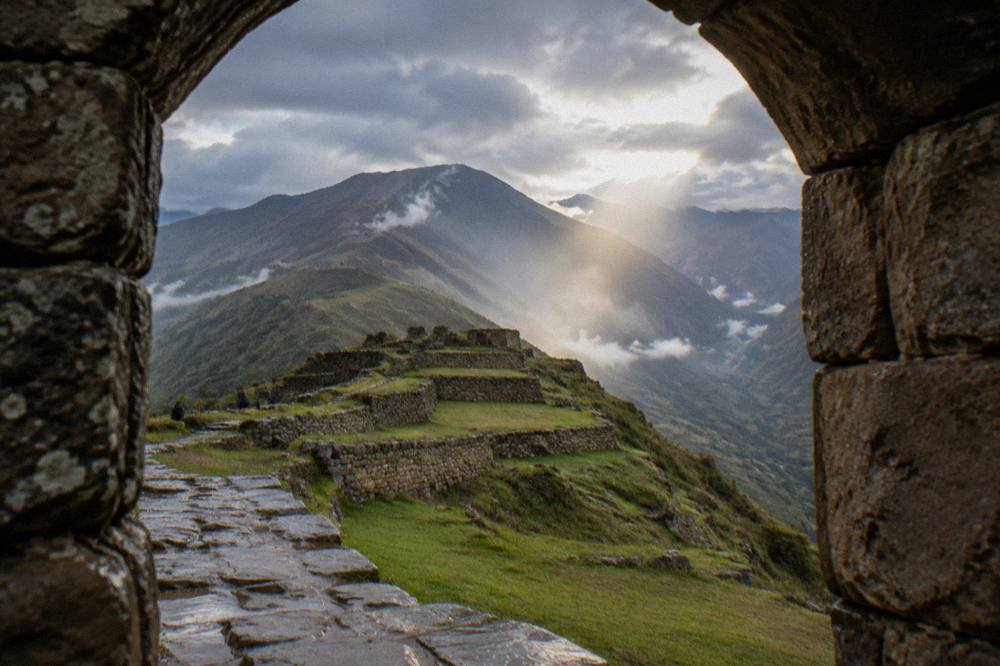
If the trip allows only one, choose Machu Picchu: it is the UNESCO World Heritage Site, inscribed on 9 December 1983, with a daily capacity system, three circuits and a depth that fills a full day, while Rainbow Mountain is a half-day viewpoint at about 5,000 m with a cash community fee. Rainbow Mountain is the easier one to add later, Machu Picchu the harder one to retrofit.
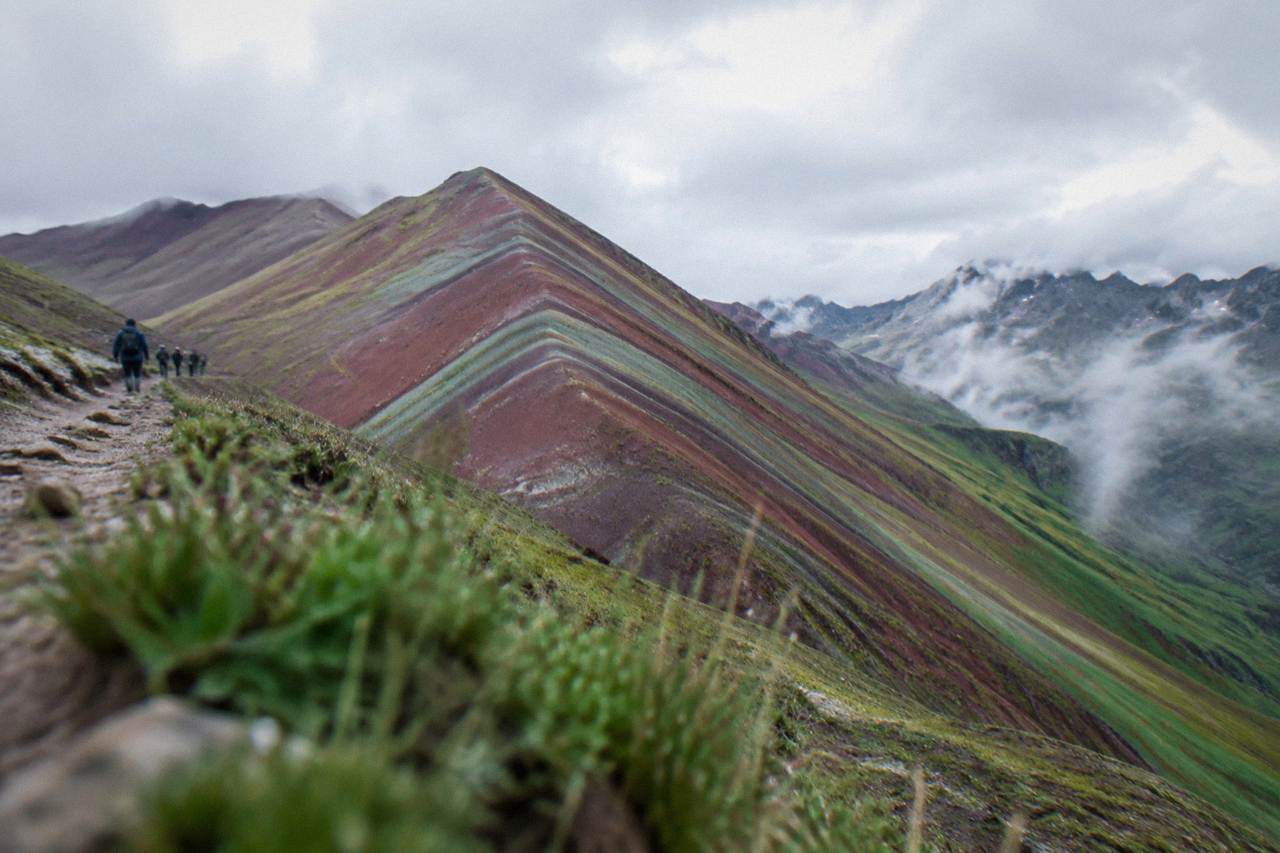
The comparison is not really close on substance. Machu Picchu is a citadel at 2,430 m with timed entry slots reported from 06:00 to 15:00, a citadel closing time of 17:30, and a maximum stay of about 2 h 30 on standard routes. Rainbow Mountain is a mountain ridge coloured by mineral banding, reached on a day trip from Cusco, with a viewpoint at about 5,000 m and a community fee of S/ 25 to S/ 30. One is an archaeological complex with a code of conduct that bans bags over 40 x 35 x 20 cm, food, tripods, selfie sticks, umbrellas and drones; the other is a natural site where access is set by operators and local communities. The page on whether Rainbow Mountain is real covers what the colours actually are.
Time and cost also differ. A Machu Picchu day from Cusco involves a train or a trek, and the full-day group tours on this site's roster run around twelve hours door to door, with prices shown on each listing. A Rainbow Mountain tour is typically a similar length of day but at a lower price point, again printed on the booking page rather than in prose. If the question is which one to sacrifice, the answer is to sacrifice the viewpoint, not the citadel. More of these guides are collected on Things To Do In Cusco Peru.
For the Rainbow Mountain day with meals included, book a Rainbow Mountain day tour here.
Does The Season Change The Order?
Yes: in the wet season, roughly November to March in the Southern Hemisphere, the order matters less for altitude and more for weather, because Rainbow Mountain's colours depend on clear views and Machu Picchu's ticket dates are fixed once bought. December to March carries 71.9 percent of Cusco's 707.8 mm of annual rain, so a flexible Rainbow Mountain day can chase the drier window while the Machu Picchu date cannot move.
The Cusco climate record, a historical normal from the WMO World Weather Information Service station supplied by SENAMHI, shows the pattern plainly. December, January, February and March together deliver 508.7 mm of the year's 707.8 mm, while May to August bring just 22.8 mm between them. Mean daily maxima stay between 18.8 and 20.9 C all year, but the July mean minimum is 0.1 C, and frosts peak in June and July. June to August is winter here: dry, clear and cold at night, never summer.
| Month | Mean max C | Mean min C | Rain mm |
|---|---|---|---|
| Jan | 18.9 | 6.6 | 145.3 |
| Apr | 19.7 | 4.9 | 43.2 |
| Jun | 19.5 | 0.3 | 1.5 |
| Jul | 19.1 | 0.1 | 4.0 |
| Sep | 19.8 | 3.9 | 21.8 |
| Oct | 20.9 | 5.5 | 39.4 |
Visitor numbers follow the same curve. MINCETUR's open data shows Machu Picchu received 154,105 visitors in October 2025 against 79,806 in February, roughly 1.93 times as many. High season crowds coincide with the dry, clear months, which is exactly when Rainbow Mountain's views are best too. In the wet season, the nominal Machu Picchu ticket's fixed date becomes a risk: a booked citadel day can land in rain and cannot be moved, while a Rainbow Mountain outing can be shuffled between Cusco days at short notice. The pages on when not to visit Cusco and the best time to visit Cusco expand on this.
Can You Do Both On Consecutive Days?
Yes, consecutive days are possible and common, and the better sequence is Machu Picchu on the first of the two and Rainbow Mountain on the second, because the citadel day ends at a lower sleeping elevation while the Rainbow Mountain day starts and ends in Cusco at 3,335 m. The reverse order sends you from about 5,000 m straight into a fixed, unchangeable Machu Picchu booking.
The back-to-back plan works because of the elevations involved. A Machu Picchu day, whether by train or as the end of a trek, involves descending to the 2,430 m citadel and often sleeping in the 2,040 m town below it. A Rainbow Mountain day is a long out-and-back from Cusco with the high point at about 5,000 m and the night back at 3,335 m. Doing the citadel first gives the body a gentler ramp; doing Rainbow Mountain first means the citadel day begins with a body still recovering from the highest point of the trip, on a ticket that cannot be rebooked if the day goes badly. The Cusco and Machu Picchu itinerary shows how the two slot together, and the comparison of Humantay versus Rainbow Mountain applies the same altitude logic to a third day trip.
One caution from the ticket rules: because Machu Picchu entry is by hourly slot and the maximum stay is about 2 h 30, the citadel day is not physically exhausting in the way the Rainbow Mountain hike is, but it is administratively rigid. Build the buffer on the flexible side of the pair, never on the nominal ticket. The CDC's practical advice, avoiding alcohol for the first 48 hours at high altitude and considering acetazolamide where abrupt ascent is unavoidable, applies to whichever order you choose.
For travellers who want the citadel to be the centrepiece rather than a single day, the trek-based option changes the arithmetic again. A multi-day trek that ends at Machu Picchu builds acclimatisation into the itinerary itself, since the walking days start from Cusco's elevation and the arrival at the citadel comes at 2,430 m, lower than where the trip began. That is the strongest version of the Machu Picchu-first argument: the trek days do the acclimatising, and a Rainbow Mountain day afterwards rides on legs and lungs already adjusted to the Andes.
Common Questions About Rainbow Mountain Or Machu Picchu First
Should I do Rainbow Mountain or Machu Picchu first?
Do Machu Picchu first in most cases. Its tickets are nominal and fixed to one date, hour and circuit, so that booking anchors the trip, and its 2,430 m elevation is lower than Cusco, which helps acclimatisation. Rainbow Mountain at about 5,000 m is a flexible, cash-fee day trip that slots in afterwards, once the body has adjusted.
Is Rainbow Mountain harder than Machu Picchu?
Altitudinally, yes. Rainbow Mountain's viewpoint sits at about 5,000 m, the highest point on most Cusco itineraries, while the Machu Picchu citadel is at 2,430 m and its standard routes allow a maximum stay of about 2 h 30. The physical effort at Rainbow Mountain is the altitude itself, not the distance.
Can you do Rainbow Mountain and Machu Picchu in the same week?
Yes. A week based in Cusco comfortably holds both: two or three days for the Machu Picchu side, whether by train or a trek such as the Inca Trail, and one day for Rainbow Mountain with its S/ 25 to S/ 30 community fee paid in cash. Machu Picchu's 2026 daily capacity is 4,500 on normal days, so the citadel booking should be made first.
Does the order change in the wet season?
It can. From roughly November to March, December to March alone carries 71.9 percent of Cusco's annual 707.8 mm of rain, and a fixed Machu Picchu date can land in poor weather with no option to change it. Keeping the Rainbow Mountain day flexible lets you chase a clearer window, which argues even more strongly for booking the citadel first.
Is a guide required at either site?
At Machu Picchu a guide is recommended, not mandatory, under the September 2026 ministerial resolution. At Rainbow Mountain, access runs through tour operators and local communities, and most visits are on organised day trips from Cusco that include the S/ 25 to S/ 30 community fee for foreigners.
Which one should you drop if there is time for only one?
Drop Rainbow Mountain and keep Machu Picchu. The citadel is the UNESCO World Heritage Site, inscribed on 9 December 1983, with three circuits and ten routes since June 2024, and it is the booking that cannot be retrofitted. Rainbow Mountain is a viewpoint day trip that is far easier to add to a future trip to [Cusco](/).