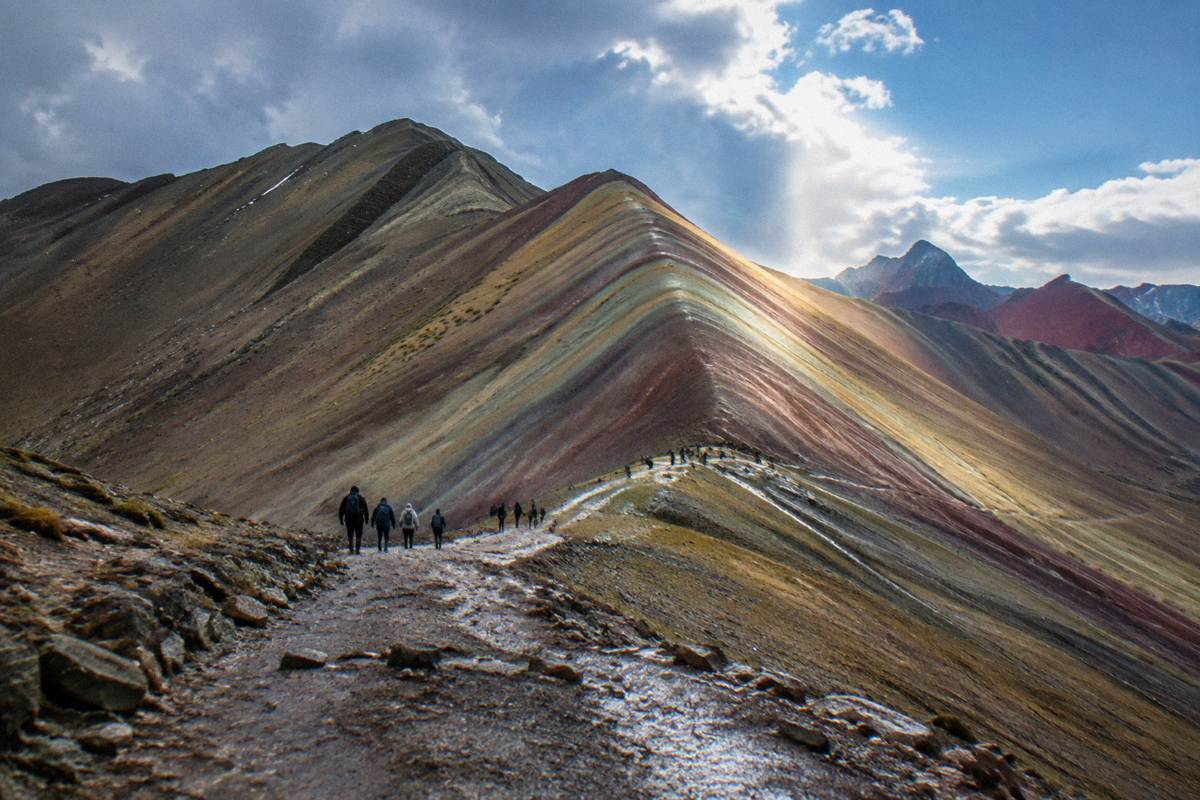
Why Is Rainbow Mountain Closed?
Rainbow Mountain (Vinicunca) near Cusco is not permanently closed. Weather, community decisions and occasional protest days close individual dates, and this page explains each cause and how to plan around it.
Rainbow Mountain, the striped ridge of Vinicunca that sits at about 5,000 m in the Andes reachable on a day trip from Cusco, is not closed in any permanent sense. What does happen, and what usually lies behind a search for this question, is that individual days are lost: to snow or heavy rain at the top, to a decision by the communities that control access, or to a regional protest that blocks the road. This page works through each cause in turn, with the sourced numbers that exist and silence where they do not.
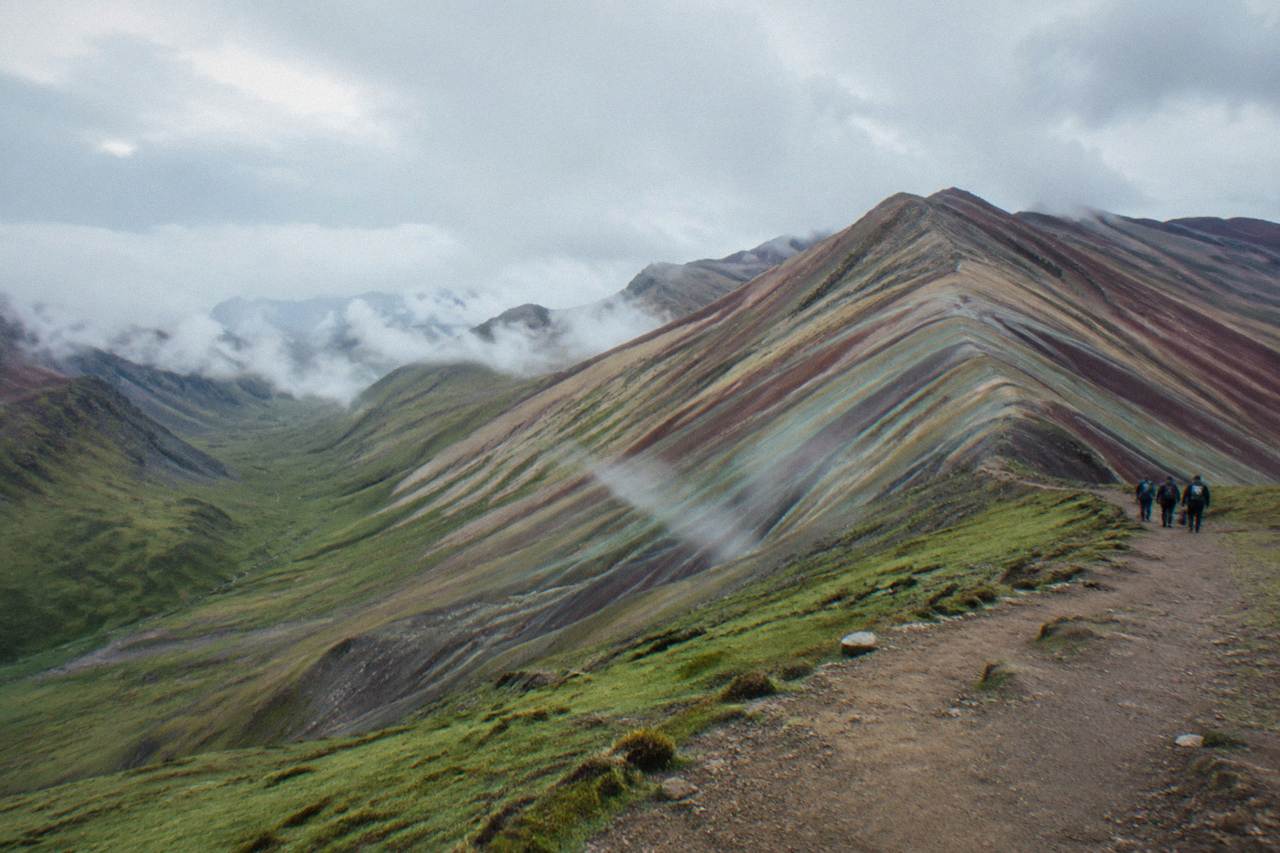
Why Is Rainbow Mountain Closed?
It is not. Rainbow Mountain near Cusco has no recorded permanent closure, and operator guides describe it as open. What closes are individual days, when snow or heavy rain makes the upper trail unsafe, when the communities that control access suspend visits, or when a regional protest blocks the road from Cusco. Access is set by operators and local communities, not by a national ticketing body.
That last point matters, because it is the structural difference between Vinicunca and the state-run sites further along any Cusco itinerary. Machu Picchu sells through the Ministry of Culture's platform with published circuits and daily caps, and Sacsayhuaman sits behind the COSITUC Boleto Turistico. Rainbow Mountain is different: it is a natural site on community land, entered for a cash fee of S/ 25 to S/ 30 for foreigners depending on the route, about US$7 to US$9, collected at the trailhead. There is no centralised status page, and there is no official timetable of openings, because no single authority publishes one.
So when a search result or a forum thread says the mountain "is closed", the claim almost always refers to a specific date, usually recent, usually weather or a road blockage. Those closures are real but temporary. A trip booked through an operator will be rescheduled or refunded for such days, and the mountain reopens when the road and the trail are passable again. The honest planning question is not whether it is closed but which days it closes on, which is what the rest of this page covers.
The site's own Rainbow Mountain day trip guide covers the visit itself, and the comparison of Rainbow Mountain and Palccoyo covers the lower, quieter alternative route to the same colours.
When Does Weather Close Rainbow Mountain Near Cusco?
Weather is the main day-to-day closure cause. The wet season around Cusco runs roughly November to March, and December to March alone carries 71.9 percent of the year's 707.8 mm of rain at the WMO and SENAMHI "Cuzco" station. At about 5,000 m, that rain falls as snow on the upper slopes, and operators cancel individual trips when the trail or the access road is unsafe.
The rain is not evenly spread, and that is the useful planning fact. The historical normal for the Cuzco station, supplied by SENAMHI to the World Weather Information Service, shows the wettest months are January at 145.3 mm and December at 122.7 mm, while the June to August stretch brings almost nothing.
| Month | Mean max C | Mean min C | Rain mm |
|---|---|---|---|
| Jan | 18.9 | 6.6 | 145.3 |
| Feb | 18.8 | 6.5 | 133.7 |
| Mar | 19.1 | 6.2 | 107.0 |
| Apr | 19.7 | 4.9 | 43.2 |
| May | 19.8 | 2.5 | 8.7 |
| Jun | 19.5 | 0.3 | 1.5 |
| Jul | 19.1 | 0.1 | 4.0 |
| Aug | 19.8 | 1.6 | 8.6 |
| Sep | 19.8 | 3.9 | 21.8 |
| Oct | 20.9 | 5.5 | 39.4 |
| Nov | 20.7 | 6.1 | 71.9 |
| Dec | 19.4 | 6.4 | 122.7 |
The dry season is not automatically clear at 5,000 m. June and July bring frost nights in the whole Cusco basin, and a cold snap in the dry season can still dust the summit ridge with snow for a morning.
The practical pattern operators describe is a same-day decision. Trips leave Cusco before dawn, the operator assesses the road and the weather en route, and if the upper section is unsafe the day becomes a lower-altitude alternative or a refund. Booking the first available day of a stay, rather than the last, leaves room to retry.
What Else Closes Rainbow Mountain On Individual Days?
Beyond weather, three things close days at Vinicunca: decisions by the local communities that own the land and collect the entry fee, regional protest days that block the Cusco region's roads, and occasional trail maintenance. None is a standing closure. The FCDO notes that Cusco is among the regions that have seen recent protests and that transport can be disrupted, so a protest day can stop the road even when the mountain itself is fine.
The community role is the part most guides skip. The fee at the trailhead, S/ 25 via the Cusipata route or S/ 30 via Pitumarca for a foreign visitor, is a community fee paid in cash, and the communities set access on their own land. On a community decision day, a festival, a meeting, a local dispute, the site simply does not receive visitors, and it reopens the next day. There is no appeal process and no central notice; the operator learns when the vehicle is turned back.
Protest days work differently, because they block the road rather than the site. Cusco region has a history of regional strikes that close highways, and the UK Foreign Office travel advice states plainly that Cusco is among the regions that have seen recent protests and that train and road transport can be suspended or disrupted. On such a day every road trip from the city is affected, not just this one. The honest statement is the general one: protest days happen, they are announced locally with little notice, and they end.
For anyone weighing the risk, the page on what to avoid in Cusco collects the practical cautions in one place, and how likely altitude sickness is covers the health side of a day that climbs to about 5,000 m, which the CDC Yellow Book treats as a rapid-ascent destination category.
Is Palccoyo A Steadier Alternative When Vinicunca Shuts?
Palccoyo, the second route to the same coloured formations, is often the fallback when the main Rainbow Mountain route is snowed or blocked. Its viewpoint sits at 4,900 m, lower than the classic Vinicunca trail, the walk to the viewpoint is shorter, and the community fee is about S/ 20 for foreigners, reported by operators in 2026. It is a genuine alternative, not a consolation prize.
The two routes reach the same geology from different valleys, and the comparison matters for anyone planning around closures. The classic route climbs to a viewpoint at about 5,000 m on a trail that can hold snow; Palccoyo's viewpoint is 4,900 m and the walk from the drop-off point is a fraction of the effort, which is why it also suits visitors who do not want a long ascent. Both close for the same reasons, weather, community days, road blocks, but the lower route is often the one an operator can still run when the classic trail is white.
| Site near Cusco | Entry fee for foreigners | Altitude | Closure pattern |
|---|---|---|---|
| Rainbow Mountain (Vinicunca), Cusipata route | S/ 25, cash | about 5,000 m | Individual days: snow, rain, community decisions, road blocks |
| Rainbow Mountain (Vinicunca), Pitumarca route | S/ 30, cash | about 5,000 m | Same as above |
| Palccoyo viewpoint | about S/ 20 | 4,900 m | Same causes, lower trail, often runnable when the classic route is not |
| Humantay Lake | S/ 10 to S/ 20, sources disagree | about 4,200 m | Individual days, weather and access |
| Maras salt mines | S/ 15 to S/ 20 | Maras at 3,300 m | Open as a working site; no closure pattern sourced |
The fees in that table are community or site fees paid in cash on the ground, not tour prices; a tour's own price, rating and duration render from the product card, never from this page's prose. The Palccoyo day trip guide covers that route in full, and the question of whether Rainbow Mountain is real answers the separate sceptical search, since the colours are mineral banding in the rock, not a trick of light or a painted hillside.
How Should A Visitor Plan Around A Possible Closure?
Plan for a retry, not a guarantee. Book Rainbow Mountain for the first full day of a stay rather than the last, keep a spare day for Palccoyo as a fallback, and accept that the go or no-go decision is made on the morning itself by the operator and the communities. The dry season, roughly May to September, gives the best odds, but no day at 5,000 m is promised.
The single most useful habit is sequencing. A visitor who books the mountain for the final morning has no retry if the day is lost; a visitor who books it early can move to Palccoyo, or to a Sacred Valley day, and still get a second attempt. The question of how many days to spend in Cusco covers the sequencing trade-off, and whether to stay in Cusco or the Sacred Valley matters here too, since the mountain trips leave from the city in darkness.
Booking through an operator rather than driving independently also shifts the risk. An operator absorbs the cancellation, reschedules or refunds, and knows by radio whether the road is open before the vehicle leaves Cusco. The page on visiting Rainbow Mountain without a tour sets out the independent route for anyone who wants it, with the honest caveat that an independent traveller carries the closure risk alone.
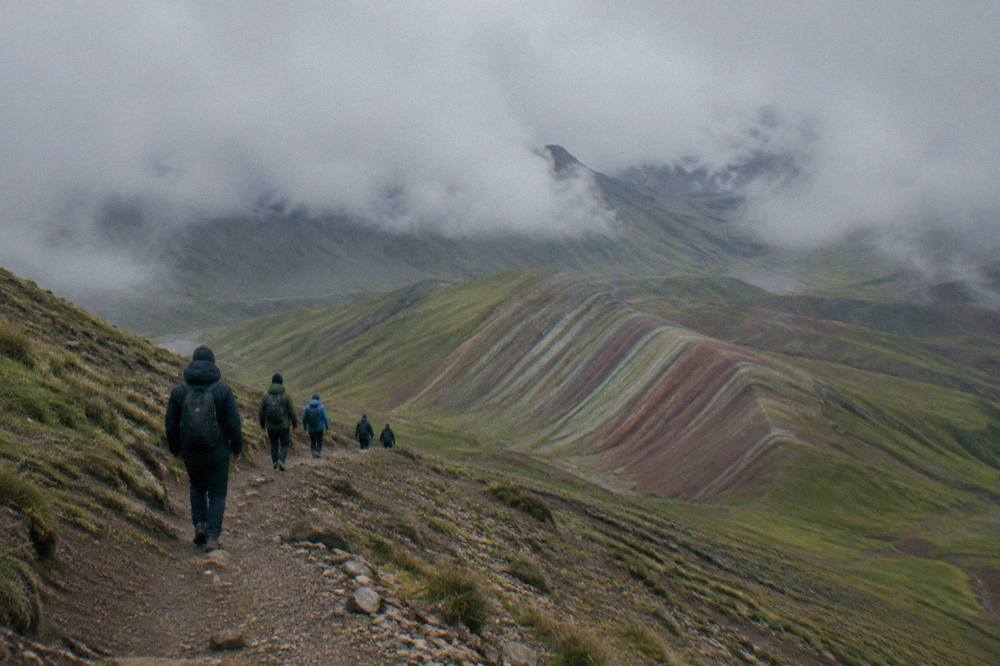
For the guided version, the Rainbow Mountain and Red Valley day trip with meals is this site's featured option, and its live listing shows the current price, rating and departure details: Check availability. More coverage of the city and region is on Things To Do In Cusco Peru.
Common Questions About Rainbow Mountain Closures
Why is Rainbow Mountain closed?
It is not closed permanently. Individual days are lost to snow and heavy rain at about 5,000 m, to decisions by the communities that own the land and collect the entry fee, and to regional protest days that block the road from Cusco. Operator guides describe the site as open, and access is set by operators and local communities.
Is Rainbow Mountain closed in the wet season?
Not as a rule, but the wettest months carry the highest chance of a lost day. December to March delivers 71.9 percent of the year's 707.8 mm of rain at the Cuzco station, and rain at that altitude often means snow on the upper trail. Trips run in the wet season; they are simply cancelled more often.
Does Rainbow Mountain ever close for maintenance?
Occasional trail work closes individual days, but no schedule of such closures is published by any official body, and this site's research holds no current one. The mountain is a natural site on community land, so there is no government department issuing closure notices the way Machu Picchu's Ministry of Culture platform does for its routes.
What happens if my Rainbow Mountain tour is cancelled?
That depends on the operator, but the standard pattern is a reschedule to another day or a refund. This is one of the practical reasons to book the trip early in a stay rather than on the last morning: a cancelled first attempt still leaves time for a retry or for the Palccoyo alternative.
Is Palccoyo open when Rainbow Mountain is closed?
Sometimes. Palccoyo's viewpoint sits at 4,900 m, lower than the classic Vinicunca trail, and operators can often run it when the higher route is snowed. But it closes for the same underlying reasons, weather, community days and road blocks, so it is a better-odds fallback rather than a guaranteed one.
How do I check whether Rainbow Mountain is open today?
There is no central status page, because access is set by the communities and the operators. The practical check is the operator itself on the morning of the trip, which is why booking through one matters: the operator learns of a closure before the vehicle leaves Cusco and can reschedule the day.
The short version: the mountain is open, days are what close, and a plan with a spare day absorbs almost every outcome the Cusco highlands can produce.