What Not To Wear In Cusco?
What not to wear in Cusco: the clothing mistakes that cause trouble at 3,335 m, from thin layers and new shoes to shorts on a dry-season day that starts warm and ends near freezing.
Cusco sits at 3,335 m in the Andes of southern Peru, and its weather breaks the packing logic of almost everyone who arrives from a northern-hemisphere summer. The WMO World Weather Information Service station "Cuzco", supplied by SENAMHI, records a July in which the mean daytime maximum reaches 19.1 C while the mean night minimum falls to 0.1 C, a swing of about 19 degrees within a single day. A visitor dressed for the midday sun will be cold by dinner, and a visitor dressed for the dinner cold will be sweating by noon. This page lists the clothing mistakes that cause the most trouble in Cusco, what the climate record says behind each one, and what experienced packs look like instead. For the positive version of the same list, the companion guide to what to wear in Cusco covers the items that work.
What Not To Wear In Cusco?
The main things not to wear in Cusco are shorts and a single light layer for a full day, thin shoes with no grip on the cobblestones, and clothing with no cover-up option for churches and sun-exposed ruins. Cusco's dry-season days feel warm at 19 C but its nights fall close to freezing, so any outfit built for the midday temperature fails after dark. Layers, long trousers and broken-in walking shoes carry the day.
The rest of this page expands each of those three failures in turn. The pattern behind all of them is the same: Cusco is a high-altitude city in the Southern Hemisphere where the dry season, roughly May to September, delivers the coldest nights of the year rather than the warmest. June and July are the frost months, and the same clear skies that make the daytime light so strong are what strip the heat away once the sun drops. Visitors who plan around a "summer packing" mental model get caught twice, first by the evening cold and then by the strength of the sun on exposed skin at altitude. The CDC's Peru travel notice notes simply that Machu Picchu and the region are at high altitude and that visitors should talk to a doctor; the clothing side of the same reality is a wardrobe that can handle a 19-degree daily swing.
Why Shorts And One Layer Fail In Cusco
Shorts and a single layer fail in Cusco because the city's temperature does not stay in one band for more than a few hours. The WMO/SENAMHI historical normal for the "Cuzco" station shows mean maxima of 18.8 to 20.9 C all year, but mean minima that range from 0.1 C in July to 6.6 C in January. An outfit chosen for the warmest hour of the day is wrong for the ten or so hours either side of it.
The table below shows the full monthly picture from the WMO World Weather Information Service, a historical normal supplied by SENAMHI. Read the third column as the reason long trousers survive even in the wet season.
| Month | Mean max C | Mean min C | Rain mm |
|---|---|---|---|
| Jan | 18.9 | 6.6 | 145.3 |
| Feb | 18.8 | 6.5 | 133.7 |
| Mar | 19.1 | 6.2 | 107.0 |
| Apr | 19.7 | 4.9 | 43.2 |
| May | 19.8 | 2.5 | 8.7 |
| Jun | 19.5 | 0.3 | 1.5 |
| Jul | 19.1 | 0.1 | 4.0 |
| Aug | 19.8 | 1.6 | 8.6 |
| Sep | 19.8 | 3.9 | 21.8 |
| Oct | 20.9 | 5.5 | 39.4 |
| Nov | 20.7 | 6.1 | 71.9 |
| Dec | 19.4 | 6.4 | 122.7 |
Two numbers in that table explain most wardrobe failures. The first is the July minimum of 0.1 C: dry season in Cusco means cold nights, not warm ones, and frosts are common in June and July. The second is the rain column. December to March delivers 508.7 mm of the year's 707.8 mm, which is 71.9 percent, while May to August together bring just 22.8 mm. A visitor in January needs a rain layer over warm clothes; a visitor in July needs a warm layer under clear skies. Neither needs a beach wardrobe.
The single-layer mistake is the more expensive of the two. A fleece or light down jacket that packs into a day bag costs almost no space and solves the evening half of the swing. The visitors who suffer are the ones who dressed at 08:00 for the temperature at 08:00 and never adjusted. More on how the altitude itself changes the picture is in how likely altitude sickness is in Cusco, and the comparison between the city and the citadel is covered in is Cusco colder than Machu Picchu.
What Not To Wear At Cusco's Churches, Ruins And Markets
At Cusco's churches and religious sites, do not wear shorts, short skirts or bare shoulders: colonial churches in Peru are active places of worship and entry can be refused to underdressed visitors. At the Inca sites on the Boleto Turistico, the problem is not a dress code but the surface: steep stone steps, exposed sun and thin air, which make slippery soles and sun-exposed skin the real mistakes.
The dress-code point matters more than many visitors expect. The Cathedral on the Plaza de Armas and the church of San Blas are working parishes, and the standard Andean convention applies: cover shoulders and knees. The same convention travels with any itinerary that includes the church at Andahuaylillas or the chapel at Chinchero, both of which are stops on common Sacred Valley routes. A light scarf or a folded long-sleeve layer in the day bag converts any outfit into a church-appropriate one without a full change. The full index of guides sits on Things To Do In Cusco Peru.
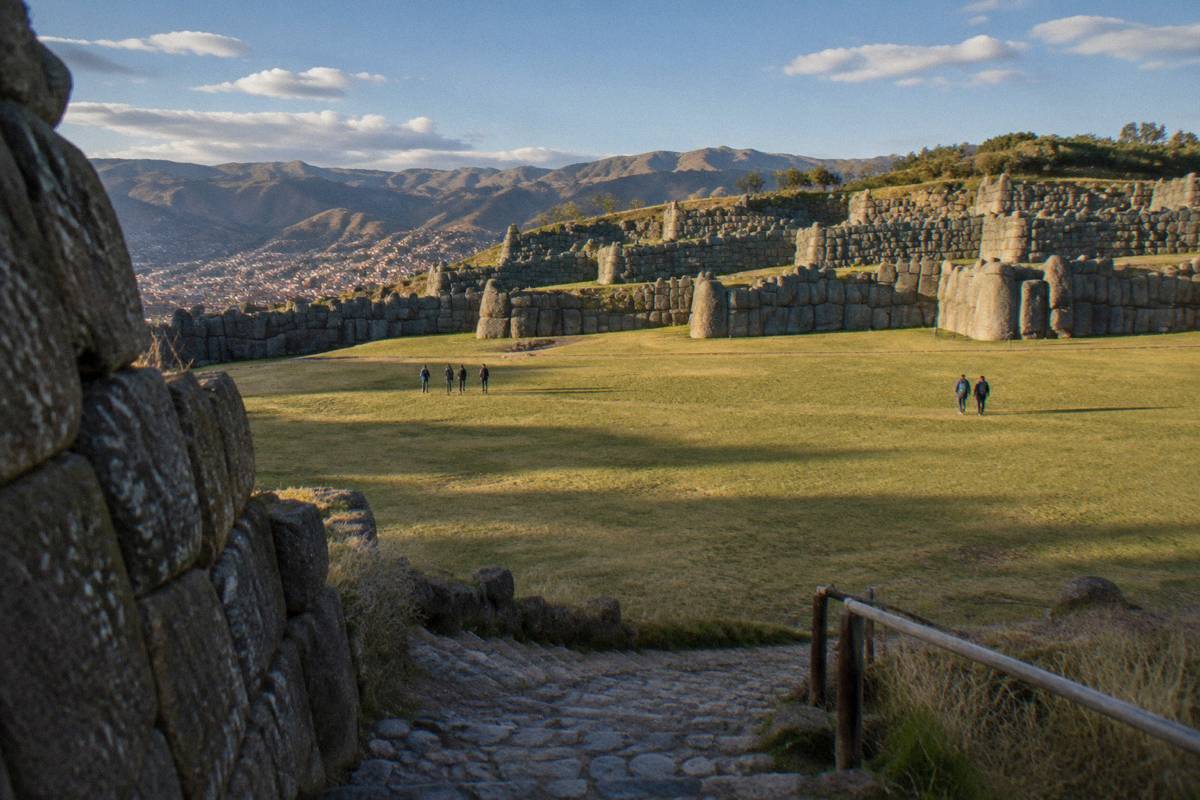
The ruins are a different failure mode. Sacsayhuaman, Q'enqo, Puka Pukara and Tambomachay sit above the city, and Sacsayhuaman stands at 3,701 m, higher than the Plaza de Armas. The paths are stone, sometimes wet, and the sun at that elevation is intense even when the air feels cool. The clothing mistakes that repeat there are smooth-soled shoes, no hat and no water-resistant layer in the wet season months. The Boleto Turistico covers these sites on Circuit I, and the ticket is sold in person only, at the COSITUC counter on Av. El Sol 103, a detail worth knowing before a wardrobe is planned around a morning at the sites. The full four-ruins circuit is described in the four ruins of Cusco.
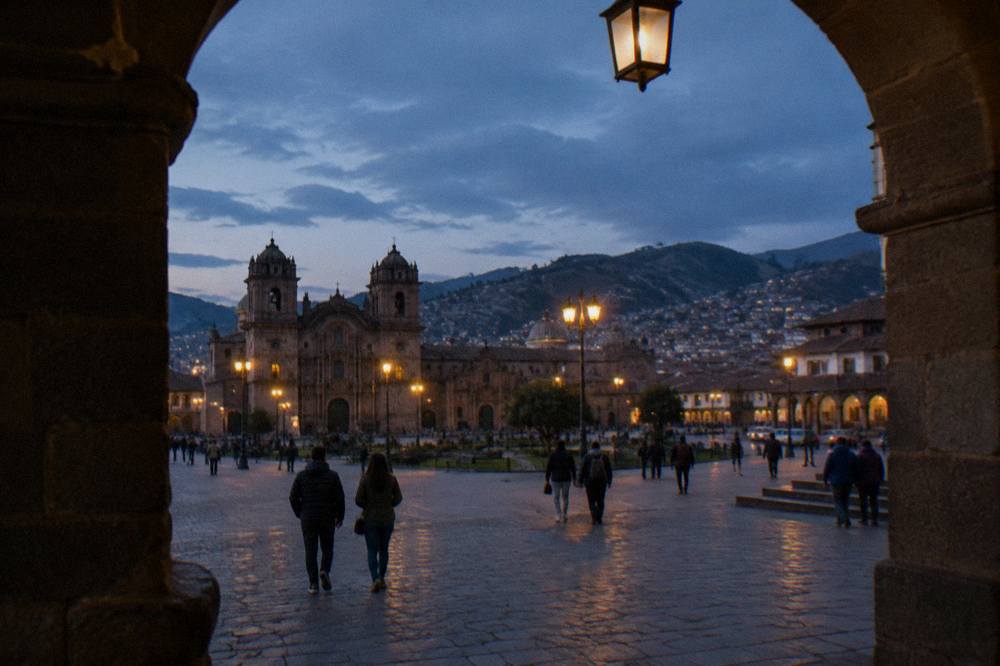
Evening plans in Cusco deserve their own wardrobe note. Bars in the historic centre are often open to the street, and the temperature at 22:00 in July sits near the day's minimum, so a warm jacket matters more than appearance on a night out. The pub crawl evening run in the city is one of the few plans where that calculation is obvious from the first stop, and the Check availability link shows the operator's live listing. General pitfalls beyond clothing are covered in what to avoid in Cusco.
What Not To Wear For Rainbow Mountain And Day Hikes From Cusco
For Rainbow Mountain and the high day hikes from Cusco, the mistakes are cotton layers, jeans, and any footwear without ankle support or tread. Rainbow Mountain stands at about 5,000 m, well above the city, and the route crosses ground where wet-season rain and dry-season frost both appear. Denim stays cold when wet, and cotton holds sweat, so both fail on the same walk.
The elevation gap between the city and the mountain is the planning fact. Cusco's Plaza de Armas is at 3,335 m and Vinicunca's summit area is about 5,000 m per the sources in the site's research, with peru.travel describing the highest point at approximately 5,200 m. Palccoyo, the lower alternative, has a viewpoint at 4,900 m. Both are colder than the city on the same day, and both are reached by vehicle first and foot second, which means the clothing has to work in a bus, on a ridge, and in between. The community entry fee at Rainbow Mountain is S/ 25 to S/ 30 for foreigners, paid in cash, so a pocket or pouch for soles belongs on the outfit as much as the jacket does.
A layering plan beats a single warm coat on these trips. The vehicle is warm, the ridge is windy, and the walk between them is short but steep. The visitors who suffer are dressed for the bus when they step onto the ridge, or dressed for the ridge when they board the bus. The comparison between the two mountain hikes, including which one is harder, is set out in Humantay compared with Rainbow Mountain.
The packing summary below collects the whole page into one table.
| Item | Why It Fails In Cusco | What Works Instead |
|---|---|---|
| Shorts as the only option | Nights fall to 0.1 to 6.6 C year-round at the city station | Long trousers, or shorts plus warm layers for midday only |
| One single layer | Day-night swing of about 19 C in July | Base layer, fleece or jacket, removable in stages |
| Smooth-soled dress shoes | Steep cobblestones and stone steps at the ruins | Broken-in walking shoes with tread |
| Cotton and denim on hikes | Hold moisture, stay cold when wet | Fleece or wool layers, quick-dry trousers |
| No rain layer, Nov to Mar | 71.9 percent of annual rain falls Dec to Mar | Packable rain jacket or poncho |
| No hat or sun protection | Strong sun at 3,335 m and above, cool air masks it | Brimmed hat, sunglasses, sunscreen |
| Bare shoulders at churches | Entry can be refused in active places of worship | Light scarf or a cover-up layer in the day bag |
| Jeans for a full day trip | Cold on pre-dawn starts, slow to dry | Quick-dry trousers with warm layers |
Footwear Mistakes On Cusco's Cobblestones
The footwear mistakes in Cusco are brand-new shoes, thin flat soles and anything with no grip. The historic centre is paved with stone that is polished by centuries of foot traffic, the hills between San Blas and the Plaza de Armas are steep, and the wet season makes the surface slick. New shoes that have never been walked in cause blisters at altitude, where feet swell and skin dries out.
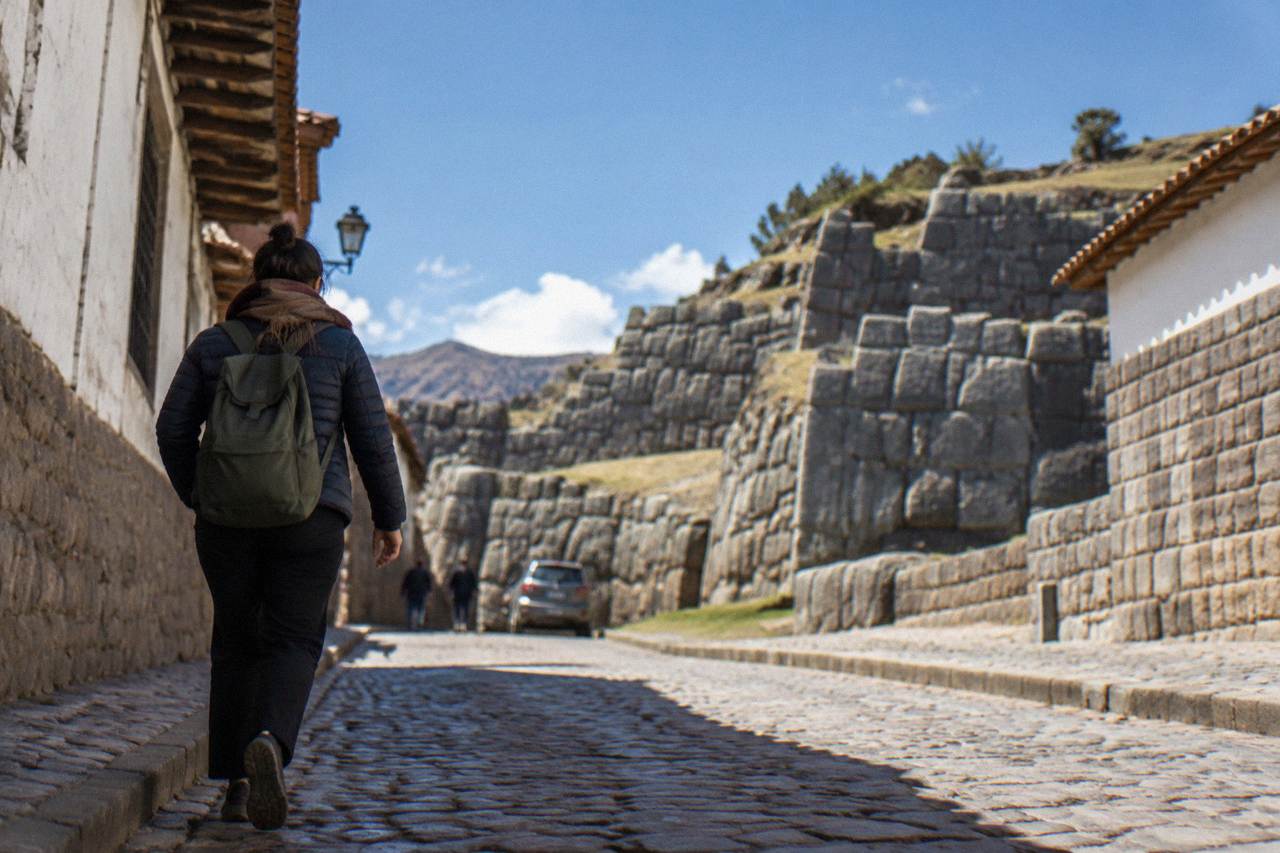
The street geometry is the hidden factor. The centre of Cusco is a walkable city of short, steep blocks, and the route from the Plaza de Armas up to San Blas gains height quickly on stone steps and cobbled lanes. Shoes that work on flat pavement at sea level get tested differently here. The same applies in reverse: heavy mountaineering boots are more shoe than the city needs and punish the same steps on the way down. A broken-in trail shoe or a sturdy sneaker with a real tread is the middle path that serves the city, the ruins and the valley day trips.
The other footwear-adjacent mistake is packing for one climate. A visitor who brings only sandals for the wet season will meet cold rain, and a visitor who brings only insulated boots for the dry season will overheat on the midday walk. The monthly table earlier in this page is the honest answer: the same city needs a rain layer from November to March and a warm layer every month of the year.
Common Questions About What Not To Wear In Cusco
What Not To Wear In Cusco?
Shorts and a single light layer for a full day, thin or slippery shoes on the cobblestones, cotton and denim on hikes, bare shoulders at churches, and no rain layer from November to March. The climate record behind the list is a city whose mean maxima stay between 18.8 and 20.9 C all year while its mean minima fall to 0.1 C in July, so every outfit needs to span a wide daily range.
Can You Wear Shorts In Cusco?
Midday in the city, yes, and many visitors do between late morning and mid-afternoon. The failure is wearing shorts as the only option, because evenings fall close to freezing in the dry season and to around 6 C even in the wet season. Shorts are also a poor choice at churches, where covering the knees is the convention, and on high day hikes, where the weather turns faster than the city's does.
Do You Need A Warm Jacket In Cusco In The Dry Season?
Yes. The dry season, roughly May to September, is when Cusco's nights are coldest: the WMO/SENAMHI historical normal for the "Cuzco" station shows July with a mean minimum of 0.1 C and June with 0.3 C, while the daytime maxima stay near 19 C. A packable fleece or light down jacket handles the evening and early morning without overheating the midday walk.
Is A Rain Jacket Necessary In Cusco?
From November to March, yes. December to March carries 71.9 percent of the year's 707.8 mm of rain at the WMO/SENAMHI station, with January alone at 145.3 mm. In the dry season, from May to August, the same station records just 22.8 mm across all four months, so a rain layer is optional weight rather than a daily necessity.
What Shoes Should You Avoid In Cusco?
Avoid brand-new shoes, smooth leather soles and anything without grip. The historic centre runs on steep cobblestones and stone steps, the ruin sites add uneven Inca stonework, and the wet season makes all of it slick. Broken-in walking shoes or trail shoes with a real tread cover the city, the four ruins above it and the Sacred Valley day trips without a second pair.
Does Altitude Change What You Should Wear In Cusco?
It changes the sun exposure more than the insulation. At 3,335 m the air is thin and the ultraviolet radiation is stronger than at sea level even when the air feels cool, so a hat, sunglasses and sunscreen belong in the outfit. The CDC's Yellow Book advises graded ascent for high-altitude destinations and names Cusco among them; the clothing side of that advice is layers that can be shed as the sun climbs and put back on as it drops.
The short version of the whole page: pack for two climates in one day, cover up for the churches, and break in the shoes before the flight. The city rewards visitors who dress for the swing rather than the average, and the climate record above is the reason why.