Is Cusco The Same As Machu Picchu?
No, Cusco and Machu Picchu are two different places: Cusco is a living city at 3,335 m in the Andes of southern Peru, while Machu Picchu is an Inca citadel at 2,430 m, roughly a day of travel away.
Cusco is not the same as Machu Picchu, and confusing the two is the single most common planning error on this destination. Cusco (also spelled Cuzco) is a living, working city in the Andes of southern Peru, the historic capital the Incas knew, with a Plaza de Armas sitting at 3,335 m according to PromPeru. Machu Picchu is an Inca citadel roughly 900 m lower, at 2,430 m per the official Machu Picchu site, standing on a ridge above the town of Aguas Calientes, which sits lower still at about 2,040 m. UNESCO inscribed the City of Cusco on the World Heritage List in 1983, and inscribed the Historic Sanctuary of Machu Picchu on 9 December 1983 of the same year: two separate inscriptions for two separate places.
Is Cusco The Same As Machu Picchu?
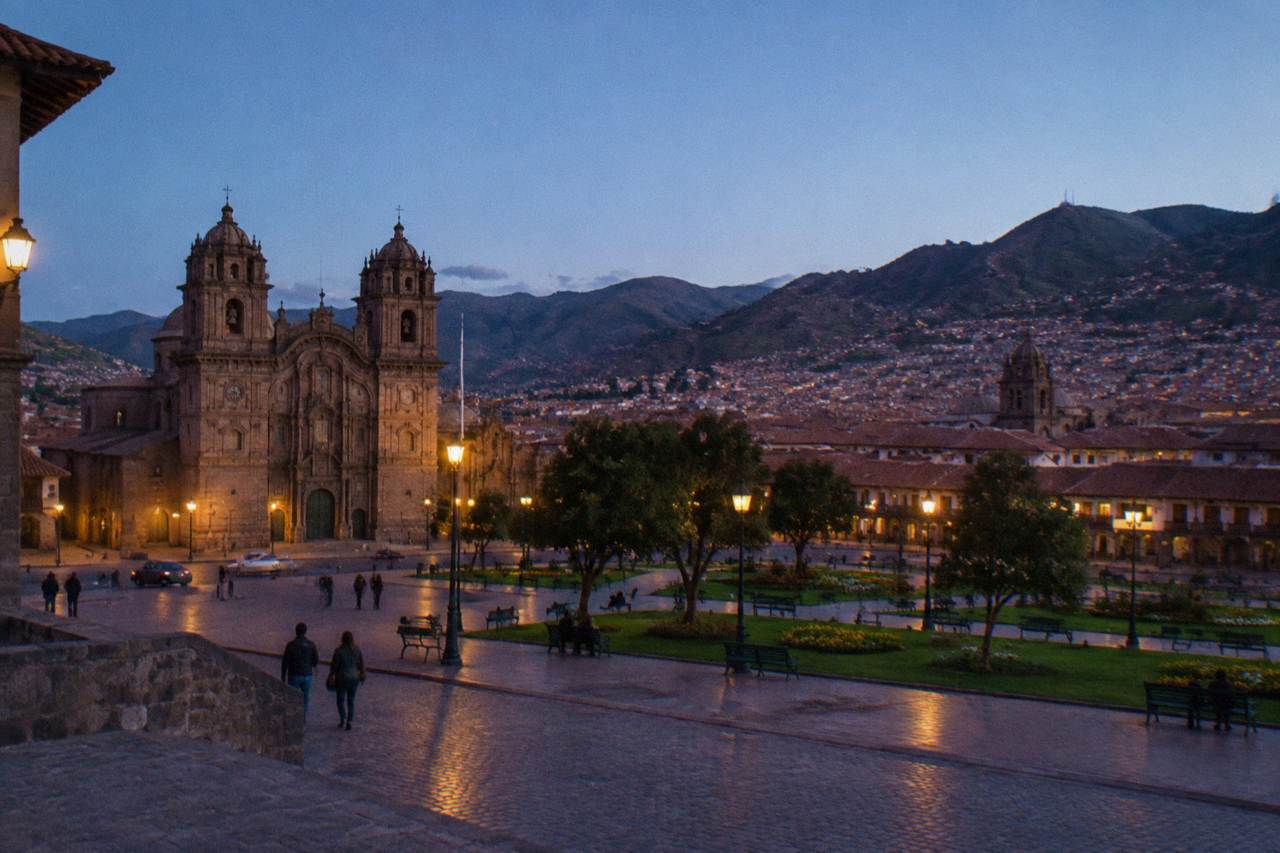
No. Cusco is a city of 428,450 people at 3,335 m in the Cusco region of southern Peru, the historic Inca capital with colonial churches, markets and museums. Machu Picchu is an Inca citadel at 2,430 m, roughly 900 m lower, inside a protected historic sanctuary reached by train and bus from Cusco. One is a place people live in; the other is a ticketed archaeological site with a daily visitor cap.
The distinction matters for planning in a very practical way. Cusco is where the airport is, where nearly every hotel stands and where the altitude first hits a traveller arriving by air. Machu Picchu is a destination reached from Cusco, usually as a day trip or an overnight, and it sells its own tickets on the Ministry of Culture platform, entirely separate from anything in the city. The two names appear together in almost every itinerary because nearly every Machu Picchu visit runs through Cusco first, which is exactly why the question gets asked.
The MINCETUR open dataset underlines the scale of the difference. Machu Picchu recorded 1,479,506 visitors in 2025, every one of them a ticketed entry to a bounded site. Cusco's Saqsaywaman esplanade, by contrast, recorded 944,008 visits in the same year, and the city around it holds a resident population of 428,450 per the 2017 census. A city of that size with schools, markets and a cathedral is simply not the same thing as a citadel with an entry gate and a 2 h 30 reported maximum stay on standard routes.
Where Are Cusco And Machu Picchu, And What Separates Them?
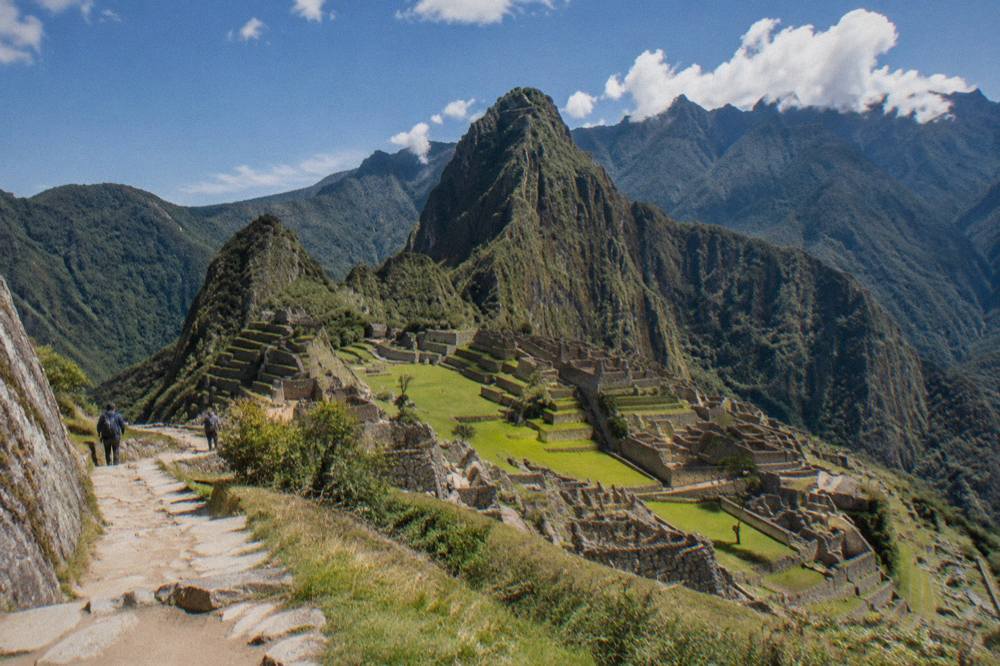
Cusco sits at 3,335 m in a high Andean basin of the Cusco region of southern Peru; Machu Picchu sits at 2,430 m on a ridge in the eastern Andes, above the town of Aguas Calientes at about 2,040 m. The citadel is roughly 900 m lower than the city, and the two are connected by rail and road rather than a direct highway.
The elevation gap is the part that shapes a trip. Travellers fly into Cusco, sleep at altitude and then descend toward Machu Picchu, which is why the CDC Yellow Book names Cusco as a rapid-ascent destination and prefers graded ascent wherever it is feasible. The citadel itself, at 2,430 m per the official site, sits at an elevation many visitors find easier than the city. Aguas Calientes, the town at the rail terminus, is lower again at about 2,040 m.
Here is the sourced comparison in one place:
| Feature | Cusco | Machu Picchu |
|---|---|---|
| What it is | Living city, historic Inca capital | Ticketed Inca citadel in a historic sanctuary |
| Elevation | 3,335 m (Plaza de Armas, PromPeru) | 2,430 m (official site) |
| Nearest lower town | Airport area at 3,310 m | Aguas Calientes at about 2,040 m |
| UNESCO inscription | City of Cusco, 1983 | Historic Sanctuary, 9 December 1983 |
| 2025 visits (MINCETUR) | Saqsaywaman esplanade 944,008 | Ciudad Inka 1,479,506 |
| Ticket | Boleto Turistico for 16 city and valley sites | Separate Ministry of Culture ticket |
| Daily cap | None on the city itself | 4,500 normal days, 5,600 on listed 2026 dates |
The relationship is one of gateway and destination, and the deeper guide to the citadel is the site's own page at the Machu Picchu day trip guide, which carries the circuits, the rules and the ticketing detail in full.
How Do You Get From Cusco To Machu Picchu?
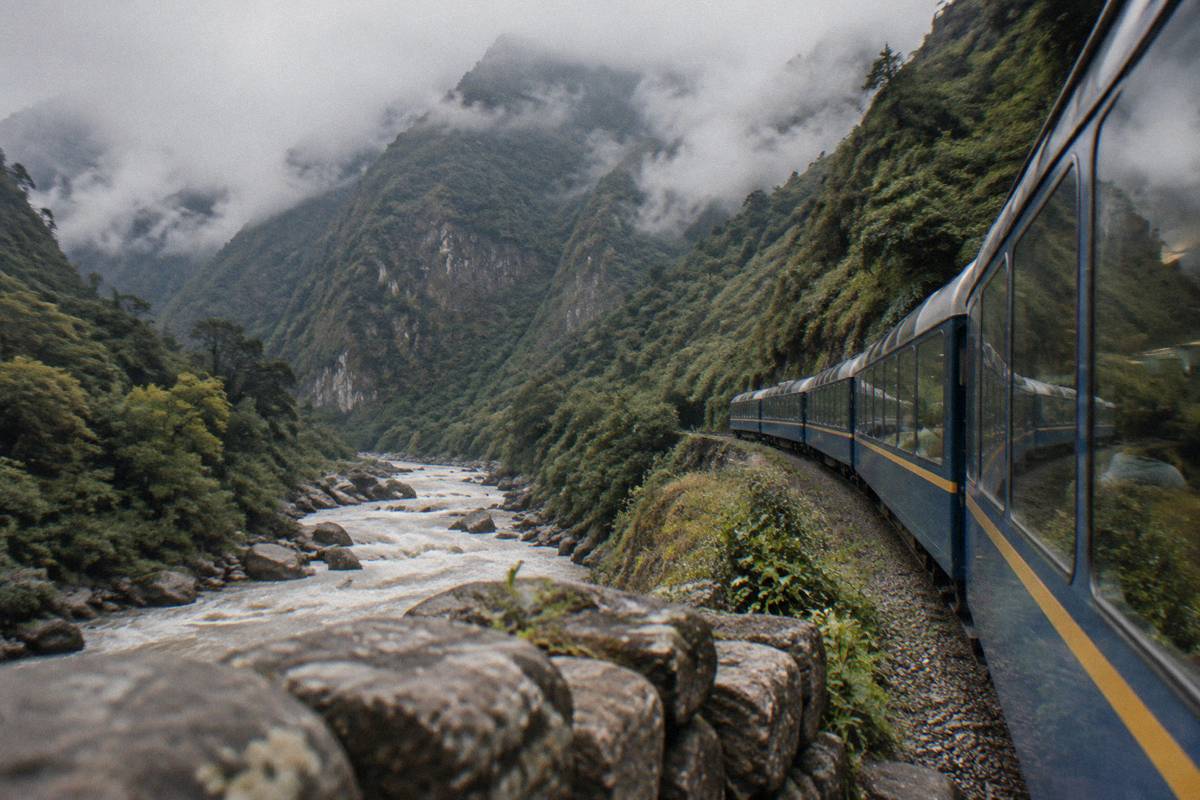
There is no road from Cusco to the citadel itself. The standard route is train from Cusco, or from Ollantaytambo, to Aguas Calientes, then bus up to the entrance. PeruRail's own FAQ gives about 4 h 30 from San Pedro station and about 3 h 30 from Poroy, with Ollantaytambo about 1 h 45 from the trailhead town.
Two operators run the rails, PeruRail and Inca Rail, from two Cusco-side stations: Poroy and San Pedro. The train question belongs to a sibling site, so this page keeps it to the sourced basics. PeruRail's FAQ gives the journey times above, plus a taxi of about 10 minutes to San Pedro and about 20 minutes to Poroy from the centre. In wet-season disruptions, when Cusco-area track is out of service, the operators use a bimodal option: bus to Ollantaytambo, then train. PeruRail's news page reports that Cusco to Ollantaytambo train travel resumed from 1 September 2026, so the current position is worth checking with the operator before booking anything fixed.
The alternatives to the train are the treks. The Inca Trail is the famous one, a licensed-agency-only permit route with a quota of 500 people per day including porters and guides, closed every February, and its permit includes Machu Picchu entry. The Salkantay and Lares routes approach the citadel on foot from different valleys. For travellers who want the connection between the city and the citadel handled end to end, the classic option is the Check availability link on the four-day Inca Trail trek with the Vistadome return, which starts from the Cusco side and finishes at the citadel.
For travellers weighing the train against a guided product, the deciding factor is usually how much of the day they want to spend coordinating. A full-day group tour from Cusco handles the transfers, the timed entry and the guiding in one booking, which matters when the citadel's hourly slots and nominal tickets leave no room for a missed connection.
Is Cusco Higher Than Machu Picchu?
Yes, and by a wide margin. Cusco's Plaza de Armas sits at 3,335 m per PromPeru, while the Machu Picchu citadel sits at 2,430 m per the official site, a gap the verified facts record as roughly 900 m. The town of Aguas Calientes below the citadel is lower still, at about 2,040 m, so the descent from city to gateway town is a long drop through three distinct elevation bands.
The direction of that gap surprises people. A common assumption is that the famous citadel must be the highest point of the trip, because it is the headline attraction. In fact the city is the high part, and the citadel is the lower, greener, more humid end. The CDC Yellow Book advises graded ascent and names Cusco specifically as a rapid-ascent destination when travellers fly in, which is the health context for the elevation column in the table above. The wider set of guides lives on Things To Do In Cusco Peru.
The full altitude picture, including how the two compare for altitude sickness, is covered in the dedicated answer on Cusco versus Machu Picchu altitude, with the temperature comparison at is Cusco colder than Machu Picchu.
Do Cusco And Machu Picchu Share A Ticket?
No. Machu Picchu is not covered by the Boleto Turistico, and the Boleto does not reach the citadel. COSITUC's integral Boleto costs S/ 130 for a foreign adult, about US$38, covers 16 sites and lasts 10 days; Machu Picchu sells separately on the Ministry of Culture ticket platform, from about S/ 163 on standard routes for a foreign adult.
The Boleto Turistico, sold by COSITUC, is the city and valley product. Its integral ticket covers 16 sites across three circuits: Saqsayhuaman, Q'enqo, Puka Pukara and Tambomachay on Circuit I, the city museums and Qorikancha site museum on Circuit II, and Pisac, Ollantaytambo, Chinchero and Moray on Circuit III. Partial circuits cost S/ 70 each. COSITUC sells it in person only, at the counter on Av. El Sol 103 daily from 07:30 to 18:00 and at most included sites; there is no online sale.
Machu Picchu is a different system entirely. Since 1 June 2024 it has run three circuits and ten routes, and since September 2026 the rules state that a guide is recommended, not mandatory, under Article 17.1 of the rewritten ministerial resolution. Tickets are nominal: valid only for the stated date, hour, circuit and holder, with no changes beyond a single passport-number correction. The foreign adult price is a secondary-source figure, from about S/ 163 (about US$48) on standard routes and S/ 211 (about US$62) on the mountain routes, including an S/ 11 SERNANP fee in place since 1 May 2026; the platform shows the live price. A 30-day trial of a new sales system began on 22 September 2026, with no three-hour prior reservation and a 15-minute payment window, so check the platform for how it is working when you book.
| Ticket | Price (foreign adult) | What it covers | Validity |
|---|---|---|---|
| Boleto integral | S/ 130 (about US$38) | 16 sites across three circuits | 10 days |
| Boleto partial, per circuit | S/ 70 (about US$20) | Circuit I, II or III sites | 1 to 2 days |
| Machu Picchu, standard routes | from about S/ 163 (about US$48) | One circuit, one timed entry | Stated date and hour only |
| Machu Picchu, mountain routes | from about S/ 211 (about US$62) | Mountain route entry | Stated date and hour only |
How Many Days Do Cusco And Machu Picchu Need Together?
Cusco and Machu Picchu are two different places on one itinerary, and the honest minimum is three days: one to arrive and acclimatise in the city, one for the citadel as a long day trip or overnight, and one for the city itself or the Sacred Valley. Trekkers need more, since the Inca Trail alone runs four days from the Cusco side before the citadel appears.
The reason the two get merged in travellers' minds is that every Machu Picchu itinerary starts in Cusco. The city is the airport, the acclimatisation stop and the base, and the citadel is the excursion. The dedicated planning answer on how many days to spend in Cusco breaks the days down, and the combined route is laid out in the Cusco and Machu Picchu itinerary.
Order matters too. The question of whether to see the Sacred Valley or Machu Picchu first has its own answer at Sacred Valley or Machu Picchu first, and the altitude logic generally favours easing into the highest sleeping elevation rather than racing for the citadel on day one. The CDC's advice on abrupt ascent, and how likely altitude sickness actually is, is covered at how likely is altitude sickness.
For travellers who want the whole corridor handled in one booking, the two-day Sacred Valley and Machu Picchu products in the band below bundle the valley stops and the citadel with transport and guiding included, which removes the coordination load that planning two separate destinations usually creates. That bundling is the practical answer to this page's question: the two places are different, and a single product is often the simplest way to respect the difference.
Common Questions About Cusco And Machu Picchu
Is Cusco the same as Machu Picchu?
No. Cusco is a living city at 3,335 m in the Andes of southern Peru, inscribed by UNESCO in 1983. Machu Picchu is a ticketed Inca citadel at 2,430 m, inscribed on 9 December 1983, reached from Cusco by train and bus or on foot. They are roughly 900 m apart in elevation and a full travel day apart in practice.
Can you see Machu Picchu from Cusco?
No. The citadel sits on a ridge in forested mountains roughly a rail journey away, with no line of sight from the city. PeruRail's FAQ gives about 4 h 30 of train time from San Pedro station to Aguas Calientes, the town below the citadel, before the bus or trail up to the entrance.
Is Machu Picchu in Cusco?
Machu Picchu is in the Cusco region, but not in the city. The citadel lies inside the Historic Sanctuary of Machu Picchu, above the town of Aguas Calientes at about 2,040 m. Cusco city, at 3,335 m, is the transport gateway, roughly 900 m higher than the citadel.
Do I need separate tickets for Cusco and Machu Picchu?
Yes. The Boleto Turistico, S/ 130 for a foreign adult, covers 16 city and Sacred Valley sites for 10 days and is sold in person only. Machu Picchu is not one of them: its tickets sell separately on the Ministry of Culture platform, from about S/ 163 on standard routes for a foreign adult, and are nominal, tied to one date, hour, circuit and holder.
Which is higher, Cusco or Machu Picchu?
Cusco is higher. The Plaza de Armas sits at 3,335 m per PromPeru, while the citadel sits at 2,430 m per the official site, a gap of roughly 900 m. The CDC Yellow Book names Cusco as a rapid-ascent destination and prefers graded ascent, which is why the city, not the citadel, is where altitude planning starts.
Can you walk from Cusco to Machu Picchu?
Yes, but only on the licensed trek routes, chiefly the Inca Trail, which is sold only through licensed agencies under a 500-person daily quota that includes porters and guides, and which closes every February. The full walking question, including what the permit covers, is answered at can you walk from Cusco to Machu Picchu.
Two inscriptions, two tickets, two elevations: Cusco and Machu Picchu share an itinerary but never an identity, and every well-planned trip treats them as what they are, a high city and a lower citadel joined by a rail line and a day of travel.