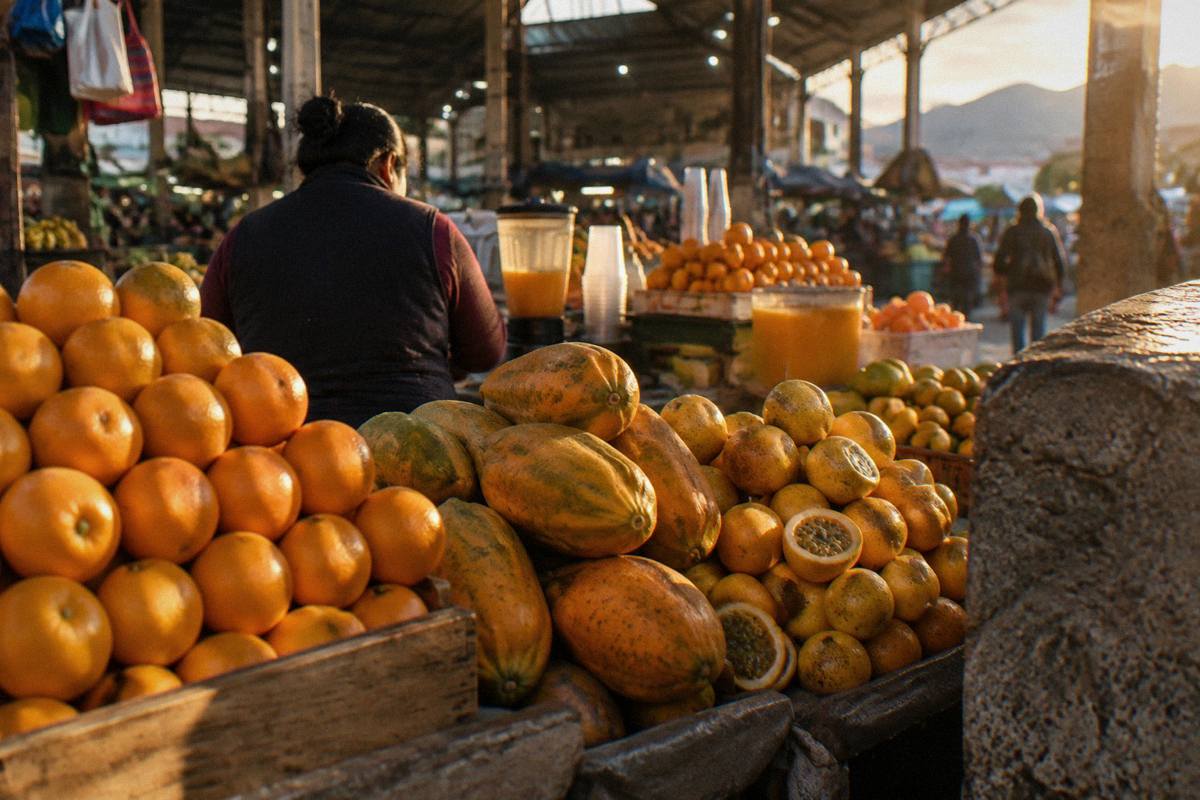
Is There A Michelin Star Restaurant In Cusco?
No, Cusco has no Michelin star restaurant: the Michelin Guide lists no restaurants anywhere in Peru. Here is what recognition Cusco and Sacred Valley food actually holds, and where to eat well without a star to guide you.
Cusco, the historic city in the Andes of southern Peru, sits at about 3,335 m above sea level and carries a food scene that stretches from colonial balconies to market stalls stacked with quinoa, chuño and river trout. Visitors planning a trip there often arrive with a simple question about fine dining, and the answer matters for anyone hoping to book a celebratory meal. The question is a fair one, because Peru's food reputation is enormous, and Cusco is the gateway city for most of the country's Andean tourism.
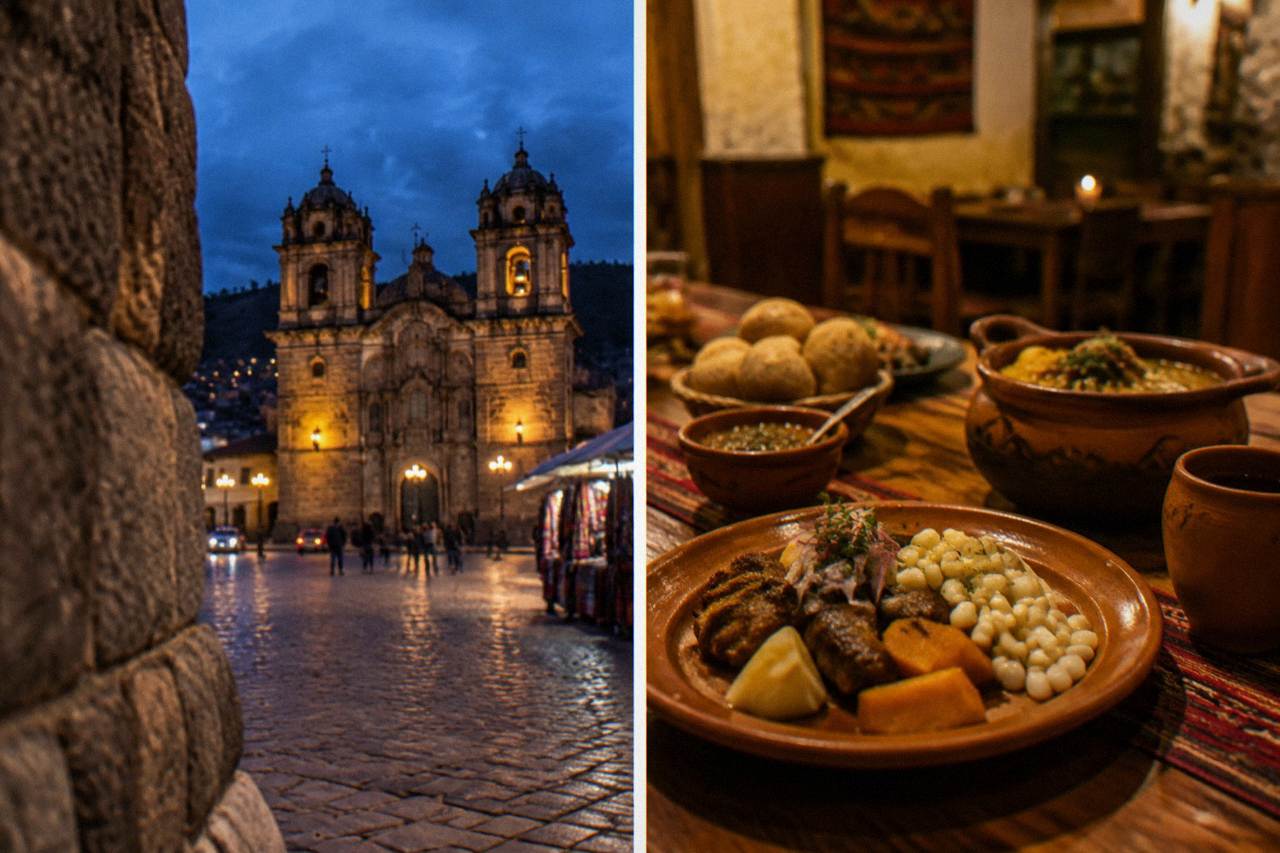
Is There A Michelin Star Restaurant In Cusco?
No. There is no Michelin star restaurant in Cusco, because the Michelin Guide does not cover Peru at all. The guide's own list for Peruvian cuisine shows restaurants in Abu Dhabi, Dubai, Sao Paulo, Courchevel, Birmingham and other cities abroad, and it states that its covered areas are increasing, so a selection in Peru may come eventually, but none exists today.
That is the whole answer, and it is worth stating plainly because the internet is full of loose phrasing. Some travel articles describe Cusco restaurants as "Michelin quality" or "Michelin level", which is marketing language, not a designation. A star can only be awarded by the Michelin Guide's inspectors, and the guide has no restaurant list for Peru. The same applies to every other Peruvian city: Lima, Arequipa and the Sacred Valley are equally outside the guide's coverage.
The distinction matters for planning. A traveller who books a Cusco restaurant expecting a star, or expecting the standards Michelin inspection enforces, is booking on a claim nobody has verified. What Cusco offers instead is a strong regional kitchen, a growing reputation among international food writers, and one genuine, checkable accolade in the wider region, covered below.
For a broader sense of what the city is known for beyond its restaurants, see what Cusco is known for, and for the practical side of eating there, the site's guide to what to eat in Cusco covers the dishes worth ordering.
Does The Michelin Guide Cover Peru At All?
No. The Michelin Guide lists no restaurants in Peru, in any category, starred or otherwise. Its public list for Peruvian cuisine contains restaurants exclusively outside the country, and the guide's own note says covered areas are expanding, which means a Peru selection could arrive in future years, but as of the latest check there is nothing to book against.
The guide's Peruvian-cuisine list is, if anything, a tribute to how far the food has travelled. It shows dozens of restaurants serving Peruvian food, every one of them abroad, in Gulf cities, Brazilian metropolises, European towns and North American centres. The cuisine has gone global while its home country remains uninspected. That gap is the single most useful fact for anyone fact-checking a "Michelin star in Cusco" claim: there is no list it could appear on.
This is not a slight on the city's kitchens. It is a statement about where a private guide company has chosen to send inspectors. Michelin expansion into South America has so far focused on Brazil, and Peru's absence reflects coverage decisions, not a verdict on the cooking. The honest framing for a trip planner: judge Cusco restaurants by their own reputations, menus and sourcing, not by an award system that has never visited.
Here is how the landscape of recognition actually looks:
| Recognition body | Does it cover Cusco or Peru? | What it actually says |
|---|---|---|
| Michelin Guide | No restaurants listed in Peru | Peruvian-cuisine list is entirely abroad; guide notes its covered areas are increasing |
| Latin America's 50 Best Restaurants | Yes, one Cusco-region entry in 2025 | Mil, at Moray in the Sacred Valley, ranked No. 49 |
| Michelin star claim for any Cusco restaurant | Not verifiable | No star exists, because no Peru list exists |
What Recognition Does Cusco Food Actually Hold?
One genuine accolade exists in the wider Cusco region: Mil, at Moray in the Sacred Valley, ranked No. 49 on the Latin America's 50 Best Restaurants 2025 list. It is overseen by Virgilio Martinez and Pia Leon of Central, and it is the region's strongest claim to international fine-dining recognition, though it sits in the valley rather than in Cusco city itself.
Mil is worth understanding because it is often the restaurant behind garbled "Michelin-adjacent" claims. It is a research-driven kitchen beside the Moray archaeological site, working with high-altitude ingredients and Andean fermentation, and its appearance on the 50 Best list is a real, dated, checkable fact. The list it appears on is published by the organisation behind the World's 50 Best Restaurants, a separate body from Michelin with its own voting system. A 50 Best ranking is not a Michelin star, and the two should never be conflated.
For travellers, the practical point is geography. Mil is in the Sacred Valley, near Moray, not in the city, so a dinner plan built around it belongs to a valley itinerary, not a Cusco evening. The site's guide to Maras and the salt mines and the wider Sacred Valley coverage explain how the valley's sites fit together, and the question of whether to stay in Cusco or the Sacred Valley shapes whether a valley restaurant is a dinner or a detour.
Within Cusco city, the honest position is that no individual restaurant on this site carries a verified award, ranking or star, and this page will not name a "best" one. What the city does have is a dense, walkable food landscape: markets, picanterias, colonial-courtroom dining rooms and cooking classes, plus guided food walks that do the filtering for you. The roster's Central Market food walking tour is one such product, a guided downtown walk stopping at San Pedro Market for regional dishes, fresh juices and Andean treats, and it can be checked via the operator's live listing: Check availability.
A market walk like this one is also the cheapest way to learn the Andean larder before ordering in any restaurant. A guided walk introduces grains, tubers and juices by name, so a later restaurant menu reads as a list of familiar friends rather than a puzzle, and the stallholders themselves are part of the story in a way no inspection system captures.
Where Do Serious Eaters Go In Cusco Without A Star?
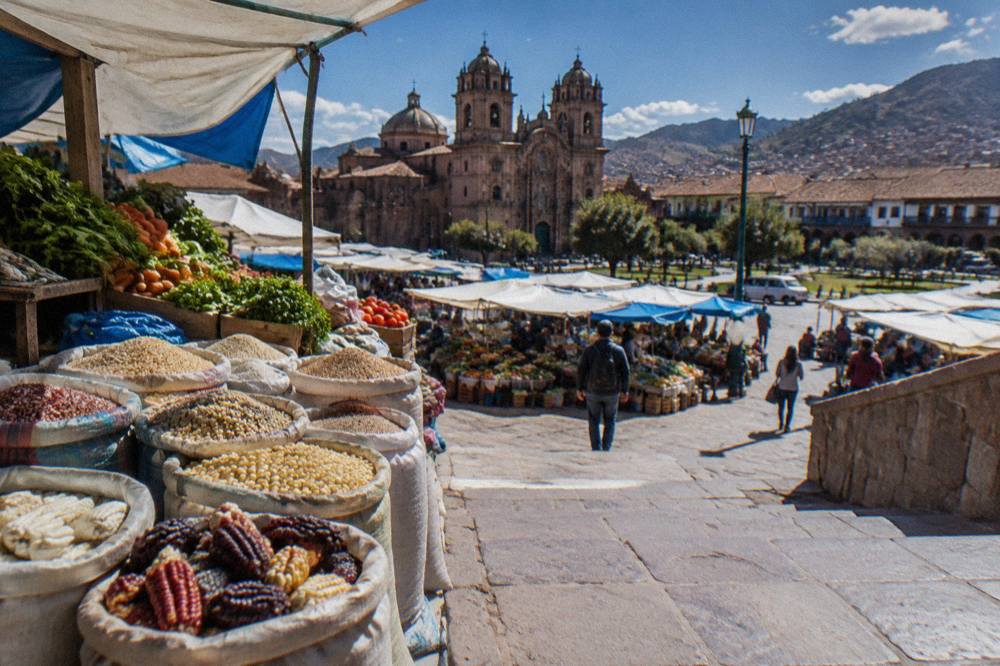
The pattern that repeats across every credible account of eating in Cusco is that the city's strengths are markets, regional dishes and Andean ingredients rather than starred dining rooms. San Pedro Market, the picanteria tradition of chilied stews, and high-altitude products such as quinoa, chuño, giant corn and river trout are what the regional kitchen is built on, and a food walk or cooking class reaches them faster than trial and error.
San Pedro Market is the city's central food market, a working institution rather than a museum piece, and it is the place where the Andean larder is laid out in full: sacks of grains, barrels of chicha, juice counters, and hot-food stalls serving set lunches at reported everyday prices. A menu del dia, a set lunch, is reported at about S/ 8 to S/ 15 (roughly US$2 to US$4), and a cup of coca tea at about S/ 2 to S/ 5; these are operator-reported ranges, not official tariffs, and they describe the market tier of eating rather than the restaurant tier. The site's San Pedro Market guide covers the market itself, and the question of what a meal costs in Cusco puts those ranges in context.
Cooking classes are the other reliable route into the food culture, and the roster carries several: a small-group class paired with a San Pedro Market tour, a Peruvian cooking class with cocktails and a market visit, and the bean-to-bar chocolate workshops at ChocoMuseo. A class turns the market from a spectacle into an education, and for families the site's Cusco with kids guide notes which food activities suit children. None of these products carries a star either, and none needs one.
To try the Andean larder hands on, book a cooking class with market tour here.
For evening planning, the honest answer on timing is that no sourced figure exists for when Cusco eats dinner, so this page gives no clock times; the dinner time in Cusco page addresses that question directly. What can be said is that the city's nightlife runs from plaza-side balconies to the San Blas bars, covered in the Cusco nightlife guide.
| Way to eat in Cusco | What it is | Typical cost tier |
|---|---|---|
| Market set lunch (menu del dia) | Market stalls serving a fixed Andean lunch | Reported at about S/ 8 to S/ 15 |
| Coca tea at a market or cafe | The standard altitude welcome drink | Reported at about S/ 2 to S/ 5 |
| Guided food walk | A guided downtown walk with market tastings | Product card shows the live price |
| Cooking class with market tour | Hands-on class plus market visit | Product card shows the live price |
| Valley fine dining (Mil, Moray) | Research-driven restaurant, No. 49 on Latin America's 50 Best 2025 | Book direct; not in Cusco city |
What Should You Eat In Cusco If No Star Guides You?
Order the Andean classics that the region actually grows: quinoa in soup and risotto forms, river trout (trucha), lomo saltado, cuy (guinea pig, the Andean ceremonial dish), chicharron, roasted coca-and-herb pork, giant corn (choclo), chuño (freeze-dried potato) stews, and the sweet, purple-corn drink chicha morada. Every one of these is a market and picanteria staple, and none depends on an award to be worth ordering.
Cuy deserves a plain word, because visitors ask about it constantly. It is eaten across the Andes and has deep cultural roots; this page gives no price, no restaurant and no origin year, because none is verified here, and the site's dedicated cuy guide handles the dish properly. The same discipline applies to every restaurant recommendation: no opening hours, menus or awards for individual Cusco restaurants are sourced on this page, so none are stated.
The practical strategy that follows from all of this is simple. Skip the star hunt, because there is no star to hunt. Build the food side of the trip around three anchors: a market visit or guided food walk for the larder, one cooking class or chocolate workshop for the technique, and, if the itinerary allows, a Sacred Valley day that could include the Moray area where the region's one internationally ranked restaurant sits. The Sacred Valley in one day page shows how a valley circuit fits together, and the how many days in Cusco page helps size the whole stay.
The guided products below cover the food walk, the valley and the city's headline archaeology in one view:
A final note on expectations. Peru's international food reputation was built largely on Lima's kitchens, and Cusco's kitchen is a different thing: high-altitude, market-centred, and closer to its ingredients than to any inspection system. Visitors who arrive looking for a Michelin moment tend to leave remembering a market lunch instead. For the wider planning picture around food, safety and timing, Things To Do In Cusco Peru collects the site's guides, and the what to avoid in Cusco page covers the pitfalls that matter more than a missing star.
Common Questions About Michelin Stars In Cusco
Is there a Michelin star restaurant in Cusco?
No. The Michelin Guide lists no restaurants in Peru at all, so no Cusco restaurant can hold a star. The guide's Peruvian-cuisine list consists entirely of restaurants outside Peru, and it notes that its covered areas are expanding, which leaves the door open for future coverage.
Does anywhere in Peru have a Michelin star?
No. The Michelin Guide covers no restaurants anywhere in Peru, Lima included. Any claim that a Peruvian restaurant holds a Michelin star is not supported by the guide's published lists.
What is the closest thing to an award-winning restaurant near Cusco?
Mil, at Moray in the Sacred Valley, ranked No. 49 on the Latin America's 50 Best Restaurants 2025 list. It is overseen by Virgilio Martinez and Pia Leon of Central, and it sits in the valley rather than in Cusco city.
Why do some articles call Cusco restaurants Michelin level?
Because "Michelin quality" is loose marketing language with no designation behind it. A star can only come from the Michelin Guide's inspectors, and the guide has never published a Peru selection, so the phrase describes an aspiration, not a fact.
Where should you eat in Cusco instead of chasing a star?
At the markets, picanterias and food walks that carry the regional kitchen: San Pedro Market for the Andean larder and set lunches, a cooking class for technique, and the Sacred Valley for its one internationally ranked restaurant. The site's what to eat in Cusco guide lists the dishes worth ordering.
Is Cusco food worth the trip without fine-dining awards?
Yes. The regional kitchen is built on high-altitude ingredients, quinoa, chuño, giant corn, river trout and long-cooked stews, served at market prices far below any starred dining room. The food is the reason cooking classes and market tours rank among the city's most-booked activities.