How Much Does An Average Meal Cost In Cusco, Peru?
How much an average meal costs in Cusco, Peru: reported menu del dia ranges, restaurant price drivers, market eating and what food tours and cooking classes add.
Cusco, the historic city in the Andes of southern Peru, is an easy place to eat well, and an easy one to overspend in without noticing. The currency is the Peruvian sol, written S/, and it trades at about S/ 3.4 to the US dollar, so a coin that looks small buys more than a visitor expects. The one meal price the reported ranges hold firmly is the menu del dia, the fixed set lunch that most small eateries serve: about S/ 8 to 15, roughly US$2 to US$4, usually for soup, a main and a drink. Everything above that depends on the street, the tablecloth and the language of the menu.
How Much Does An Average Meal Cost In Cusco, Peru?
An average meal in Cusco costs about S/ 8 to 15 for the fixed set lunch, called a menu del dia, that most small local eateries serve, which is about US$2 to US$4 at roughly S/ 3.4 to the dollar. A sit-down dinner in a tourist restaurant costs more, and no verified range exists for it, so the menu del dia is the only honest average figure.
How Much Does An Average Meal Cost In Cusco, Peru?
An average meal in Cusco costs about S/ 8 to 15 for the fixed set lunch, called a menu del dia, that most small local eateries serve, which is about US$2 to US$4 at roughly S/ 3.4 to the dollar. A sit-down dinner in a tourist restaurant costs more, and no verified range exists for it, so the menu del dia is the only honest average figure.
That answer needs one caveat spelled out. The S/ 8 to 15 range is a reported range from operator and travel sites in 2026, not an official tariff, and it applies to the set lunch format, not to eating in general. A cup of coca tea is reported at about S/ 2 to 5, which gives a sense of the floor: even the cheapest hot drink in a tourist city carries a small premium over what a local pays in a residential neighbourhood.
The honest way to plan a food budget is to treat the set lunch as the anchor and everything else as a choice. Visitors who eat the menu del dia at midday and snack lightly in the evening spend very little. Visitors who eat two restaurant dinners a day near the Plaza de Armas spend several times more, and neither pattern is wrong. The cost of the food itself is low across the city; what raises a bill is the address, the service and the setting.
What Does A Menu Del Dia Cost In Cusco?
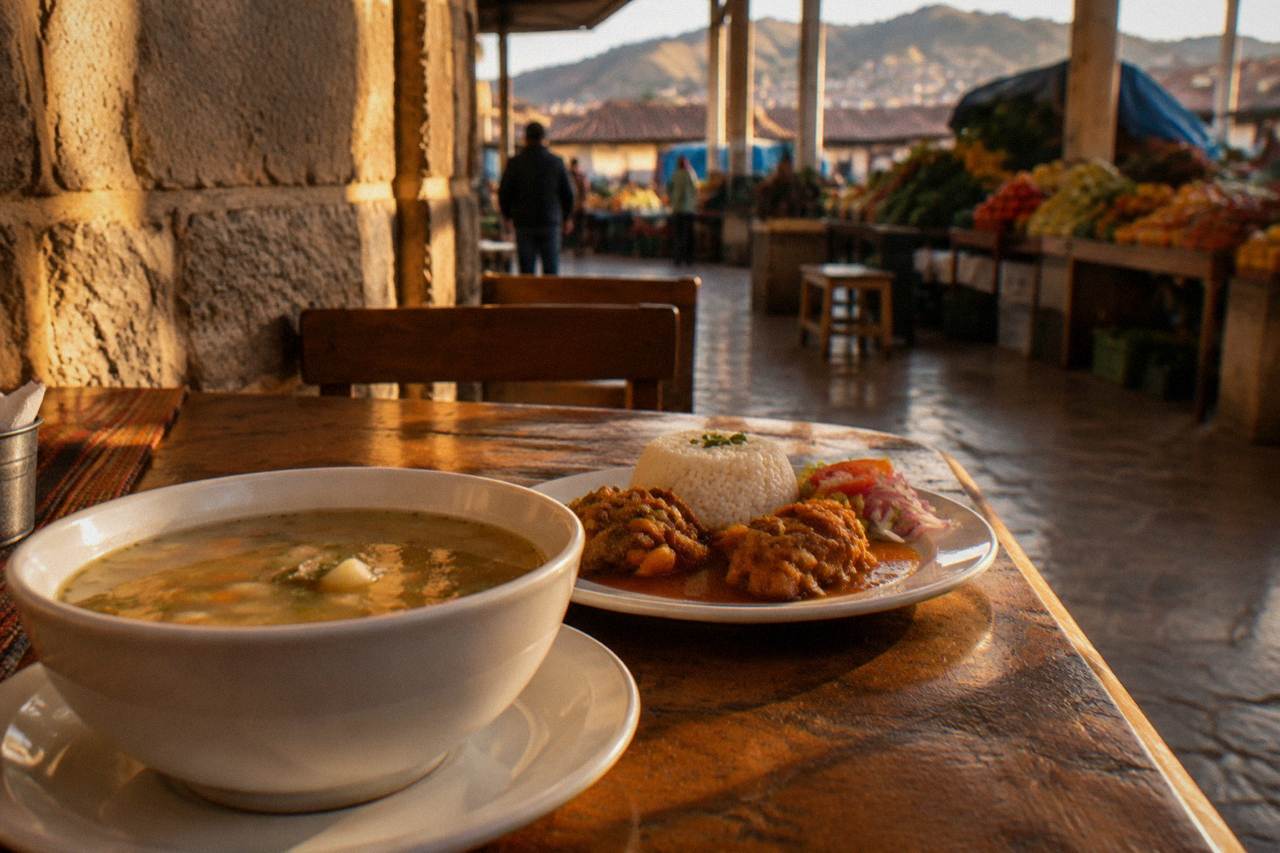
A menu del dia in Cusco is reported at about S/ 8 to 15, roughly US$2 to US$4, for a fixed set lunch that normally includes a starter soup, a main dish with a drink, and sometimes a small dessert. The price is a reported range from operator and travel sites in 2026, not an official tariff, and it is the cheapest full meal format in the city.
What Does A Menu Del Dia Cost In Cusco?
A menu del dia in Cusco is reported at about S/ 8 to 15, roughly US$2 to US$4, for a fixed set lunch that normally includes a starter soup, a main dish with a drink, and sometimes a small dessert. The price is a reported range from operator and travel sites in 2026, not an official tariff, and it is the cheapest full meal format in the city.
The set lunch is the working meal of Cusco. Restaurants that serve it print it on a single sheet or recite it, and it changes with what the market sold that morning. The format keeps the price low because the kitchen makes one soup and a handful of mains in bulk for a midday rush, rather than cooking to order all afternoon. A traveller eating the set lunch eats what the city eats, at the price the city pays plus a small margin.
| Item | Reported price range | Notes |
|---|---|---|
| Menu del dia (set lunch) | S/ 8 to 15 (about US$2 to 4) | Fixed menu, soup plus main and a drink; reported 2026 range, not official |
| Cup of coca tea | S/ 2 to 5 (about US$1) | Reported range; often cheaper away from the Plaza de Armas |
| Tourist SIM card | S/ 5 to 15, data pack S/ 20 to 40 | Included as a planning comparison, not a food item |
Where the set lunch sits matters more than the exact price on the sheet. The same kitchen a few blocks from the centre serves the same format for the lower end of the range, and the same format aimed at tour groups sits at the upper end. The free things to do in Cusco approach applies to food too: walking three blocks off the main square is the single biggest saving available, and it needs no bargaining, only a willingness to sit where the menu is only in Spanish.
How Much Do Restaurants Near The Plaza De Armas Cost?
No verified price range exists for sit-down restaurant meals in Cusco, so the honest answer is that a tourist restaurant near the Plaza de Armas costs more than the S/ 8 to 15 set lunch, and the difference comes from location, service and menu language rather than from the raw cost of the food. Any specific figure a guide quotes for a restaurant average is a guess.
How Much Do Restaurants Near The Plaza De Armas Cost?
No verified price range exists for sit-down restaurant meals in Cusco, so the honest answer is that a tourist restaurant near the Plaza de Armas costs more than the S/ 8 to 15 set lunch, and the difference comes from location, service and menu language rather than from the raw cost of the food. Any specific figure a guide quotes for a restaurant average is a guess.
What can be said is what drives the difference. Rent around the main square is the highest in the city, menus are printed in English and sometimes illustrated, and the kitchen cooks to order rather than in bulk. Each of those raises the cost per plate without changing what is on it. A plate of the same Andean ingredients, cooked the same way, carries a different number on a side street.
The Michelin Guide lists no restaurants anywhere in Peru; its Peruvian-cuisine list covers restaurants abroad only. That fact, which the guide's own site states, matters for visitors reading restaurant marketing in Cusco, because the word "Michelin" floats around South American dining copy without a listed restaurant behind it. Recognition that does exist for the region sits in the Sacred Valley rather than the city, at Mil near Moray, which appeared on the Latin America's 50 Best Restaurants 2025 list. The Michelin question is answered on its own page.
A practical pattern for a sightseeing day: eat the set lunch at midday, when the format exists and the price is at its lowest, and spend the evening budget on one dinner worth sitting down for. Visitors planning days around the city can pair this with the half-day city tour of the four ruins, which covers the sites above the city and leaves the middle of the day open for a proper lunch.
The three tours above all solve the lunch problem in a different way. The city tour returns to the centre in time for a set lunch. The Sacred Valley tours build a buffet lunch into the day, which matters because valley sites are far from cheap eateries. The Route of the Sun day trip between Puno and Cusco likewise carries lunch with it, and on a long transfer day that is one less thing to plan.
Where Can You Eat Cheaply In Cusco?
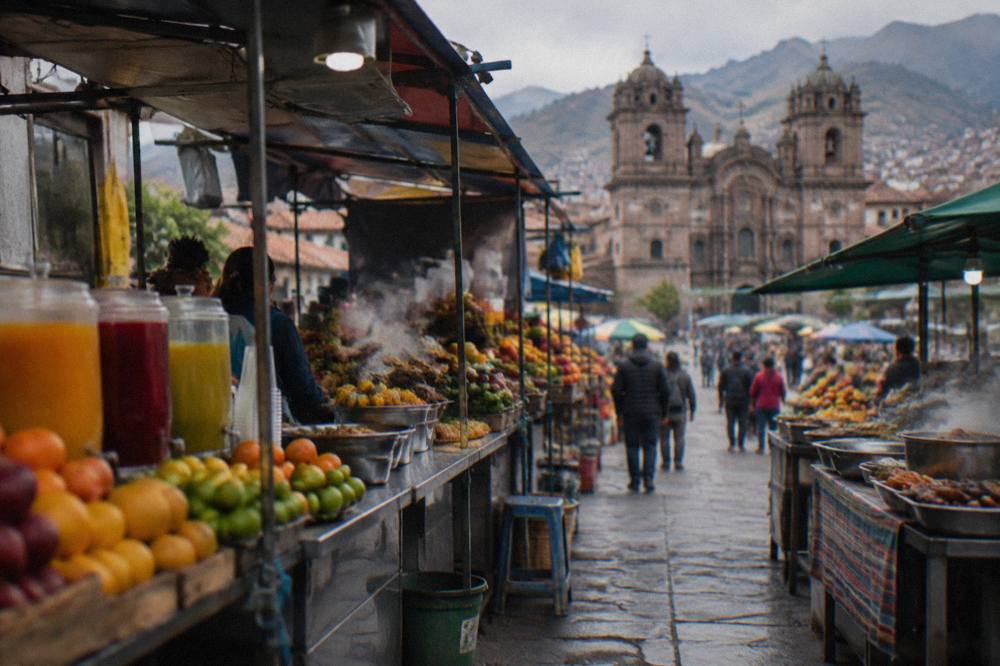
The cheapest full meals in Cusco are the set lunches served by small eateries at about S/ 8 to 15, and the markets, above all San Pedro market, sell individual dishes and juices at prices even below that format, though no verified range exists for individual market dishes. Eating where the queue is local, at midday, a few blocks off the main square, is the reliable way to pay the lower end.
Where Can You Eat Cheaply In Cusco?
The cheapest full meals in Cusco are the set lunches served by small eateries at about S/ 8 to 15, and the markets, above all San Pedro market, sell individual dishes and juices at prices even below that format, though no verified range exists for individual market dishes. Eating where the queue is local, at midday, a few blocks off the main square, is the reliable way to pay the lower end.
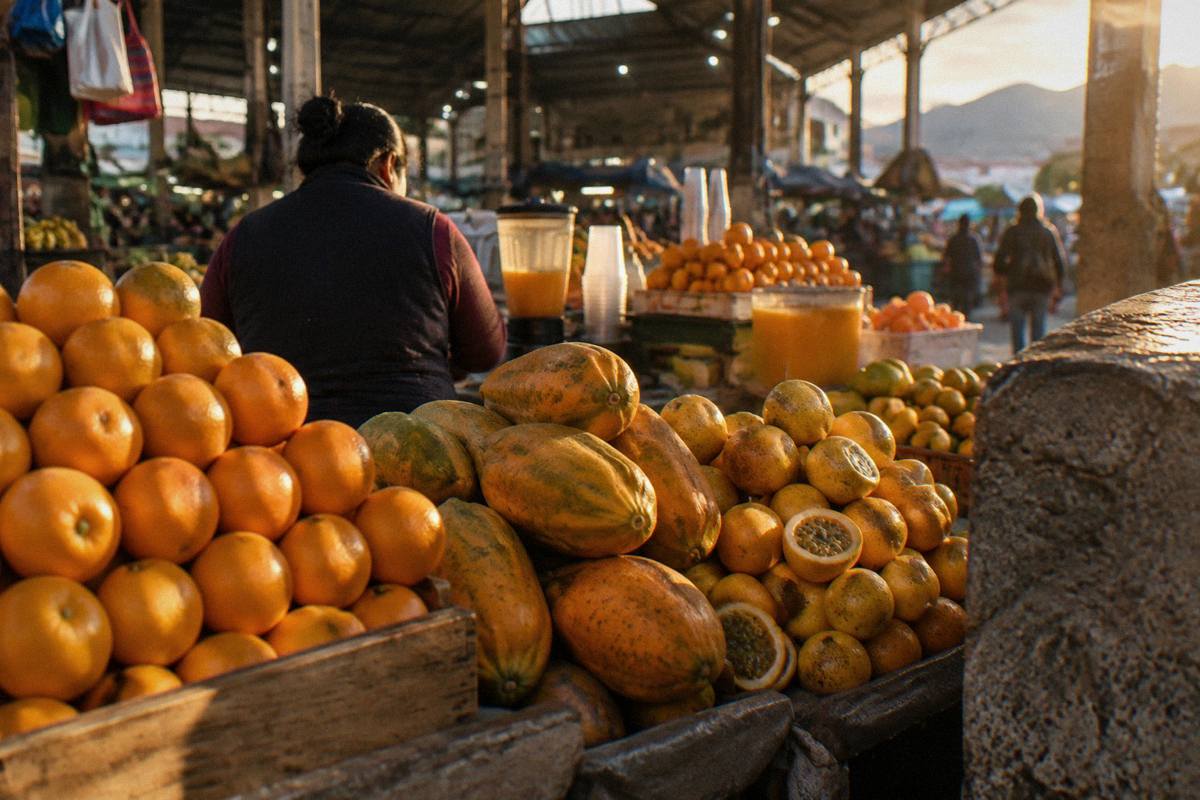
San Pedro market is the city's central market, and it is the place where the price of eating and the price locals pay come closest together. Juice stands, soup counters and hot-food stalls operate from the same aisles that sell vegetables and bread, and the format is pay-at-the-counter rather than menu-and-waiter. The market has its own guide page, and the wider question of where locals eat is answered separately, but the principle is one sentence: the market prices food for people who live here, not for people passing through.
| Eating situation | What it costs | Why |
|---|---|---|
| Set lunch, small eatery off the centre | About S/ 8 to 15, reported | One fixed menu, cooked in bulk at midday |
| Set lunch, tourist street | Upper end of the same range | Same format, higher rent and printed menus |
| San Pedro market stall | No verified range | Prices set for local shoppers; pay at the counter |
| Restaurant dinner near the Plaza de Armas | No verified range | Location, service and cooked-to-order plates raise the bill |
Two habits keep the food budget at the floor without any sacrifice in quality. The first is eating the main meal at midday, when the set lunch format exists at all; in the evening the same kitchens often serve only the pricier a la carte menu. The second is treating a market breakfast, fruit and bread with coffee, as a meal in its own right rather than a snack. The what to eat in Cusco guide covers the dishes themselves, and the Cusco markets guide covers the stalls.
Do Food Tours And Cooking Classes Change The Budget?
A food tour or cooking class in Cusco is a bookable product, so its price renders on the product card rather than in prose, and it replaces one or two meals as well as adding an activity. The budget question is not what the class costs but what it replaces: a market-and-cooking class typically covers a shopping stop, a meal and a drink experience in one booking.
Do Food Tours And Cooking Classes Change The Budget?
A food tour or cooking class in Cusco is a bookable product, so its price renders on the product card rather than in prose, and it replaces one or two meals as well as adding an activity. The budget question is not what the class costs but what it replaces: a market-and-cooking class typically covers a shopping stop, a meal and a drink experience in one booking.
The site's roster carries several of these. The San Pedro market cooking class, the central market food walk and the street food walk all eat into the same budget line as meals, because they include food. The chocolate workshops and the pisco sour mixology session are closer to activities with tastings. For a visitor counting soles, the honest framing is that a food tour is not an extra on top of the food budget, it is the food budget for that afternoon, with a guide attached. More of these guides are collected on Things To Do In Cusco Peru.
A market cooking class doubles as a meal and an activity. Book a cooking class with market tour here.
The half-day city tour above is the non-food counterpart: it spends the morning on the ruin sites above Cusco and hands the afternoon back, which leaves the set lunch window free. Pairing a booked morning with a cheap set lunch and a booked evening class is the pattern that keeps a Cusco food budget flat while the experiences stack up.
What Is The Cheapest Full Meal In Cusco?
The cheapest full meal in Cusco is the menu del dia, reported at about S/ 8 to 15, which is a fixed set lunch of soup, a main and a drink served by small eateries at midday. Market stalls sell individual dishes at prices around or below that format, but no verified range exists for individual market dishes, so the set lunch is the only figure worth planning on.
What Is The Cheapest Full Meal In Cusco?
The cheapest full meal in Cusco is the menu del dia, reported at about S/ 8 to 15, which is a fixed set lunch of soup, a main and a drink served by small eateries at midday. Market stalls sell individual dishes at prices around or below that format, but no verified range exists for individual market dishes, so the set lunch is the only figure worth planning on.
The set lunch exists because it is the city's own working meal, not a tourist product. It appears around midday and disappears in the afternoon. The saving is real rather than marginal: eating the set lunch instead of a tourist restaurant dinner can cut a day's food spend by more than half, and the food is the same Andean cooking, just served in bulk.
Is Food In Cusco Expensive Compared To Lima?
No verified price comparison between Cusco and Lima exists in the reported ranges, so the honest answer is that no sourced figure supports a comparison. What the reported ranges do show is that Cusco's set lunch, at about S/ 8 to 15, sits at the cheap end of what visitors report paying for a full meal anywhere in Peru, and that the city's tourist streets carry the same address premium as any tourist centre.
Is Food In Cusco Expensive Compared To Lima?
No verified price comparison between Cusco and Lima exists in the reported ranges, so the honest answer is that no sourced figure supports a comparison. What the reported ranges do show is that Cusco's set lunch, at about S/ 8 to 15, sits at the cheap end of what visitors report paying for a full meal anywhere in Peru, and that the city's tourist streets carry the same address premium as any tourist centre.
The comparison visitors usually mean is not city against city but street against street. A tourist restaurant near a main square costs more than a set lunch three blocks away in either city, for the same reasons: rent, service and menu language. Cusco adds one factor Lima does not have, altitude, which changes appetite more than price, and the altitude questions are covered on their own page.
How Much Does Coca Tea Cost In Cusco?
A cup of coca tea in Cusco is reported at about S/ 2 to 5, roughly a dollar or less, and it is the standard welcome drink handed to arriving visitors at hotels and lodges. The range is a reported one from operator and travel sites in 2026, not an official price, and it is often lower away from the Plaza de Armas.
How Much Does Coca Tea Cost In Cusco?
A cup of coca tea in Cusco is reported at about S/ 2 to 5, roughly a dollar or less, and it is the standard welcome drink handed to arriving visitors at hotels and lodges. The range is a reported one from operator and travel sites in 2026, not an official price, and it is often lower away from the Plaza de Armas.
Coca tea is the city's default answer to altitude, served free in most hotel lobbies and sold by the cup in markets and cafes. The reported range makes it the cheapest item on any Cusco menu, and the free hotel cup makes it, in practice, the cheapest thing a visitor consumes here. What the tea does or does not do for acclimatisation is a separate question with no sourced number attached, and the acclimatisation guide covers the day-planning side of it.
Should You Tip On Meals In Cusco?
No verified tipping percentage for Cusco exists, so no figure belongs on the page. What can be said without a number is that a service charge line on the bill and a tip are different things, and that checking the bill before adding anything is the habit that matters in a tourist city where the printed menu and the final line do not always tell the same story.
Should You Tip On Meals In Cusco?
No verified tipping percentage for Cusco exists, so no figure belongs on the page. What can be said without a number is that a service charge line on the bill and a tip are different things, and that checking the bill before adding anything is the habit that matters in a tourist city where the printed menu and the final line do not always tell the same story.
The safe rule is to read the bill. If a service line already appears, adding more is a choice rather than an expectation; if it does not, rounding up is the local norm visitors report. Tour guides and free walking tours run on tips in a different way from restaurants, and the free walking tours guide covers that side of the budget separately.
Does Eating In The Sacred Valley Cost More Than In Cusco?
No verified meal price range exists for the Sacred Valley, so the honest answer is that no sourced figure supports a comparison. What the reported Cusco ranges show is that the S/ 8 to 15 set lunch is a city format tied to midday bulk cooking, and valley day trips usually solve lunch by building a buffet into the tour rather than by finding a set lunch.
Does Eating In The Sacred Valley Cost More Than In Cusco?
No verified meal price range exists for the Sacred Valley, so the honest answer is that no sourced figure supports a comparison. What the reported Cusco ranges show is that the S/ 8 to 15 set lunch is a city format tied to midday bulk cooking, and valley day trips usually solve lunch by building a buffet into the tour rather than by finding a set lunch.
That is why valley tours carry lunch with them. The Sacred Valley guide and the question of whether the valley is worth visiting cover the itinerary side, but the food logic is simple: the valley's sites sit far from the cheap eateries that make city eating inexpensive, so a tour with lunch included converts an unpredictable midday search into a known line on one bill. The same logic applies to the Puno day trip, which carries lunch across a long transfer day.
Planning around the set lunch is the one food decision that pays for itself every single day in Cusco: eat the S/ 8 to 15 menu at midday, keep the market stalls for breakfast and snacks, and spend the saving on one dinner, one class or one tour that is worth the price on its own card.