Is Cusco LGBTQ Friendly?
What official sources say about LGBTQ travel to Cusco, Peru: legality, social attitudes, safety advice and practical planning for LGBTQ visitors in the Andes.
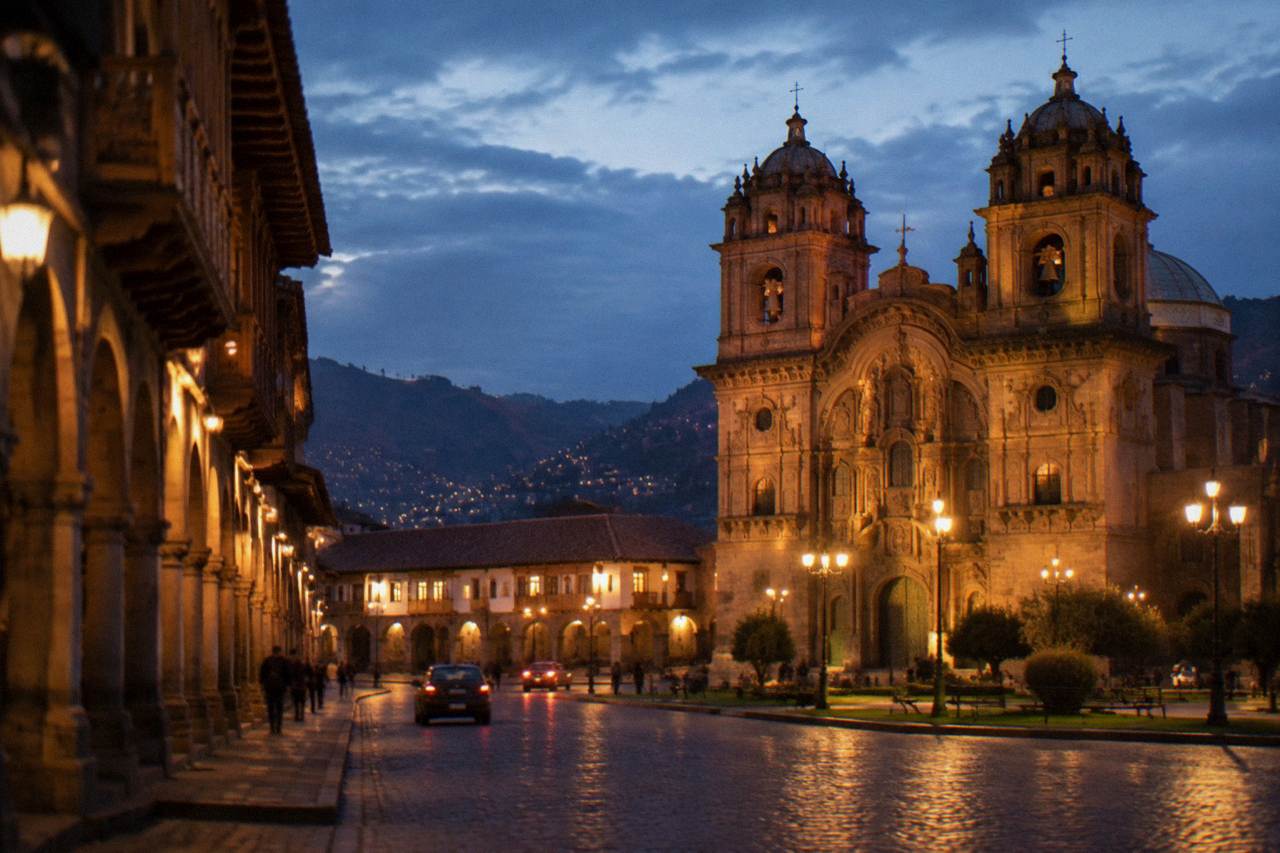
Cusco, the historic city in the Andes of southern Peru, sits at 3,335 m on the Plaza de Armas and receives visitors from every part of the world, including LGBTQ travellers planning a stop before Machu Picchu. The question of how friendly the city is deserves a sourced answer rather than a slogan. What follows is what government travel advisories, official tourism bodies and published guidance actually state, with the honest gaps left as gaps.
Is Cusco LGBTQ Friendly?
Cusco is a legal and generally workable destination for LGBTQ visitors: same-sex sexual activity is legal in Peru, and the US State Department places Cusco city outside its Do Not Travel areas. The UK Foreign Office adds the caveat that matters: social attitudes are generally conservative, crimes against the LGBT+ community are not covered by hate crime legislation, and public affection may draw unwanted attention.
The honest framing is that "friendly" splits into two different questions. Legality is clear and settled. Social climate is more conservative than the legal position, and the official wording from the UK Foreign and Commonwealth Development Office (FCDO) says so directly: "Same-sex sexual activity is legal in Peru, but social attitudes are generally conservative." The same advisory notes that same-sex partnerships are not formally recognised in Peruvian law. None of this singles out Cusco as hostile; it describes the national picture, and Cusco, as a tourism city of 428,450 people at the 2017 census, lives inside that picture.
What Do Official Travel Advisories Say About LGBTQ Travellers In Peru?
The UK Foreign Office is the advisory that addresses LGBTQ travellers directly: it confirms same-sex activity is legal, describes social attitudes as generally conservative, notes the absence of hate crime legislation covering anti-LGBT+ crimes, and warns that public displays of affection between same-sex couples may receive unwanted and negative attention. The US State Department advisory for Peru is Level 2, Exercise Increased Caution, and lists Cusco city, the Sacred Valley, the Inca Trail and Machu Picchu as outside its Do Not Travel areas.
Those are the two most load-bearing sentences on this page, and they come from pages dated 2026. The FCDO safety page for Peru, updated 22 June 2026, carries the LGBT+ wording quoted above. The US advisory, reissued 8 September 2026, gives Peru a Level 2 rating citing crime, unrest, kidnapping and terrorism, but its geographic carve-outs matter for Cusco: the areas flagged as Do Not Travel are elsewhere in the country, and the VRAEM caution named by UK, Canadian and Australian advisories covers specific districts of the Cusco region, Pichari, Quimbiri and Vilcabamba, not the city or the Sacred Valley.
No advisory publishes an LGBTQ-safety ranking, score or index for Cusco or for Peru, and none is invented here. What the sources support is a plain summary:
| Official source | What it says about LGBTQ travellers | What it says about Cusco specifically |
|---|---|---|
| UK FCDO (updated 22 June 2026) | Same-sex activity legal; attitudes generally conservative; no hate crime legislation covering anti-LGBT+ crimes; partnerships not formally recognised; public affection may draw unwanted attention | Cusco named among cities with a significant street crime problem; recent protests have occurred in the region |
| US State Department (reissued 8 September 2026) | Level 2, Exercise Increased Caution for Peru overall | Cusco city, the Sacred Valley, the Inca Trail and Machu Picchu are outside the Do Not Travel areas |
| CDC Peru notice | Level 1, Practice Usual Precautions; altitude advice applies to all travellers | Machu Picchu and Cusco are high-altitude destinations; talk to a doctor |
The FCDO's general crime wording applies to everyone, not only to LGBTQ visitors: "Street crime, including muggings and thefts, is a significant problem in Lima, Cusco, Arequipa and other major cities," with the standing advice not to walk alone in quiet areas or at night. That sentence sits beside the LGBT+ paragraph on the same page, and together they describe a city that is safe to visit with ordinary urban caution rather than a city with a specific documented threat against LGBTQ travellers.
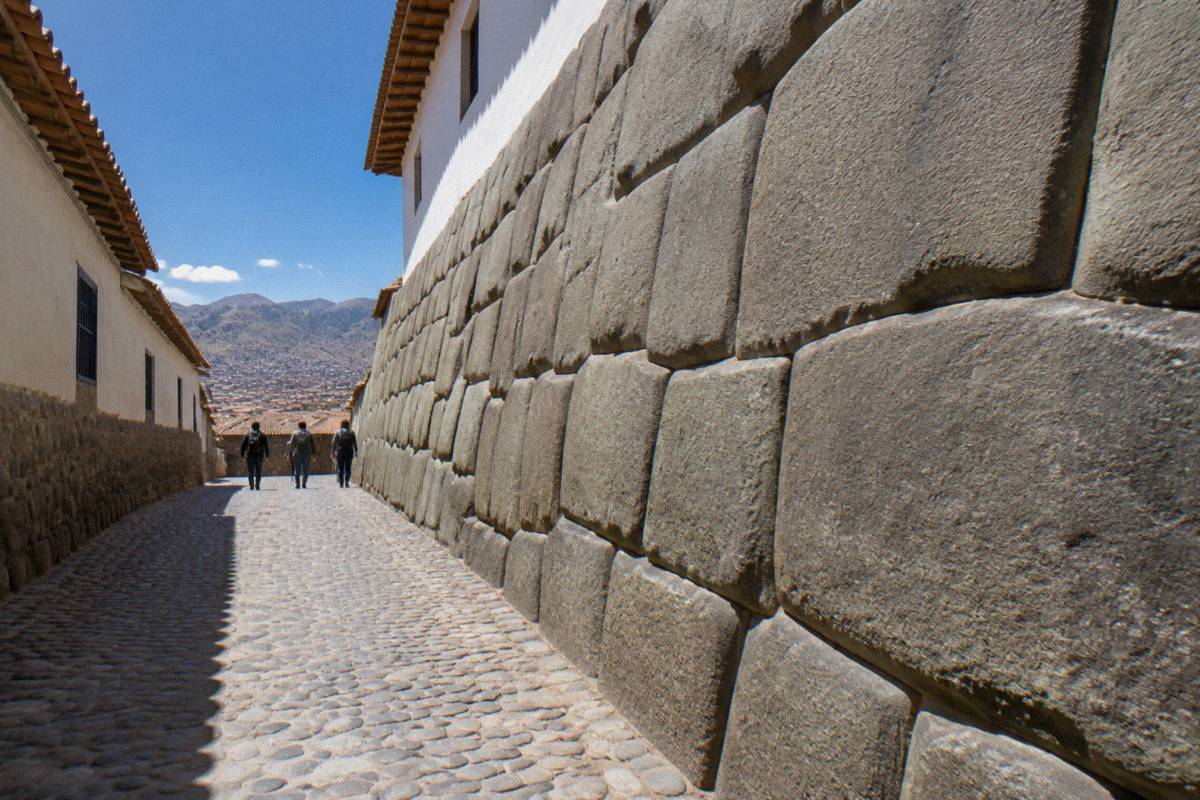
For context on how a visit is actually spent, the things Cusco is known for are public and shared: the Inca walls of the historic centre, the Plaza de Armas, and the surrounding ruins, all of them visited in the same way by any traveller.
Is Same-Sex Activity Legal In Peru?
Yes. The UK Foreign Office states plainly that same-sex sexual activity is legal in Peru, and no advisory contradicts it. What the law does not provide is recognition: the FCDO notes that same-sex partnerships are not formally recognised, and that crimes against the LGBT+ community are not included in hate crime legislation. Legality and protection are therefore not the same thing, and the advisory wording reflects that gap.
This distinction is worth spelling out because it shapes behaviour rather than eligibility. An LGBTQ traveller loses nothing at the border, at a hotel check-in or at a ticket counter under current rules; entry to Peru is visa-free for US, UK, EU, Canadian and Australian passport holders, with the length of stay set by the border officer, typically up to 90 days, and a passport valid at least six months from entry. Two adults of the same sex booking one room is unremarkable in a tourism city that hosts well over a million visitors a year at Machu Picchu alone, 1,479,506 in 2025 by the Ministry of Culture count through the MINCETUR open dataset.
The gap appears in the legal aftermath of any incident. Because anti-LGBT+ crimes are not covered by hate crime legislation, an incident that would carry an aggravated charge elsewhere in the world would be prosecuted, if at all, as an ordinary crime. The practical reading of the advisory is not "do not go"; it is "the law is thinner here than at home, so the ordinary precautions matter more, not less."
What Does Daily Life In Cusco Look Like For LGBTQ Visitors?
In practice, LGBTQ visitors to Cusco spend their days on the same itinerary as everyone else: the Plaza de Armas at 3,335 m, the Inca sites on the Boleto Turistico, the markets and the day trips, with the FCDO's one behavioural caveat, that visible public affection between same-sex couples may attract unwanted attention in a socially conservative setting. No source documents harassment of tourists for orientation, and no source rates the city either way.
The city that surrounds this question is a UNESCO World Heritage site, inscribed in 1983, whose daily texture is tourism. Visitors share the same streets, the same ruins and the same restaurants regardless of orientation, and the advisory record contains no Cusco-specific warning addressed to LGBTQ travellers. The conservative-attitudes sentence in the FCDO text is a national observation, and it is the only sentence in any of these advisories that speaks to the social climate at all.
Practical planning is where an LGBTQ visitor's questions converge with every other visitor's questions. Altitude is the first one: the CDC Yellow Book names Cusco, at approximately 3,350 m by its figure, as a rapid-ascent destination and prefers graded ascent, with acetazolamide a prescription decision to make with a doctor. The CDC puts rates of altitude illness "approaching 50%" only in abrupt-ascent situations where staged acclimatisation is not feasible, not for all visitors, and that applies equally to everyone. The likelihood of altitude sickness in Cusco is covered in its own answer on this site.
Timing is the second. Cusco's year is southern-hemisphere and high Andean: dry season runs roughly May to September, wet season roughly November to March, and December to March carries 71.9 percent of the year's 707.8 mm of rain at the WMO/SENAMHI "Cuzco" station, a historical normal. Mean daily maximums stay between 18.8 and 20.9 C all year, but June and July nights average close to freezing and frost is common.
| Month | Mean max C | Mean min C | Rain mm |
|---|---|---|---|
| Jan | 18.9 | 6.6 | 145.3 |
| Apr | 19.7 | 4.9 | 43.2 |
| Jul | 19.1 | 0.1 | 4.0 |
| Oct | 20.9 | 5.5 | 39.4 |
A couple deciding when to come faces the same trade-off as any other travellers: clear, cold, crowded dry-season days or warmer, wetter ones. The best time to plan around has its own page, and the answer has nothing to do with orientation.
Where Do LGBTQ Visitors Find Community And Nightlife In Cusco?
No verified source publishes a map of Cusco's LGBTQ venues, a pride calendar or a community directory, so this answer stays within what is known: Cusco has an active tourism nightlife centred on bars and clubs around the historic centre and San Blas, and the general FCDO advice, do not walk alone in quiet areas or at night, applies to everyone leaving a venue late.
The nightlife question is where published guidance runs out first. Government advisories do not review venues, and the site's own nightlife guide covers dinner timing rather than clubbing. What can be said honestly is structural: Cusco's visitor economy is large, year-round and used to every kind of traveller, and a city with a tourism sector of this scale has the ordinary range of bars and clubs that such a sector supports. What cannot be said is which venues are LGBTQ-specific, because no source in the research behind this page verifies one.
The safety advice for a late night out is the FCDO's general line, not an LGBTQ-specific one: street crime is a significant problem in Cusco, do not walk alone in quiet areas or at night, and beware of fake taxi drivers, usually operating at night, in express-kidnapping scenarios. The tourist police (Policia de Turismo) run a 24-hour phone and WhatsApp line, 980 122 335, and iPeru, the official tourist information service, runs a 24/7 line at (01) 574 8000 and WhatsApp +51 944 492 314. Those contacts are worth saving before a first night out, for any traveller.
For travellers who want a guide's company rather than a venue list, a guided walking tour of the historic centre with experienced local guides is a low-key way to spend an afternoon in company, and its card appears in the tour picks on this page.
How Can LGBTQ Visitors Manage Safety And Practicalities In Cusco?
The sourced playbook is short: keep public affection discreet, per the FCDO's wording on unwanted attention; take the same anti-theft precautions as any visitor, since street crime is the documented risk; use registered transport rather than hailing unknown taxis at night; and save the tourist police and iPeru numbers. Nothing in any advisory suggests LGBTQ travellers need a different itinerary, only a slightly different calibration of the same precautions.
Discretion is the one orientation-specific adjustment the sources support. The FCDO sentence about unwanted and negative attention for public affection is behavioural, and it is advice about visibility rather than identity. Everything else on the list is universal: the US advisory's Level 2 caution, the CDC's Level 1 for Peru, the altitude protocol, the water advice to drink bottled, boiled or treated water. The places and situations to be careful with in Cusco are covered elsewhere on this site and apply to all visitors equally.
One practical note that belongs on any Cusco planning page: the city is the staging point for Machu Picchu, and the logistics of that trip, the train from Poroy or San Pedro, the timed entry, the three circuits and ten routes in place since 1 June 2024, are orientation-neutral. A couple trekking the Inca Trail faces the same permit system as everyone: 500 people a day including porters and guides, sold only through licensed agencies, closed every February. The Inca Trail has its own guide on this site.
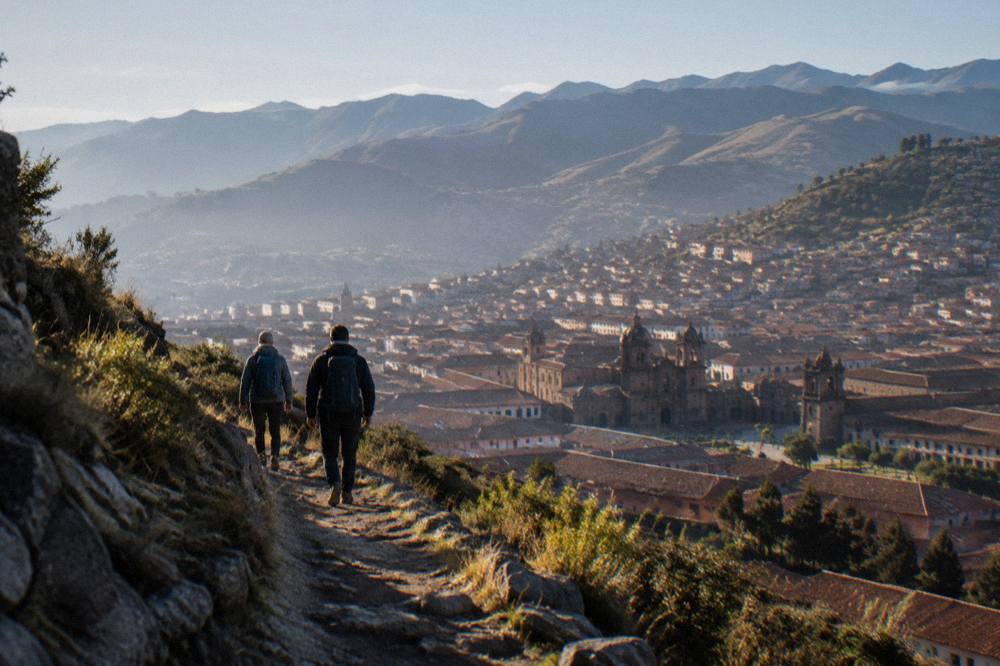
For travellers who prefer the outdoors to the evening economy, Cusco's surroundings are the main draw, and outdoor activities are the least orientation-sensitive way to spend time. A horseback ride out to the Temple of the Moon and Chacan Mountain is one such option; Check availability shows the operator's live listing.
Common Questions About LGBTQ Travel To Cusco
Is Cusco LGBTQ friendly?
Same-sex activity is legal in Peru and Cusco is a workable destination, but the UK Foreign Office describes social attitudes as generally conservative, notes the absence of hate crime legislation covering anti-LGBT+ crimes, and warns that public affection between same-sex couples may receive unwanted and negative attention. The US advisory places Cusco outside its Do Not Travel areas. No ranking or rating of the city exists in any official source.
Is same-sex marriage recognised in Cusco?
No. The UK Foreign Office states that same-sex partnerships are not formally recognised in Peru. A civil partnership or marriage from another country carries no local legal standing, which matters mostly for paperwork situations rather than for tourism.
Can same-sex couples share a hotel room in Cusco?
No advisory, official page or verified source documents any restriction on same-sex couples sharing accommodation in Cusco. The city's tourism sector serves a large international visitor volume, and entry rules for Peru apply identically to all travellers.
Is Cusco safe for LGBTQ travellers at night?
The documented risk in Cusco at night is ordinary street crime, not orientation-targeted crime. The FCDO advises everyone, not only LGBTQ visitors, not to walk alone in quiet areas or at night, and warns about express kidnappings by fake taxi drivers, usually at night. The tourist police operate a 24-hour line at 980 122 335.
Are there pride events or LGBTQ venues in Cusco?
No verified source in this site's research confirms a pride calendar or specific LGBTQ venues in Cusco, so this page does not name any. What is documented is a busy general nightlife around the historic centre and San Blas, covered by the same standard night-out precautions as any large tourism city.
Do LGBTQ travellers need any different documents or vaccines for Peru?
No. Entry to Peru is visa-free for US, UK, EU, Canadian and Australian passport holders with a passport valid at least six months, and the length of stay is set by the border officer, typically up to 90 days. The yellow fever vaccine is not required for entry, and the CDC does not recommend it for travel limited to the highland tourist areas such as Cusco city and Machu Picchu. None of these rules reference orientation.
The verdict, stated as the sources state it: Cusco is legal, visitable and busy with travellers of every kind, inside a socially conservative country whose laws do not yet recognise same-sex partnerships. The precautions that matter are the ones every visitor should already be taking, plus the FCDO's one orientation-specific note about public affection. More on planning a trip around the city's altitude, seasons and neighbourhoods is collected across Things To Do In Cusco Peru, and the mistakes to avoid on a first visit apply to everyone equally.