Can I Brush My Teeth With Tap Water In Cusco?
What the CDC and other official sources actually say about tap water in Cusco, Peru, including the brushing question, altitude and hydration, and what drinks cost on the ground.
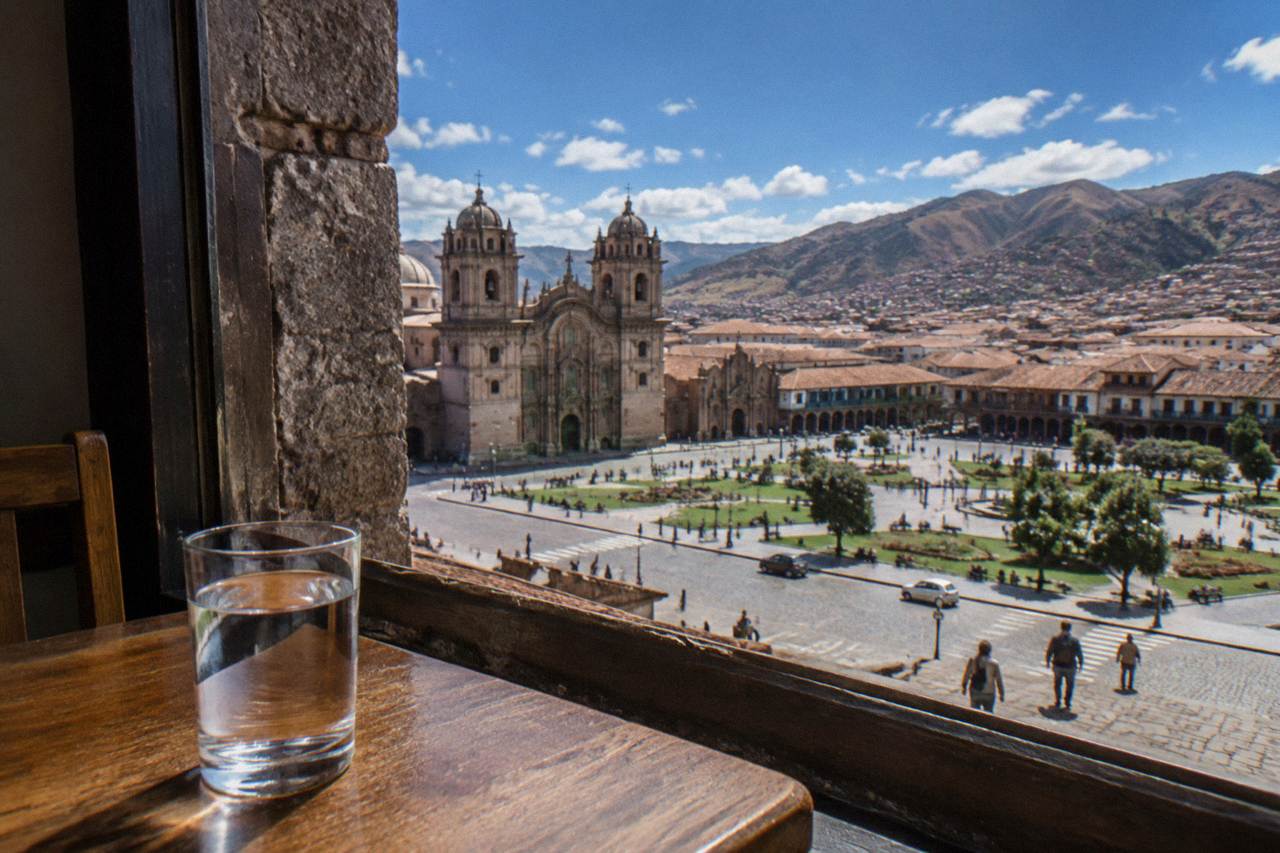
Cusco, the historic city in the Andes of southern Peru, sits at about 3,335 m on the Plaza de Armas, and one of the first practical questions travellers ask about it is the water. The question matters because the answer shapes daily routines, from ordering drinks to the small act of brushing teeth. The honest starting point is that the CDC's travel guidance for Peru advises avoiding contaminated water and drinking bottled, boiled or treated water, and it does not publish a tap-by-tap verdict for individual cities. This page sets out what official sources say, what they leave unsaid, and how the city's altitude and seasons frame the question.
Can I Brush My Teeth With Tap Water In Cusco?
The CDC's travel guidance for Peru advises travellers to avoid contaminated water and to drink bottled, boiled or treated water, and it publishes no city-specific verdict on Cusco's tap water, so no official source gives a flat yes or no for brushing teeth there. The cautious reading of the CDC's wording is that water from an unverified tap is best not swallowed, and brushing is a matter of personal comfort with that guidance.
That is the full extent of what an official source supports. The CDC's Peru destination page discusses safe food and water habits in the context of typhoid prevention, and its environmental health chapter repeats the bottled, boiled or treated advice for travellers generally. Neither page names Cusco's municipal supply, grades its quality, or distinguishes between drinking, cooking and brushing.
Plenty of travel blogs print a confident verdict either way. Those verdicts are not sourced to an official page, and this site does not repeat them. What can be said is that the question is common enough that Peru's official tourism promotion body and the CDC both address water safety at the country level, which is where the sourced guidance stops.
For travellers who want a single rule while packing, the CDC's own phrasing is the rule: bottled, boiled or treated. Anyone wanting to read the wider health picture for the Andes can start with the companion page on how likely altitude sickness is in Cusco, because hydration and altitude are the two questions that arrive together.
Is Cusco Tap Water Safe To Drink?
No official source reviewed for this page gives a safety verdict on Cusco's tap water. The CDC's Peru guidance says to avoid contaminated water and to drink bottled, boiled or treated water, and it applies that advice to the whole country rather than to named cities. Any confident claim that Cusco's taps are safe, or definitively unsafe, goes beyond what the official guidance states.
This is worth spelling out because the internet is full of absolute answers. A search for the question returns pages saying the water is fine, pages saying never to touch it, and pages splitting the difference by neighbourhood. None of the ones reviewed for this page cited a municipal water authority or a laboratory result.
The Peruvian government's own tourism information covers emergency contacts and practical travel data, not water quality grades. The CDC's destination notice for Peru is set at Level 1, Practice Usual Precautions, and its water advice is the general one quoted above. The gap between "no official verdict" and "definitely unsafe" is real, and a research-oriented guide should name it rather than paper over it.
What travellers can do with the gap is apply the CDC's stated precaution. Bottled, boiled or treated water is the documented standard, and it is the standard that the rest of this page assumes when it talks about drinks, meals and daily routine.
What Does The CDC Actually Say About Water In Peru?
The CDC's Peru destination page advises avoiding contaminated water and drinking bottled, boiled or treated water, and it frames safe food and water habits as part of typhoid prevention. It does not carry a sentence declaring Peruvian tap water unsafe, and it does not name Cusco. The advice is general, national and precautionary rather than a quality judgement on any city's supply.
That last point deserves emphasis, because a sentence sometimes attributed to the CDC, a flat declaration about tap water in Peru, does not appear on the Peru destination page at all. What the page does say fits within its disease-prevention sections: travellers should practise safe food and water habits, and the bottled, boiled or treated standard applies to drinking water.
Three practical readings follow from the actual wording. First, the advice is about drinking water, and it does not extend to washing, showering or, explicitly, brushing. Second, it is national, so it does not distinguish Cusco from Lima or from jungle regions below 2,300 m, where different health considerations such as yellow fever recommendations apply. Third, it is precautionary, written to reduce disease risk across every kind of traveller, not to grade any particular water system.
Travellers who want to dig into the wider set of precautions for the city will find the companion page on what to avoid in Cusco covers the other common-sense questions, from street safety to the practical side of eating well in the historic centre.
How Does Cusco's Altitude Change What You Drink?
The CDC Yellow Book names Cusco, at approximately 3,350 m, as a rapid-ascent destination and advises graded ascent where possible; it also advises avoiding alcohol for the first 48 hours at high altitude. It says nothing about a litre-per-day hydration target, because no official source reviewed publishes one. Altitude changes the context around water, but it does not change the bottled, boiled or treated rule.
The altitude chapter of the CDC Yellow Book is the strongest official source on Cusco as a destination. It lists the city by name and elevation, notes that travellers arriving by air ascend rapidly, and describes the option of descending to sleep at lower elevations for a night or two before climbing higher. It discusses acetazolamide as a prescription decision to be made with a doctor, which is a medical question rather than a water question. More of these guides are collected on Things To Do In Cusco Peru.
The connection to water is indirect but real. The CDC's altitude guidance is about acclimatisation, and the pages on this site that cover that ground in depth, including how long it takes to acclimatise in Cusco and altitude pills for Cusco, stick to the same sourced lines. No official page reviewed for this site states a specific daily water intake for altitude, and inventing one would be exactly the kind of unsourced practical claim this site refuses to print.
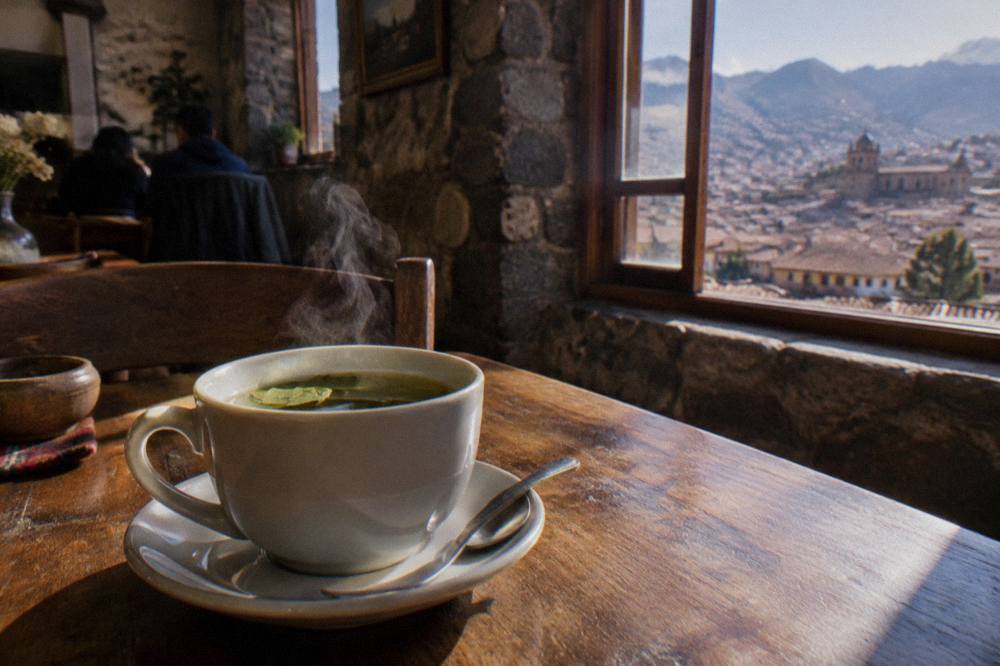
One drink does carry a sourced price. A cup of coca tea is reported at about S/ 2 to 5, and it is served constantly across Cusco's cafes, hotels and markets. The tea is made with boiled water as a matter of course, which is why it fits the CDC's standard without any extra effort from the drinker.
What Do Drinks And Small Meals Cost In Cusco?
A cup of coca tea is reported at about S/ 2 to 5 in Cusco, and a market menu del dia is reported at about S/ 8 to 15. Those two ranges come from on-the-ground price reporting gathered for this site, and they are stated as ranges, not as official tariffs. Bottled water carries no sourced price in the research behind this page, so this site does not print one.
The table below gathers the everyday on-the-ground prices that the research for this site verified as reported ranges. Every figure is a range with "about" wording, because these are street prices, not posted tariffs.
| Item | Reported price range | Notes |
|---|---|---|
| Cup of coca tea | S/ 2 to 5 | Served in cafes, hotels and markets across the city |
| Menu del dia | S/ 8 to 15 | Set lunch, widely reported at markets and local restaurants |
| Tourist SIM | S/ 5 to 15, plus data at S/ 20 to 40 | Starter cost plus a data pack, reported range |
| Airport taxi to the centre | S/ 15 to 25 | Reported range for the ride from the airport to the historic centre |
The pattern worth noticing is that the drinks and meals that come to the table hot, tea above all, sidestep the tap-water question entirely. Boiling is one of the three methods the CDC names. A traveller ordering tea, coffee or a hot soup in Cusco is drinking water that has been boiled in front of them, whatever the source.
A guided market cooking morning fits that boiled-water logic. Book a cooking class with market tour here.
Cold drinks are where the question returns. Ice, juices and unsealed cold drinks all involve water in some form, and the official guidance offers no city-specific reassurance about them. The CDC's general advice is the only sourced line, and travellers who want to apply it strictly order sealed bottles and skip the ice.
For a fuller picture of eating well in the city, the companion pages on this site cover the market scene and the practical side of choosing where to eat, and the question of how many days to spend in Cusco, which shapes how much of this routine matters, is covered at how many days to spend in Cusco.
When Does Rain Shape The Water Picture In Cusco?
Cusco's climate is strongly seasonal: December to March delivers 71.9 percent of the year's 707.8 mm of rain at the WMO and SENAMHI Cuzco station, while May to August together bring just 22.8 mm. The wet season roughly runs November to March and the dry season roughly May to September, and the table below shows the full monthly picture from the historical normal.
The station record, supplied by SENAMHI to the World Weather Information Service, is a historical normal rather than a recent averaging period, and it is the most complete sourced climate set for the city. The rainfall matters to the water question because a highland city's supply, its streets and its daily rhythms all follow the rain.
| Month | Mean maximum C | Mean minimum C | Rain mm |
|---|---|---|---|
| Jan | 18.9 | 6.6 | 145.3 |
| Feb | 18.8 | 6.5 | 133.7 |
| Mar | 19.1 | 6.2 | 107.0 |
| Apr | 19.7 | 4.9 | 43.2 |
| May | 19.8 | 2.5 | 8.7 |
| Jun | 19.5 | 0.3 | 1.5 |
| Jul | 19.1 | 0.1 | 4.0 |
| Aug | 19.8 | 1.6 | 8.6 |
| Sep | 19.8 | 3.9 | 21.8 |
| Oct | 20.9 | 5.5 | 39.4 |
| Nov | 20.7 | 6.1 | 71.9 |
| Dec | 19.4 | 6.4 | 122.7 |
Two readings follow. In the wet months, afternoon rain is a near-daily event, and the dry months are dramatically drier, with June averaging just 1.5 mm. Temperatures, meanwhile, barely move: mean daily maximums stay between 18.8 and 20.9 C all year, and June to August is winter, with frost common in June and July and cold nights around freezing.
None of this changes the CDC's water advice, but it does change the texture of a visit. A traveller in February walks through daily downpours; a traveller in July walks through dust and clear skies. The companion page on this site covering Cusco weather by month expands the full seasonal picture for anyone timing a trip.
Common Questions About Tap Water In Cusco
Can I brush my teeth with tap water in Cusco?
The CDC's guidance for Peru advises avoiding contaminated water and drinking bottled, boiled or treated water, and it publishes no verdict on Cusco's taps specifically. The cautious reading is to keep unverified tap water out of your mouth, and many travellers brush with bottled water as a simple precaution.
Is Cusco tap water safe to drink?
No official source reviewed for this site gives a safety verdict on Cusco's tap water. The CDC's advice is national: drink bottled, boiled or treated water in Peru. Confident claims in either direction about Cusco's taps go beyond what the official guidance states.
Should I drink bottled water in Cusco?
Bottled water is one of the three options the CDC names for Peru, alongside boiled and treated water. Sealed bottles are the simplest way to follow the guidance, and hot drinks such as coca tea, made with boiled water, fit it too. This site does not print a bottled water price, because no sourced figure exists in its research.
Does Cusco's altitude change how much water I need?
The CDC Yellow Book names Cusco, at approximately 3,350 m, as a rapid-ascent destination and advises avoiding alcohol for the first 48 hours at high altitude. It publishes no daily water intake figure, and no official source reviewed for this site states one, so this site does not invent a litre target.
Is the water advice different in the Sacred Valley or Machu Picchu?
The CDC's water guidance applies to Peru as a whole and does not distinguish between Cusco, the Sacred Valley and Machu Picchu. The bottled, boiled or treated standard is the same everywhere in the country covered by the notice.
The short version of this whole page is that the sourced guidance is simple and national: bottled, boiled or treated. Everything beyond that, including the brushing question, is a personal reading of one precautionary sentence, and the official sources leave the rest of the detail to the traveller.