What Is The Oxygen Level At Rainbow Mountain?
No official oxygen-level figure exists for Rainbow Mountain near Cusco, Peru. This page explains what the about 5,000 m altitude means, how it compares with Cusco and Palccoyo, and what the CDC advises.
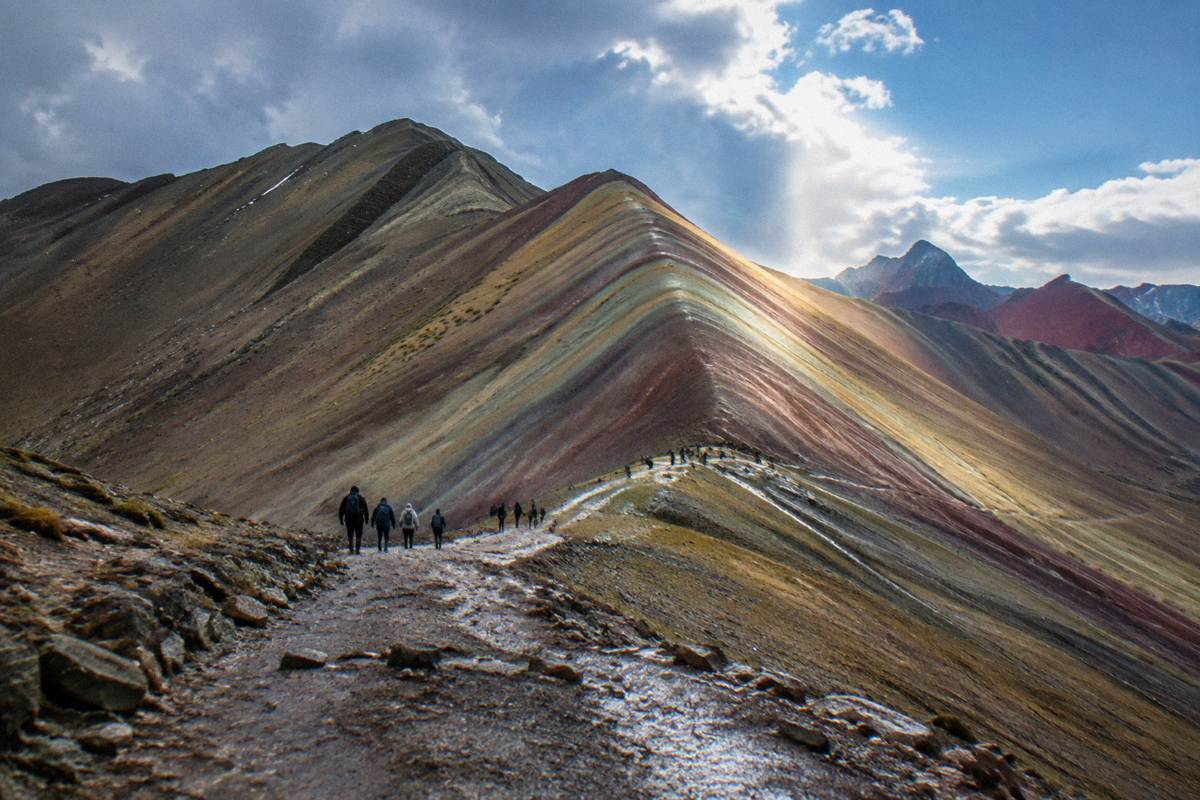
Rainbow Mountain, or Vinicunca, is a striped highland summit in the Cusco region of southern Peru, and the question people ask before booking is a physical one: how much oxygen is actually up there. The short version is that no official body publishes an oxygen-level figure for the mountain. What is documented is the elevation, about 5,000 m per Peru's official tourism portal, and the fact that this is the highest point most Cusco visitors reach on any single day trip, roughly 1,700 m above the Plaza de Armas at 3,335 m. The air is thinner there, bodies respond differently, and the CDC Yellow Book treats this kind of rapid ascent as a situation worth planning for rather than shrugging off.
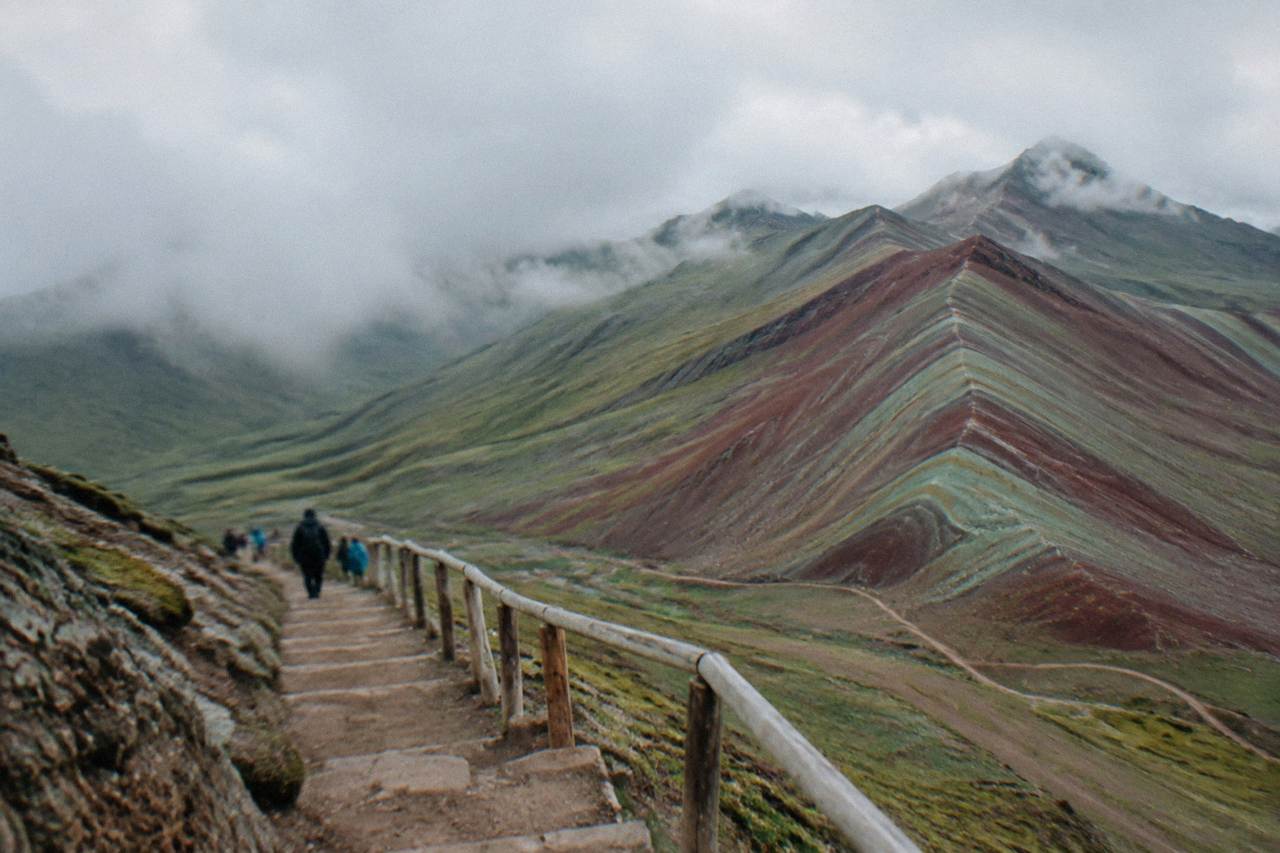
It covers the honest answer to the oxygen question, how Rainbow Mountain compares with Cusco, Palccoyo and Humantay Lake, what the CDC advises, and what a day on the mountain actually involves. For the wider picture of altitude and the city, see how likely altitude sickness is in Cusco.
What Is The Oxygen Level At Rainbow Mountain?
No official source publishes an oxygen-level figure for Rainbow Mountain. Peru's tourism portal places the mountain at about 5,000 m above sea level, and at that elevation the air holds meaningfully less oxygen than at sea level or in Cusco, but no verified percentage, saturation or partial-pressure figure exists for the summit. Any specific number circulating online is an estimate, not a measurement anyone can trace to an authority.
That silence is the honest answer, and it matters because plenty of pages invent the missing figure. The physical reality does not need a number to be clear. Atmospheric pressure falls with altitude, and the proportion of oxygen in the air stays the same while the number of oxygen molecules in each breath falls with the pressure. At about 5,000 m, a visitor is breathing air considerably thinner than in Cusco at 3,335 m, which is itself named by the CDC Yellow Book as a high-altitude, rapid-ascent destination.
What the sources do hold is the elevation ladder. The Plaza de Armas sits at 3,335 m per PromPeru. Sacsayhuaman, on the hill above the city, is 3,701 m. The Palccoyo viewpoint, the lower alternative to Vinicunca, is 4,900 m per Peru's tourism portal. Rainbow Mountain is about 5,000 m, with peru.travel describing the highest point at approximately 5,200 m. Humantay Lake, another popular day trip, sits at about 4,200 m. Every one of these is a day trip from a city that is already high, which is exactly the abrupt-ascent pattern the CDC writes about.
| Place | Elevation | Source note |
|---|---|---|
| Cusco, Plaza de Armas | 3,335 m | PromPeru |
| Sacsayhuaman | 3,701 m | Wikipedia, secondary |
| Humantay Lake | about 4,200 m | Operator sites, secondary |
| Palccoyo viewpoint | 4,900 m | PromPeru |
| Rainbow Mountain (Vinicunca) | about 5,000 m | PromPeru and Wikipedia, highest point approx 5,200 m |
| Machu Picchu citadel | 2,430 m | Official Machu Picchu site |
The comparison with Machu Picchu surprises people. The citadel is lower than Cusco by roughly 900 m, so a visitor who has spent days in the city is descending, not climbing, when they reach Machu Picchu. Rainbow Mountain is the opposite case, the one excursion from Cusco that goes sharply up. The comparison between Humantay and Rainbow Mountain covers which day trip sits harder on the lungs.
Is The Air At Rainbow Mountain Thinner Than In Cusco?
Yes, and by a wide margin. Cusco sits at 3,335 m and Rainbow Mountain at about 5,000 m, so the summit is roughly 1,700 m higher than the city. Air pressure drops with elevation, which means each breath at the top delivers less oxygen than the same breath in the Plaza de Armas. The difference in oxygen delivery is real, and its direction and scale are not in dispute.
The practical consequence is that the drive out of Cusco is a climb of about 1,700 m, usually done in a few hours on a tour bus, followed by a walk to the viewpoint. The CDC Yellow Book advises against going from low altitude to a sleeping altitude of 2,750 m or more in a single day, and recommends increasing sleeping altitude by no more than 500 m per night once above 3,000 m. A day trip does not sleep on the mountain, so those rules do not bind, but they describe the gradient the body is being asked to absorb.
The Yellow Book also notes that in some rapid-ascent cases, travellers can descend to lower elevations to sleep for a night or two before continuing upward, and names Cusco and La Paz as places where this applies. For Rainbow Mountain the usual pattern is the reverse: visitors sleep in Cusco, ride up, walk the final stretch, and come back down the same day. That up-and-back profile is why the mountain feels harder than its walking time suggests, and why the question of how long to acclimatise in Cusco comes up so often in planning.
Symptoms are the body's own measurement. The CDC advises a low threshold for taking altitude seriously after rapid ascent, and its practical line for the first 48 hours at altitude includes avoiding alcohol. Nobody publishes a number for how likely altitude illness is at Vinicunca specifically, and no sourced figure exists for how much coca tea helps, so this page states neither. What is documented is that bodies differ, that symptoms warrant attention, and that acetazolamide is a prescription decision to make with a doctor, with the Yellow Book listing 125 mg twice daily as its prophylaxis dose and 250 mg twice daily for people over 100 kg.
Does Palccoyo Sit Lower Than Rainbow Mountain?
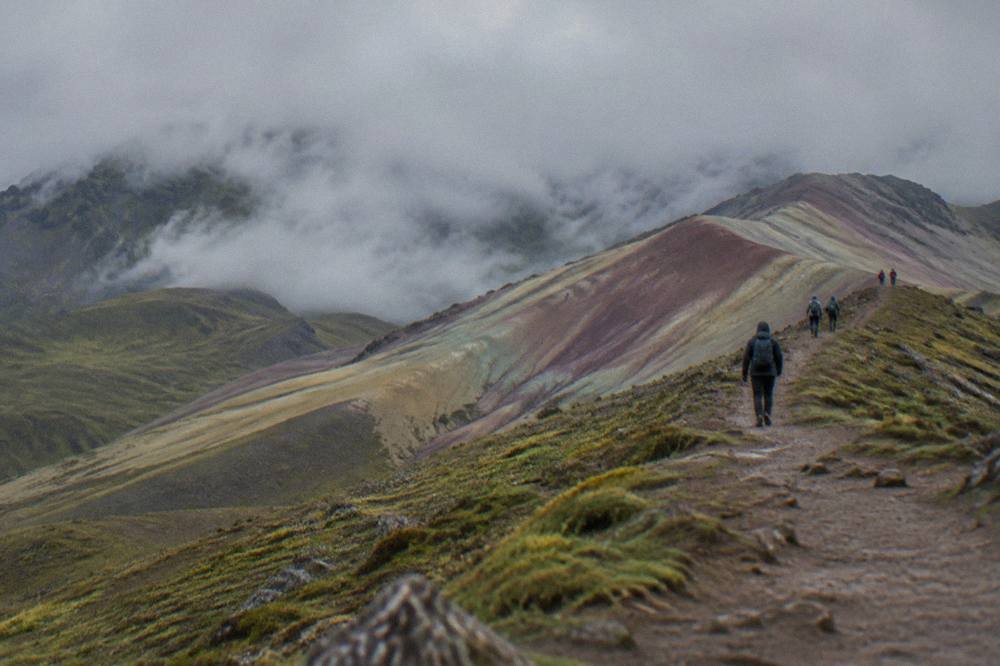
Yes. The Palccoyo viewpoint is documented at 4,900 m per Peru's tourism portal, while Rainbow Mountain is about 5,000 m, with the highest point near 5,200 m. The gap in elevation understates the practical difference, because Palccoyo's viewpoint sits close to the road while Vinicunca requires a longer walk from the trailhead, so the two days feel quite different even though the summit figures look close on paper.
Palccoyo is the standard answer for visitors who want the coloured striations without the hardest climb, and the full comparison of Rainbow Mountain and Palccoyo works through the trade-offs. Both are day trips from Cusco, both sit above Humantay Lake's about 4,200 m, and both are higher than anything in the Sacred Valley. Pisac town, for instance, is 2,972 m, Ollantaytambo 2,792 m and Urubamba 2,870 m, all well below the city itself.
Fees differ too. The community fee at Rainbow Mountain is S/ 25 to S/ 30 for foreigners depending on the route, Cusipata at S/ 25 and Pitumarca at S/ 30, with peru.travel itself listing S/ 30 for foreign visitors, paid in cash. Palccoyo's fee is reported at about S/ 20 by operators in 2026, with older official pages quoting lower. Neither site is free, and both are community-run, which is why access is set locally rather than by a national body. The full index of guides sits on Things To Do In Cusco Peru.
| Site | Elevation | Foreign fee (2026, cash) |
|---|---|---|
| Rainbow Mountain (Vinicunca) | about 5,000 m | S/ 25 to S/ 30, route-dependent |
| Palccoyo viewpoint | 4,900 m | about S/ 20, operator-reported |
| Humantay Lake | about 4,200 m | S/ 10 to S/ 20, sources disagree |
| Maras salt mines | Maras at 3,300 m | S/ 15 to S/ 20, operator-reported |
The fee column is worth reading twice before the elevation column. Community fees are paid at the trailhead in soles, and the amounts above are reported ranges from operators and official pages, not tariffs set in stone. Budget cash for them.
How Should You Prepare For The Altitude At Rainbow Mountain?
The CDC Yellow Book's advice is the documented line: prefer a graded ascent, treat Cusco as the rapid-ascent city it is, and discuss acetazolamide with a doctor before travelling rather than on the trail. The same source advises avoiding alcohol for the first 48 hours at high altitude and taking symptoms seriously after abrupt ascent. No official body publishes a number for how many days acclimatisation takes or how likely illness is at Vinicunca, so planning rests on the ascent pattern itself.
The pattern that fits Rainbow Mountain is simple to state. Arrive in Cusco at 3,335 m, give the city days rather than hours, and only then add a trip that climbs to about 5,000 m. The CDC's own framing treats the flight into Cusco as a rapid ascent by air, the situation where it says rates of altitude illness can approach half and where it advises a low threshold for prophylaxis. That wording applies to rapid-ascent situations generally, not to every visitor, and it is the closest thing to a risk figure any source offers, so it is the only one repeated here.
Practical decisions follow from it. Walking slowly on the final stretch to the viewpoint, drinking water, and skipping alcohol the night before are all consistent with the CDC's general altitude guidance. Horses are offered along the trailhead section by local operators, a cash decision made on the spot. The community fee is cash too. And the weather matters as much as the thin air: the mountain is a two-season place, with the Cusco wet season running roughly November to March and the dry season roughly May to September, so the question of when not to visit Cusco is answered mostly by rainfall, which the month-by-month Cusco weather guide breaks down.
Can You Visit Rainbow Mountain Without A Tour?
Yes, it is possible, and the mechanics are documented: the community fee is paid in cash at the trailhead, and public transport from Cusco reaches the trailhead towns. What tours add is early timing, meals and a vehicle that handles the long drive back after a day at about 5,000 m, which is the part independent visitors most often underestimate. Neither approach changes the oxygen question, since the altitude is the same either way.
The independent route is covered in detail on visiting Rainbow Mountain without a tour, including the fee logistics. The trade-off is control against convenience. A tour bus leaves Cusco in darkness, arrives before the busiest hours and carries food, while an independent trip means arranging colectivos, paying the community fee and planning the return before afternoon weather turns.
For visitors who decide the mountain is not worth the altitude at all, there are honest alternatives. What to do instead of Rainbow Mountain lists lower options, and whether Rainbow Mountain is real answers the colour question, since the stripes are mineral, not decoration. The mountain is open, and no closure is documented; access is set by the local communities and operators, and individual days can be lost to weather, as the page on why Rainbow Mountain closes explains without inventing a shutdown.
Common Questions About Rainbow Mountain Oxygen Levels
What is the oxygen level at Rainbow Mountain?
No official source publishes an oxygen-level figure for Rainbow Mountain. The mountain sits at about 5,000 m above sea level per Peru's tourism portal, where the air is thinner than in Cusco at 3,335 m, but no verified percentage or saturation figure exists for the summit. Any specific number online is an untraceable estimate.
Is Rainbow Mountain higher than Cusco?
Yes, by roughly 1,700 m. Cusco's Plaza de Armas is at 3,335 m and Rainbow Mountain at about 5,000 m, with the highest point near 5,200 m per peru.travel. The trip from the city is a fast climb, which is why the CDC's rapid-ascent advice is the relevant planning frame.
Is the air thinner at Rainbow Mountain than at Machu Picchu?
Yes, by a wide margin. The Machu Picchu citadel sits at 2,430 m, lower than Cusco by roughly 900 m, while Rainbow Mountain is about 5,000 m. Machu Picchu is the descent in this comparison and Rainbow Mountain the climb.
Does Palccoyo have more oxygen than Rainbow Mountain?
The Palccoyo viewpoint is documented at 4,900 m, slightly below Rainbow Mountain's about 5,000 m. No oxygen figure exists for either. Palccoyo's practical advantage is that its viewpoint sits close to the road, so the walking effort is smaller even though the elevations read as close on paper.
Should you take altitude pills for Rainbow Mountain?
The CDC Yellow Book treats acetazolamide as a prescription decision with a doctor, listing 125 mg twice daily for prophylaxis and 250 mg twice daily for people over 100 kg. It advises a low threshold for prophylaxis in rapid-ascent situations. Nobody can source a probability of illness at the mountain itself, so the decision belongs with a clinician before travel.
How many days should you acclimatise in Cusco before Rainbow Mountain?
No official body publishes a day count. The CDC prefers graded ascent and names Cusco as a rapid-ascent destination; its rule of thumb is to increase sleeping altitude by no more than 500 m per night above 3,000 m. Days in Cusco before the trip help, but the honest answer is that bodies differ and no sourced number exists.
The oxygen question has a cleaner answer than most pages give it: the elevation is documented, the advice is documented, and the missing number is simply missing. Plan the ascent, carry cash for the community fee, and treat the mountain as the highest thing the Cusco itinerary will ask of you.