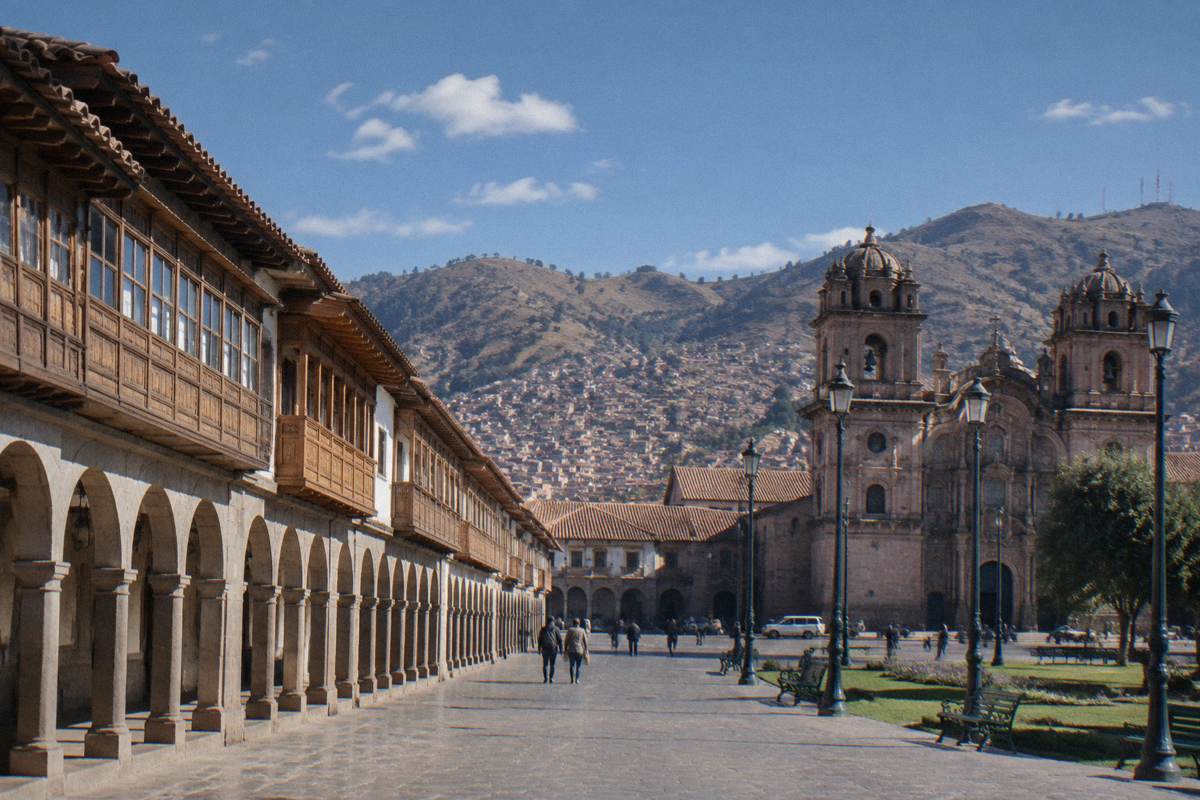
Can You Fly Directly To Cusco From The US?
No nonstop flights link the United States and Cusco; almost every itinerary connects in Lima. This answer page explains the connection, the airport, the transfer to the historic centre and the best arrival season.
Cusco, the historic city in the Andes of southern Peru, sits at 3,335 m above sea level at its Plaza de Armas, and it is reached by air through one airport: Alejandro Velasco Astete International. The question of whether a traveller can board a plane in the United States and step off in Cusco without a stop somewhere has a short answer, and it is no. The 2026 schedules checked for this page listed no nonstop service between any US airport and Cusco; international visitors usually connect through Lima, Peru's capital, where the domestic leg to Cusco takes about 1 h 15. This page sets out what that connection involves, which airport receives the flight, how the short hop from the terminal to the historic centre works, and when in the Andean year the arrival is smoothest.
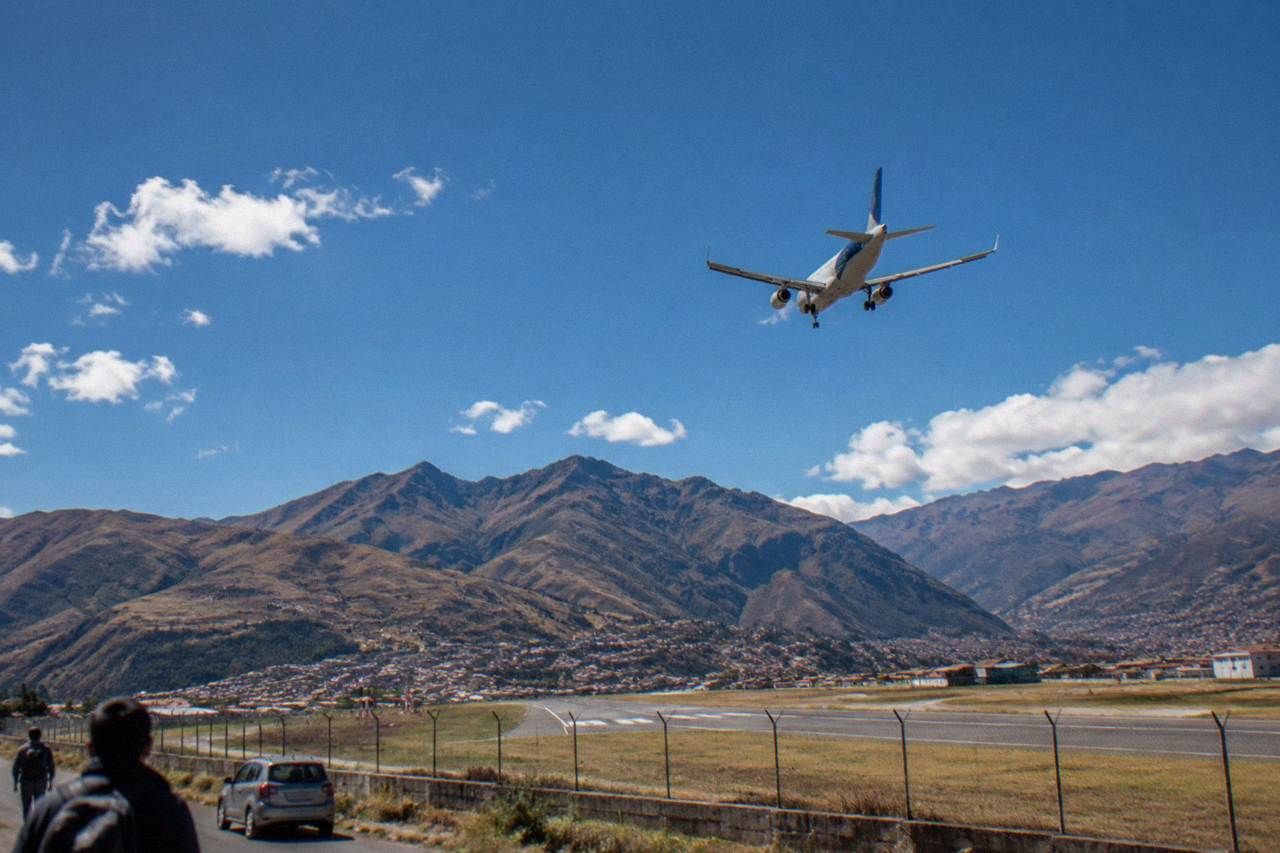
Can You Fly Directly To Cusco From The US?
No. No nonstop flight between the United States and Cusco appears in the 2026 schedules checked for this page, and every US itinerary connects through another airport, almost always Lima. The final domestic leg from Lima to Cusco takes about 1 h 15, landing at Alejandro Velasco Astete International Airport, about 6 km from the Plaza de Armas.
The absence of a direct link is a matter of geography and runway economics rather than demand. Cusco's airport sits in a high Andean basin, and the city's altitude of about 3,335 m shapes what aircraft and routes can serve it. Peru's own tourism authority, PromPeru, describes the Lima to Cusco flight as about 1 h 15 and lists the bus alternative at about 21 to 26 hours, which is why nearly everyone flies. The same PromPeru page gives the airport's distance from the historic centre as about 6 km, or 15 to 20 minutes by taxi.
That connection through Lima is routine rather than awkward. Lima's Jorge Chavez airport is the main international gateway for Peru, and the Lima to Cusco corridor is one of the country's busiest domestic routes. A traveller who books a single ticket from a US city to Cusco is usually booked onto a connecting flight under the same reservation, with the airline responsible for the transfer if the inbound leg runs late. The one planning note worth stating plainly: the last leg of the day fills first, and a missed connection in Lima can mean an overnight there, so morning connections carry less risk than evening ones. That is general travel logic rather than a sourced statistic, and it is stated here as such.
One more rumour deserves a straight answer before the sections below. Aviation news in 2026 carried reports of airlines expressing interest in new international links to Cusco, including a reported plan by Avianca to operate flights between Cusco and La Paz, in Bolivia. An announcement is not a timetable, and no page checked for this article confirms a start date, so nothing here should be read as a promise of new service. For now, the honest summary stands: from the United States, Cusco is a one-stop destination.
Which Airport Serves Cusco, And What About The New Chinchero Airport?
Every flight into Cusco currently uses Alejandro Velasco Astete International Airport, about 6 km from the Plaza de Armas. The replacement airport under construction at Chinchero is not operating: reported progress was about 38.9 percent in mid-2026, with completion targeted for 2028 and flights expected in 2028 to 2029.
The Chinchero project is the most persistent source of confusion in Cusco arrival planning, because travel articles have been announcing it for years. The verified position, drawn from Peruvian transport ministry and news sources checked in September 2026, is that the new airport is a construction site: about 38.9 percent built as of mid-2026, with a control tower contract awarded and the terminal contract assigned, completion targeted in 2028 and flights expected to begin between 2028 and 2029. Until then, nothing changes for a traveller booking flights today: the airport on every ticket is Alejandro Velasco Astete, the city airport close to the historic centre.
That closeness is the airport's quiet advantage. At about 6 km from the Plaza de Armas, the terminal is one of the more convenient city airports in South America, and the ride into the centre is reported at about 15 to 20 minutes by taxi, with an airport taxi to the centre reported at about S/ 15 to 25, roughly US$4 to US$7 at about S/ 3.4 to the dollar. The trade-off of a basin airport is weather sensitivity: afternoon conditions in the wet season can delay flights, which is one more reason the morning connection from Lima is the safer booking. The table below gathers the arrival facts that are actually verified.
| Arrival fact | Figure | Source basis |
|---|---|---|
| Airport serving Cusco | Alejandro Velasco Astete International | PromPeru |
| Distance to Plaza de Armas | About 6 km | PromPeru |
| Taxi time to the centre | About 15 to 20 minutes | PromPeru |
| Airport taxi to the centre | About S/ 15 to 25 (about US$4 to 7) | Reported range, secondary sources |
| Lima to Cusco flight | About 1 h 15 | PromPeru |
| Lima to Cusco by bus | About 21 to 26 hours | PromPeru |
| Chinchero airport status | Not operating; about 38.9 percent built mid-2026, completion targeted 2028 | Transport ministry and news reports |
For a traveller assembling the whole journey, the practical reading of this table is simple. The flight side ends at a small airport minutes from the hotels, and the ground side is short. What follows the landing matters more than the landing itself, because Cusco is a rapid-ascent destination: the CDC Yellow Book names Cusco, at approximately 3,350 m, among the high-altitude destinations where travellers arrive by air in a single day. The first day in the city is best treated as an acclimatisation day, a subject this site covers in detail on how likely altitude sickness is and in the guide to how long to acclimatise in Cusco.
How Do You Get From Cusco Airport To The Historic Centre?
The ride from Alejandro Velasco Astete to a central Cusco hotel takes about 15 to 20 minutes by taxi, with an airport taxi reported at about S/ 15 to 25 to the centre. Options at the terminal are official airport taxis, hotel-arranged transfers and pre-booked private transfers, and the fare is shown or agreed before the ride.
Three ground options exist, and each suits a different traveller. Official airport taxis operate from the terminal; the fare is agreed at the rank before the ride, and the reported range to the centre is about S/ 15 to 25. Hotels in the historic centre can arrange a pickup, which is worth requesting when a late Lima connection lands after dark. The third option is a pre-booked private transfer, and this is the one this site features as its related product for this page: a private transfer from the airport to centrally located hotels in Cusco, with a driver meeting the traveller on arrival. The transfer's price and rating render on its own card rather than being typed here, and the card carries the live figures.
A pre-booked transfer earns its place on an arrival like this one for reasons the altitude explains. Cusco's terminal is small, the exit is compact, and the historic centre's streets are steep and narrow; a traveller landing at 3,335 m after a red-eye from the US via Lima is not at their best for negotiating a fare in a second language. A driver with a name sign removes the first half hour of friction, and the ride itself is short enough that the transfer is over before the altitude makes itself felt. Travellers who prefer to arrange everything in advance can read the wider planning picture in the guide to how many days to spend in Cusco, which places the arrival day inside a realistic itinerary.
What is settled is the trio above: airport taxis, hotel transfers and pre-booked private transfers, with the fare shown or agreed before the ride in every case. Whichever a traveller chooses, the practical instruction is the same: have the hotel address written down, in Spanish if possible, because the centre's lanes are easier for a driver to find by landmark than by street number.
When Is The Best Time Of Year To Fly Into Cusco?
The dry season, roughly May to September, is the smoothest window for flying into Cusco, with June and July averaging just 1.5 and 4.0 mm of rain at the WMO station. The wet season, roughly November to March, concentrates 71.9 percent of the year's 707.8 mm of rain, and December to March is when afternoon flight delays are most likely.
The climate behind that answer comes from the WMO World Weather Information Service record for the "Cuzco" station, supplied by SENAMHI, Peru's national weather service, and treated as a historical normal. The pattern is strongly bimodal: December through March delivers 508.7 mm of the annual 707.8 mm, while May through August brings just 22.8 mm between them. Temperatures, by contrast, barely move: mean daily maximums stay between 18.8 and 20.9 C all year, and the real seasonal difference is the nights, with June and July mean minimums of 0.3 and 0.1 C. Frost is common in those two months, which is a packing question rather than a flying question.
| Month | Mean max C | Mean min C | Rain mm |
|---|---|---|---|
| Jan | 18.9 | 6.6 | 145.3 |
| Feb | 18.8 | 6.5 | 133.7 |
| Mar | 19.1 | 6.2 | 107.0 |
| Apr | 19.7 | 4.9 | 43.2 |
| May | 19.8 | 2.5 | 8.7 |
| Jun | 19.5 | 0.3 | 1.5 |
| Jul | 19.1 | 0.1 | 4.0 |
| Aug | 19.8 | 1.6 | 8.6 |
| Sep | 19.8 | 3.9 | 21.8 |
| Oct | 20.9 | 5.5 | 39.4 |
| Nov | 20.7 | 6.1 | 71.9 |
| Dec | 19.4 | 6.4 | 122.7 |
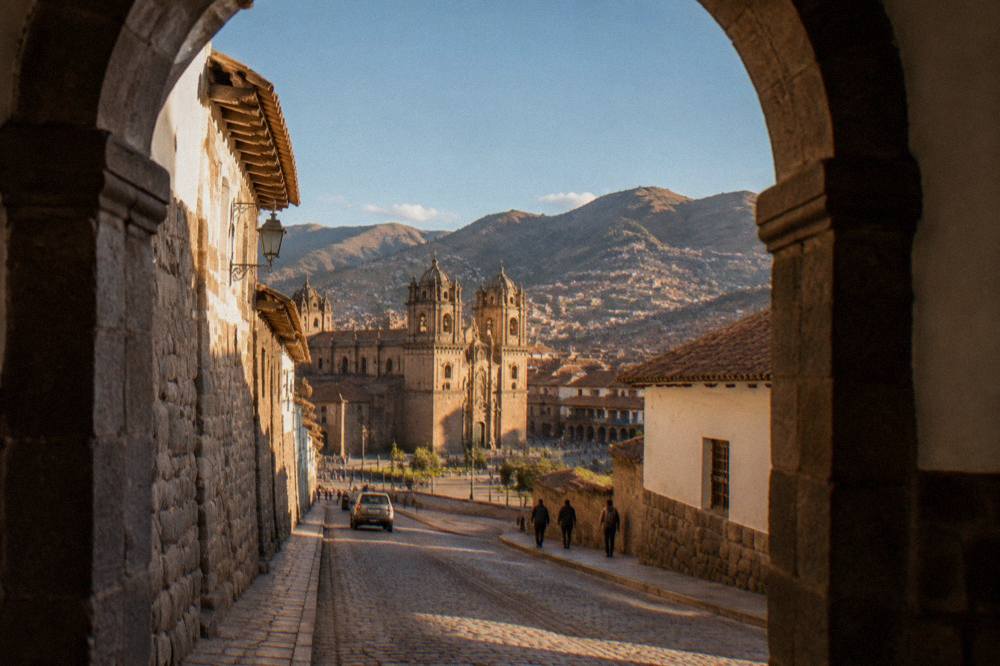
For flight planning, the wet-season column matters more than the temperature ones. Basin airports live on visibility, and Cusco's wet afternoons are when the Lima shuttle flights queue and divert, which is why a morning connection is the safer choice from November to March and why the dry months remove most of that risk. The dry season is also the high season: Machu Picchu's 2025 visitor counts, from Peru's MINCETUR open dataset, show October drawing 1.93 times the visitors of February, and the daily capacity at Machu Picchu rises to 5,600 on the flagged high-season dates between mid-June and early November. A traveller weighing that trade-off can compare the two windows in the guide to when not to visit Cusco and the broader page on the best time to visit Cusco.
The other seasonal note is the city itself. Cusco's dry-season winter nights are cold, but the days are clear and the light on the colonial stonework is at its best, and the mean maximum never leaves the high teens. Packing for that swing, cold nights and mild days, is covered on this site in the guide to what not to wear, and the arrival-day advice is consistent across every page: land, transfer, rest, and take the first day gently.
Common Questions About Flying To Cusco From The US
Can you fly directly to Cusco from the US?
No. No nonstop flight between a US airport and Cusco appears in the 2026 schedules checked for this page. The standard routing connects through Lima, and the Lima to Cusco leg takes about 1 h 15, landing at Alejandro Velasco Astete International Airport about 6 km from the Plaza de Armas.
How long does the whole journey from the US take?
The transpacific or transatlantic leg to Lima depends on the US departure city, and this page does not state flight durations the sources do not carry. What is verified is the final leg: Lima to Cusco is about 1 h 15 by air, against about 21 to 26 hours by bus, per PromPeru. Add a connection window in Lima, and the last hop is a small fraction of the journey.
Is the new Chinchero airport open?
No. The replacement airport at Chinchero is not operating. Reported progress was about 38.9 percent in mid-2026, with completion targeted for 2028 and flights expected in 2028 to 2029. Until it opens, every Cusco flight uses Alejandro Velasco Astete, the city airport about 6 km from the historic centre.
How far is Cusco airport from the historic centre?
About 6 km, or 15 to 20 minutes by taxi, per PromPeru. An airport taxi to the centre is reported at about S/ 15 to 25, and the fare is shown or agreed before the ride. Pre-booked private transfers and hotel-arranged pickups are the alternatives.
Does altitude affect the arrival?
Yes, and the CDC Yellow Book names Cusco, at approximately 3,350 m, as a rapid-ascent destination where travellers fly in within a single day. The CDC advises graded ascent where possible and notes that acetazolamide is a prescription decision to make with a doctor. This site's acclimatisation pages cover the first 48 hours in detail.
Should the Lima connection be in the morning?
The verified reason is weather: Cusco's wet season, roughly November to March, concentrates 71.9 percent of the year's rain, and afternoon conditions in the basin are when delays bite. A morning connection leaves a buffer for the short hop. That is planning logic, not a statistic, and it is offered as such.
The full picture, then, is short enough to carry in one line: from the United States, Cusco is reached with one stop, through Lima, onto a flight of about 1 h 15, into an airport 15 to 20 minutes from the centre, at a latitude where the seasons run opposite to the northern year. The rest of the planning, from the Things To Do In Cusco Peru homepage outward, is about what to do after the landing.